
Benefit-Sharing Agreements that Actually Deliver
Learn the legal models, core clauses, funding structures, governance, and negotiation steps to build benefit-sharing that actually delivers under pressure.
SOCIAL IMPACT & STAKEHOLDER RELATIONS
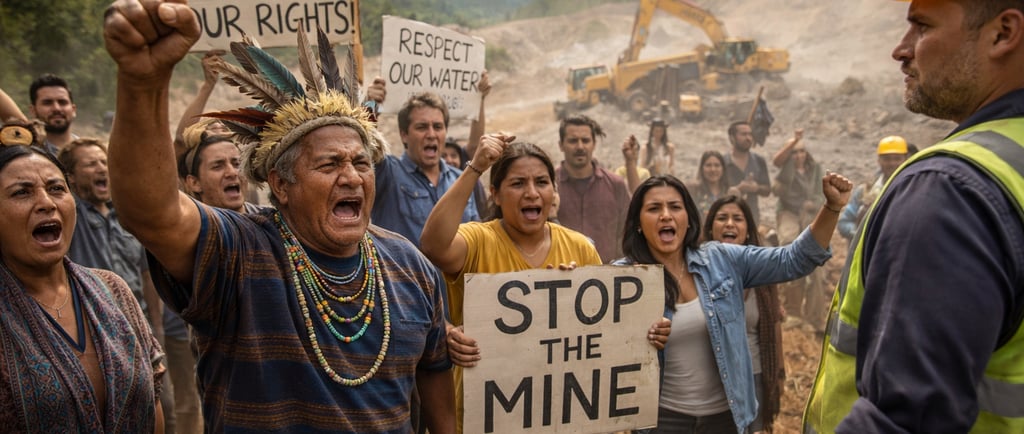
Context: Why Benefit-Sharing Matters in Mining and Metals
Benefit-sharing sits at the center of modern mining risk. It affects permitting, schedule certainty, investor confidence, community support, closure planning, and the long-term standing of the project in the region. UNEP’s Global Resources Outlook 2024 warns that, without major change, global resource extraction could rise by 60 percent by 2060 compared with 2020. That means more pressure on land, water, infrastructure, cultural heritage, and local institutions in mining regions. It also means communities are less willing to accept vague promises, weak reporting, or narrow cash deals that leave little behind once ore leaves the ground.
This is one reason the older view of benefit-sharing no longer holds. For years, many companies treated it as a side package around the “real” project. That no longer fits the operating reality. IFC’s stakeholder engagement guidance presents disclosure, consultation, negotiation, monitoring, reporting, and grievance handling as connected parts of one operating system across the life of a project. Its grievance note says the same thing in plainer terms: grievance management is one of the pillars of stakeholder engagement and should work across the project life, because it helps build trust and maintain broad community support.
There is also a hard commercial reason to get this right. ERM’s 2025 research on critical minerals projects found that permitting issues contributed to 45 percent of mining project delays, stakeholder opposition to 26 percent, and environmental concerns to 24 percent. In other words, the social side is not a side issue. It is part of schedule risk, cost risk, and approval risk. When communities think the agreement is unfair, opaque, or easy to ignore, the project pays for that later.
The circular economy raises the stakes further. If the metals sector is serious about creating value over longer periods, the agreement cannot stop at extraction. It should think about local repair, recovery, reprocessing, dismantling, recycling, post-closure land use, and re-skilling. ICMM’s 2025 closure and transition guidance now treats closure as an integrated, early, and iterative process that should consider environmental, social, and economic factors from an early stage of mine development. That is a major shift in industry thinking, and a good benefit-sharing agreement should reflect it.
2. Where Agreements Break Down
Most bad agreements do not fail because one clause is missing. They fail because the whole arrangement is too thin to carry real stress. The text may sound fair, but the system behind it is weak. The benefit package is vague. There is no clear formula for payment. The governance committee has no real authority. Reports are late or unreadable. Community members hear about commitments, but cannot check whether those commitments were met. The gap between promise and visible delivery then turns into anger, mistrust, and calls for renegotiation. The World Bank’s mining CDA sourcebook was written because this pattern showed up often enough across countries to justify model guidance.
The first common failure point is poor stakeholder definition. “Community” is often treated as if it were one block with one voice. It is not. IFC’s handbook stresses stakeholder identification and analysis because affected communities, local governments, civil society groups, traditional institutions, and other interested or affected parties often have very different interests and levels of impact. If a project misreads who is affected and how, the agreement starts from a false map.
The second failure point is process quality. The World Bank sourcebook says participatory approaches are strongly recommended across all parts of community development agreements because they cultivate ownership, improve decision-making, identify issues early, and reduce risk on all sides. The same sourcebook also sets out good-faith negotiation principles, including involvement of legitimate representatives, willingness free from coercion or intimidation, equal access to the best available information, sufficient time for decision-making, and respect for cultural differences. If those elements are weak, the agreement often becomes a document communities tolerate rather than one they trust.
The third failure point is weak accountability after signing. The World Bank sourcebook is explicit that monitoring based only on dollars spent, percentages distributed, or number of programs initiated will not create long-term sustainable development. It recommends proper metrics, a monitoring schedule, and feedback loops that can improve the agreement over time. That is a critical point. Many agreements still measure inputs and call that success. Communities care more about outcomes, distribution, fairness, and whether the system responds when it slips.
The fourth failure point is grievance design. The World Bank sourcebook calls grievance, feedback, and dispute management a fundamental component of a successful CDA, while IFC says the mechanism should be scaled to the level of risk and should sit inside the broader engagement process. If complaints can only be handled informally, politically, or after conflict escalates, then the project has already made resolution harder and more expensive.
3. The Main Legal and Structural Models
A publishable guide needs to be clear on one basic point. “Benefit-sharing agreement” is not one legal thing. It is a family of arrangements. That matters because the legal form changes what can be enforced, who signs, who approves, who reports, and what happens when the project changes hands.
One model is the statutory community development agreement. The World Bank’s model regulations were drafted for jurisdictions that want mining right holders and qualified communities to enter into a formal community development agreement that is submitted for approval, reported on periodically, and in some versions made publicly available. This model is strong when the law is clear and the regulator can enforce reporting and approval rules. It is weaker when the law exists on paper but the institutions behind it are thin.
A second model is the negotiated Indigenous impact and benefit agreement. Canada provides some of the best-known examples. Glencore states that the Raglan Agreement, signed in 1995, was one of the first impact benefit agreements between a mining company and Indigenous communities in Canada. It includes training and hiring, environmental protection, preference for Inuit businesses, monitoring through the Raglan Committee, and profit-sharing. This model can be very strong where rights-holder status is clear and the agreement is built around those rights.
A third model is the foundation or trust model. The World Bank’s work on mining benefit-sharing notes the role of foundations, trusts, and funds in delivering benefits over time, and the sourcebook lists community-controlled trusts, development funds, and foundations as common structures. NADeF in Ghana is a real example. It was established in 2008 through a foundation agreement between Newmont Ghana Gold Limited and the Ahafo Social Responsibility Forum, which included ten mine communities, local government, regional government, and civil society, to administer annual contributions for community development programs.
A fourth model is the land access and land use agreement. In Australia, an Indigenous Land Use Agreement, or ILUA, is a voluntary agreement between Aboriginal groups and others about the use and management of land and waters. Western Australia’s guidance notes that ILUAs are more flexible than a right-to-negotiate agreement and can cover a broader range of interests. Rio Tinto’s global community agreements page shows how major mining companies use a range of negotiated agreements, including life-of-mine agreements, cultural heritage management agreements, and environmental management agreements, to set mutual obligations, expected behaviour, and value-sharing terms over the life of a mine.
A fifth model is the socio-economic monitoring and participation agreement model. Rio Tinto’s public material on Diavik says the mine entered into a Socio-Economic Monitoring Agreement with the Government of the Northwest Territories and later signed participation agreements with five local Indigenous groups. Natural Resources Canada’s Diavik factsheet also points to these participation agreements as the way commitments to training, employment, scholarships, and business opportunities were formalized. This is useful because it shows how a project can combine a government-facing monitoring agreement with community-specific participation agreements.
No one model is always best. What matters is fit. The legal vehicle should match the rights structure, the local institutional strength, the size of the project, the type of impact, and the level of trust already in the relationship.
4. The Core Clauses Every Serious Agreement Needs
A top-tier agreement should make it hard to misunderstand the deal. The World Bank’s model regulations and example guidelines are useful here because they turn abstract good practice into concrete content. The guidelines cover citation, object, capacity to negotiate, recommended content, links to other development plans, minimum expenditure, transparency through reporting, public availability, transfer, and treatment of pre-existing rights. The regulations also contemplate public reports, reporting in local language where needed, approval by the responsible authority, and content on local representation, goals, objectives, implementation timetable, traditional knowledge, and how the agreement fits with local and regional development plans.
In practice, every serious agreement should clearly cover the following.
Parties and authority. Who signs, in what legal capacity, and with what proof of authority.
Definitions. What counts as the community, sub-community, project area, impact area, community benefit, procurement, local business, and grievance.
Geographic and project scope. Which mine phases, facilities, transport corridors, waste areas, and related activities are covered.
Duration and review dates. When the agreement starts, when it is reviewed, and what triggers early review.
Funding formula. The exact basis for payments or contributions, timing, and any caps, floors, carry-forwards, or exclusions.
Permitted uses of funds. What money can and cannot be spent on.
Governance. Which bodies oversee implementation, how members are selected, quorum, voting, conflict-of-interest rules, minutes, and public disclosure.
Employment and training. Targets, pipelines, data categories, retention support, and reporting.
Procurement and business development. Local supplier rules, payment times, contract packaging, and support for enterprise growth.
Cultural and land protections. Sacred sites, no-go areas, seasonal access, heritage procedures, traditional knowledge, and stop-work triggers.
Grievances and disputes. Intake channels, time limits, appeal steps, mediation, and link to broader project systems.
Monitoring, audit, and reporting. What is measured, how often, by whom, and who can inspect the books.
Assignment and transfer. What happens if the asset is sold or the operator changes.
Closure and post-closure. Transition planning, asset transfer, land use, continued monitoring, and what survives mine closure.
Amendment and default. How the agreement can be changed and what happens when one side misses obligations.
5. Funding Models and the Trade-Offs Behind Them
Benefit-sharing often gets reduced to one question: how much money? That matters, but it is the wrong first question. The right question is: what funding model fits the project, the community’s priorities, the legal setting, and the delivery capacity of the institutions that will manage the money?
The World Bank’s work on mining benefit-sharing points to a range of structures including social investment programs, development forums, community-controlled trusts, development funds, and foundations. That range matters because each model solves a different problem. A foundation can smooth annual planning and give continuity. A direct payment model can be simpler but more politically exposed. A mixed model can spread risk across several channels.
A fixed annual contribution is easy to forecast and easy to explain. It helps community institutions plan multi-year projects. The downside is that it may feel unfair in periods of high profitability and burdensome in periods of weak prices. A revenue-linked formula moves with sales and is usually simpler to verify than a profit-linked formula. A profit-linked formula can create a larger upside for communities in strong years, but disputes over costs, transfer pricing, and profit calculation can become serious. A per-tonne or per-unit formula is clear, but it only works where production volumes are measured cleanly and community institutions understand the model. These are design choices, not technical footnotes. They shape trust. The World Bank model regulations also contemplate minimum expenditure rules and annual expenditure reports, which shows how central the funding architecture is to the overall design.
A fund or foundation model is often better for long-term development spending than direct ad hoc grants. NADeF shows why. Its structure was created to receive annual contributions and support community development programs through a standing institution rather than through irregular project donations. The strength of this model is continuity, planning, and some insulation from short-term management changes. The risk is that the institution itself can become distant, politicized, or opaque if reporting and representation are weak.
A serious agreement should also separate different money streams. One stream can support direct household or community access. Another can support long-term development. Another can support cultural protection. Another can support transition and closure. Mixing all of these into one bucket often creates conflict because short-term needs crowd out long-term investment. That is not speculation. It is one reason the World Bank sourcebook spends so much time on management, accountability, and transparency of funds.
For projects with a circular economy angle, there is one more funding question. Should some money be reserved for post-extraction value creation, such as local recycling, reuse, dismantling, or secondary processing? The case for that is strong. The International Aluminium Institute says aluminium’s global recycling efficiency rate is 76 percent. The International Copper Association says about 32 percent of annual copper use during the last decade came from recycled sources. These figures do not remove the need for primary mining, but they do show that agreements which ignore downstream materials value are leaving a real economic lane unexplored.
6. How to Run the Negotiation So the Agreement Can Survive Real Pressure
The best agreement text in the world cannot rescue a rushed or distorted negotiation. The World Bank sourcebook is clear on the principles of good-faith negotiation: legitimate representation, willing engagement free from coercion or intimidation, joint exploration of key issues, equal access to the best available information, participatory approaches, sufficient time for decisions, and cultural sensitivity. These are not soft ideas. They are risk controls.
The first rule is to prepare before drafting starts. That means stakeholder mapping, rights-holder mapping, baseline data, local institutional mapping, and a record of existing tensions, historic promises, unresolved claims, and internal divisions. The World Bank sourcebook recommends a flow that starts with stakeholder engagement outputs such as lists of stakeholders, qualified communities, mapping, and plans for periodic review. Many negotiations skip this and move straight to drafting. That saves time at the start and costs far more time later.
The second rule is capacity support. The World Bank model guidelines explicitly recommend that mining right holders assist communities to build capacity so they can negotiate effectively. That point matters because many agreements are negotiated between a well-resourced company team and a community delegation with limited legal, financial, technical, or translation support. The agreement may still be lawful, but it is less likely to be durable if one side did not really have the tools to test assumptions and consequences.
The third rule is language access. The World Bank model regulations say that where a substantial proportion of the community is not fluent in the official language, the mining right holder should consider submitting reports in both the official language and the local language or dialect used by that community. That principle should apply earlier, during negotiation and explanation of the draft itself. A plain-language summary should exist before signing, not as an afterthought.
The fourth rule is to keep government and existing plans in view. The World Bank model guidelines say agreements should complement, not replace, government-led development and services, and should align with local and regional development plans. This is a major point. If the agreement is designed as a substitute for basic state obligations, it can create dependency, duplication, and political conflict. A company can help fund roads, clinics, schools, or water systems, but the agreement should be clear on who operates, staffs, maintains, and pays for those assets over time.
The fifth rule is to negotiate for stress, not for ceremony. Ask what happens if prices fall. Ask what happens if production expands. Ask what happens if the mine is sold. Ask what happens if community leadership changes. Ask what happens if obligations are missed for a year. Good negotiations front-load these questions because bad years and leadership changes are normal in mining.
7. Delivery, Governance, and the Role of Government
Once signed, the agreement becomes an operating document. That means every commitment should be converted into work plans, budgets, owners, schedules, and reporting lines. The World Bank sourcebook recommends concise regular reviews, more rigorous quarterly reviews, and even a monitoring and evaluation unit to create feedback loops and improve the agreement over time. That is the difference between implementation and drift.
Governance bodies need real powers. They should be able to review delivery, approve annual priorities, request clarifications, inspect spending records, track grievances, commission audits, and recommend amendments when conditions change. If the committee can only meet and listen, it is not governance. It is theatre. The Raglan Agreement remains important because Glencore still presents implementation monitoring through the Raglan Committee as a core part of the deal, alongside training, hiring, Inuit business preference, environmental protection, and profit-sharing.
Government’s role should be explicit. The World Bank sourcebook asks whether government revenues, development plans, and the collection, management, and distribution of mining-related revenue are transparent and understood. It also treats the roles of government and the private sector in local development as a central issue. This matters because many agreements fail in the space between company promises and public service realities. If a company funds a water system, who will maintain it? If it helps build a training center, who accredits the training? If it funds a clinic, who staffs it? If that answer is unclear, the agreement may create assets without creating durable services.
Closure planning needs to sit inside delivery from the start. ICMM’s 2025 closure guidance says integrated mine closure is a dynamic and iterative process that considers environmental, social, and economic factors from an early stage of development. Its 2025 transitions handbook says the best preparation for eventual closure starts before a mine is developed and continues throughout the life of the mine. That should change how benefit-sharing is written. Transition funds, reskilling, supplier diversification, post-mining land use, asset transfer, and reprocessing or repurposing options should not wait until the last years of the operation.
8. Women, Youth, Elders, and the Groups Most Often Left Out
Almost every mining company now says its agreements are inclusive. Far fewer write inclusion into the machinery of the deal. That is where many otherwise strong agreements start to thin out. Value reaches the community, but not evenly. Contracts flow to politically connected firms. Jobs go to the same networks. Meetings are held in formats that exclude women, young people, remote settlements, seasonal users of land, or people who do not speak the dominant working language well. The World Bank’s CDA sourcebook is clear that participatory approaches are strongly recommended across all parts of the agreement process and asks directly whether different sub-communities will be represented in decision-making and implementation. IFC’s stakeholder engagement guidance makes the same point from another angle: if stakeholder identification is weak, the whole engagement process starts on a false map.
This matters because “community” is not a single unit. In practice, a mine may affect rights-holders, land users, transport corridor communities, downstream water users, pastoral groups, artisanal recyclers, traders, youth seeking employment, elders responsible for cultural continuity, and women whose work is tied to care, household economies, land access, water, or small enterprise. If the agreement only recognizes formal leadership and ignores how harm and opportunity are distributed inside the community, the document can look fair on paper while locking in internal inequality. The World Bank model guidance explicitly contemplates how sub-communities will be represented and how local and regional development plans should be considered in agreement design.
The practical fix is not vague language about inclusion. It is design. A serious agreement should define representation rules for governance bodies, minimum participation standards for women and youth, elder advisory roles where cultural and land stewardship are involved, and reporting that is broken down by gender, age, location, and other locally relevant categories. It should also finance participation properly. Travel budgets, childcare support, translation, plain-language briefings, and separate consultation tracks for groups who may not speak freely in mixed forums often matter more than polished inclusion statements. The World Bank sourcebook and IFC guidance both support the logic behind this, even if they do not prescribe one exact model for every site.
In Indigenous contexts, this is even more important. OHCHR states that consultation and participation are crucial components of a consent process, and that states should consult and cooperate in good faith through Indigenous peoples’ own representative institutions before approving projects that affect their lands, territories, and resources. That means inclusion cannot be improvised for speed. It has to respect how the affected people themselves define legitimate process, timing, and representation. A benefit-sharing agreement that bypasses those structures may still be signed, but it will be fragile.
9. Transparency, Grievances, Monitoring, and Audits
Transparency is the line between a promise and a testable obligation. EITI’s current guidance says contracts, licenses, and associated agreements are important elements of a country’s legal framework because they define the rights and obligations of the parties involved, and the 2023 EITI Standard requires full disclosure of contracts and licenses granted, entered into, or amended from January 1, 2021. The broad lesson for mining benefit-sharing is simple: the more stakeholders can see, understand, and compare, the harder it becomes for delivery to drift into ambiguity.
A publishable agreement system therefore needs more than an annual press release. At minimum, it should produce a plain-language public summary, a regular implementation report, a financial report that can actually be read by non-specialists, and a record of what decisions the governance body took and why. The World Bank’s model regulations contemplate public availability of agreements and periodic reports, and also note that local-language reporting should be considered where communities are not fluent in the official language. That is not a cosmetic add-on. It is part of real accountability.
Grievance handling has to be equally concrete. IFC describes grievance management as one of the pillars of stakeholder engagement and says grievance mechanisms should inform and complement, not replace, other forms of engagement. Its guidance also says the mechanism should be scaled to the level of risk and impact. The World Bank sourcebook treats grievance, feedback, and dispute management as a fundamental component of a successful agreement. Together, these sources point to the same operational truth: if people only feel heard after conflict escalates, the mechanism was not built early enough or well enough.
A workable grievance system should therefore include several intake routes, clear service standards for acknowledgment and response, written tracking, confidentiality rules where needed, an appeal path, and trend reporting so governance bodies can see recurring failure points. The World Bank Group’s CAO guidance adds an important standard here: a well-functioning grievance mechanism should provide a predictable, transparent, and credible process that results in outcomes seen as fair, effective, and lasting. That is the benchmark.
Monitoring should go beyond money spent. The World Bank sourcebook explicitly warns that monitoring based only on dollars spent, percentages distributed, or number of programs initiated will not create long-term sustainable development. Better monitoring asks who benefited, whether outcomes improved, whether distribution was equitable across groups, whether commitments were completed on time, whether cultural safeguards were respected, whether procurement and jobs actually reached local people, and whether the relationship itself is strengthening or weakening.
That is where audits come in. Internal reporting alone is rarely enough in a contested environment. A good agreement should define who can inspect records, how often independent verification can be commissioned, and what happens if the auditor finds gaps or non-compliance. Audits are not only about catching fraud. They are about reducing interpretation battles before those battles become political crises. The World Bank sourcebook’s emphasis on management, accountability, and transparency of funds supports this approach directly.
10. What Real Projects Show
The best-known mining agreements are useful because they show that strong benefit-sharing is built from several components at once, not one. Glencore states that the Raglan Agreement, signed in 1995, includes training and hiring, environmental protection, preference for Inuit businesses, implementation monitoring through the Raglan Committee, and profit-sharing. That mix matters. It shows a model where value-sharing, oversight, business participation, and environmental issues were not split into isolated silos.
Mary River is useful for a different reason. The public IIBA text and related materials show a more structured implementation architecture, with committees, coordinators, participation mechanisms, and periodic reporting. It is a good example of how agreement design can try to turn broad commitments into an operating framework. It also shows a harder truth: a detailed agreement does not eliminate controversy around the project itself. It lowers some forms of risk, but it does not replace discipline, review, and ongoing legitimacy work.
Ahafo in Ghana shows why institutional form matters. The Newmont Ahafo Development Foundation states that it was established in 2008 through a foundation agreement involving Newmont, mine communities, local government, regional government, and civil society, with annual contributions to support community development programs. This is important because it moved benefit administration into a standing institution rather than leaving it as a series of ad hoc company decisions. That does not make the model automatically perfect, but it does improve continuity and planning capacity.
Diavik shows that one project can use several agreement layers at once. Rio Tinto’s public material says the mine works with five local participation agreement groups, while Canadian government material notes a socio-economic monitoring agreement with the territorial government and separate participation agreements with Indigenous groups. That is a useful pattern because it separates some government-facing monitoring functions from community-specific benefit and participation arrangements.
Australia’s ILUA system shows the value of legal fit. Western Australia’s guidance explains that Indigenous Land Use Agreements are voluntary agreements about the use and management of land and waters and notes that they are more flexible than right-to-negotiate agreements. For mining, the lesson is clear: do not force every community-project relationship into one template. Use the legal and institutional vehicle that best matches the rights structure, land questions, and operating risks on the ground.
11. Ten Signs an Agreement Is Built to Fail
The fastest way to test a draft agreement is to look for structural weaknesses that create trouble later.
The first sign is a vague funding formula. If nobody can explain, in plain language, how the money is calculated, timed, and verified, disputes are almost guaranteed.
The second sign is the absence of a public summary. If the people most affected cannot understand the deal without a lawyer or company adviser translating it for them, accountability is already weak.
The third sign is unclear representation. If it is not obvious who speaks for whom, elite capture becomes easier. The World Bank model guidance and sourcebook both point toward clarity on representation, transparency, and implementation as core design requirements.
The fourth sign is no audit right.
The fifth is a grievance clause that sounds respectable but has no service standards, tracking, or appeal path.
The sixth is silence on assignment and transfer, which becomes dangerous if the asset changes hands.
The seventh is a token closure section, usually a few lines that defer the real discussion to some later stage. ICMM’s updated mine closure guidance is especially relevant here because it stresses that integrated closure should begin early and be treated as a disciplined planning process throughout the mine life.
The eighth sign is reporting that is not broken down by group or geography. That allows unequal distribution to hide inside headline numbers.
The ninth is an agreement that assumes government responsibilities without defining who will operate, maintain, or finance services later.
The tenth is optional review. If the agreement has no scheduled review cycle and no clear triggers for early reconsideration, it is effectively pretending that mines, markets, politics, and community priorities do not change. That is not realism. It is deferred conflict.
12. Practical Tools You Can Use
A strong reference article should leave readers with tools they can use immediately.
The first is a pre-signing due-diligence checklist. Before signing, both sides should be able to answer a short set of practical questions: who exactly is covered, what legal model is being used, what baseline data exists, what the funding formula is, what is public, who audits, what triggers review, what happens if ownership changes, and what survives closure. The World Bank model regulations and sourcebook support this checklist logic because they repeatedly tie successful agreements to clarity on representation, content, approval, reporting, transfer, and monitoring.
The second is a plain-language summary template. Every agreement should be explainable in a short public note covering five essentials: what the company promised, what the community and any government bodies agreed to do, how value will flow and on what basis, who governs implementation and hears complaints, and when the next review happens. EITI’s contract-transparency guidance and the World Bank’s local-language reporting logic both support this kind of accessible disclosure.
The third is an annual scorecard. A useful scorecard should cover money received, money spent, projects completed, jobs created and retained, contracts awarded, local businesses supported, training outcomes, grievance volumes and closure times, cultural commitments completed, and closure-transition preparation. The World Bank sourcebook’s warning against monitoring only spending is the clearest reason this broader scorecard matters.
The fourth is a first governance agenda after signing. Many agreements lose momentum in the first year because no one converts the text into a calendar. The first formal meeting should confirm members and authority, quorum rules, reporting formats, data responsibilities, grievance setup, first-year priorities, public communication rules, conflict-of-interest standards, and the date for the first review. This sounds simple, but implementation drift often starts with exactly this kind of operational vagueness.
13. Frequently Asked Questions
What is the difference between compensation and benefit-sharing?
Compensation addresses harm or loss, such as displacement, land impacts, or other specific adverse effects. Benefit-sharing is broader. It addresses how value created by the project is shared over time through jobs, procurement, funding, governance participation, infrastructure, cultural protections, and longer-term development measures. The World Bank and IFC materials consistently treat community agreements and stakeholder engagement as broader than compensation alone.
Should the agreement be public?
The direction of travel in extractives is strongly toward disclosure. EITI’s guidance says contracts, licenses, and associated agreements are important elements of the legal framework and supports full disclosure under the current standard for covered agreements. Even where full publication is not legally required, at least the core commitments, governance structure, and benefit flows should be visible enough for communities and other stakeholders to monitor performance.
Who should control the money?
That depends on the model, but money concentrated in a small political group is usually risky. A jointly governed fund, trust, or foundation can work better if representation, auditing, disclosure, and conflict-of-interest controls are clear. The Ahafo foundation model is one visible example of a standing institution created for that purpose.
What if prices fall or production drops?
The agreement should say what happens before the market tests it. This is why fixed contributions, revenue-linked formulas, profit-linked formulas, floors, caps, and review triggers matter so much. Funding architecture is not a technical side note. It is a core part of how trust survives a downturn. The World Bank model guidance’s attention to expenditure rules and reporting reflects that reality.
What if the mine changes ownership?
The agreement should contain assignment and transfer provisions so obligations survive an asset sale or operator change. The World Bank model regulations treat transfer as a core design issue for exactly this reason. Without it, communities may find that the relationship was anchored more to the original operator than to the project itself.
How early should closure appear in the agreement?
From the beginning. ICMM’s updated Integrated Mine Closure guide says closure planning should be integrated early and treated as a disciplined process throughout the mine life. Waiting until late operations usually means too much value has already been consumed and too little transition capacity has been built.
14. Conclusion
A benefit-sharing agreement that actually delivers is not defined by a headline payment. It is defined by whether the system works under pressure.
The best available guidance from the World Bank, IFC, EITI, OHCHR, and ICMM points in the same direction. Strong agreements define who is covered, match the legal vehicle to the context, state the funding formula clearly, build governance bodies with real powers, publish information people can understand, create workable grievance systems, measure outcomes rather than only inputs, account for government’s role, and plan for ownership change and closure early.
That standard is becoming harder to avoid. UNEP’s resource outlook points to rising extraction pressure. EITI’s transparency requirements point to stronger disclosure expectations. IFC’s grievance and stakeholder guidance point to stronger expectations around process and responsiveness. ICMM’s updated closure guidance points to stronger expectations around long-term transition planning. In other words, the sector is being judged less by what it promises at signing and more by what it can prove over the full life of the project.
The agreements that endure tend to leave more than a record of payments. They leave stronger institutions, deeper skills, more durable local enterprise, better oversight, protected cultural value, and a community with more agency than it had before the project began. That is the real test. That is what readers should look for. And that is the standard the mining and metals sector should now be held to.
Connect
Your trusted partner for scrap metal procurement.
CONTACT
About
haroon@tdcventures.com
+1-307-655-7593
© 2025. All rights reserved.
NEWSLETTER