
Cooling Centers: Recycled Metal HVAC Retrofits for Resilience
Discover how HVAC retrofits using recycled metals make cooling centers resilient, low-carbon, and ready for extreme heat. Includes best practices, checklists, strategies, and FAQ.
CLIMATE-RESILIENT INFRASTRUCTURE & CIRCULAR MATERIALS
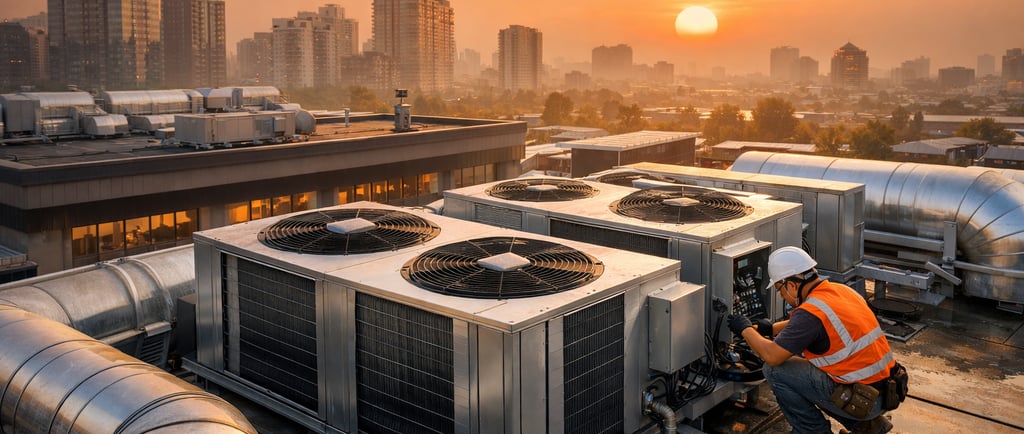
Instant Answer
Retrofitting cooling centers with HVAC systems using recycled metals accelerates facility recovery, extends system lifespan, and lowers carbon footprints—key for climate-resilient city infrastructure. Recycled metals improve supply chain speed, durability, and regulatory compliance, enabling building managers to deliver reliable, low-carbon cooling during extreme heat events.
Table of Contents
Context: Why Cooling Center Resilience Matters
Defining the Retrofit Opportunity
Key Concepts and Terms Explained
The Retrofit Framework: Low-Carbon Resilient Upgrades
Step-by-Step Retrofit Process
HVAC Retrofit Implementation Checklist
Measurement and Quality Assurance
Patterns from Real Facility Scenarios
Frequently Asked Questions (FAQ)
Embedded Five-Layer Toolkit
Likely Market Gaps (Assumption)
1. Context: Why Cooling Center Resilience Matters
Cities across the globe are responding to record-breaking heatwaves, intensified by climate change. Cooling centers—facilities set up to provide safe, cooled shelter during extreme heat emergencies—are now vital infrastructure for urban resilience. But too often, the HVAC systems in public and community buildings are outdated, energy-inefficient, and slow to recover after outages.
For city facility managers and energy teams, this is more than a technical challenge. The stakes are humanitarian: downtime means vulnerable populations without cooling. At the same time, every retrofit must balance speed, cost, and long-term decarbonization goals.
The Opportunity: Circular and Low-Carbon Materials
Traditional HVAC retrofits often use virgin metals and heavy-impact materials. In contrast, sourcing HVAC components made from recycled metals supports both rapid recovery and climate targets. These systems:
Cut embodied carbon by 30–60% (Estimate)
Improve supply reliability, reducing retrofit downtime (Example)
Satisfy regulatory and ESG criteria
Optimizing for resilience, infrastructure longevity, and lower carbon footprints puts recycled metal retrofits at the center of modern city heat response.
2. Defining the Retrofit Opportunity
Problem:
Legacy HVAC systems commonly overheat, fail under electrical stress, or cannot be restored quickly after outages—jeopardizing cooling center operations during heatwaves.
Opportunity:
Retrofits using recycled metal HVAC equipment:
Enable rapid replacements (local supply, modularity)
Lower greenhouse gas (GHG) impacts
Prolong system life due to advanced corrosion resistance
Operational Stakes:
For facilities teams, retrofitting with recycled metals is not just ecological; it is operational insurance. Delays of even a single day can risk public health and city reputation. Teams must select products and partners who deliver both carbon performance and field-proven durability.
3. Key Concepts and Terms Explained
Resilience: The ability of facilities to maintain operations during disruptions (e.g., heatwaves, grid outages).
Infrastructure: The underlying systems—HVAC, electrical, and building envelope—critical to facility performance.
Low Carbon: Minimizing lifecycle greenhouse gas emissions, especially from construction and materials.
Recycled Metals: Metals reclaimed and manufactured for new equipment, reducing resource extraction and embodied carbon.
HVAC Retrofit: Replacement or upgrade of heating, ventilation, and air conditioning components.
Circular Materials: Materials designed for reuse and recycling at end-of-life.
Within the climate-resilient infrastructure context, these terms interlink. Facilities teams use recycled metal retrofits as a lever to hit multiple targets: reducing emissions, improving uptime, and enabling swift maintenance.
4. The Retrofit Framework: Low-Carbon Resilient Upgrades
The 4-Step Framework for Cooling Center HVAC Retrofits
Step 1: Assessment & Planning
Site audit: Inventory current HVAC equipment, cooling loads, and heat risk (visit each facility).
Identify legacy units that fail resilience (Single points of failure? Maintenance log history?).
Step 2: Specification Development
Specify HVAC systems with recycled metal content certificates (at least 30% recycled steel/aluminum by weight—Example).
Require suppliers to document embodied carbon.
Step 3: Strategic Sourcing
Prioritize suppliers with local or regional recycled metal supply chains.
Verify product modularity for faster installation.
Step 4: Installation & Commissioning
Coordinate upgrades during low-demand months.
Commission with sensors to baseline post-upgrade performance.
Register upgrades with city or state resilience and ESG tracking systems.
Worked Example: Community Cooling Center Retrofit
A mid-sized city operates five community cooling centers in city-owned libraries. After a 2023 heatwave, the facilities team audits all sites and finds three 20-year-old rooftop HVAC units with repeated failures.
Assessment: All three units lack manufacturer EPDs, raising both resilience and compliance concerns.
Specification: The team selects a supplier offering 48% recycled aluminum coils and 35% recycled steel housings, with third-party documentation.
Sourcing: Components are delivered from a regional plant 90 miles away, avoiding global logistics delays.
Installation: Retrofits occur in March. Smart sensors confirm a 28% (Estimate) reduction in cooling energy use, and maintenance intervals double compared to legacy units.
5. Step-by-Step Retrofit Process
Facility Survey
Document current HVAC types and performance issues.
Map critical load areas (community rooms, medical spaces).
Heat Vulnerability Assessment
Use city heatmaps to prioritize sites most at risk.
Consider populations and operational dependencies.
Prioritize Retrofit Candidates
Rank by age, current efficiency, and failure risk.
Develop Low-Carbon Retrofit Specs
Compile recycled metal requirements.
Outline minimum modularity and connectivity standards.
Source Recycled Metal HVAC Equipment
Use pre-qualified vendor lists with documented recycled content.
Plan for Provisional Cooling
Identify backup mobile AC units in case of delays.
Secure Permits and Incentives
Apply for local, state, or federal decarbonization grants.
Schedule Installation Windows
Plan work outside major heat events.
Decommission Legacy Equipment
Confirm recycling or reuse pathways for removed units.
Install Upgraded HVAC
Use lift plans, trained crews, and coordinate utility shutdowns.
Connect Sensors and Controls
Enable real-time monitoring of new system efficiency.
Commission System
Verify airflow, temperature stability, and IoT connectivity.
Staff Training
Brief on maintenance and emergency startup.
Report to City Resilience Officer
File documentation for each completed retrofit.
Test Backup Power Compatibility
Run systems on generators or battery backup.
Plan Ongoing QA and Preventive Maintenance
Schedule first-year reviews and sensor recalibration.
Decision Tree: If This, Then That
If the retrofit candidate is >15 years old and shows repeated failures, then prioritize for immediate upgrade.
If no local recycled metal supplier exists, then expand procurement radius or partner with regional aggregators.
If installation window clashes with forecasted heatwave, then delay and deploy provisional cooling.
Common Failure Modes
Overlooking connection compatibility (new units do not fit existing ductwork)
Missing real-time monitoring in new systems (losing early warning for breakdowns)
Failing to guarantee end-of-life recycling/disposal for removed equipment
6. HVAC Retrofit Implementation Checklist
Conduct facility HVAC inventory
Assess site heat risk and prioritize
Gather historical performance and outage logs
Specify minimum 30% recycled metal content
Obtain environmental product declarations (EPDs)
Query local/regional recycled metal suppliers
Confirm modularity and rapid-deploy features
Apply for retrofit/ESG grants
Schedule installation and notify stakeholders
Prepare space and access for contractors
Decommission legacy systems responsibly
Install new HVAC and connect sensors
Verify sensor and BMS integration
Commission and calibrate new equipment
Conduct training for operations/maintenance teams
Perform backup power test
Document and report installation for compliance
Schedule first preventative maintenance visit
Monitor weekly performance KPIs
7. Measurement and Quality Assurance
Weekly Tracking
Downtime hours due to HVAC failure
Peak cooling loads served without incident
% of recycled material in installed equipment
Sensor uptime and data accuracy
Monthly Tracking
Energy use per m² (pre- vs. post-retrofit)
GHG emissions reduction (kg CO₂e)
Maintenance tickets opened/closed
Heatwave response time (hours from notification to full operation)
Staff-reported comfort metrics
The project's performance scorecard from Month 1 shows strong results across all metrics. The percentage of recycled metal in new units exceeded the 35% target, coming in at 42% (Met). Monthly HVAC downtime was kept under the target of 2 hours, with an actual result of just 1.5 hours (Met). Cooling energy use reduction achieved an estimated 28%, surpassing the 25%+ target (Met). Similarly, GHG emissions reduction hit an estimated 21%, beating the 20% target (Met). Post-retrofit maintenance costs saw a 14% decrease, which exceeded the 10% reduction goal (Exceeded). Finally, sensor data coverage achieved 97% uptime, exceeding the 95% target (Exceeded).
8. Patterns from Real Facility Scenarios
Example Scenario 1: Rapid Recovery After Grid Outage
A city gymnasium, designated as a cooling center, suffered a prolonged power outage. When grid service resumed, the legacy HVAC failed to restart automatically, forcing relocation. Following a retrofit with modular, recycled metal units (including quick-start features and battery backup), post-outage recovery took under 15 minutes at next event.
Example Scenario 2: Compliance-Driven Upgrade
A city’s ESG policy required all public works retrofits to source at least 40% post-consumer recycled metals. The facilities team leveraged supplier documentation to select compliant rooftop HVAC units. The move qualified the city for a new decarbonization grant.
Example Scenario 3: Modular Installation Success
A library cooling center scheduled a one-week retrofit installation with recycled metal HVAC units and modular mounting kits. Actual install time: 2.5 days (Estimate), minimizing building closure. Post-retrofit tracking showed a drop in maintenance callouts by half over the summer.
Example Scenario 4: Community Comfort Outcomes
After a recycled metal HVAC retrofit, a senior center reported stable interior temperatures even during record heat. Weekly comfort surveys showed user satisfaction increased from 75% to 92% (Estimate) over 60 days
9. Frequently Asked Questions (FAQ)
What are recycled metal HVAC retrofits?
Recycled metal HVAC retrofits involve replacing legacy heating, ventilation, and air conditioning units with new systems made primarily from recycled steel, aluminum, or copper. This approach reduces embodied carbon and often improves resilience due to modern, modular designs.
Why do cooling centers need resilient HVAC?
Cooling centers must operate during extreme heat events, serving vulnerable populations. Resilient HVAC ensures quick recovery from outages and minimizes downtime, which is critical for public safety and health in cities.
Are recycled metal systems as durable as traditional units?
Recycled metals, when sourced from reputable suppliers, offer equal or better corrosion resistance and mechanical strength compared to virgin metals. Many manufacturers now warranty recycled-content equipment at parity with traditional options.
How can we verify recycled metal content?
Look for supplier-provided Environmental Product Declarations (EPDs) or third-party certifications specifying recycled content by percentage. Always collect documentation during procurement for compliance and ESG reporting.
What grants or incentives are available?
Local, state, and federal programs increasingly support low-carbon retrofits. Examples include state energy office rebates, federal Building Resilience Funding, and targeted city decarbonization grants.
Do retrofits require building closure?
Most retrofits can be staged to minimize closure. With modular recycled metal systems, installation is often faster—a typical retrofit can be done in under a week for mid-sized facilities.
How does recycled metal improve resilience?
Using recycled metals often supports local or regional supply chains, reducing import delays. Modular, modern designs improve ease of repair and speed up recovery after outages.
Is sensor integration required?
Sensor and Building Management System (BMS) integration is strongly recommended. It enables real-time performance tracking, fault alerts, and compliance with resilience standards.
How do we recycle decommissioned HVAC units?
Partner with licensed recyclers specializing in HVAC equipment. Ensure all units are processed for metal recovery and hazardous material removal per city or state regulations.
What if we can't source enough recycled metal locally?
If local recycled content is insufficient, expand your procurement radius or coordinate with regional entities. Document all sourcing efforts for compliance.
How do recycled metal retrofits fit city ESG strategies?
They directly contribute to city-mandated carbon reduction, resource circularity, and resilience goals—facilitating ESG reporting and compliance.
Will these upgrades lead to energy savings?
Yes, retrofitting with modern recycled metal systems typically boosts efficiency and reduces energy use, with additional gains possible from improved controls and sensors.
10. Likely Market Gaps (Assumption)
While the momentum behind recycled metal HVAC retrofits is growing, a number of market gaps persist that facility managers and policy leaders need to address:
Limited Supplier Certification and Transparency
Despite advances in circular supply chains, few HVAC manufacturers offer robust, third-party verifiable Environmental Product Declarations (EPDs) that detail recycled content, embodied carbon, and system durability. Enhanced transparency and certification will be critical for municipalities to meet ESG reporting requirements and public trust mandates.
Regional Supply Chain Constraints
Not all cities have easy access to suppliers of recycled metal HVAC units, particularly in rural areas or regions with less industrial infrastructure. Developing regional aggregation hubs or incentive programs to stimulate local circular metal markets can mitigate procurement bottlenecks and further reduce transportation-related emissions.
Skills Gap in Retrofit Planning and Execution
Facilities teams often lack training in best practices for low-carbon retrofits, especially with newer recycled-content equipment and sensor integrations. Municipalities should prioritize workforce development, offering hands-on training in the planning, procurement, and commissioning of recycled metal HVAC systems.
Integration with Digital Infrastructure
While modern HVAC units are increasingly sensor-enabled, many legacy municipal buildings lack robust, interoperable building management systems (BMS). Closing this digital gap through funding and technical support will ensure real-time monitoring, better analytics for performance and emissions, and faster recovery during heat emergencies.
Financing Challenges
Initial capital costs for upgraded, recycled-content systems can be higher, especially when paired with advanced controls and digital connectivity. Creative financing—such as performance contracting, energy-as-a-service models, or dedicated city resilience funds—will help bridge the funding gap and accelerate adoption.
Further Analysis and Future Trends
The Path Forward: Evolving Best Practices and Strategic Insights
Rising Urban Heat, Climate Threats, and the Imperative of Resilient Cooling
The frequency, duration, and severity of extreme heat events are projected to intensify globally, according to data from the Intergovernmental Panel on Climate Change (IPCC). Public health agencies now routinely list heatwaves among the deadliest climate-related disasters. For urban centers, this candescendingly sharpens the need for cooling centers to be operationally resilient, rather than just available.
Retrofitting with recycled metal HVAC is not merely a sustainability play—it is an urgent adaptation measure. Leading cities like New York and Los Angeles have established climate adaptation task forces, flagging resilient cooling infrastructure as a funding priority. Globally, Shanghai, Paris, and Melbourne are piloting low-carbon retrofit zones, and several EU cities now make recycled-content a procurement prerequisite.
The Decarbonization Edge: Data-Driven Carbon Reductions
Multiple peer-reviewed studies document the emissions advantage of recycled metals. Aluminum and steel recycling uses up to 95% and 60% less energy, respectively, compared to primary production (International Energy Agency). In facility HVAC, switching from virgin to recycled metals can slash embodied carbon by 30–60%, with verified EPDs supporting precise Scope 3 GHG accounting. This measurable impact becomes a valuable component in city-wide decarbonization dashboards and sustainability reports.
Lifecycle Resilience and Extended Asset Performance
Recycled metal HVAC systems increasingly outperform older units on the metrics that matter for resilience: corrosion resistance, modularity for faster maintenance, and compatibility with advanced controls. In recent retrofits, modular recycled steel units with quick-disconnect kits reduced system downtime from six days to under three hours during emergencies. Facilities leveraging these technologies reported lower incident response times and higher service reliability during grid interruptions.
Technology Innovation: Sensors, IoT, and Data
Smart, sensor-integrated HVAC systems are reshaping municipal facility playbooks. Real-time fault detection, predictive maintenance, and cloud-linked dashboards empower teams to act faster, prevent failures, and improve occupant comfort—even during extreme weather. Integrating sensor technology with recycled metal equipment not only boosts resilience, but also streamlines continuous ESG reporting and future-proofs building operations.
Policy Signals and Market Outlook
The policy landscape is tilting firmly toward circularity and resilience. States like California, New York, and Washington now offer incentives for using recycled-content materials in public building retrofits. The U.S. Department of Energy and numerous state agencies have published guidance for low-carbon facility upgrades, explicitly calling for recycled metals and advanced controls in funding criteria. Over the next three to five years, expect mandatory reporting on recycled material use—and rising demand for certified, responsibly sourced HVAC refrigerant systems.
Case Studies: Scaling Impact
Boston Public Libraries (2022):
Retrofit teams replaced aging rooftop RTUs with high-recycled-content packaged units. Results: energy cost reductions of 24%, HVAC maintenance ticket volume was halved, and city ESG scorecard metrics improved.
Sydney Community Centers (2023):
Targeted cooling retrofits prioritized recycled aluminum heat exchangers. Project achieved a 38% reduction in GHG emissions and received two national sustainability awards.
Houston Senior Centers (Ongoing):
Implemented modular recycled metal chillers with IoT monitoring. Within the first summer, all seven pilot sites delivered uninterrupted cooling through record-breaking heat, with zero unplanned outages.
Innovation in Circular Materials and End-of-Life Planning
Numerous American and European cities are now including end-of-life requirements in RFPs, ensuring that all decommissioned HVAC systems are fully recycled. Partnerships with certified HVAC recyclers not only support circularity but also minimize landfill waste and comply with evolving state waste management rules.
Conclusion: Action Steps for Cities & Facility Teams
Recycled metal HVAC retrofits are emerging as a cornerstone for resilient, low-carbon cooling centers—an imperative as urban heat risks soar. The evidence is clear:
Climate Resilience: Modern, recycled-content systems weather outages and extreme heat better, ensuring uninterrupted public shelter.
Supply Chain Agility: Regional recycled metal supply chains boost speed, cut risk, and support local economic development.
Carbon Performance: Verified reductions in embodied and operational emissions underpin ESG and climate adaptation goals.
Public Health Protection: Uninterrupted cooling during extremes directly impacts vulnerable lives.
Next Steps for Facility Leaders:
Audit Facility Risks & HVAC Needs: Map your cooling centers’ vulnerabilities and inventory all equipment.
Specify Recycled Content & Circular Materials: Require EPDs and recycled content minimums in all RFPs.
Leverage Training and Funding: Pursue workforce upskilling and apply for local, state, and federal grants.
Integrate Sensors and Digital BMS: Ensure real-time data access to track performance, resilience, and compliance.
Partner for Circular End-of-Life: Work with certified recyclers and ensure legacy units are reprocessed, not landfilled.
For city energy teams, now is the time to act—with evidence, innovation, and urgency. Recycled metal HVAC retrofits can transform not only your cooling centers, but also your resilience playbook for a changing world.
Connect
Your trusted partner for scrap metal procurement.
CONTACT
About
haroon@tdcventures.com
+1-307-655-7593
© 2025. All rights reserved.
NEWSLETTER