
Cultural Impact Assessments for Industrial Sites
Learn how Cultural Impact Assessments (CIA) reduce project delays, ensure Indigenous rights compliance, and boost ESG performance. Essential 2026 guide for industrial developers.
CULTURAL SUSTAINABILITY & INDIGENOUS CIRCULAR PRACTICES
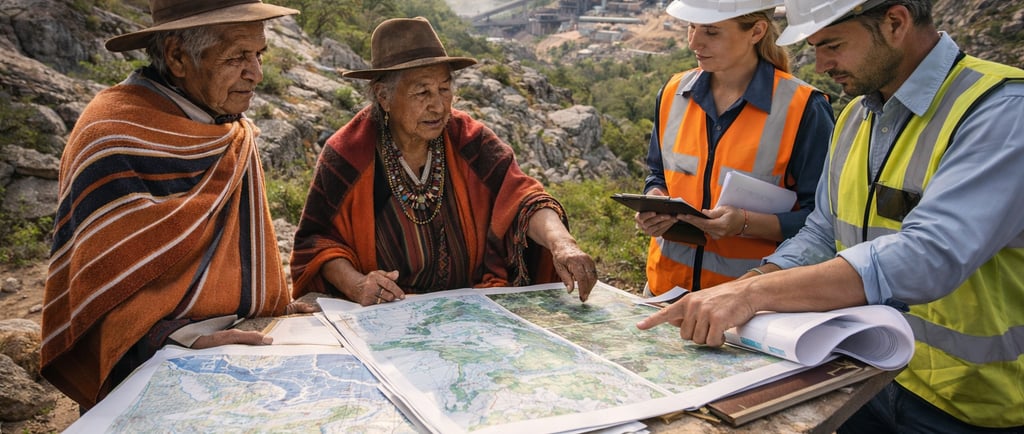
Context: The Urgency of Cultural Considerations in Industrial Development
The industrial development landscape has shifted dramatically over the last decade—especially in resource-rich geographies with pronounced cultural significance. According to the World Bank, over 370 million Indigenous people reside in or hold title to about 20% of the Earth’s land surface. These lands often intersect with mineral deposits, energy corridors, and other industrial projects.
The consequences of neglecting cultural impacts are substantial: the global average for project delays due to community conflict is 35% for resource projects, adding an average of $20 million per week in delay costs, as detailed in a Harvard Kennedy School report (Davis & Franks, 2014). Additionally, fatal flaws in cultural engagement often lead to litigation or project refusal, with the Inter-American Development Bank documenting that 60% of project suspensions relate directly to social and cultural concerns.
Today’s regulatory climate reflects this urgency. In countries such as Australia and Canada—home to rigorous legal frameworks like the Native Title Act and the Canadian Impact Assessment Act—early cultural impact consideration isn’t just good practice, it’s a non-negotiable element for project approval. Similarly, emerging requirements under the European Union’s Corporate Sustainability Reporting Directive and US SEC ESG disclosure rules force multinational metals and energy firms to prove robust cultural diligence.
Communities themselves are more organized and vocal than ever. Social media empowers both information sharing and activism, often outpacing formal legal redress in generating reputational challenges for companies. The cultural integrity, land stewardship, and inclusion of marginalized voices are now table stakes for project legitimacy.
2. Defining the Problem and Opportunity
Problem: Marginalization and Underweighted Culture
Historically, Environmental and Social Impact Assessments (ESIAs) gave culture a narrow scope, often captured as a box-ticking exercise—leading to a fundamental misalignment between developers, regulatory authorities, and affected communities. For example, a 2019 study by the International Association for Impact Assessment revealed that fewer than 28% of ESIAs in high-impact mining projects appropriately documented cultural sites or practices, and less than 10% took Indigenous governance systems into account.
This underweighting incubates five core operational risks:
Mistrust: Loss of credibility among local communities and NGOs.
Delay: Higher likelihood of protests or court injunctions.
Financial Exposure: Unanticipated costs for mitigation or redesign.
Regulatory Setbacks: Increased chances of non-compliance or review.
Reputational Damage: Negative media coverage and lower ESG scores.
Opportunity: Integrating the Cultural Lens
Conversely, developers who adopt a proactive CIA approach—prioritizing local knowledge, traditions, and governance—are proven to achieve faster permitting, reduced conflict, and increased shared value creation. A 2022 report by McKinsey & Co. estimated that projects with deep, early cultural inclusion were 60% more likely to come online on time and 50% less likely to experience major community opposition.
What’s more, embedding equity and local governance in the design process can cultivate broader economic participation—expanding employment, supply chain inclusion, and skills development among historically marginalized groups.
Key Opportunity Areas:
Building “cultural capital” that improves local relations and long-term viability.
Reducing costly retrofits and penalties through early-stage cultural alignment.
Unlocking access to sustainability-linked finance and premium market channels, especially as metals and materials buyers look for strong cultural compliance (for example, BMW and Tesla now require traceable cultural and human rights safeguards in their supply chains).
3. Operational Stakes: Why Developers and ESG Teams Must Act
The stakes for operationalizing a robust CIA framework couldn’t be higher. Let’s break down the key drivers with added data and strategic analysis:
Regulatory Risk Intensifies:
The volume and granularity of cultural regulatory requirements have exploded. More than 70 nations now require some form of cultural assessment or Indigenous consultation for resource and infrastructure projects (UN Environment Programme, 2023). In Canada, the landmark 2021 Supreme Court ruling (Clyde River vs. Petroleum Geo‑Services) enshrined Indigenous consent as a legal hurdle—rendering “consultation failures” grounds for immediate project suspension.
Community Opposition = Real Cost:
Research by the International Council on Mining and Metals demonstrates that projects facing sustained community opposition average 24 months in permitting delays—often reducing Net Present Value (NPV) by as much as 25%. In Chile’s Pascua Lama case, protests around water and cultural ritual sites led to national regulatory stoppage and eventually, project abandonment, costing the developer nearly $8 billion.
ESG Ratings and Investor Scrutiny:
ESG ratings matter more than ever—BlackRock, the world’s largest asset manager, now flags projects with poor cultural impact disclosure as “high risk,” potentially excluding them from $9 trillion in sustainability-leaning funds. Moody’s and S&P Global include cultural due diligence in their ESG risk assessment algorithms.
Global Supply Chain Imperative:
Leading auto and electronics companies, pressured by policy and public opinion, now require suppliers to demonstrate compliance with cultural due diligence. For instance, under the European Battery Regulation, battery metals must be “sourced and processed in a manner that protects social and cultural rights” or risk exclusion from the EU market starting 2026.
Case-in-Point: Anglo American’s Quellaveco copper project in Peru adopted a CIA model, resulting in 52 signed community agreements, zero legal injunctions, and a 20% increase in local hiring—a clear competitive edge in global supply contracts.
4. Key Concepts: Cultural Impact, Equity, Governance, and Community
Let’s expand and illustrate these core terms, anchoring them with examples and recommended best practices.
Cultural Impact:
The scope of cultural impact spans tangible sites—such as burial grounds and sacred natural features—and intangible elements, including languages, oral histories, and rituals. For instance, in Papua New Guinea, mining near Mount Fubilan posed risks not just to landforms but to the storytelling traditions and seasonal festivals vital for identity transmission.
Equity:
Equity isn’t merely about fair compensation—it’s about recognition and remedy for historic disadvantage. The key is procedural equity—ensuring everyone, including women and youth, has a real seat at the table during negotiations. On Australia’s Pilbara iron projects, shifting hiring quotas and procurement to favor Indigenous-owned businesses increased local wage inflows by 33% over five years (Australian Institute of Aboriginal and Torres Strait Islander Studies, 2020).
Governance:
Traditional governance may involve consensus-building, clan councils, or sacred custodians—systems that often conflict with Western corporate protocols. Best practice involves the explicit mapping and integration of both customary law and statutory requirements. A world-leading example is Canada’s Impact and Benefit Agreements (IBAs), which formalize Indigenous leadership in decision-making and project oversight.
Community:
“Community” must be understood as a dynamic and intersectional entity. While Indigenous groups may have recognized leadership, other subgroups—such as recent migrants, neighboring villages, or urban traditionalists—can hold legitimate interests. Effective CIA processes map all relevant actors and ensure cross-representational inclusion at every phase.
5. A Practical Framework for Cultural Impact Assessments at Industrial Sites
A strong Cultural Impact Assessment does not begin with a survey form, a permit checklist, or a consultant’s site visit. It begins with a shift in how the project is defined. The site is not just a parcel, lease block, corridor, pit, plant, rail spur, tailings area, access road, port interface, or transmission route. It is also a lived cultural landscape, often layered with memory, ceremony, livelihood, kinship, identity, language, burial, seasonal use, governance, and obligations to future generations. That distinction matters because the largest failures in industrial development usually happen when companies assess only the footprint they intend to build, rather than the cultural system they are about to disturb. International standards are now much clearer on this point. IFC Performance Standard 7 requires culturally appropriate engagement with Indigenous Peoples throughout the project process and, in certain circumstances, Free, Prior and Informed Consent. OECD due diligence guidance also frames responsible business conduct as an ongoing process of identifying, preventing, mitigating, and accounting for adverse impacts across operations and value chains. UNESCO’s current impact assessment guidance likewise stresses that cultural and heritage assessment must evaluate risks early, consider alternatives, and address cumulative effects rather than treating heritage as an afterthought.
The most useful way to structure a CIA in 2026 is as a seven-layer operating framework. The first layer is cultural baseline intelligence. This goes beyond mapping known heritage sites. It includes intangible cultural practice, language use, seasonal mobility, customary authority, ritual geographies, story places, historical trauma, intergenerational use patterns, and the difference between public cultural knowledge and knowledge that is restricted or sacred. If a company only documents what is already visible in a state registry, it is already behind. That was one of the lessons reinforced after the 2020 destruction of the 46,000-year-old Juukan Gorge rock shelters in Western Australia, where formal approvals existed, but the legal framework and company processes still failed to protect cultural heritage of extraordinary significance. Australia’s parliamentary inquiry later described serious deficiencies in Indigenous cultural heritage protection and exposed how procedural compliance can coexist with cultural failure.
The second layer is rights and governance mapping. One of the most common CIA weaknesses is that developers identify stakeholders but fail to identify decision-making authority. In practice, that means they engage the most visible representatives, or those most convenient to schedule, rather than the institutions that actually carry cultural legitimacy. Canada’s current federal guidance is explicit that impact assessment must address impacts on the rights of Indigenous peoples and that, where communities have their own consultation protocols or methodologies, those must shape the assessment approach. That is a major point. It means the CIA cannot be fully standardized across jurisdictions. It must be adaptable to Indigenous law, local protocol, and community-designed process.
The third layer is pathways of impact. A serious CIA does not ask only, “Will the project damage a site?” It asks, “How exactly could this project alter cultural continuity?” That includes direct physical disturbance, restricted access, hydrological change, noise, vibration, dust, visual intrusion, worker influx, land use conversion, road access for outsiders, security controls, contamination, and schedule interference with seasonal practice. Cultural loss often happens through indirect pathways. A sacred site can remain physically untouched while the project still destroys the cultural conditions that gave the site meaning. UNESCO’s impact assessment framework and ICOMOS heritage guidance both push strongly toward this broader causal logic, especially through cumulative and setting-related effects.
The fourth layer is alternatives analysis. This is where many CIAs remain weak because they document impacts but do not compare design choices rigorously enough. Good practice requires testing route alternatives, micro-siting changes, buffer distances, restricted work seasons, visual shielding, haul road changes, blasting windows, water management redesign, and no-go areas. If the CIA cannot show that alternatives were considered before the design hardened, communities will often read the whole process as theater. OECD guidance and EU due diligence rules both reinforce that businesses are expected to identify and address adverse impacts in a risk-based, preventive way, not simply record them once they become expensive. That expectation is becoming more commercial, not less. The EU Battery Regulation has imposed due diligence obligations on in-scope battery economic operators from 18 August 2025, and the Corporate Sustainability Due Diligence Directive entered into force on 25 July 2024, adding further pressure on supply chains to demonstrate real impact management rather than symbolic consultation.
The fifth layer is consent, agreement, and cultural control. Not every jurisdiction uses the same legal language, but the direction of travel is clear. UNDRIP recognizes the rights of Indigenous peoples to participate in decision-making and requires Free, Prior and Informed Consent in specific contexts, including relocation. OHCHR guidance emphasizes that consultation should occur through Indigenous peoples’ own representative institutions in good faith, with the objective of obtaining consent before measures that affect them are adopted. IFC and ICMM frameworks have also moved further toward requiring stronger evidence of agreement for impacts on Indigenous rights. In 2024, ICMM updated its Indigenous Peoples and Mining position statement, reinforcing member commitments to respect Indigenous rights. In 2025, IRMA issued updated supplementary guidance on Indigenous Peoples and FPIC, reflecting the same direction of travel in assurance and certification systems. In other words, the market is moving toward a higher bar, even where domestic law remains uneven.
The sixth layer is benefits, remedy, and cultural continuity investment. A CIA should not end with mitigation. It should ask what conditions are required for culture to remain viable over the life of the project. Sometimes that means avoidance and access protection. Sometimes it means language support, youth knowledge transfer, cultural ranger programs, community archives, ceremonial access protocols, cultural center funding, or community-controlled monitoring. IFC guidance is clear that mitigation and development benefits should be identified with affected communities and delivered in a timely and equitable way, with attention to local laws, institutions, and customs. This matters because many projects still over-invest in visible compensation and under-invest in cultural continuity. The result is that communities receive money while losing authority, access, or intergenerational transmission. That is not successful mitigation.
The seventh layer is monitoring, grievance handling, and adaptive governance. A CIA is not a pre-approval document. It is a live management system. ICMM’s social performance principles and grievance guidance both make clear that companies need functioning systems to receive, resolve, and learn from local concerns. Good CIA practice therefore includes cultural incident triggers, independent review, commitment registers, monitoring led jointly with community representatives, and grievance channels that are locally accessible and culturally appropriate. The strongest systems track whether commitments were actually delivered, whether access remained intact, whether community trust held during operational change, and whether new impacts emerged that were not visible at baseline. This is where weak projects break. They produce elegant reports and then fail at operating discipline.
A useful way to think about the framework is this: a CIA should do four jobs at once. It should identify cultural significance accurately, predict impact pathways honestly, change project design materially, and create an operating system that communities can test in real time. If it does only the first two, it is descriptive but weak. If it does only the third, it may reduce harm but still lack legitimacy. If it does only the fourth, it becomes a grievance machine instead of a planning tool. The best CIAs do all four.
6. A Step-by-Step Delivery Process That Works in the Real World
The delivery process matters as much as the framework because many CIA failures are sequencing failures. The company engages too late, discloses too little, locks the design too early, uses the wrong counterpart, or treats culturally sensitive knowledge like ordinary project data. When that happens, the technical quality of the report cannot save the process.
Step one is pre-feasibility screening. Before serious engineering hardens, the project team should run a cultural constraints scan across the entire area of influence, not just the direct footprint. That scan should flag known heritage records, Indigenous territories, seasonal use corridors, burial landscapes, historic routes, ritual sites, protected areas, legal triggers, and pending claims. The purpose is not to complete the CIA immediately. The purpose is to identify whether the project concept itself carries cultural fatal flaws. UNESCO’s impact assessment guidance is clear that early assessment is what allows alternatives to be considered in time to shape decisions.
Step two is protocol-building before data-gathering. This is where the company asks a different opening question: not “Can we start the study?” but “How should this study be conducted, by whom, under what rules, and with what protections for knowledge?” In many places, communities have their own consultation protocols or impact assessment methods. Canada’s guidance now explicitly states that where communities have their own methodologies for assessing impacts on their rights, the federal approach should adapt to respect them. This principle should be adopted by proponents even where the law does not force it. It changes the tone of the process from extraction of information to co-design of method.
Step three is governance and representation verification. Companies routinely underestimate how important this is. Formal titleholders, hereditary leaders, elected councils, women’s groups, elders, land users, youth, and neighboring communities may each hold different forms of authority. A project that signs the wrong agreement with the wrong counterpart can create a second conflict before the first is even understood. The solution is to document governance structure transparently, confirm representation rules in writing, and avoid assuming that statutory recognition automatically captures cultural legitimacy. IFC guidance specifically notes the need to involve representative bodies and organizations, including elders’ councils or village councils, and to allow sufficient time for Indigenous decision-making processes.
Step four is baseline research using mixed methods. Desktop review is necessary but insufficient. A strong baseline combines archival research, oral history, participatory mapping, seasonal calendars, site walks, language-sensitive interviews, intergenerational dialogue, and cultural use mapping. It also distinguishes between what can be published, what can be summarized anonymously, and what must remain confidential. Cultural data governance is a major issue in 2026 because the spread of drones, GIS layers, mobile apps, and AI-assisted document systems has made it easier to store and share sensitive information in ways communities did not authorize. The right approach is least-exposure data design: record what is necessary, protect what is restricted, and never assume all heritage data belongs in a corporate database.
Step five is significance assessment. Here the project team and community need to establish what matters, why it matters, to whom, and under what conditions significance changes. This is where many industrial CIAs remain too museum-like. They identify objects and features but miss relationships and practice. A place may be significant because it anchors a migration route, a ceremony cycle, a clan story, or a teaching sequence. Significance is not only archaeological age, visual distinctiveness, or legal listing status. Juukan Gorge is again instructive here. The caves were archaeologically extraordinary, but the broader lesson was that significance had been narrowed by a system unable to account for Indigenous living value in a way that could actually stop destruction.
Step six is impact pathway analysis. This is the engineering and social interface stage. The CIA team should work directly with mine planners, plant designers, route engineers, blasting specialists, logistics planners, and operations managers. Each project component should be tested for direct, indirect, induced, and cumulative cultural effects. For industrial sites, the most underestimated impact pathways are usually water regime change, access restrictions, visual dominance, camp-related social pressure, and traffic corridor effects. That is because they often sit outside narrow heritage permitting systems while still producing serious cultural consequences.
Step seven is alternatives and redesign. At this point, the CIA has to force decisions. Can a waste dump move. Can a road alignment shift. Can the blasting calendar avoid ceremonial periods. Can a buffer be widened. Can a viewpoint be screened. Can a pipeline be buried differently. Can a port loading pattern change. Can worker codes and access controls reduce disturbance. If the answer is no across the board, the project should show why. But in practice, many cultural conflicts can be reduced only when the CIA arrives before the cost of redesign becomes politically or financially unacceptable.
Step eight is negotiation over avoidance, mitigation, benefit-sharing, and authority. This is where the process becomes real. Communities need enough disclosed information, enough time, and enough independent support to negotiate from a position that is not structurally weak. OHCHR guidance on consultation and FPIC stresses good faith, representative institutions, and consent-seeking before affecting Indigenous Peoples. IFC makes clear that where FPIC circumstances apply, the process should produce documented evidence of agreement and the mutually accepted process used to reach it. In practical terms, a company should not treat this stage as stakeholder management. It is governance formation.
Step nine is integration into the approval package and operating system. Too many CIAs die at submission. The report goes to the regulator, while the project execution team moves on. Strong projects instead convert commitments into contract clauses, site procedures, engineering controls, induction content, procurement rules, land access protocols, emergency planning, and board-level risk registers. This is where the CIA stops being a document and becomes management infrastructure.
Step ten is implementation, monitoring, and correction. Monitoring has to be joint, regular, and decision-linked. If monitoring reveals that cultural access has degraded, or a grievance cluster is emerging, or a mitigation is not working, there must be a pre-agreed process for correction. ICMM grievance guidance and site-level grievance practice across mining both show that accessible systems with tracked resolution metrics are essential. What matters is not just whether a complaint can be filed, but whether the system can detect patterns early enough to prevent escalation into a permitting, reputational, or operational crisis.
This is also where digital practice has to improve. A growing number of companies now use dashboards for social performance, but many still measure activity instead of outcomes. Counting meetings, workshops, or MoUs signed is easy. Measuring whether people retained access, whether trust held after a blasting event, whether youth still participate in cultural practice, or whether sacred knowledge remained protected is harder. Harder does not mean optional. It means the process is finally measuring what matters.
One of the clearest real-world illustrations of a longer-horizon engagement model comes from Anglo American’s Quellaveco copper project in Peru. The company describes an 18-year journey of engagement with local communities, and evidence submitted to the UK Parliament emphasized that the dialogue table produced public commitments on water, local employment, and procurement, helping build broad social and political support for the project. More recently, Anglo American has continued to highlight local supplier localization and host-community procurement around Quellaveco. That does not mean the project should be romanticized, but it does show what industrial developers often resist admitting: early, structured, negotiated social process is not dead weight. It is part of what makes execution possible at scale.
7. Measurement and Quality Assurance: What to Track and How to Prove It Works
Measurement is where most CIAs become weak, because many companies still report effort instead of effect. They tell you how many meetings were held, how many people attended, how many brochures were translated, or how many heritage sites were recorded. Those metrics have some value, but they do not answer the central question: did the project preserve cultural integrity while remaining workable as an industrial operation?
A serious measurement system needs five categories of indicators. The first category is process integrity. This includes whether the right rights-holders and cultural authorities were engaged, whether participation happened early enough to influence design, whether communities had time to use their own decision-making processes, whether information was disclosed in accessible form, and whether sensitive knowledge was protected according to agreed protocols. These are threshold metrics. If they fail, the rest of the system is shaky. IFC and OHCHR standards make these procedural requirements central, not optional.
The second category is design influence. This measures whether the CIA changed the project. How many route changes were made because of cultural concerns. How much infrastructure was re-sited. How many no-go areas were defined. What seasonal restrictions were adopted. What visual, noise, or access controls were added. A CIA with no design changes is not automatically bad, but it should trigger scrutiny. In high-sensitivity landscapes, the absence of meaningful redesign often means the process began too late or the cultural baseline was too shallow.
The third category is outcome protection. This is where the system must move beyond physical heritage avoidance alone. Did communities retain access to important places. Did ceremonies continue without new disruption. Did seasonal use change. Did youth participation in cultural activity hold or fall. Were oral history, language, or knowledge transfer practices affected by worker influx, land access change, or environmental stress. Did women, elders, and land users report different impacts than formal leadership. These are harder metrics, but they are closer to the real question of cultural continuity.
The fourth category is relationship quality and confidence. ICMM’s social performance principles and grievance guidance point in this direction, even if industry reporting still lags. Relationship quality can be measured through commitment fulfillment rates, grievance trends, response times, unresolved issue age, trust surveys designed with communities, re-engagement rates after incidents, and independent perception review. The best systems do not wait for protest to discover distrust. They measure fragility early.
The fifth category is governance resilience. This asks whether the arrangements created through the CIA remain workable under pressure. If site leadership changes, does the agreement still hold. If commodity prices fall, are cultural commitments preserved or quietly weakened. If the project expands, is there a re-consent or re-assessment trigger. If a contractor causes a cultural incident, is accountability clear. Governance resilience is crucial because many industrial failures happen years after the original approval, when the people who negotiated the commitments have moved on.
Quality assurance then sits on top of these indicators. In practice, QA should include at least six disciplines. First, independent review of methodology, especially where critical cultural heritage or Indigenous rights are involved. IRMA, IFC, and UNESCO-aligned practice all push toward stronger review where impacts are serious.
Second, traceable evidence management. Every conclusion in the CIA should be linked to source material, field evidence, or community-validated interpretation, with clear controls for restricted knowledge. If a regulator, lender, auditor, or community review body asks how a conclusion was reached, the chain of evidence should be visible without exposing confidential cultural data.
Third, joint verification. Where possible, communities should verify site boundaries, significance determinations, and impact characterizations before they are finalized. This reduces downstream conflict over what the report did or did not say.
Fourth, trigger-based review. The CIA should not be revised only on a fixed calendar. It should also reopen when material changes occur, such as new drilling zones, route changes, operating expansion, workforce growth, new contractor packages, new access roads, spills, blasting incidents, or evidence that mitigation is failing.
Fifth, contractor integration. Many cultural incidents are caused not by the asset owner’s core team but by contractors, subcontractors, transport operators, security providers, or field survey teams. QA therefore has to extend into procurement, induction, supervision, and enforcement.
Sixth, public accountability with protected confidentiality. This is a difficult balance but a necessary one. Communities and investors increasingly expect transparency, while cultural custodians may rightly restrict disclosure of location or meaning. The best solution is layered reporting. Public reports disclose commitments, governance, and results. Restricted annexes hold sensitive information. That is far better than full secrecy on one side or reckless disclosure on the other.
What should the actual metric set look like. A practical CIA dashboard for an industrial site should track, at minimum, the percentage of commitments delivered on time, number and severity of cultural incidents, proportion of mitigation measures independently verified, grievance closure time, number of design changes attributable to cultural assessment, number of access restrictions created and resolved, satisfaction with consultation among different community groups, and frequency of joint monitoring meetings held versus planned. It should also include qualitative indicators, because cultural protection cannot be reduced to only numeric output. The narrative findings from elders, land users, and community observers are often the early-warning system for impacts that formal KPIs miss.
There is now a strong commercial reason to take this seriously. EU due diligence rules, the Battery Regulation, lender expectations, industry assurance systems, and investor scrutiny all move in the same direction: companies will increasingly be asked not just whether they consulted, but whether they can show they prevented, mitigated, tracked, and corrected adverse impacts on people and heritage across the project life cycle.
8. Case Patterns from Around the World
The most important case pattern is failure through legal formalism. Juukan Gorge remains the most famous example. Rio Tinto had legal permissions, but the 2020 blast destroyed Aboriginal heritage of enormous cultural and archaeological importance. The parliamentary inquiry that followed did not treat the event as a simple site management error. It exposed structural defects in heritage law, consultation practice, and corporate decision-making. The lesson is direct. A project can be technically compliant and still be culturally indefensible. That is exactly why a strong CIA must be designed as a decision-shaping and governance-shaping process, not just a compliance document.
The second case pattern is success through long-horizon negotiated legitimacy. Quellaveco in Peru is often cited for this reason. Anglo American has publicly described an 18-year engagement journey, while external evidence to the UK Parliament highlighted how dialogue led to commitments on water, employment, and procurement that helped build support. In 2026, the company is still emphasizing localization of supplier capacity around the operation. The point is not that the project is beyond criticism. The point is that industrial developments with major social and cultural exposure usually need years of trust-building, transparent negotiation, and institutionalized commitments if they are to move from contested proposal to durable operation.
The third case pattern is improvement through rights-based assessment reform. Canada’s current impact assessment guidance gives a clearer methodological place to impacts on the rights of Indigenous peoples and explicitly recognizes Indigenous-designed consultation protocols and assessment methods. That shift matters because it gives proponents and regulators less room to pretend that culture is peripheral to project assessment. It is being pulled closer to the center of decision-making.
The fourth case pattern is market pressure through downstream regulation. The EU Battery Regulation and the Corporate Sustainability Due Diligence Directive make it harder for global supply chains to ignore upstream cultural and human rights risk. That pressure will not affect every site equally, but it will affect many of the sectors that sit closest to industrial metals, energy transition minerals, battery materials, electronics, and automotive manufacturing. For projects targeting those value chains, the CIA is no longer only about getting the local permit. It is also about remaining bankable, sellable, and certifiable in export markets.
9. What Strong Projects Do Differently
Strong projects treat the CIA as an early design input. Weak projects treat it as a late-stage report.
Strong projects ask communities how the assessment should be done. Weak projects ask communities to comment on a method that has already been fixed.
Strong projects separate public information from restricted knowledge and respect cultural data protocols. Weak projects gather sensitive knowledge casually and store it like ordinary project data.
Strong projects map authority carefully, including women, elders, land users, and less visible rights-holders. Weak projects speak to whoever is easiest to identify.
Strong projects test alternatives seriously and can show where culture changed engineering. Weak projects produce long mitigation lists because they refused to change the design when it was still affordable.
Strong projects attach commitments to contracts, budgets, site procedures, and executive accountability. Weak projects leave the CIA in the permitting file.
Strong projects keep monitoring after operations begin and use grievances as learning data. Weak projects treat grievances as public-relations noise.
Strong projects understand that cultural continuity is a business stability issue. Weak projects discover that fact only when drilling stops, permits freeze, or investors start asking harder questions.
10. Future Outlook: What Changes Between 2026 and 2030
Between now and 2030, the CIA field is likely to change in five important ways.
First, supply-chain pressure will tighten. With the EU Battery Regulation already in force for due diligence obligations since August 2025 and the CSDDD now part of the EU legal architecture, companies in metals and industrial supply chains will face stronger demands to evidence upstream impact management. That will push CIAs closer to procurement, assurance, and investor reporting systems.
Second, Indigenous-led assessment models will expand. Canada’s evolving guidance already reflects this direction, and broader international practice is moving toward greater respect for Indigenous methodologies, protocols, and authority structures. By 2030, the strongest projects will likely be those able to work with parallel or co-governed assessment systems rather than trying to absorb everything into one corporate template.
Third, cumulative impact logic will become harder to avoid. UNESCO and ICOMOS guidance already emphasize cumulative effects. As industrial corridors densify around ports, transmission infrastructure, renewables, mines, refineries, and logistics networks, single-project CIAs will increasingly be judged inadequate unless they account for regional layering of impact.
Fourth, assurance will get sharper. IRMA’s continued work on Indigenous rights, FPIC, and cultural heritage points toward more detailed scrutiny from auditors, not less. Companies that still rely on generic stakeholder engagement language will find that language aging badly.
Fifth, digital risk will rise. AI transcription, geospatial platforms, drones, and integrated social data systems can improve baseline quality and monitoring speed, but they can also expose sacred knowledge, erase context, or centralize control over information that communities expected to remain theirs. By 2030, one of the defining questions in CIA practice may be not just who was consulted, but who owns the data, who can interpret it, and who can stop it being misused.
The broad direction is clear. The future CIA will be more rights-based, more design-linked, more data-sensitive, more assurance-driven, and more continuous over the life of the asset.
11. Conclusion
Cultural Impact Assessments for industrial sites have moved out of the margins. They now sit at the center of project legitimacy, operational continuity, and market access. The old model treated culture as a subheading inside environmental and social reporting. The emerging model treats culture as a planning variable, a rights issue, a governance issue, a finance issue, and a long-term operating issue at the same time.
That shift is happening because the evidence is now too strong to ignore. Conflict is expensive. Delay is expensive. Heritage destruction can become a global scandal in hours. Regulators, investors, customers, and assurance systems are all asking harder questions. International standards are clearer. Community expectations are higher. And many of the sectors building the industrial systems of the next decade, especially mining, energy, batteries, logistics, and infrastructure, are operating in or near places where culture is inseparable from land, water, and authority.
The practical answer is not difficult to state, even if it is demanding to execute. Start earlier. Map rights as carefully as sites. Let communities shape the method. Test alternatives before designs harden. Protect restricted knowledge properly. Build consent and agreement into the process where rights require it. Convert commitments into operating systems. Measure effects, not just effort. Reopen the assessment when conditions change.
Projects that do this well will not only reduce harm. They will make better decisions, earn more durable legitimacy, and protect themselves from the kinds of failures that now define entire corporate reputations. Projects that do not will keep learning the same lesson at a far higher cost.
Connect
Your trusted partner for scrap metal procurement.
CONTACT
About
haroon@tdcventures.com
+1-307-655-7593
© 2025. All rights reserved.
NEWSLETTER