
Digital Volunteer Hubs: Event-to-Impact Tracking with AI Engagement
Discover how digital volunteer hubs with AI engagement and event-to-impact tracking can quantify and amplify circular economy outcomes from community events.
AI & DIGITAL ENGAGEMENT IN SUSTAINABILITY
Instant Answer
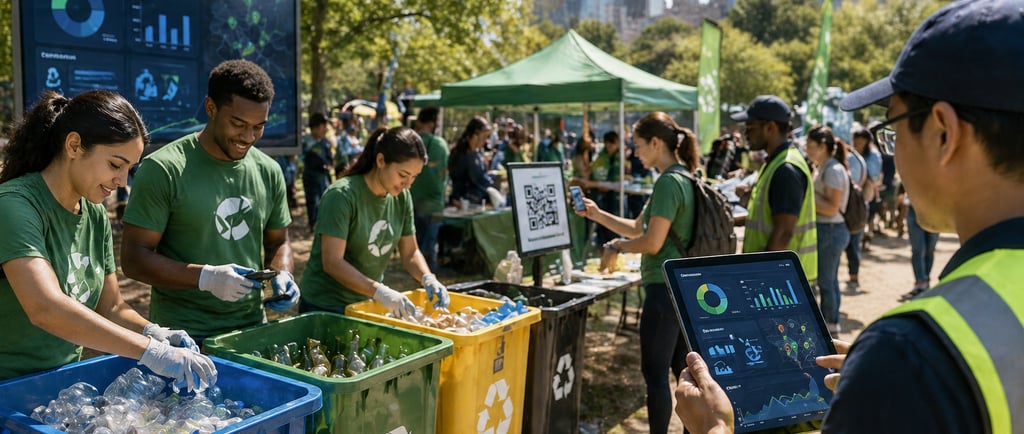
Digital volunteer hubs revolutionize community engagement by leveraging AI engagement tools and digital tracking. These platforms automate event operations, enable real-time tracking of volunteer actions, and use recycling and circularity apps to promote sustainable behaviors. The result: NGOs, city programs, and CSR initiatives can easily quantify, validate, and amplify the impact of volunteer participation, from awareness to demonstrable sustainability outcomes.
Table of Contents
Context: The Impact Imperative for Digital Volunteer Hubs
Problem and Opportunity: Why Event-to-Impact Matters
Key Concepts and Definitions
The Event-to-Impact Framework
Step-by-Step Implementation Playbook
Measurement and QA: Metrics for Circular Impact
Case Patterns and Example Scenarios
FAQs
Embedded Five-Layer Distribution & Reuse Toolkit
Likely Market Gaps and Upgrades
1. Context: The Impact Imperative for Digital Volunteer Hubs
Municipal governments, nonprofit organizations, and circular economy programs are encountering a new wave of demand—from funders, local regulators, and the public—to demonstrate not only how many people participate in community sustainability events but also what real, measurable environmental or social impact results. This “impact imperative” is reshaping both the metrics of success and the technologies used by organizations passionate about driving meaningful change.
Why this shift now?
Over the past five years, the convergence of AI engagement, cloud-based tracking, and mobile recycling apps has transformed the landscape of volunteer management and impact reporting. Tech-forward organizations have outgrown traditional paper sign-in sheets and anecdotal storytelling about impact. Instead, stakeholders now expect verified, specific data: tons of e-waste recycled, kilograms of plastic diverted, or measurable increases in city-wide composting rates tied back to programs and events.
The proliferation of digital tools is also a response to donor expectations and public accountability. In 2023, a Gartner report highlighted that over 60% of sustainability funders now require quantified, attributable outputs—not just overall participation numbers (Gartner, 2023). At the same time, global initiatives supporting the circular economy, such as the Ellen MacArthur Foundation and local zero-waste movements, increasingly emphasize behavior change over passive attendance.
A digital volunteer hub that seamlessly links event registration, engagement analytics, and real-world action data is no longer a luxury. It’s become foundational for operational efficiency, funding competitiveness, and building lasting public trust. For organizations serious about climate action or social innovation, this is now an organizational mandate.
2. Problem and Opportunity: Why Event-to-Impact Matters
The Problem
Most legacy volunteer management systems are designed for administrative convenience rather than meaningful reporting. Their limitations include:
Manual or paper-based processes prone to errors and data loss.
Disconnected data streams: event attendance lives in one system, while recycling or upcycling app data sits elsewhere with no closed-loop integration.
Minimal feedback or recognition for volunteers, often resulting in declining engagement.
Difficulty in translating activity into meaningful, auditable impact for grant applications or corporate social responsibility (CSR) disclosures.
A 2022 study by TechSoup revealed that 70% of NGOs cite gaps in tracking post-event volunteer activities, making it hard to demonstrate continued engagement or sustained circular behavior change.
The Opportunity
AI-powered digital volunteer hubs, integrated with recycling apps, represent an opportunity to radically improve public sustainability outcomes:
Seamless Data Integration: Volunteers’ action data can be tracked, validated, and aggregated in real time, eliminating silos.
Behavioral Science Meets Technology: Automated nudges, gamified feedback, and digital rewards drive higher participation and repeated action, closing the gap between awareness and long-term behavioral change.
Data-Driven Decision Making: Program leaders get actionable insights granulated by geography, material type, or demographic, enabling targeted improvements and powerful reporting.
Operational Stakes:
Funding and Recognition: Grants and sponsorship are increasingly contingent on evidence of change, not simply activity.
Volunteer Retention: Showcasing impact and offering instant recognition leads to improved satisfaction and lower attrition rates. As per a 2023 VolunteerMatch survey, retention improves by up to 25% in programs that provide instant, digital recognition.
Policy Influence: Reliable, quantified data enables municipalities and environmental NGOs to advocate for more ambitious policies and resources.
In summary, bridging the gap between events and verified, sustainable impact isn’t just a technological upgrade—it’s the new battleground for credibility and influence in the nonprofit and municipal sectors.
3. Key Concepts and Definitions
Understanding the terminology is essential to implementing or advocating for digital volunteer hubs and event-to-impact tracking. Here are key concepts:
AI Engagement: The use of artificial intelligence to deliver personalized, automated communications—ranging from event reminders and tailored sustainability tips to post-action recognition. AI engagement provides a data-driven means of nudging volunteers toward desired behaviors.
Digital Volunteer Hub: A centralized, interactive portal or app where volunteers register for events, communicate with organizers, and track their impact. The hub typically integrates with third-party recycling, repair, or upcycling apps, providing a seamless journey from signup to action.
Event-to-Impact Tracking: The strategic integration of attendance, participation, and action data, linking every registered event with tangible, validated sustainability (or social) outcomes.
Circular Behavior Change: The process of moving individuals and communities from one-off engagement (event attendance) to ongoing, habit-forming behaviors—such as regular recycling, consistent repair, or lifestyle shifts that support the circular economy.
Recycling Apps: Mobile platforms and digital tools that support and verify circular actions (recycling, composting, repair), often through scanning barcodes/QR codes, geotagging, or digital photo uploads.
Impact Reporting Dashboard: A real-time or periodic summary of outcomes visualized via charts, maps, and leaderboards, tailored for various stakeholders—volunteers, funders, sponsors, and policymakers.
Understanding and aligning with these concepts is vital for any organization or program looking to maximize sustainability outcomes through technology.
4. The Event-to-Impact Framework
From Event to Measurable Impact in Five Steps
To transform volunteer engagement events into sustained, measurable impact, programs should follow a proven five-step framework:
Align Outcomes with Circular Actions
Begin by clearly defining the circular behaviors you want to drive—such as increasing PET plastic recycling, e-waste repair, or household composting. Set specific, measurable KPIs (e.g., “Divert 1 ton of plastic waste over 12 weeks”).Digital Registration with Consent for Follow-Up
Use your digital volunteer hub to capture accurate data: name, contact details, and explicit consent for follow-up communication. Consent is crucial for privacy compliance (GDPR, CCPA, etc.) and effective engagement.AI Engagement + Behavioral Nudging
Deploy AI-driven follow-up sequences. This could include:Automated, personalized reminders for next actions.
Micro-challenge invitations (“Log your next recycling scan to climb the leaderboard!”).
Dynamic content delivered by the volunteer’s preferred channel (email, SMS, in-app).
These nudges are highly effective—behavioral science research shows that well-timed digital nudges can increase circular action rates by up to 40%.
Track, Validate, and Reward Actions
Integrate recycling or repair apps. Volunteers validate actions via barcode scans, QR codes, or app-based photo evidence. Instantly recognize achievements with digital badges, points, and progress on a public leaderboard. Such gamification can boost sustained action and peer-to-peer encouragement.Aggregate, Visualize, and Report
Centralize all data in your impact dashboard. Overlay event-to-action conversion rates, highlight demographic or neighborhood trends, and showcase repeat volunteerism. Automatically prepare reports for internal review, funders, or public sharing.
Worked Example: Improving City Plastics Recycling
Target Niche: A municipal recycling program aims to improve community plastics recycling.
Event: “Spring Clean City Park” enlists 250 volunteers, registered through the city’s digital hub.
Outcome: Increase post-event recycling participation and diversion volume in local neighborhoods.
AI Engagement Plan:
Pre-event: Attendees opt in and receive recycling app download prompts.
First week: Personalized messages encourage first scans (“Snap and scan your bag for instant points!”).
Ongoing: Weekly leaderboards and “challenge rounds” drive ongoing action.
Action Tracking: App scans of barcoded recycling bags capture and verify each action, geotagged to track community-wide engagement.
Reporting: Real-time dashboard shows 170 of 250 volunteers participating post-event, yielding an estimated 700 kg of plastic recycled and a 42% repeat engagement rate—figures that impress stakeholders and pave the way for further funding.
5. Step-by-Step Implementation Playbook
To guarantee successful implementation of a digital volunteer hub with AI-driven event-to-impact tracking, follow this detailed stepwise checklist:
Define Circular Behaviors and KPIs. Set quantifiable goals aligned with your community’s circular economy strategy.
Select a Robust Volunteer Hub. Opt for platforms supporting AI engagement and direct integration with recycling or repair apps. Feel free to pilot open-source or SaaS solutions before a larger rollout.
Craft Smart Digital Registration Forms. Secure required consents and pre-qualify volunteers for digital engagement.
Map the Data Flow. Chart registration, event reminders, action logging, and dashboard integration—closing the loop between attendance and outcome.
Integrate Behavior-Tracking Apps. Link or build apps for recycling, repair, or other actions, enabling barcode/QR code scanning, photo uploads, or other digital logs.
Pre-Load Engaging Campaign Content. Prepare nudges, friendly challenges, and rewards in advance to automate engagement sequences.
Train Staff and Volunteers. Ensure smooth use of digital tools and robust understanding of privacy protocols.
Run a Controlled Pilot. Test with power volunteers, refine onboarding, and iron out technical bugs.
Launch Registration and Communications. Ensure all automations (confirmation emails, reminders) are working before a full event rollout.
Checkpoint Event Operations. Use staff mobile devices or kiosks for streamlined check-ins.
Initiate Post-Event AI Engagement. Kick off follow-up prompts and ongoing nudges as soon as the event ends.
Monitor and Validate Actions. Watch for error spikes or data anomalies in reported actions; flag issues for manual review.
Reward and Recognize. Activate badges and leaderboards for instant feedback and healthy competition.
Aggregate Data Weekly. Update dashboards by event, individual, and action type to ensure accurate monitoring and review.
Generate Impact Reports Automatically. Schedule regular stakeholder updates highlighting both participation and verified action.
Diagnose and Address Weaknesses. If data drops off or patterns look suspicious, troubleshoot promptly.
Celebrate Top Volunteers. Use digital recognition and, when possible, public rewards to boost morale and encourage word-of-mouth recruitment.
Collect Feedback for Iteration. Use quick surveys or app feedback forms to capture what’s working and what’s not.
Refine and Scale. Adjust protocols in future cycles based on data and participant feedback.
Common Failure Modes (and Solutions):
Low App Conversion: If fewer than 25% of event attendees download and use the recycling app, send a personalized SMS with a simple, 1-click installation link and troubleshooting support.
Incomplete Data: Clarify consent during registration and emphasize the “why” in communications to reduce drop-off.
Post-Event Drop-Off: If engagement lags, test new formats for nudges, such as memes, challenge rounds, or public acknowledgments of top performers.
6. Measurement and QA: Metrics for Circular Impact
You can’t improve what you can’t measure. Robust digital volunteer hubs track not only event attendance but also conversion and repeat action rates. Here’s a best-practice measurement framework:
Weekly Metrics:
Number of new sign-ups with valid consents
Volunteer-to-app adoption rate (% of registered volunteers using digital tracking tools)
Percentage of volunteers logging at least one action (recycling/repair/other)
AI engagement metrics (open rates, click rates, nudge engagement)
Monthly Metrics:
Total actions logged, categorized by behavior type (recycle, repair, compost, etc.)
Volume of material diverted (in kg/tons), using standardized estimation if direct verification is unavailable
Repeat engagement rate (% of volunteers active across at least two months)
Impact by geography, demographic, or other program-relevant segments
Digital rewards claimed versus actions reported
Volunteer experience score (NPS or short-form feedback)
Example Impact Scorecard
MetricGoalLast Month (Est.)New Volunteer Sign-ups300285App Adoption (%)80%67%1+ Circular Action (%)75%54%Total Actions Logged1,000840Material Diverted (kg)500412Repeat Engagement (%)45%36%Volunteer Feedback (NPS)6562
Continuous improvement is fundamental. The most transformative programs set ambitious but achievable KPIs, monitor them in real time, and iterate their AI engagement and event strategies based on quantitative and qualitative data.
7. Case Patterns and Example Scenarios
Digital volunteer hubs work best when they move beyond event registration and become a living impact system. The strongest programs connect four things clearly: the volunteer action, the proof of that action, the behavior after the event, and the public value created.
In 2026, this matters because volunteering is recovering, but expectations have changed. In the United States, formal volunteering rose from 23.2% in 2021 to 28.3% in the 2022 to 2023 period, reaching about 75.8 million people. Virtual volunteering also became part of the mix, with 18% of volunteers participating online. That means the modern volunteer is no longer tied only to a physical event, paper sign-in sheet, or one-day service model. They expect flexibility, digital follow-up, and clear proof that their time created value.
Globally, the United Nations Volunteers program shows the same shift toward measurable contribution. In 2022, UNV reported 12,408 UN Volunteers, a 14% increase over 2021, with volunteer reports tied to Sustainable Development Goals such as peace, health, gender equality, and reduced inequalities. The important lesson for digital volunteer hubs is simple: volunteer participation gains more value when it is connected to specific public outcomes, not vague participation totals.
Case Pattern 1: Municipal Recycling Event to Household Action
A city runs a weekend recycling education event in three neighborhoods with low recycling participation. Historically, the city measured success by counting attendees, collecting photos, and estimating material collected on-site. A digital volunteer hub changes the entire measurement model.
Volunteers register through the hub, select their neighborhood, consent to follow-up, and download the city’s recycling app before the event. During the event, they scan QR codes at training stations, complete a short sorting quiz, and log their first verified action. After the event, the hub sends personalized prompts based on neighborhood, housing type, and common local contamination issues.
For example, residents in apartment buildings may receive reminders about plastic bags, food residue, and shared-bin contamination. Single-family households may receive prompts about cardboard flattening, organics separation, or collection-day timing. The goal is not to blast everyone with the same message. The goal is to connect event education to the next correct action.
A strong 12-week target might look like this:
The city signs up 600 volunteers across three events.
At least 70% complete app onboarding.
At least 50% log one verified recycling action within seven days.
At least 30% log three or more actions within 60 days.
Contamination complaints from participating zones drop by 8% to 12% over the pilot period.
The strongest version of this case pattern uses photo verification, geotagged drop-off data, and waste-hauler confirmation. This matters because cities are under rising pressure to prove results, not activity. OECD research on AI in digital government highlights responsiveness and accountability as major use cases for AI-supported public service delivery, especially when digital tools help governments manage information better and act on public needs more quickly.
Case Pattern 2: E-Waste Drive to Repair and Reuse Network
An NGO runs an e-waste collection drive at schools, community centers, and retail parking lots. The old model counts devices collected and publishes a thank-you post. The digital hub model goes further.
Volunteers register as collectors, sorters, repair assistants, or community educators. Each device category is logged at intake: laptops, mobile phones, chargers, tablets, printers, small appliances, and batteries. Items are then tagged by pathway: reuse, repair, parts recovery, responsible recycling, or hazardous handling.
The hub creates a cleaner impact story. Instead of saying “we collected 3 tons of e-waste,” the organization can report:
1,400 devices collected.
310 devices routed for repair or reuse.
680 kg of material sent to certified recycling.
92 volunteers trained on safe intake handling.
46 households referred to future repair clinics.
18 student volunteers returned for a second activity within 30 days.
This pattern matters because the circular economy is not only about recycling. The Ellen MacArthur Foundation defines circularity around keeping products and materials in circulation through maintenance, reuse, refurbishment, remanufacture, recycling, and composting. A digital volunteer hub should therefore measure higher-value outcomes such as reuse and repair before counting recycling as the default success metric.
The upgrade opportunity is huge. Most community e-waste events still treat items as a single bulk category. By adding intake tagging and repair-path tracking, the same event becomes a public education tool, a circular skills program, and a funder-ready reporting asset.
Case Pattern 3: Corporate CSR Day to Verified Community Outcome
Many corporate volunteer days suffer from the same weakness. Employees show up, wear branded shirts, take photos, and leave. The report says “200 employees volunteered for 800 hours.” That number is useful, but it does not prove environmental or social value.
A digital volunteer hub can turn a CSR day into a verified impact program. Employees register in teams, complete pre-event learning, check in on-site through QR codes, and log task outputs. For a park cleanup, that may include bags collected, litter categories, mapped hotspots, public bins audited, and local follow-up needs. For a food redistribution event, it may include meals packed, delivery zones covered, storage issues, and volunteer shift reliability.
This is where corporate sponsors gain better reporting. Instead of only counting volunteer hours, the sponsor can report community outcomes by project type, location, and beneficiary group. That helps CSR teams defend future budgets and gives nonprofits stronger renewal material.
The market timing supports this. GivingTuesday reported that Americans gave $4 billion in 2025, up from $3.6 billion in 2024. Volunteer participation also rose to 11.1 million people, compared with 9.2 million the year before. This shows a clear appetite for participation, but it also raises the bar. People and sponsors want to see where the effort went.
The best CSR volunteer hubs therefore include three layers of proof: attendance proof, task proof, and post-event effect. Attendance proof shows who came. Task proof shows what they did. Post-event effect shows what changed after they left.
Case Pattern 4: Youth Climate Ambassadors to Long-Term Behavior Change
Youth climate programs often create strong awareness but weak follow-through. Students attend a workshop, join a cleanup, post photos, and then participation fades. A digital volunteer hub can convert that energy into long-term behavior.
The hub assigns student ambassadors to micro-campaigns: plastic-free lunch weeks, school compost audits, uniform repair drives, refill station mapping, or family recycling challenges. Each action is logged through simple mobile forms, photos, or QR-coded checkpoints. The AI engagement layer sends reminders, prompts reflection, and recommends the next challenge based on prior participation.
A strong youth program should avoid turning sustainability into points alone. The better model combines recognition with learning. Students should see what their actions changed: kilograms diverted, classrooms reached, repair events hosted, families engaged, or school policy updates influenced.
This pattern fits the global volunteer trend toward inclusion and state-community partnership. The UN State of the World’s Volunteerism Report emphasizes that volunteer-state collaboration can help build more equal and inclusive societies. For schools and municipalities, youth volunteer hubs can support civic learning while producing measurable circular outcomes.
Case Pattern 5: Disaster Response Volunteers to Circular Recovery
After floods, storms, fires, or large public disruptions, communities often face a surge of material waste: damaged furniture, appliances, textiles, packaging, construction debris, and household goods. Standard emergency volunteer systems focus on relief logistics. A digital volunteer hub can add a circular recovery layer.
Volunteers can be assigned to safe sorting, donation routing, reusable goods recovery, repair intake, debris mapping, and household needs surveys. The hub records what was salvaged, what was repaired, what was donated, what required safe disposal, and what materials created recurring problems.
This is especially useful for local governments and NGOs that want to reduce landfill burden after emergencies. It also builds a better evidence base for future prevention, such as flood-resilient storage guidance, repair partnerships, or pre-positioned donation networks.
The key is to keep the system practical. In disaster contexts, volunteers should not be asked to complete long digital forms. The best model uses short mobile prompts, offline capture, location tagging, and supervisor review.
Case Pattern 6: Repair Café to Skills and Reuse Tracking
Repair cafés are powerful circular economy events, but many undercount their real value. They often measure attendance and repaired items, but miss skills transfer, volunteer expertise, avoided replacement costs, and repeat participation.
A digital volunteer hub can track item type, repair status, estimated weight, estimated replacement value, repair reason, volunteer skill used, and whether the participant learned how to prevent the issue next time. Over time, the organization can identify common product failures, in-demand repair skills, and neighborhoods with high interest.
For example, a six-month repair café network may find that small appliances account for 38% of repair attempts, clothing and textiles 24%, electronics 21%, and bikes 10%. It may also find that 62% of successful repairs are completed by only 15% of expert volunteers. That insight changes staffing, training, and recruitment. The hub can then recruit new volunteers based on missing skills instead of generic availability.
This pattern ties directly to the circular economy’s shift from disposal to product life extension. It also creates strong local storytelling: “This year, residents repaired 1,200 items, avoided an estimated 8 tons of waste, saved households an estimated $95,000 in replacement costs, and trained 140 new repair learners.”
8. FAQs
What is a digital volunteer hub?
A digital volunteer hub is a central online system where volunteers can register, receive instructions, check in to events, log actions, receive prompts, and view their impact. In a circular economy context, the hub connects volunteer participation to outcomes such as recycling, reuse, repair, composting, litter reduction, public education, and behavior change.
A basic hub may manage sign-ups and reminders. A mature hub connects event data, app activity, verification, recognition, dashboards, and reporting. The difference is important. A sign-up system tells you who attended. A digital volunteer hub tells you what happened because they attended.
What does event-to-impact tracking mean?
Event-to-impact tracking means connecting a volunteer event to measurable outcomes after the event. It answers questions such as:
Did attendees take the intended next action?
Did they recycle, repair, reuse, compost, donate, or educate others?
Did the behavior continue after one week, one month, or one quarter?
Did the program reduce contamination, increase diversion, or improve public awareness in a measurable way?
This is the missing link in many volunteer programs. A cleanup event may look successful on the day, but the deeper impact comes from whether residents change behavior after the event. Digital tracking helps reveal that.
Why is AI useful in volunteer engagement?
AI is useful when it improves timing, relevance, and follow-up. Volunteers do not all need the same message. A first-time volunteer may need simple onboarding. A returning volunteer may need a team captain role. A resident who logs composting actions may need different prompts than someone who attends repair events.
AI can help segment volunteers, recommend next actions, draft personalized reminders, detect drop-off patterns, flag suspicious logs, summarize feedback, and prepare reports. It should not replace human organizers. It should reduce repetitive admin work and help teams communicate with more relevance.
OECD research on AI in government points to productivity, responsiveness, and accountability as key public-sector benefits when AI is supported by strong data and information management. Those same principles apply to digital volunteer hubs used by cities, NGOs, and public-private programs.
How do you verify volunteer impact without making the process complicated?
Use the lightest proof method that fits the action. For event attendance, QR check-in may be enough. For recycling or repair actions, photo uploads, barcode scans, geotagged drop-off logs, partner confirmation, or weigh-scale records may be appropriate. For education campaigns, short surveys, referral codes, and follow-up quizzes may work.
The rule is simple: do not overburden volunteers. A 15-second proof step will usually beat a 4-minute form. Verification should be easy for the volunteer and credible enough for the stakeholder.
For high-stakes reporting, use stronger verification. For community engagement, use lighter verification and sample-based checks.
What metrics should a digital volunteer hub track first?
Start with a small set of metrics that show the full journey:
Registered volunteers.
Valid consent rate.
Event attendance rate.
App or tool activation rate.
First action rate within seven days.
Repeat action rate within 30 and 90 days.
Verified circular actions.
Estimated material diverted.
Volunteer satisfaction.
Return participation.
Referral participation.
These metrics show whether the program can attract volunteers, activate them, retain them, and connect them to real outcomes. Avoid starting with dozens of metrics. Too many metrics create reporting noise and slow down decisions.
How often should impact reports be published?
Internal teams should review data weekly during active campaigns. Funders and sponsors usually need monthly or quarterly summaries. Public-facing reports can be monthly, quarterly, or campaign-based.
The best reporting rhythm is:
Weekly for operational fixes.
Monthly for management review.
Quarterly for funders and sponsors.
Annual for public accountability and strategic planning.
The annual report should not be a static PDF alone. It should also feed social posts, grant applications, sponsor decks, local press stories, volunteer recruitment pages, and board updates.
How can small NGOs build this without a large software budget?
Small NGOs can start with low-cost tools. A practical first version can use a form builder for registration, a spreadsheet or Airtable-style database for tracking, email or SMS tools for reminders, QR codes for check-in, and a simple dashboard for reporting. The AI layer can begin with message drafting, volunteer segmentation, feedback summaries, and report generation.
The goal is not to build a perfect system at the start. The goal is to close the gap between event attendance and post-event action. Even a simple system can track consent, check-ins, first actions, repeat actions, and proof uploads.
A good starting stack includes:
A registration form.
A volunteer database.
QR check-in.
Email and SMS reminders.
A basic action log.
A folder for photo proof.
A monthly dashboard.
A report template.
Clear privacy language.
What are the biggest privacy risks?
The main privacy risks are over-collection, unclear consent, location tracking without proper explanation, volunteer profiling, weak access controls, and public leaderboards that expose personal data.
A responsible hub should collect only what is needed, explain why each data point is collected, allow opt-outs, protect minors, limit staff access, and avoid publishing personal information without permission. If geolocation is used, it should be clear, limited, and tied to the action being verified.
For public-sector programs, privacy and trust are core adoption issues. OECD digital government guidance continues to stress openness, participation, trust, and responsible use of digital tools in public institutions.
Should volunteer leaderboards be public?
Public leaderboards can help, but they can also discourage people who cannot participate often. Use them carefully.
Better options include team leaderboards, neighborhood progress, milestone badges, anonymous rankings, and collective goals. For example, “District 4 reached 2,000 verified recycling actions this month” may be more inclusive than naming the top 10 individuals.
Recognition should make people feel seen, not judged.
How can a hub prevent fake or inflated impact data?
Use layered QA. Start with automated checks, then add human review for unusual patterns.
The system should flag repeated uploads, impossible action volumes, duplicate photos, location mismatches, suspicious time stamps, and sudden spikes from one account. For material diversion, use standard conversion factors and label estimates clearly. If direct weights are available from haulers, MRFs, repair partners, or collection sites, use those as the stronger source.
Impact claims should always distinguish between verified, estimated, and self-reported data. This protects credibility.
What is a realistic pilot size?
A strong pilot can begin with 100 to 500 volunteers over 8 to 12 weeks. That is usually enough to test registration, check-in, onboarding, nudges, action logging, verification, recognition, and reporting.
For smaller NGOs, even 50 committed volunteers can provide useful learning. The pilot should be judged by conversion quality, not only total sign-ups. A pilot with 120 volunteers and a 55% repeat action rate is more useful than a campaign with 1,000 sign-ups and weak follow-through.
What is a good target for app adoption?
A strong target is 60% to 80% app activation among registered volunteers, but the right benchmark depends on audience, event type, age group, device access, and incentive design. If adoption falls below 30%, the app onboarding process is probably too complex, poorly timed, or weakly explained.
The best way to improve adoption is to ask volunteers to install and test the app before the event, not after. On-site QR stations and volunteer tech helpers can also lift activation.
How does this help grant applications?
Grant applications need proof. A digital volunteer hub creates proof across participation, behavior, verification, and outcomes. Instead of saying, “We hosted five events,” you can say:
“We registered 1,250 volunteers, verified 7,800 circular actions, reached a 46% repeat participation rate, diverted an estimated 18.4 tons of material, reduced contamination reports in target zones by 9%, and trained 180 residents in repair or sorting skills.”
That is a stronger funding story. It shows capacity, learning, and measurable public value.
9. Embedded Five-Layer Distribution and Reuse Toolkit
A digital volunteer hub should not treat reporting as the final step. The best programs turn every event, action, result, and story into reusable communication assets. This is how a single event creates long-term recruitment, funding, policy, and public education value.
The five-layer toolkit below turns one volunteer campaign into a full distribution engine.
Layer 1: Internal Operations Layer
This layer helps the team improve the program while it is still running.
The internal layer should include weekly performance notes, issue logs, volunteer drop-off alerts, app adoption rates, consent gaps, verification problems, and staff observations. The goal is to catch weak points early.
For example, if 400 volunteers register but only 180 check in, the team needs to know why. Was the reminder weak? Was the location unclear? Was the weather a factor? Was parking bad? Did the event require too many steps? If 300 volunteers attend but only 90 log a post-event action, the issue may be app onboarding, unclear next steps, or lack of follow-up.
A useful weekly review should answer:
Where did volunteers drop off?
Which message got the most clicks?
Which action type had the highest completion rate?
Which neighborhood or team needs extra support?
Which claims require verification?
Which volunteer stories should be captured?
This layer should be private, honest, and operational. It is where teams fix the machine.
Layer 2: Volunteer Feedback and Recognition Layer
This layer turns participants into repeat participants.
Volunteers need to see proof that their time mattered. A strong post-event message should include specific numbers, a visual progress update, a personal thank-you, and one clear next action.
For example:
“Your team helped log 480 verified recycling actions in seven days. Together, volunteers diverted an estimated 620 kg of material from landfill. Your next challenge: log one more action this week and help your neighborhood reach 1,000.”
Recognition should be specific. “Thanks for helping” is polite. “You helped your block become one of the top five participation zones this month” is motivating.
The recognition layer can include:
Digital badges.
Milestone certificates.
Team shoutouts.
Local partner rewards.
Skill progression labels.
Volunteer spotlights.
Return-invite messages.
Family or group challenges.
The goal is to build a return loop. Volunteers should know what they did, why it mattered, and what to do next.
Layer 3: Public Education Layer
This layer turns program results into community learning.
Every campaign should produce public-facing content that helps residents understand circular behavior. The hub should identify the most common errors, questions, myths, and success stories. Then the program can turn those into short posts, local newsletters, public dashboards, school materials, and community guides.
For example, if the data shows repeated contamination from plastic bags, the campaign can publish a simple local education post:
“Plastic bags were the most common recycling mistake during this month’s volunteer audit. Keep them out of curbside bins unless your local program accepts them. Use store drop-off options where available.”
If repair data shows high demand for small appliance fixes, the city can create a repair clinic series. If composting logs show lower participation in apartment buildings, the municipality can design building-specific outreach.
This layer is where the hub becomes a public learning system. It converts data into better local behavior.
Layer 4: Funder, Sponsor, and Board Layer
This layer turns program activity into renewal, funding, and strategic support.
Funders and sponsors need more than photos. They need clear outcomes, credible proof, and a story they can repeat. A digital volunteer hub should create reusable funder assets after every major campaign.
The funder package should include:
Campaign goal.
Participation numbers.
Consent and activation rates.
Verified action counts.
Material estimates.
Repeat participation.
Geographic reach.
Volunteer feedback.
Case story.
Lessons learned.
Next funding need.
The key is to connect the numbers to decisions. For example:
“App activation reached 68%, but repeat actions dropped after week four. With sponsor support for SMS reminders and neighborhood captains, the next phase will target 45% repeat participation over 90 days.”
That kind of reporting is stronger than a static success claim. It shows that the organization can measure, learn, and improve.
This matters in 2026 because donors, public agencies, and CSR teams face pressure to justify spend. Large civic organizations are also pushing for more volunteer growth. Points of Light announced a goal to double American volunteerism from 75 million to 150 million people annually by 2035, supported by a planned $100 million investment over three years. That level of ambition will require better digital systems, better reporting, and more flexible participation models.
Layer 5: Search, AI Discovery, and Evergreen Content Layer
This layer makes the program findable long after the event ends.
Many organizations publish impact reports that disappear into PDFs. A better approach is to create evergreen pages that answer the questions volunteers, residents, funders, journalists, and AI search tools are likely to ask.
Examples include:
“How our city tracks recycling volunteer impact.”
“How volunteers helped reduce contamination in apartment recycling.”
“What happens after a community cleanup?”
“How repair cafés reduce waste and build local skills.”
“How CSR volunteer days can produce verified circular impact.”
Each page should use clear entities, direct answers, internal links, and repeated context. Mention the city, program type, material stream, verified actions, partners, and results. Use plain language. Search systems and AI assistants need clear context to understand and recommend the page.
Advanced SEO and NLP improvements should include:
Use consistent terms such as digital volunteer hub, event-to-impact tracking, circular behavior change, recycling app, repair tracking, verified impact, and volunteer retention.
Add short answer blocks near the top of each page.
Include real numbers and dates.
Explain the proof method.
Add FAQ sections.
Use descriptive headings.
Link related program pages together.
Refresh results quarterly.
Add alt text to images.
Create schema markup for events, FAQs, organizations, and articles where appropriate.
The goal is to make the program easy to cite, easy to understand, and easy to trust.
10. Likely Market Gaps and Upgrades
Digital volunteer hubs are still early in their maturity curve. Many tools manage sign-ups well, but few connect volunteer participation to verified circular outcomes. This creates a major market gap for municipalities, NGOs, CSR teams, and circular economy platforms.
Gap 1: Most Systems Still Measure Attendance, Not Behavior
The first market gap is basic but serious. Volunteer management systems often stop at registration, scheduling, check-in, and hour tracking. Circular economy programs need more.
They need to know whether a volunteer recycled correctly after the event, joined another repair activity, helped neighbors adopt a new habit, or contributed to measurable diversion. Without that link, programs cannot prove lasting value.
The upgrade is event-to-impact tracking. Every event should have a defined next action, proof method, follow-up sequence, and outcome report. Attendance should be treated as the start of the journey, not the end.
Gap 2: Circular Economy Metrics Are Often Too Broad
Many programs report “waste diverted” without enough detail. That can weaken credibility.
A better system separates outcomes by pathway:
Reuse.
Repair.
Composting.
Recycling.
Donation.
Refurbishment.
Safe disposal.
Education.
Policy referral.
Household behavior change.
This distinction matters because circular value is not equal across pathways. Reuse and repair often preserve more value than recycling. Composting creates different benefits than plastic recovery. E-waste collection requires different safeguards than textile donation.
The Ellen MacArthur Foundation’s 2024 impact reporting emphasizes implementation at scale across business, policy, and circular design. That shift from theory to implementation means measurement must become more specific, comparable, and decision-ready.
Gap 3: Volunteer Recognition Is Too Generic
Many programs send a thank-you email and stop there. That is a missed retention opportunity.
Recognition works best when it is immediate, personal, and tied to a visible result. A volunteer should see their contribution in context: their team, their neighborhood, their material stream, their milestone, and their next opportunity.
The upgrade is adaptive recognition. A first-time volunteer gets a simple completion badge and next-step invite. A repeat volunteer gets a skill badge or captain invite. A high-performing volunteer gets a mentor role. A corporate team gets a sponsor-ready impact summary. A school group gets a classroom certificate and learning recap.
Recognition should also avoid over-rewarding only high-volume volunteers. Some people have limited time, mobility, or digital access. Good systems reward consistency, learning, teamwork, and community support, not only volume.
Gap 4: AI Is Used for Messaging, But Not Program Learning
Many organizations use AI to draft emails or social posts. That is useful, but limited. The stronger use case is program learning.
AI can summarize volunteer feedback, detect common barriers, compare performance across neighborhoods, identify drop-off points, draft funder updates, segment volunteers by readiness, and recommend improvements.
For example, the system may notice that volunteers who receive an SMS within two hours of an event are twice as likely to log a first action as those who receive an email the next day. Or it may detect that app adoption is lower among older volunteers and recommend on-site support.
This use of AI should be governed carefully. AI should support human decisions, not hide assumptions. Staff should be able to see why a segment was created or why a recommendation was made.
Gap 5: Public Dashboards Lack Trust Signals
Public dashboards can look impressive, but they often fail to explain how the numbers were calculated. A dashboard that says “12 tons diverted” should also explain whether that number came from direct weight, partner records, estimates, volunteer reports, or mixed sources.
The upgrade is transparent impact labeling. Each metric should be marked clearly:
Verified.
Partner-confirmed.
Estimated.
Self-reported.
Sample-based.
Pending review.
This builds trust. It also protects the organization from overstating impact.
Gap 6: Tools Do Not Serve Low-Resource Communities Well
Many digital programs assume reliable smartphones, strong internet, high digital literacy, and comfort with app-based reporting. That excludes people.
A strong digital volunteer hub should support low-bandwidth use, SMS prompts, kiosk check-ins, offline data capture, paper backup where needed, multilingual instructions, accessibility features, and trusted community intermediaries.
Inclusion is not a side issue. It determines data quality. If only digitally confident residents participate, the program will overrepresent one segment and underrepresent others. That can lead to bad planning.
Gap 7: CSR Programs Need Better Proof of Community Value
Corporate volunteer programs often focus on employee participation and brand visibility. Community partners need deeper value.
The upgrade is shared reporting. A CSR sponsor should receive its own employee impact view, but the nonprofit should also retain a community outcome view. The program should show how corporate time supported local goals, not only how many employees attended.
This improves sponsor renewal and protects the nonprofit’s mission.
Gap 8: Event Data Is Rarely Reused for Policy
Volunteer data can help policymakers identify local gaps. For example, repeated contamination in one area may signal poor bin signage. Low compost participation in apartments may signal infrastructure barriers. High repair demand may justify a city-supported repair network.
The upgrade is policy translation. Quarterly reports should include a “what this means for local systems” section. That section should convert volunteer data into service design, infrastructure, education, and funding recommendations.
This aligns with the OECD view that digital technologies can support civic participation and more responsive public institutions.
11. Conclusion: The Future of Digital Volunteer Hubs Is Verified, Local, and Continuous
Digital volunteer hubs are becoming a core operating system for modern community impact. The old model counted attendees, hours, and photos. The new model connects people to verified circular actions, tracks behavior over time, and turns every event into a source of learning.
In 2026, the strongest hubs will not be the ones with the flashiest dashboards. They will be the ones that answer five hard questions clearly:
Who participated?
What did they do?
How was it verified?
What changed after the event?
What should the program do next?
That is the shift from event management to impact management.
For municipalities, this means better service planning, stronger public trust, and clearer evidence for policy. For NGOs, it means stronger grant applications, better volunteer retention, and more credible reporting. For CSR teams, it means cleaner proof that employee time created community value. For circular economy programs, it means moving beyond awareness campaigns and measuring real behavior change.
The best digital volunteer hubs will also become content engines. They will produce public dashboards, volunteer stories, funder reports, social content, policy briefs, school materials, search-friendly resource pages, and AI-readable impact summaries. Every event will feed the next campaign. Every action will improve the next prompt. Every report will strengthen the next funding case.
The future belongs to programs that treat volunteer time with the same seriousness as financial capital. Volunteers give attention, effort, local trust, physical labor, and social influence. A digital volunteer hub helps protect that value by showing what it created.
The practical path is clear. Start with one circular behavior. Track one event. Capture consent. Send timely follow-up. Verify the first action. Measure repeat behavior. Publish useful results. Improve the next cycle.
A program does not need to become complex to become credible. It needs a clean journey from event to action, from action to proof, from proof to learning, and from learning to better public outcomes.
Connect
Your trusted partner for scrap metal procurement.
CONTACT
About
haroon@tdcventures.com
+1-307-655-7593
© 2025. All rights reserved.
NEWSLETTER