
Dust to Dollars: Baghouse Fines Valorization
Transform industrial dust from cost to profit. Discover actionable strategies for baghouse fines valorization to drive decarbonization, compliance, and new revenue streams.
WASTE-TO-RESOURCE & CIRCULAR ECONOMY SOLUTIONS
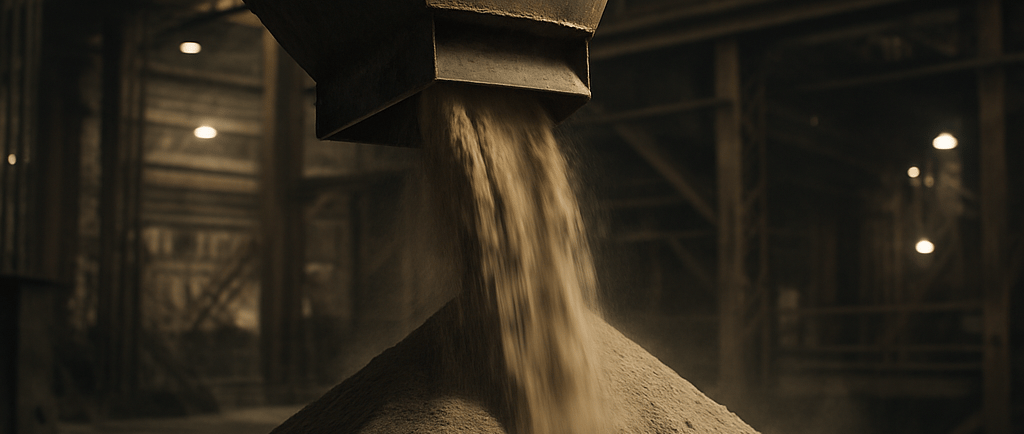
In today’s rapidly evolving industrial landscape, few priorities loom larger than decarbonization, operational efficiency, and regulatory compliance. Heavy industries—spanning cement, mining, steel, and asphalt—are under intense scrutiny to manage emissions and waste streams. As pressure mounts to achieve sustainability targets and demonstrate leadership in environmental stewardship, organizations are re-evaluating every facet of their operations for hidden value.
One of the most overlooked, yet high-potential opportunities? Baghouse fines—the ultrafine particulates trapped by air filtration systems. Long dismissed as a liability, these dusts are quietly emerging as a goldmine for profit, compliance, and corporate sustainability. This comprehensive guide will equip plant engineers, sustainability leaders, and environmental managers with actionable strategies to unlock the hidden value in baghouse fines, leveraging real-world data, case studies, compliance insights, and the latest technological innovations.
Table of Contents
Baghouse Fines 101: From Waste to Resource
The Decarbonization Imperative: Why Valorize Baghouse Fines?
Mapping the Value Chain: Energy, Emissions, and Operations
Applying LCAs: Measuring True Impact
Risk & Compliance: Navigating Regulation and Liability
Cost-Benefit Analysis: Real-World Dollars and Cents
Actionable Steps for Baghouse Fines Valorization
Case Studies: Success Stories in Industry
Emerging Innovations and The Road Ahead
Conclusion: Sustainability, Profit, and Compliance—Baghouse Fines as a Triple Win
1. Baghouse Fines 101: From Waste to Resource
Baghouse fines are the ultrafine dust particles captured by industrial “baghouse” filters—high-efficiency dust collection systems deployed across industries including cement manufacturing, nonferrous metallurgy, asphalt production, mining, and aggregate processing. These fines, often measuring less than 75 microns, accumulate as a byproduct whenever raw materials are heated, ground, or processed.
Traditional disposal practices: For decades, baghouse fines have been managed as waste—hauled to landfill, temporarily stockpiled, or, in the worst cases, illicitly dumped. This approach burdens companies with disposal fees, environmental liabilities, and negative ESG scores.
A paradigm shift is underway: Increasingly, industries are recognizing the constituent value of these fines. Chemically, baghouse fines comprise minerals (e.g., silicates, alumina, lime), trace metals (iron, zinc, lead), and, in some configurations, unreacted fuel carbon or organic content.
Circular economy in action: Through careful characterization, these fines can be upgraded to secondary raw materials, closing resource loops and driving material circularity. For example, cement plants often find their fines’ composition aligns closely with the raw meal, making re-integration feasible with proper quality control. In asphalt plants, mineral-rich fines are a prime candidate for aggregate substitution.
Market statistics: According to the Cement Sustainability Initiative, global cement production generates over 20 million metric tons of baghouse fines annually—an enormous latent resource.
2. The Decarbonization Imperative: Why Valorize Baghouse Fines?
In the face of the climate emergency, every ton of CO₂ reduced can make a strategic difference. The operational paradigm is shifting from “managing waste” to “maximizing resources.” Here’s why valorizing baghouse fines is becoming non-negotiable:
Decarbonization of the value chain:
Most heavy industries are grappling with the dual challenge of Scope 1 (direct) and Scope 3 (indirect, supply chain) emissions. By integrating recycled fines:Facilities reduce the need for virgin raw materials, which carry high embedded carbon from extraction and transport.
Emissions from transporting, landfilling, or storing wastes are eliminated, reducing carbon intensity at every life cycle stage.
Strengthening ESG and compliance:
Corporate ESG frameworks are strengthening, often requiring transparent accounting of waste, emissions, and resource efficiency. Valorizing previously discarded fines scores points on:Material circularity (a core tenet of circular economy models)
Waste reduction targets (aligned with UN SDG 12: Responsible Consumption and Production)
Regulatory mandates for waste diversion (e.g., European Green Deal, US EPA waste minimization)
Regulatory “stick and carrot”:
Many governments now enforce or incentivize industrial byproduct recycling. In the EU, “zero landfill” directives demand justifiable recycling of any non-hazardous industrial residue. Innovations such as Extended Producer Responsibility (EPR) tie operational licensing and taxes to sustainable waste management.
Competitive advantage: Companies that operationalize fines valorization get ahead of regulatory risks and position themselves for green procurement opportunities, sustainable finance, and preferred supplier status.
Global context and future-readiness: By demonstrating sophisticated waste valorization, organizations also safeguard future access to carbon credits, emissions trading, and green public contracts—key levers in a carbon-constrained, competitive market.
3. Mapping the Value Chain: Energy, Emissions, and Operations
To maximize decarbonization and business potential, companies should analyze baghouse fines across the full operational value chain.
a. Energy Optimization
Baghouse fines frequently contain energy-relevant constituents. For instance:
Residual carbon in steel or power plant dust can supplement fuel in cement kilns or act as a reductant in metallurgical processes.
Mineral alignment between fines and primary feedstocks in cement or glass production can reduce the need for virgin quarried inputs, cutting both processing energy and environmental disturbance.
Industry example: A German cement mill found that by re-blending up to 10% fines into the raw meal, they reduced the kilowatt-hours per ton clinker by 5%, owing to the fines’ favorable chemical reactivity and particle size distribution.
b. Emission Reduction Across the Life Cycle
Fine particulates, when valorized, deliver tangible emission savings:
Scope 1: Direct reduction in GHG emissions from on-site waste incineration or decomposition
Scope 2: Lowered emissions from electricity (as fewer virgin materials require processing)
Scope 3: Significant cut in “downstream” emissions from waste transport and landfill methane generation
Data point: Landfilled industrial wastes, especially those containing organic traces, can generate up to 1.9 metric tons CO₂-equivalent per ton via decomposition and transport (source: World Resources Institute). Valorization disrupts this pathway entirely.
c. Operational Efficiencies and Safety
Disposal cost savings: Transporting fines to landfill incurs haulage, tipping, and environmental surcharge fees.
Plant safety: Accumulating dust elevates the risk of fire, explosion, or fugitive emissions, which can lead to equipment downtime or OSHA violations. Reducing on-site stockpiles enhances compliance and safety KPIs.
Resource yield: Plants with mature valorization programs often streamline overall waste management, integrating fines into continuous improvement cycles and ISO 14001 environmental management systems.
4. Applying LCAs: Measuring True Impact
Life Cycle Assessment (LCA) is the definitive tool for quantifying the environmental benefits and trade-offs of baghouse fines valorization. Here’s how best-in-class organizations deploy LCA to assess fines strategies:
Emissions accounting:
LCAs reveal the “cradle-to-grave” impact of reusing baghouse fines, illuminating reductions in:Embodied carbon per ton of finished product (e.g., cement, asphalt, brick)
Upstream energy inputs, water use, and waste output
Downstream impacts, such as landfill avoidance and pollution risk mitigation
Example metric: LafargeHolcim’s pilot in France found that valorizing 4,000 tons of baghouse fines annually saved 3,200 tons of CO₂ relative to virgin limestone use—a 30% reduction in life cycle GHGs for the blended product.
Environmental trade-offs and safeguards:
LCAs scrutinize both upsides and downsides—such as the risk of heavy metal leaching, potential ecotoxicity, or increased fine dust in process streams. Mitigation via pre-screening, process optimization, and compliance with product quality standards is essential.Documentation for ESG and customers:
Leading organizations use LCA-verified data to produce Environmental Product Declarations (EPDs), serving as credible, third-party verified disclosures for B2B customers, regulatory bodies, and investors.
Future trend: Digital twins and AI-driven LCA platforms are now enabling real-time assessments, integrating valorization impacts with broader corporate sustainability dashboards for agile, data-driven decision-making.
5. Risk & Compliance: Navigating Regulation and Liability
Navigating the compliance landscape surrounding baghouse fines is now a strategic imperative for plant managers and sustainability teams.
Key compliance drivers:
Zero landfill mandates: Across the EU and Asia, regulations require producers to divert industrial byproducts from landfill wherever safe/feasible recovery options exist.
Waste tracking and reporting: The US Resource Conservation and Recovery Act (RCRA) and comparable global directives require meticulous recording of waste production, movement, and disposal.
“End-of-waste” status: Valorized fines may qualify as secondary raw materials only if they meet specific technical and environmental standards—e.g., proof of non-hazardous characteristics, absence of persistent organic pollutants, and consistent performance.
Risk mitigation strategies:
Thorough material characterization, using XRF/XRD analysis and leaching tests to verify safety and fitness for intended end-use.
Regulatory engagement: Securing byproduct reclassification (e.g., UK “Quality Protocol” schemes) unlocks new revenue streams and de-risks compliance.
Supply chain traceability: Technology platforms (including blockchain) now track the provenance, quality assurance, and fate of valorized fines, helping companies prove compliance during audits, tendering, or mergers and acquisitions.
Long-term liability: Failure to valorize (and instead landfill) baghouse fines can create contingent liabilities—such as post-closure site remediation. Proactive valorization slashes legacy risk and can bolster corporate balance sheets, which is increasingly watched by investors and insurers.
6. Cost-Benefit Analysis: Real-World Dollars and Cents
Turning baghouse fines from cost center into profit center starts with a clear financial picture. You need to understand how much dust you generate, what you currently pay to get rid of it, and what you can save or earn by valorizing it.
a. The Cost Side: What Baghouse Fines Really Cost You Today
Key cost components usually include:
Landfill tipping fees
Transport and handling
On-site storage and management
Compliance, permits, and monitoring
Long-term environmental liabilities
Landfill fees for industrial waste often fall in the range of 75 to 200 USD per ton, depending on region and contract, with higher figures in densely populated areas or for special waste classes.
If a mid-sized plant generates 10,000 tons of fines per year and pays a blended 120 USD per ton (transport plus disposal), that is:
10,000 tons × 120 USD/ton = 1.2 million USD per year
This excludes indirect costs such as:
Project management for waste contracts
Periodic soil and groundwater monitoring
Risk reserves for future site remediation
For groups operating multiple plants, annual disposal costs can quickly move into the multi-million range.
b. The Benefit Side: How Valorization Pays
Valorization affects both your cost base and your revenue potential.
Avoided disposal costs
Every ton reused or sold is a ton you do not send to landfill. Using the same 10,000 ton example:
Avoided landfill + transport: 120 USD per ton
If you valorize 60% of fines, that is 6,000 tons avoided
Annual savings: 6,000 × 120 = 720,000 USD
This saving is predictable and easy to justify in internal business cases.
Avoided virgin raw material costs
In cement and lime, cement kiln dust and bypass dust can replace a share of raw meal or act as mineral filler. In asphalt, baghouse fines can replace part of the filler or fine aggregate fraction. Studies on waste reuse in cement show meaningful reductions in consumption of natural resources and imported coal, lowering raw material and fuel costs.
If your plant spends 15 USD per ton on quarried limestone, shale, or aggregate delivered to site, and 1 ton of valorized fines replaces 1 ton of virgin input:
6,000 tons of fines reused internally
6,000 × 15 = 90,000 USD in avoided material purchases
Energy and CO₂ cost savings
Recycling fines often means:
Less energy for quarrying, crushing, and grinding virgin feed
Lower kiln energy per ton of product when fines have favorable chemistry or size distribution
Lower emissions factor per ton of product
At a plant level, assume:
0.1 ton CO₂ avoided per ton of fines valorized (through avoided raw material and disposal emissions)
Carbon cost or shadow price of 40 USD per ton CO₂
For 6,000 tons of fines reused:
Emissions avoided: 600 tons CO₂
Avoided or implicit carbon cost: 600 × 40 = 24,000 USD annually
With tighter carbon markets or internal carbon prices at 80–100 USD per ton, the benefit doubles.
New revenue streams
Certain fines, especially from EAF steelmaking, carry high levels of zinc and other metals and can be sold to specialized processors or smelters. Case studies show steel plants turning EAF dust into a steady revenue stream by finding off-takers in the zinc industry instead of paying disposal fees.
If:
You sell 3,000 tons of fines per year
At a conservative 60 USD per ton net of logistics
You gain an additional 180,000 USD in top-line revenue.
c. Putting It Together: Example Annual Business Case
For a single plant with 10,000 tons of baghouse fines per year:
60% reused internally (6,000 tons)
30% sold externally (3,000 tons)
10% still landfilled (1,000 tons)
Annual impact:
Cost avoided
Landfill avoidance for 9,000 tons: 9,000 × 120 = 1,080,000 USD
Raw material savings
6,000 tons of fines replacing quarry materials: 6,000 × 15 = 90,000 USD
Carbon-related benefit
600 tons CO₂ avoided × 40 USD = 24,000 USD
New revenue
3,000 tons sold × 60 USD = 180,000 USD
Total positive impact: about 1.374 million USD per year
Investment items:
Detailed characterization and lab testing
Process adjustments and sometimes minor equipment upgrades
Certification, LCA studies, EPD updates, and regulatory approvals
Training, quality control, and monitoring
In many cases, payback periods are between 1 and 3 years, especially when disposal costs are high and markets for secondary raw materials exist. Where carbon pricing, landfill bans, or waste taxes apply, payback can be even faster.
The message is simple: if you are landfilling more than a few thousand tons of fines per year, you almost certainly have a six- or seven-figure annual opportunity on the table.
7. Actionable Steps for Baghouse Fines Valorization
Valorization is not a single project. It is a structured shift in how your plant treats one of its most visible waste streams. The following sequence gives you a practical roadmap.
Step 1: Build a cross-functional team
Bring together:
Environmental and ESG leads
Process and production engineers
Maintenance and plant operations
Quality assurance and product development
Finance and procurement
Legal and compliance
Give the group a clear goal: cut landfill disposal of fines by a specific percentage within a defined time, while maintaining product performance and safety.
Step 2: Quantify and map your fines
You cannot manage what you do not measure. Start by:
Measuring fines generation rates per process line and per product
Recording seasonal and grade-related variations
Mapping where and how fines are collected and stored
Documenting current disposal routes, contracts, and costs
Use 6 to 12 months of data if possible. This baseline becomes the reference for all later savings and ESG reporting.
Step 3: Characterize the material
Laboratory work is non-negotiable. For each major fines stream, you should:
Analyze chemical composition using XRF and XRD
Measure particle size distribution
Test loss on ignition, moisture, and organic content
Assess leaching behavior for metals and other contaminants using standardized protocols
Record variability over time and across operating conditions
For EAF dust or potentially hazardous fines, pay particular attention to Zn, Pb, Cd, Cr, As, and chlorides.
Step 4: Screen internal reuse options
With data in hand, evaluate where fines can fit inside your own processes:
Cement and lime plants:
Can fines replace part of raw meal, kiln feed, or mineral addition
Can bypass dust be reintroduced at controlled rates without harming kiln stability
Can fines be blended into blended cements, mortars, or backfill products
Asphalt plants:
Can fines fill mineral filler requirements for certain mix designs
How do fines affect binder demand, moisture sensitivity, and rutting performance
Do mix design standards or agency specifications allow partial substitution
Steel and nonferrous operations:
Can dust be reintroduced as a reductant or flux in controlled amounts
Are there internal processes for briquetting or agglomeration to stabilize fines
Step 5: Assess external markets
When internal reuse is limited or saturated, look outward:
Cement plants that need supplementary materials
Brick and block producers interested in fine mineral fillers
Road construction contractors that use mineral fines in stabilized base or asphalt
Metal processors and smelters that can recover nonferrous metals from dust
Step 6: Run LCAs and financial models
For each promising route, run:
A simple financial model with capital, operating cost, and revenue or savings
An LCA that covers cradle to grave impacts, including disposal avoidance and raw material substitution
Use these models to:
Rank options by net present value and payback
Identify low-risk quick wins
Justify investments and approvals with clear numbers
Step 7: Secure regulatory clarity
Before scaling any route:
Confirm waste classification and whether the fines can obtain end-of-waste status
Review national and regional rules on byproduct management, cross-border shipments, and product quality standards
Discuss your plan with regulators where needed and document all agreements
For hazardous dusts, be careful not to create environmental burdens elsewhere.
Step 8: Pilot, monitor, and adjust
Start small:
Select one line, one product, and one valorization route
Set clear KPIs: tonnage of fines reused, product quality metrics, emissions, cost savings
Monitor performance over several months, then increase substitution rates gradually
Document all results, both good and bad. Use these to refine operating windows, specification limits, and quality control plans.
Step 9: Standardize and scale
Once pilots are stable:
Write standard operating procedures for fines handling, dosing, and monitoring
Train operators, lab staff, and maintenance teams
Integrate valorization targets into plant KPIs and management reviews
Replicate the approach across other lines and sites
Over time, treat fines valorization as part of your continuous improvement program, not a side project.
8. Case Studies: Success Stories in Industry
Real projects show what is possible when fines are treated as a resource.
Case Study 1: Cement Plant Closing the Loop on Cement Kiln Dust
A European cement plant producing around 1 million tons of clinker per year generated tens of thousands of tons of cement kiln dust and bypass dust. Historically, much of this material went to landfill.
Actions taken:
Detailed characterization confirmed that CKD chemistry matched raw meal within certain limits, with manageable chloride content.
The plant developed controlled recirculation strategies, feeding a portion of fines back into the kiln system while using another fraction as a mineral additive in blended cement.
LCA analysis compared this approach with continued landfill disposal and full virgin raw material use.
Results:
CKD reuse, combined with careful process control, supported annual reductions of several thousand tons of CO₂, since each ton of raw meal replaced carried less embedded carbon than newly quarried materials.
Landfill disposal volumes dropped sharply, shrinking long-term liabilities linked to waste storage.
The plant used LCA-backed data to update Environmental Product Declarations, which helped win contracts with infrastructure clients who had strict embodied carbon requirements.
Key lessons:
CKD and bypass dust can become high-value internal materials when chemistry and process control are well understood.
Regulatory acceptance is easier when you can show robust testing, clear product performance, and third-party verified LCA results.
Case Study 2: Asphalt Producer Reusing 90 Percent of Baghouse Fines
An asphalt producer operating several drum mix plants collected large volumes of fines from baghouse systems. A portion was reused, but excess fines were sent to settling ponds and landfill.
Actions taken:
A technical review of mix designs determined where fines could replace virgin mineral filler without harming performance.
Laboratory testing confirmed that well-controlled fines addition met strength, rutting, and moisture sensitivity requirements.
Plants adjusted dust return systems to reintroduce fines to the mix in a controlled, measured way.
Operators received training on managing dust return rates and monitoring mix quality indicators.
Results:
The producer cut landfill disposal of fines to near zero across most sites.
Annual savings included avoided disposal costs and reduced purchase of mineral filler.
Environmental reporting improved, with lower waste generation per ton of asphalt produced and reduced truck movements for waste transport.
Key lessons:
Fines reuse in asphalt is technically mature and widely accepted when done under controlled conditions.
Mix design standards and agency specifications must be understood early to avoid conflicts with road authorities.
Case Study 3: Steel Plant EAF Dust Turned into Zinc Revenue
An electric arc furnace steel plant generated several thousand tons of EAF dust every year. The dust contained zinc and other metals but was classified as hazardous waste in many jurisdictions. Disposal required special handling and high-cost landfilling.
Actions taken:
The plant partnered with a trading company and zinc smelters to evaluate the dust as a secondary zinc source.
Detailed characterization confirmed sufficient zinc content and manageable levels of impurities.
The partner arranged export logistics, regulatory documentation, and contracts with smelters that could treat the dust safely.
Results:
Disposal costs dropped since a major fraction of dust now left the plant as a saleable material.
The plant gained a new revenue stream, linked to zinc prices, instead of paying significant fees to remove hazardous waste.
Compliance improved, as dust now followed documented, audited routes to specialized facilities instead of long-term storage or landfill.
Caution:
Responsible producers must ensure that partners operate under strong environmental regulations and transparent reporting.
Case Study 4: Baghouse Fines in Mining Backfill and Construction Materials
A mining company operating underground workings and associated processing plants generated mineral-rich fines from crushing, screening, and dust collection.
Actions taken:
Geotechnical tests evaluated fines as part of paste backfill in underground stopes.
Parallel work explored their use in low-strength concrete and stabilized road base for on-site infrastructure.
Results:
Use in backfill reduced fresh aggregate demand and cut truck traffic in and out of the site.
Stabilized base and low-grade concrete with fines performed adequately for internal roads and non-critical structures, after proper mix development.
The company reported lower overall waste volumes and better alignment with circular resource goals.
Key lessons:
Mining operations have multiple internal sinks for fines when geotechnical and environmental constraints are respected.
Close coordination between mine planning, tailings management, and plant operations is essential to unlock this potential.
9. Emerging Innovations and The Road Ahead
Baghouse fines valorization is no longer limited to simple reuse or sale. New technologies are opening fresh routes for both environmental and financial gains.
Mineral carbonation of cement kiln dust and fines
Potential routes:
Exposing CKD and certain fines to concentrated CO₂ streams from flue gas
Producing carbonate-rich fillers for blended cement, panels, or other building materials
Creating modular carbonation units that treat dust on site and feed both sequestration targets and product lines
Benefits:
Permanent CO₂ storage in solid form
Lower clinker content in some cement products
Added value for what was previously a disposal problem
Advanced metal recovery from fine dust
Deep eutectic solvents and other hydrometallurgical routes are being tested for EAF dust and similar materials.
If commercialized at scale, such techniques can:
Recover more metals from the same ton of dust
Reduce energy use and emissions of metal recovery
Create cleaner mineral residues that may be non-hazardous and suitable for further use
High-performance construction materials using fines
Research has shown that baghouse fines can be blended into:
Geopolymer binders and alkali-activated materials
High replacement-rate blended cements
Self-compacting concretes and shotcrete mixes, subject to durability tests
These routes promise:
Higher utilization rates for fines
Reduced clinker factors and lower embodied carbon
New product lines with tailored performance for specific markets
Real-time digital monitoring and LCA integration
Digital tools are now able to:
Track fines generation and valorization in real time
Feed production data directly into LCA platforms
Update product footprints and dashboards with current rates of fines reuse and disposal
For corporate ESG teams, this means:
Faster reporting
Transparent metrics for clients, financiers, and regulators
Better alignment between operational decisions and sustainability targets
Policy and market signals pushing higher value use
Several trends favor more ambitious fines valorization:
Landfill bans and high landfill taxes for industrial residues in Europe and parts of Asia
Rising carbon prices and broader adoption of emissions trading schemes
Public procurement rules that reward low-carbon materials and documented circularity
National strategies on circular resource use that include CKD, EAF dust, and other byproducts as priority streams
Plants that invest early in serious fines valorization will be better positioned as these signals strengthen.
10. Conclusion: Baghouse Fines as a Triple Win
Baghouse fines have long been treated as an inconvenient cost of doing business. That view no longer holds. When you look at the numbers, the environmental impact, and the compliance landscape, fines sit at the intersection of three strategic goals:
Sustainability
Valorization cuts waste and reduces demand for virgin raw materials.
It lowers CO₂ and other emissions across the life cycle, from quarry to product to disposal.
It supports credible LCAs and EPDs that clients and regulators are starting to expect as standard.
Profit
You avoid disposal fees and transport costs that can exceed 100 USD per ton.
You reduce spend on raw materials and, in many cases, fuel.
You may gain new revenue from external sale of high-value fines or metal-rich dusts.
Typical projects can return hundreds of thousands to millions of dollars each year for medium and large plants.
Compliance and risk reduction
You prepare for stricter landfill bans, waste taxes, and carbon pricing.
You shrink long-term liabilities from landfilled dust and legacy waste sites.
You can show regulators, auditors, and neighbors that you treat byproducts responsibly.
For plant engineers, sustainability leaders, and environmental managers, the path forward is clear:
Stop thinking of baghouse fines as an unavoidable waste.
Build a clear picture of how much you generate, what it costs you, and what it could be worth.
Use LCAs and financial models together to select routes that make sense technically, environmentally, and economically.
Start with pilots, document rigorously, and scale across sites.
Work only with partners and markets that can handle fines safely and transparently.
If you manage an energy-intensive facility and you are still landfilling large volumes of fines, you are paying twice: once in direct costs and again in missed opportunities.
Treat dust as a material flow that you can understand, control, and put to work. Plants that do this well will cut emissions, strengthen margins, and stay ahead of tightening regulation.
Baghouse fines valorization is not a side project. It is one of the clearest, most practical routes to turn dust into recurring value for your business, your climate targets, and your license to operate.
Connect
Your trusted partner for scrap metal procurement.
CONTACT
About
haroon@tdcventures.com
+1-307-655-7593
© 2025. All rights reserved.
NEWSLETTER