
Dynamic QR Labels: Repair, Reuse, Recycle Guides
Turn your packaging into a live repair, reuse, refill, and recycling guide. Discover how dynamic QR labels with AI and local data help FMCG brands boost circular action, compliance, and consumer trust.
AI & DIGITAL ENGAGEMENT IN SUSTAINABILITY
Instant Answer
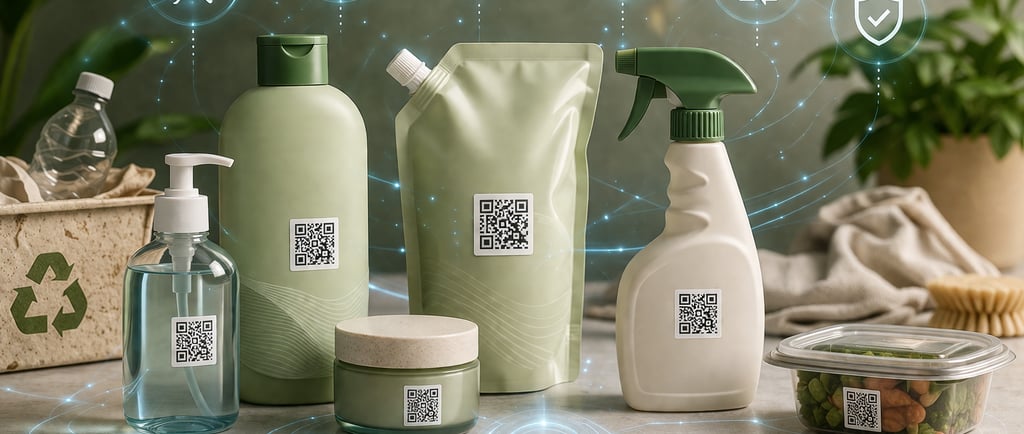
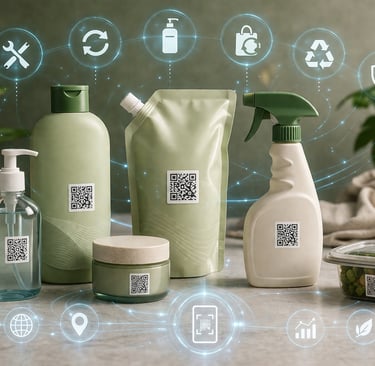
Dynamic QR labels turn FMCG packaging into a live digital guide for repair, reuse, refill, return, and recycling. Instead of relying on static symbols that often fail across regions, brands can connect each SKU, batch, and market to updated local instructions, AI chat support, repair guidance, refill maps, return locations, compliance evidence, and consumer engagement data.
In 2026, this matters because packaging regulation is getting stricter, GS1's Sunrise 2027 shift is pushing the industry toward 2D barcodes, and consumers expect clear product information at the moment they need it. GS1 US describes Sunrise 2027 as a transition toward smarter 2D barcodes that connect product identity to real-time online information, while the Consumer Goods Forum notes that retailers and manufacturers must now prepare packaging, point-of-sale systems, and supply chain data for 2D scanning capability.
For FMCG brands, dynamic QR labels are no longer a side feature. They are becoming a practical bridge between packaging design, EPR compliance, retail readiness, consumer trust, and circular behavior.
Context: Why Dynamic QR Labels Matter for FMCG Sustainability
FMCG packaging has always had a difficult job. It must protect the product, carry the brand, satisfy legal label requirements, work across retail systems, and guide the consumer after use. In 2026, that job is harder. Packaging must now explain what a product is, where it came from, how to use it safely, how to reuse or repair related components, how to return it, and how to dispose of each material correctly in a local system that may differ from one city to the next.
The old model was simple: print a recycling symbol, add a short phrase, and hope the consumer understands what to do. That model is breaking down. Packaging streams are more complex. Multi-material formats, pumps, films, labels, laminates, caps, liners, refill pouches, compostable claims, mono-material redesigns, and reusable formats all require more explanation than a small printed panel can handle.
At the same time, regulation is moving from broad intent to proof. The EU's Packaging and Packaging Waste Regulation adds stronger requirements around recyclability, reuse, packaging minimization, recycled content, labelling, and conformity. Legal analysis of the PPWR notes that packaging may need digital codes, such as QR codes, to provide information on reusability and enable packaging to be tracked.
That shift matters because FMCG companies operate across markets. A shampoo bottle sold in France, Germany, the UAE, Canada, and Pakistan may carry similar physical packaging, but the correct end-of-life instruction can differ by location. A black plastic tray might be accepted in one municipality and rejected in another. A flexible pouch might need store drop-off in one market and general waste in another. A refillable pack might need a return point, deposit process, or cleaning instruction. A static label cannot keep up with this level of local variation.
Dynamic QR labels solve this by moving the detailed guidance layer online. The physical pack carries a compact code. The digital experience carries the intelligence.
A consumer scans the code and sees the right guidance for that product, location, language, and use case. The experience can show whether to rinse, separate, flatten, return, refill, repair, mail back, book pickup, or dispose. The same scan can offer an AI assistant, short video, image-based material check, refill store locator, warranty flow, or proof-of-return upload.
This matters for brands because sustainability claims now face more scrutiny. A label that says "recyclable" is weak if the pack is not accepted where the consumer lives. A QR-led experience can avoid vague claims by saying, for example: "Recycle the bottle locally. Place the pump in general waste. Refill options available within 4 km." That is clearer, more useful, and easier to update.
Consumer behavior also supports this direction. SmartLabel, one of the best-known connected packaging programs in North America, gives consumers digital access to detailed product information that cannot fit on physical packaging. It covers food, beverage, household, pet care, personal care, over-the-counter products, and related categories.
Retail infrastructure is catching up too. GS1 Canada states that GS1 barcodes are scanned more than 10 billion times per day globally. That gives the industry a powerful base for moving from simple product identification to richer product intelligence.
The major shift is this: packaging is becoming a digital touchpoint. It is no longer only a container. It is a product passport, recycling guide, service channel, trust layer, and compliance record.
Defining the Challenge: From Awareness to Circular Action
The FMCG sustainability problem is not only awareness. Most consumers already know that waste is a problem. The harder challenge is action. People need the right instruction at the exact moment they are ready to discard, refill, return, repair, or reuse something.
This is where most current packaging systems fail.
A consumer finishes a moisturizer bottle and sees a pump, cap, label, bottle, and remaining residue. The pack says "recycle." What does that mean? Should the pump stay on? Is the label okay? Is the bottle accepted locally? Does the brand offer a refill? Is there a store drop-off point? Can the empty container be returned for rewards? Is the refill pouch recyclable? Does the consumer need to clean it?
If the answer is unclear, the consumer defaults to habit. That usually means one of three outcomes: wishcycling, disposal in general waste, or inaction.
Wishcycling is especially damaging. When consumers place non-accepted items into recycling bins, they can contaminate streams, increase sorting costs, and reduce the quality of recovered material. For brands, that creates a trust problem. A sustainability claim that feels helpful on shelf can become frustrating at disposal.
The challenge is also fragmented. FMCG brands often have separate teams for packaging, sustainability, marketing, retail, compliance, customer support, and data. Recycling guidance may sit with packaging. Loyalty sits with marketing. EPR reporting sits with sustainability. Product data sits with IT. Consumer care sits with customer service. Each team holds a piece of the system, but the consumer sees one pack and expects one answer.
Dynamic QR labels can connect those pieces.
For example, a beverage brand can use one QR experience to show deposit return guidance, local recycling rules, proof-of-return rewards, batch-level traceability, and brand education. A personal care brand can show refill pouch instructions, pump disposal guidance, subscription refill options, and repair or replacement steps for durable accessories. A household cleaning brand can show dilution instructions, refill station maps, safety guidance, and local disposal rules for triggers, caps, bottles, and concentrates.
The opportunity gets stronger when dynamic QRs connect to local data. The Recycling Partnership's Recycle Check platform was launched to provide package-specific local recycling information in the United States. It lets people enter a zip code or use location permissions to get a clear yes-or-no answer about whether a specific item is recyclable where they are.
That is the type of clarity FMCG needs. The consumer should not have to decode resin codes, municipal rules, and brand claims. The brand should make the next step obvious.
The commercial case is also growing. QR labels can reduce confusion, improve post-purchase engagement, support loyalty, gather first-party behavioral signals, and help brands understand which packaging formats cause the most friction. The value is not limited to sustainability. It touches retail, retention, product education, customer support, and compliance.
Core Concepts: Dynamic QR Labels, AI Engagement, and EPR Compliance
Dynamic QR labels are QR codes whose destination can be changed or managed after printing. A static QR sends every scanner to the same fixed URL. A dynamic QR can route users based on product, country, language, campaign, city, batch, consumer segment, time period, or regulatory requirement.
For FMCG, that distinction is critical. Packaging may remain in circulation for months. Regulations can change. Recycling acceptance can change. Refill points can open or close. Product instructions can be improved. New repair videos can be added. Local take-back partners can change. A dynamic system lets the brand improve the experience without scrapping printed packaging.
The best versions use GS1 Digital Link. GS1 Digital Link connects a product's unique identity to online sources of real-time information. This allows the same code to support retail scanning, supply chain data, consumer information, recall support, product authentication, and circularity guidance.
That is why GS1 Sunrise 2027 matters. The Consumer Goods Forum's 2026 QR code implementation guidance describes Sunrise 2027 as the voluntary target timeline for point-of-sale systems to scan 2D codes, with retailers preparing scanner systems and manufacturers preparing packaging designs.
This creates a clear direction for FMCG. Instead of printing separate codes for checkout, transparency, loyalty, recycling, and traceability, brands should move toward a single smart product identity that can support multiple use cases.
AI makes the experience more useful. A standard QR landing page can answer basic questions. An AI-enabled QR experience can respond to the consumer's actual situation.
A consumer might ask: "Can I recycle this pump in Vancouver?" The AI assistant can use the SKU, material data, local recycling rules, and brand instructions to answer clearly. Another consumer might upload a photo of a broken cap or worn reusable component. The system can identify the part, show repair steps, offer replacement options, or route the consumer to customer care.
AI can also personalize behavior prompts. It can show a short instruction for a repeat scanner, a beginner guide for a first-time scanner, a refill map for a shopper near a participating store, or a reward prompt for someone who has returned three packs.
The compliance layer matters just as much. EPR is moving brands toward stronger responsibility for packaging after sale. Dynamic QR systems can support compliance by logging scan activity, instruction views, location-based guidance, return confirmations, refill interactions, photo uploads, and consumer-declared disposal actions. This does not prove actual recycling on its own, but it creates a stronger evidence trail than printed labels alone.
The key point is simple: dynamic QR labels are not only "scan for more info." In 2026, the better model is "scan for the correct next action."
The Dynamic QR Circular Action Model for FMCG Brands
A strong dynamic QR program should be built around circular action, not content access. The goal is not to make people scan. The goal is to help them complete a useful action after scanning.
The model has six layers: identify, localize, guide, verify, reward, and improve.
First Layer: Product Identity
Every QR experience should begin with a clean product data structure. At minimum, the system should know the product name, GTIN, SKU, packaging components, material types, market, batch or lot where needed, and approved claims. For a shampoo bottle, that means the system knows the bottle material, cap material, pump material, label material, sleeve material, and any local variations. For a snack pouch, it knows the film type, metallization, label format, and whether store drop-off is available.
This is where many brands fail. They treat the QR code as a marketing link, not a product intelligence layer. That creates weak experiences. The consumer scans and lands on a generic sustainability page. The page says the brand cares. It does not tell the consumer what to do with the actual pack in their hand.
Second Layer: Localization
Recycling and reuse guidance must reflect the user's market. At a basic level, the experience can ask for postal code or city. A stronger system can use permission-based location detection. The best system connects to municipal recycling data, retailer take-back networks, refill stations, deposit return programs, and local waste partners.
Localization must be handled with care. Consumers should not be forced into invasive tracking. The experience can offer a simple choice: "Use my location," "Enter postal code," or "Choose country/city." The outcome should be practical, not creepy.
Third Layer: Guidance
This is the consumer-facing instruction layer. It should be direct, visual, and specific. For example: "Rinse bottle. Keep cap on. Remove pump and place in general waste." Or: "Return this jar to any participating store for refill credit." Or: "Scan the damaged part, then choose repair, replacement, or return."
Good guidance should avoid vague claims. "Widely recyclable" is less useful than "Recycle bottle in your curbside bin in this area. Pump is not accepted." "Reusable" is less useful than "Wash with warm water, refill up to 20 times, replace seal after 6 months."
Fourth Layer: Verification
This does not mean pretending every scan proves recycling. It means creating reasonable proof points based on the action. Examples include return station scans, deposit redemption, refill checkout events, photo upload confirmations, repair booking records, warranty part requests, or consumer self-reporting. Each has a different evidence strength.
A refill purchase is stronger than a page view. A return station scan is stronger than a scan at home. A photo upload may be stronger than a click, but weaker than a verified reverse logistics record. Brands should score these signals honestly.
Fifth Layer: Reward
Rewards are useful when they support the behavior. They should not turn sustainability into gimmicks. A reward can be loyalty points for verified returns, refill discounts, repair credits, sweepstakes entries, local charity contributions, or progress badges. For FMCG, the most useful reward is often tied to the next purchase or refill action.
Sixth Layer: Improvement
Every scan produces insight. Where do people scan? Which products trigger the most confusion? Which cities show higher recycling uncertainty? Which instructions reduce support tickets? Which packaging components cause abandonment? Which rewards increase return rates?
This feedback should go back to packaging design, sustainability strategy, retail partnerships, and consumer education. A dynamic QR system is only powerful if the brand uses the data to improve the product and the program.
A practical rollout should start small. Select one product family with meaningful circularity friction, such as personal care pumps, household cleaner refills, beverage containers, baby product packaging, pet food pouches, or cosmetics jars. Map the packaging components. Build the digital journey. Test the scan placement. Run a pilot in two or three markets. Measure action rates. Improve the guidance. Then scale.
The main mistake is launching across every product too soon. A shallow QR rollout across 300 SKUs creates noise. A well-built pilot across 10 SKUs creates learning.
Implementation Best Practices, Technology Partners, KPIs, and ROI
The best FMCG QR programs treat packaging as a connected system. The worst programs treat it as a link stuck on a label.
Implementation should begin with governance. A dynamic QR program needs clear ownership across packaging, sustainability, legal, marketing, IT, retail, and customer care. The brand needs one approved source of truth for product data, packaging components, claims, regional instructions, and compliance language. Without this, the QR experience becomes another disconnected content channel.
First Best Practice: Design the Code Strategy Before the Label Design
Brands need to decide whether the QR will be a campaign code, a SmartLabel-style transparency code, a GS1 Digital Link code, a recycling guidance code, or a combined experience. The combined route is usually stronger for long-term FMCG readiness because consumers should not face three different codes on one pack.
Second Best Practice: Use GS1-Compatible Product Identity Where Possible
GS1 US says Digital Link connects product identity to real-time information online. That is the right foundation for brands preparing for Sunrise 2027 because it supports broader use cases than a basic landing page URL.
Third Best Practice: Make the Scan Destination Fast
Many QR programs fail because the landing page is slow, heavy, or confusing. The experience should load quickly on mobile data, especially in stores, apartment buildings, kitchens, bathrooms, and outdoor disposal areas. The first screen should answer the likely question within seconds: "What should I do with this package?"
Fourth Best Practice: Write Instructions by Component
FMCG packaging is rarely one material. A body wash pack might include bottle, pump, dip tube, label, cap, and residual product. A coffee pack might include flexible laminate, valve, label, tin tie, and shipping mailer. A baby food pouch might include pouch, cap, and carton. The QR experience should break this down clearly.
Fifth Best Practice: Connect the QR to Existing Consumer Journeys
If the brand has refill stations, show a map. If it has spare parts, show repair steps. If it has loyalty, connect reward points. If retailers collect empties, show nearby stores. If municipal recycling differs by region, ask for location. If the item is not recyclable locally, say so clearly and offer the next best option.
Sixth Best Practice: Make the Experience Accessible
Use plain language, large tap targets, multilingual support, alt text for images, captions for videos, and low-bandwidth pages. Sustainability guidance should work for older users, busy parents, low-connectivity areas, and multilingual households.
Seventh Best Practice: Separate Engagement Analytics from Compliance Claims
Scan rates are useful. They are not recycling rates. Page views are useful. They are not proof of reuse. A compliance dashboard should classify evidence by confidence level. For example, "instruction viewed" is an awareness signal. "Return point scanned" is a participation signal. "Deposit redeemed" is stronger verification. "Material processed by partner" is operational evidence.
Useful KPIs should cover six categories.
Awareness KPIs
Awareness KPIs include scan rate per 1,000 units sold, unique scanners, repeat scans, page load completion, average time on instruction page, and language selection. These show whether the packaging is being used as a digital touchpoint.
Action KPIs
Action KPIs include instruction completion clicks, refill locator taps, return location taps, repair guide views, parts ordered, pickup bookings, deposit redemptions, photo confirmations, and loyalty reward claims. These show whether the experience leads to behavior.
Quality KPIs
Quality KPIs include instruction clarity score, consumer feedback rating, support ticket reduction, failed scan rate, broken link rate, outdated instruction incidents, and local mismatch reports. These show whether the system is reliable.
Circularity KPIs
Circularity KPIs include refill rate, reuse cycle count, return rate, repair completion rate, estimated packaging diverted, verified returned units, and material-specific collection uplift. These are closer to sustainability outcomes.
Compliance KPIs
Compliance KPIs include SKU coverage, market coverage, approved claim coverage, audit-ready data completeness, data freshness, regulatory update response time, and EPR report export readiness.
Commercial KPIs
Commercial KPIs include repeat purchase rate among scanners, loyalty signup rate, cost per verified return, cost per refill conversion, support cost reduction, packaging redesign insights, and retailer partnership value.
ROI should be calculated with clear assumptions. A simple model can start with four benefit pools: compliance risk reduction, packaging and print savings, consumer retention, and circular action value.
For example, imagine an FMCG brand runs a dynamic QR pilot across 10 million units of a refillable household cleaner. The QR platform, content, integrations, translation, analytics, and program management cost $250,000 in year one. The QR experience generates a 6% scan rate, or 600,000 scans. Of those scanners, 12% use the refill locator, creating 72,000 refill-intent actions. If 25% of those actions convert into actual refill purchases, that is 18,000 incremental refills. If the gross contribution per refill is $4, that creates $72,000 in direct contribution.
That alone may not cover the program. But the ROI changes when you add the full value stack. If support tickets about disposal and refills fall by 20,000 contacts per year at an estimated $3 per contact, that saves $60,000. If digital updates avoid one packaging reprint across a regulated market, that may save tens of thousands more. If verified return data improves EPR reporting and reduces consultant hours, audit effort, or manual data work, that adds more savings. If scan data helps redesign a confusing component and improves recyclability, the long-term value can be larger than the first-year campaign return.
That is how brands should evaluate these systems. Dynamic QR is not only a media channel. It is a compliance, packaging, customer experience, and circularity asset.
Technology partner selection should match the use case. For product identity and standards, GS1 and GS1 Digital Link are central. For consumer transparency, SmartLabel is already familiar to many North American brands and gives consumers access to detailed product information through QR scans and web-based product pages. For local recycling guidance in the United States, Recycle Check is relevant because it provides location-specific recycling answers for package types. For UK packaging guidance, OPRL remains important because its labels give a consistent recycle or do-not-recycle message based on packaging format, collection access, sortability, and end markets.
For AI engagement, brands may need a chatbot layer, content management system, product information management integration, consent management, analytics stack, translation workflow, and customer support handoff. The right stack depends on whether the use case is recycling guidance, refill conversion, product transparency, authentication, repair, or EPR reporting.
The safest implementation pattern is to keep AI inside approved boundaries. The AI assistant should answer from verified product, packaging, and local guidance data. It should not invent recycling claims. It should not make unsupported environmental claims. It should say "not accepted locally" when that is the accurate answer. It should escalate uncertain cases to a fixed guidance page or customer support.
That guardrail matters because green claims are under pressure. The stronger the sustainability claim, the stronger the evidence needs to be.
Emerging Trends: AI-Enabled Packaging, Digital Product Passports, Retail Readiness, and Circular ROI
The next phase of dynamic QR in FMCG will be shaped by five major trends.
First Trend: Shift from UPC-Only Packaging to 2D-Ready Packaging
GS1's Sunrise 2027 target is already influencing retailers, manufacturers, scanner providers, and packaging teams. The Consumer Goods Forum's 2026 implementation guidance shows that the industry is preparing for a period where 2D codes support point-of-sale scanning, product data, and consumer-facing use cases from the same symbol family.
This is a major packaging planning issue. FMCG brands do not change packaging overnight. Artwork cycles, regulatory approvals, retailer requirements, print suppliers, global market versions, and inventory runout all create long timelines. Brands that wait until late 2027 may face rushed transitions. Brands that start in 2026 can test code placement, scan performance, data structure, consumer experience, and retailer compatibility with less risk.
Second Trend: Digital Labelling for Compliance
The EU PPWR direction shows that packaging information is becoming more structured and more demanding. Digital codes can support reusability information, tracking, and extra consumer guidance.
For reusable packaging, this becomes especially important. Reuse systems need instructions, return points, cycle counts, deposit logic, cleaning guidance, and consumer trust. A reusable container without a clear digital guide risks becoming another confusing pack. A QR-enabled reusable pack can tell the consumer how the system works, where to return it, what reward applies, and how many reuse cycles the package has completed.
Third Trend: Local Recycling Intelligence
Static global labels will keep struggling because recycling rules are local. Programs like Recycle Check show the direction: package-specific, location-specific answers that reduce guesswork.
The next step is AI-assisted local guidance. A consumer will not just scan and read. They will ask: "Can this go in my blue bin?" "Do I remove the sleeve?" "Where is the nearest drop-off?" "Is the refill pouch accepted?" "Can I recycle this if it still has product inside?" The winning systems will answer with simple, verified, local instructions.
Fourth Trend: Connected Packaging as a First-Party Data Channel
As paid media gets more expensive and privacy rules limit third-party tracking, FMCG brands need better owned touchpoints. Packaging is one of the few touchpoints that reaches buyers after purchase. A dynamic QR scan can reveal product interest, usage timing, disposal friction, refill intent, region-level confusion, and loyalty potential.
This data must be handled responsibly. Consumers should know what is being collected and why. Brands should collect the minimum data needed to provide the service. A recycling answer should not require account creation. A refill reward may require opt-in. A repair warranty flow may require more detail. The value exchange must be clear.
Fifth Trend: Circular ROI Moving Beyond Brand Reputation
Early sustainability programs often relied on soft benefits. In 2026, leadership teams want numbers. Dynamic QR systems can support stronger business cases because they connect packaging actions to measurable events.
A brand can calculate avoided support costs from fewer "how do I recycle this?" contacts. It can calculate refill conversion from QR-to-refill journeys. It can estimate packaging savings from digital updates replacing some printed inserts or market-specific leaflets. It can calculate return participation from verified return scans. It can compare regions with QR guidance against regions with static labels. It can identify low-performing components and redesign them.
This creates a stronger board-level argument. Dynamic QR labels help FMCG brands prepare for 2D retail readiness, reduce consumer confusion, improve circular behavior, collect better evidence, support compliance, and generate useful post-purchase engagement.
The strongest brands will not treat this as a campaign. They will treat it as infrastructure.
The practical roadmap for 2026 is clear. Start with high-friction packaging. Build a verified product and material data layer. Use GS1-compatible identity where possible. Connect local disposal, repair, return, and refill options. Add AI only where it improves the consumer's next action. Measure actions, not vanity scans. Use the learning to improve packaging design and compliance reporting.
Dynamic QR labels are powerful because they meet the consumer at the exact moment of uncertainty. They turn "What do I do with this?" into a clear next step. For FMCG brands, that is where circularity becomes practical.
Conclusion: Dynamic QR Labels Are the Next Operating Layer for Circular FMCG Packaging
Dynamic QR labels are becoming one of the clearest ways for FMCG brands to turn circularity from a packaging claim into a consumer action. Static labels can say "recycle," but dynamic QR labels can show the exact next step: rinse, separate, refill, return, repair, redeem, or dispose. That level of guidance matters because recycling rules, reuse systems, packaging materials, and compliance requirements now change faster than printed packaging cycles can handle.
The timing is critical. GS1's Sunrise 2027 initiative is pushing the global retail industry toward smarter 2D barcodes that can connect product identity with real-time information controlled by brands. The EU's Packaging and Packaging Waste Regulation also raises the bar for packaging information, reusability guidance, digital codes, and traceability. Together, these changes signal a clear direction: FMCG packaging is becoming connected, trackable, and updateable.
For consumers, the value is simple. They get answers at the moment of decision. They do not need to guess whether a pump is recyclable, search for a refill station, decode local disposal rules, or contact customer service for basic repair steps. A good dynamic QR experience removes confusion and makes the correct action easier.
For brands, the value is broader. Dynamic QR labels can support EPR reporting, reduce support queries, improve refill and return participation, strengthen retail readiness, collect better post-purchase insights, and expose weak points in packaging design. Programs like Recycle Check show how local, package-specific recycling guidance can move the market away from generic claims and toward clearer consumer instructions.
The brands that win will not treat QR codes as a marketing add-on. They will treat them as circular packaging infrastructure. The best systems will connect product identity, local rules, AI assistance, verified action data, compliance dashboards, and consumer rewards into one practical experience.
In 2026, the question is no longer whether FMCG packaging should become digital. It already is. The real question is whether brands will use that digital layer to create trust, reduce waste, prove progress, and make circular action easy enough for everyday consumers to follow.
Connect
Your trusted partner for scrap metal procurement.
CONTACT
About
haroon@tdcventures.com
+1-307-655-7593
© 2025. All rights reserved.
NEWSLETTER