
Electric Boiler Trials: Steam without Emissions
Explore how electric boiler trials deliver zero-emission steam, cutting costs & ensuring compliance. Your actionable guide to industrial decarbonization.
SUSTAINABILITY & GREEN TECHNOLOGY
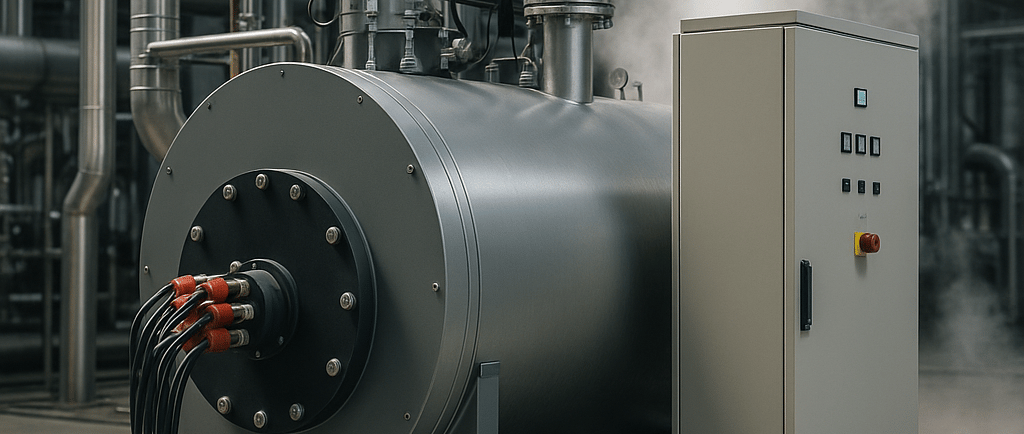
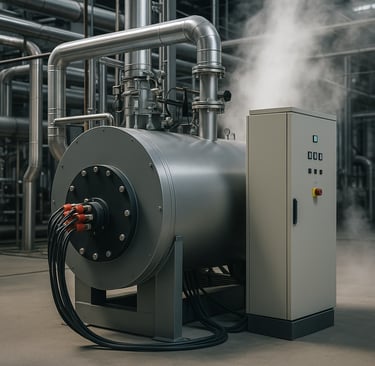
The urgency for industrial decarbonization is approaching a tipping point. In 2024, manufacturers, plant operators, and energy strategists operate under relentless scrutiny from investors, regulators, and climate-conscious customers—all demanding rapid reductions in greenhouse gas emissions. The challenge? Achieve climate targets without compromising productivity, compliance, or operational efficiency.
That’s where the electric boiler steps in: a high-impact solution that’s transforming the world of process steam. This definitive guide offers deep-dive analysis of electric boiler trials, illuminating best practices, lessons learned, and the evolving cost-benefit landscape for forward-thinking organizations.
Table of Contents
Why Decarbonize Steam Operations?
Electric Boilers: The New Era of Clean Steam
Learnings from Electric Boiler Trials
Lifecycle Analysis (LCA): Measuring the True Carbon Impact
Navigating Costs: Upfront Investment vs Long-term Savings
Risk Assessment: Operational and Regulatory
Compliance: Meeting and Exceeding Standards
Actionable Steps for Implementation
Key Takeaways and Next Steps
Why Decarbonize Steam Operations?
Steam remains the backbone of industrial productivity, driving essential processes across food & beverage, pharmaceuticals, chemicals, automotive, and electronics. Unfortunately, the conventional steam generation process ranks among the largest industrial contributors to climate change.
According to the International Energy Agency (IEA), industry is responsible for approximately 30% of total global CO₂ emissions linked to energy use (IEA, 2023). Fossil-fueled boilers—primarily natural gas, oil, and coal—are major culprits.
Why the Decarbonization Mandate is Intensifying
Regulatory demands: Governments worldwide are doubling down on emissions ceilings and carbon pricing. The EU’s Fit for 55 initiative aims for a 55% emission reduction by 2030. The United States, under the Inflation Reduction Act and EPA Clean Air Act updates, is phasing in stricter emissions standards and substantial incentives for electrification.
Investor priorities: With $40 trillion of assets under management now committed to ESG criteria (Morningstar, 2023), shareholders expect real action—not lip service—on climate goals. Companies leading in sustainability are seeing lower capital costs and greater access to investment.
Supply chain pressure: Top brands (think Unilever, Nestlé, Apple) increasingly require suppliers to disclose and cut their carbon footprints, rewarding “green” partners with premium contracts.
Operational resilience: Fossil fuel volatility, whether from geopolitics or fluctuating commodity markets, erodes predictability and profitability. Electric alternatives, especially those powered by renewables, offer greater risk control.
Bottom line: Decarbonization of steam operations isn’t just ethical—it’s critical business strategy for 2024 and beyond.
Electric Boilers: The New Era of Clean Steam
Electric boilers signal a paradigm shift for process steam—delivering equivalent thermal output with none of the direct stack emissions or local air pollution associated with combustion.
How Do Electric Boilers Work?
Rather than burning fossil fuels, electric boilers use electric resistance heating elements (or electrodes) to convert electrical energy into heat, boiling water into steam with remarkable efficiency (up to 99%). When supplied with 100% renewable electricity, the result is carbon-free steam.
Key Advantages of Electric Boilers
Zero onsite emissions: Electric boilers operate without producing nitrogen oxides (NOx), sulfur oxides (SOx), or particulates—improving local air quality and aiding in compliance with the toughest emissions standards.
Superior energy efficiency: Traditional combustion boilers have thermal losses and parasitic loads, often limiting real-world efficiencies to 75–85%. Electric boilers, with fewer moving parts and losses, frequently achieve >99% conversion from input electricity to steam output.
Rapid response and modulation: Many electric models provide instantaneous heat-up and rapid modulation of output, supporting dynamic operational needs, equipment cleaning cycles, and integration with renewables—even supporting flexible grid demand response.
Lower maintenance demands: Fewer moving and mechanical parts reduce maintenance time and costs, minimizing unplanned downtime for process-critical industries.
Regulatory “future proofing”: Electric steam generation aligns with emerging emissions-free ordinances, carbon neutrality pledges, and Scope 1/Scope 2 GHG requirements.
Insight: According to a 2023 survey by the World Business Council for Sustainable Development (WBCSD), more than 60% of global manufacturers are planning pilot electric steam installations by the end of 2025.
Where Are Electric Boilers Being Deployed?
Renewed focus on clean steam is driving adoption across several sectors:
Food & Beverage: Breweries, bakeries, and dairy producers switching to electrified steam are able to tout “net-zero products.”
Pharmaceuticals: Clean-in-place process validation and high-purity steam requirements lend themselves to precise, emission-free electric systems.
Chemicals & Materials: High-reliability electrode boilers are being piloted for specialty steam supply in polymer and plastics production.
District Energy & Utilities: Major European cities have initiated district heating decarbonization programs using electric boilers as seasonal peaking resources.
Learnings from Electric Boiler Trials
Transitioning to electric steam through real-world pilots offers invaluable lessons—both technical and strategic. Let’s analyze several recent high-profile trials and the critical takeaways for organizations seeking to replicate their success.
1. Food & Beverage Manufacturing
A global beverage conglomerate launched a trial replacing two aging 5 t/h natural gas-fired steam boilers with dual 4 t/h electric resistance boilers at a flagship bottling plant.
Results
Emissions impact: Achieved a net 90% reduction in process steam CO₂ (remainder tied to grid’s energy mix).
Energy costs: Initially faced a 25% hike in energy costs per MWh due to wholesale electricity prices, but negotiated a multi-year renewable Power Purchase Agreement (PPA) that lowered marginal energy cost below historical gas rates within 16 months.
Operational reliability: Met or exceeded process uptime, benefiting from reduced unplanned maintenance (a 35% drop in boiler-related downtime).
Compliance readiness: Instantaneously achieved the city’s mandated zero emissions requirement, while unlocking preferential tax treatment for green operations.
Brand value: Marketed “net-zero” product lines, resulting in an 18% year-over-year increase in premium market segment sales.
Analysis
Facilities that proactively engage in renewable energy contracts and flexible load management can achieve competitive (or superior) steam economics versus fossil alternatives.
Brand-level communication of zero-emission steam can yield measurable consumer preference and loyalty in carbon-sensitive markets.
2. Pharmaceuticals
A multinational pharmaceutical firm piloted a modular 2 MW electric boiler to support batch sterilization lines traditionally reliant on high-pressure gas boilers.
Results
Integration benefits: Electric boiler operated in parallel with legacy steam infrastructure, enabling flexible output scaling during variable load events and ensuring no process interruptions.
Quality assurance: Tighter control of steam purity (essential for GMP-compliant sterilization and Cleaning-In-Place validation) resulted from the absence of combustion-based impurities or condensate contamination.
Risk management: Addressed concerns around local grid unreliability by integrating onsite battery storage and backup generators, which proved sufficient during planned and unplanned grid interruptions.
Sustainability reporting: Data from smart boiler monitoring supported Scope 2 GHG reduction claims, expediting updates to ESG disclosures for listed investors and regulatory authorities.
Analysis
Modular electric boilers enable incremental decarbonization—allowing companies to trial, validate, and scale up with minimal production risk.
Integration with onsite energy resilience measures (batteries, renewables) supports uninterrupted process operations, addressing a common pain point.
3. Specialty Chemicals
A European specialty chemicals manufacturer ran a 12 MW electrode boiler pilot, seeking to replace a legacy coal-fired central plant.
Results
Investment calculus: Upfront CAPEX was approximately 27% higher than a gas-fired alternative, but offset by aggressive decarbonization grants and eligibility for state carbon tax rebates.
Policy-driven payback: Over the lifecycle (20 years), factoring in projected carbon pricing escalations, electric model produced a net-present-value (NPV) internal rate of return (IRR) 6% higher than business-as-usual fossil options.
Dependability: Built-in redundancy (N+1 design) and advanced controls ensured high reliability—exceeding 99.95% boiler availability.
Future readiness: Facility was “policy proofed” for the next two decades against expected tightening of EU Emissions Trading Scheme (ETS) requirements.
Analysis
Considering total lifecycle costs—including incentives, carbon prices, and maintenance savings—is critical when evaluating electric boiler investments.
Early adoption confers strategic insulation from regulatory and market volatility tied to fossil energy.
Lifecycle Analysis (LCA): Measuring the True Carbon Impact
Switching from gas to electric steam is more than a fuel change. You are redesigning where emissions sit in your value chain. Lifecycle Analysis, or LCA, is how you prove, quantify, and defend that change.
At its simplest, you are answering one core question:
“For every unit of useful steam I produce, what is the real climate impact from cradle to grave, and how does that change when I electrify?”
Key design choices in any boiler LCA
You need to lock in four things before you trust any chart or claim:
Functional unit
Typical choices:
1 ton of saturated steam at a defined pressure and temperature, or
1 MWh of useful thermal energy delivered to process.
Pick one and stay consistent across all scenarios.
System boundaries
A credible LCA for steam generation should, at minimum, cover:
Fuel or electricity production and delivery.
Onsite combustion or conversion in the boiler.
Use-phase auxiliary loads (pumps, fans, water treatment).
End-of-life for major equipment, especially if you replace boilers early.
For gas boilers, that includes upstream extraction, processing, pipeline transport, and combustion, plus methane leaks in the supply chain. For electric boilers, it includes power generation, grid losses, and any onsite renewable systems linked to supply. IEA+1
Allocation of Scope 1 vs Scope 2
Gas or oil boiler: emissions show up mainly in Scope 1 (direct).
Electric boiler: direct onsite emissions drop toward zero. Emissions move into Scope 2, tied to the grid or contracted supply.
For companies with aggressive Scope 1 targets, this rebalancing matters. Electric boilers can give you fast headline reductions, while you gradually clean up Scope 2 with better electricity sourcing.
Electricity mix assumptions
The grid and contract mix you assume will drive your results. Using a generic national average when you are on a clean regional grid, or when you buy a specific renewable PPA, will understate your progress. Conversely, hiding behind “green power” without evidence will not pass investor or regulator scrutiny.
Quantifying the shift: gas boiler vs electric boiler
Consider 1 MWh of useful steam output.
Natural gas boiler
Typical direct emission factor for gas combustion is about 0.18–0.20 kg CO2 per kWh of fuel energy, depending on the source. Climatiq+1
Real-world boiler efficiency often sits between 80% and 90%.
At 90% efficiency, that 1 kWh of useful steam needs roughly 1.11 kWh of gas input.
That gives about 0.20–0.23 kg CO2 per kWh of steam output before you even add upstream methane leakage.
If you include upstream gas supply and leaks, several inventories put total CO2e closer to 0.24 kg per kWh of gas energy, which pushes the per-kWh steam footprint higher. Zuno Carbon
Electric boiler
Electric boilers convert almost all incoming electricity into steam. Real efficiency is often 97–99%.
The emission factor now depends almost entirely on the grid or contract mix.
In the European Union, average power sector emission intensity was around 242 g CO2 per kWh in 2023, down sharply from 292 g the year before, with a long-run trend of steady decline. Ember Energy Some residual mixes for uncovered consumers are still close to 493 g CO2 per kWh because they exclude certified renewables. AIB
The implication:
On a high-carbon grid, such as 450–500 g CO2 per kWh, a simple electric boiler without a clean supply contract may not beat an efficient gas boiler on pure carbon per MWh of steam.
On a modern European grid, with 200–250 g CO2 per kWh and falling, the gap is narrow and can disappear once you include upstream gas impacts.
On a dedicated renewable supply (on-site solar or wind, or a high-quality PPA with additionality), you can cut steam-related emissions by 80–95% compared with a fossil boiler.
Several LCAs comparing gas boilers, electric boilers, and heat pumps for thermal applications reach a consistent conclusion. Where the electricity mix is moderately clean and getting cleaner, electric technologies deliver lower lifecycle global warming potential than gas, especially when upstream gas emissions are fully counted. Agora Industry+1
Do not ignore non-CO2 impacts
Steam systems influence more than CO2:
NOx, SOx, and particulates. These are significant for gas and especially oil and coal boilers, and near zero for electric boilers.
Water use. Some electric systems integrate better with closed-loop cooling or lower blowdown rates, although this is highly site specific.
Local air quality. Removing boiler stacks from your facility can materially improve local air quality and reduce odor and particulate complaints, which carries reputational and permitting benefits.
What a credible boiler LCA should deliver for you
For each scenario you study, your LCA should give you:
kg CO2e per ton of steam, broken down by Scope 1 and Scope 2.
Contribution analysis by phase: fuel or power production, onsite conversion, auxiliary loads, equipment production, and end-of-life.
Sensitivity to grid decarbonization: what happens as grid emission factors drop 20%, 40%, or more over the next decade. IEA+1
Comparison with alternative decarbonization options, such as high-temperature heat pumps or biomass, where relevant.
That output is what your board, investors, and auditors will expect. It is also what regulators and customers will increasingly ask to see when you claim “low carbon steam” on packaging, tenders, or ESG disclosures.
Navigating Costs: Upfront Investment vs Long Term Savings
Capital cost is often the first objection to electric boilers. Operating cost is the second. Both are valid, and both are manageable if you treat them as part of an integrated energy and carbon plan.
Capex: where the money actually goes
When you compare a replacement gas boiler to an electric boiler, you should count:
Equipment cost
Engineering and installation
Electrical infrastructure upgrades
Controls and integration with your existing steam and process systems
Optional items like thermal storage, backup boilers, and power quality systems
Several European and international studies find that, on a pure equipment basis, high-voltage electric boilers tend to cost more than gas units per installed MW, often in the range of 1.2 to 1.5 times. However, they can qualify for public grants, low-interest green loans, and preferential tax treatment that reduce net capital cost. ECCO+1
In practice, the big capex swings usually come from electrical work:
New medium-voltage connection or upgraded transformer.
New switchgear and protection.
Reinforcement on the utility side in some locations.
This is why early engagement with your utility is non-negotiable.
Opex: the new cost structure of steam
Your operating costs shift from gas and combustion maintenance to electricity, demand charges, and more modest boiler servicing.
The main drivers:
Energy price ratio
If your delivered electricity price is two to three times your gas price per unit of energy, electric steam often looks expensive.
As that ratio narrows and carbon prices rise, the picture changes fast. Studies for European food and textile sectors show full heat electrification by 2040–2050 in scenarios where electricity becomes only slightly more expensive than gas after including emissions costs. ECCO
Carbon prices and taxes
Under the EU Emissions Trading System, carbon prices averaged around 83 EUR per ton in 2023 and roughly 65–70 EUR per ton in 2024, with forecasts pointing toward 140–150 EUR per ton by 2030. European Environment Agency+2ICAP+2
At these levels, every ton of CO2 you avoid by switching from gas to electric steam translates directly into avoided permit purchases or carbon tax payments.
Efficiency and utilization
Electric boilers waste very little energy.
Gas boilers often run at lower efficiency under part load, during frequent cycling, or when maintenance is deferred.
If you combine electric boilers with smart load management, you can shift operation into cheaper tariff windows or respond to grid signals.
Maintenance and downtime
No burners, no flue gas system, and fewer moving parts typically mean fewer failures and lower annual maintenance.
Several industrial case studies report drops of 30–40% in boiler-related downtime after switching to electric or hybrid set-ups. Renewable Thermal Collaborative+1
A simple numeric illustration
Assume:
Current gas boiler: 10 MW thermal, 85% efficiency, 6,000 full-load hours per year.
Annual useful steam output: 60 GWh.
Gas price (delivered): 35 EUR per MWh.
Electricity price (delivered, average): 80 EUR per MWh.
Carbon price: 70 EUR per ton CO2.
Gas emission factor including upstream: 0.24 t CO2 per MWh of fuel. Zuno Carbon
Gas option
Fuel use: 60 / 0.85 = 70.6 GWh.
Emissions: 70.6 × 0.24 ≈ 16,944 t CO2 per year.
Fuel cost: 70.6 × 35 ≈ 2.47 million EUR per year.
Carbon cost: 16,944 × 70 ≈ 1.19 million EUR per year.
Total energy plus carbon: about 3.66 million EUR per year (before maintenance).
Electric option, average grid
Electricity use: 60 GWh.
Emissions at 250 g CO2 per kWh: 60,000 MWh × 0.25 t/MWh ≈ 15,000 t CO2 per year. Ember Energy+1
Power cost: 60 × 80 = 4.8 million EUR per year.
Carbon cost, depending on whether you still pay for residual emissions, can be 0 if you buy high-quality guarantees of origin, or similar to gas if you do not.
On these assumptions, a simple switch to average grid electricity increases energy costs but does little for emissions. If, however, you source electricity with an effective emission factor closer to 50 g per kWh through a credible PPA, your annual emissions drop to around 3,000 t CO2, and your carbon cost shrinks by about 1 million EUR per year at a 70 EUR carbon price.
You can see why the best electric boiler projects are tightly linked to electricity procurement strategy.
Where incentives and grants fit in
Heat electrification, including electric boilers, is a target in many support schemes:
EU member states channel EU ETS revenues into industrial decarbonization funds, with carbon revenues growing as prices rise. European Environment Agency+1
The US Inflation Reduction Act includes multiple tax credits and funding lines for industrial decarbonization and efficient electrification. McKinsey & Company
National or regional development banks increasingly offer low-interest green loans if projects can show credible CO2 reduction per euro invested.
A thorough business case for an electric boiler should combine:
Capital cost, including grid and electrical work.
Energy and carbon cost over the asset life.
Maintenance and downtime savings.
Grants and tax benefits.
Residual value and risk of stranded gas assets as policies tighten.
Risk Assessment: Operational and Regulatory
Any major steam change brings risk. The goal of a trial is not to pretend the risk does not exist. It is to surface it early, quantify it, and manage it.
Operational risks to work through in trials
Grid capacity and reliability
Constraint: local grid may not support a step change in demand without reinforcement.
Trial strategy:
Start with a smaller electric unit in parallel with an existing gas boiler.
Use the pilot to characterize load patterns and power quality needs.
Work with the utility to phase in upgrades rather than discover constraints after a full-scale investment. Agora Industry+1
Power price volatility
Power markets can be as volatile as gas. You need a plan for:
Contract structure: fixed, indexed, or hybrid.
Time-of-use pricing: ability to ramp output up or down in cheaper periods.
Demand response: some operators earn revenue providing flexible load or grid balancing with electric boilers, especially in Europe, where large electric boilers already participate in balancing markets. epub.wupperinst.org+1
Production continuity
Pharma, food, and continuous process plants cannot afford steam loss. Manage this by:
Keeping a portion of legacy gas capacity as backup during transition.
Installing dual-fuel or dual-source steam headers.
Combining electric boilers with thermal storage or high-temperature heat pumps, creating redundancy and smoother operation. Agora Industry+1
Technical integration risk
Electric boilers plug into old steam networks, water treatment lines, and control systems that were designed around combustion. Common issues:
Control logic that must be retuned because electric boilers respond faster.
Need to revise blowdown and water treatment practices.
Requalification of process conditions for sensitive batches, especially in pharma and specialty chemicals.
Skills and safety
Staff used to combustion equipment may not be familiar with high-voltage systems. You need:
Targeted electrical safety training.
Updated lockout/tagout procedures.
Close coordination with your EHS and electrical teams.
Regulatory and policy risks
Carbon price and policy shifts
You are betting on steadily rising carbon prices and tighter rules on fossil use. That trend is clear, even if year-to-year prices move up and down. The EU ETS already covers about 45% of EU emissions and has cut covered emissions by around half since 2005. ICAP+1
Analysts expect carbon prices in the EU to increase again after a recent dip, with forecasts near 90–150 EUR per ton later in the decade. BloombergNEF+1 Electric boiler investments that look marginal at today’s prices often look attractive at those future levels.
Border and supply chain rules
The EU Carbon Border Adjustment Mechanism (CBAM) is phasing in from 2026. It will charge imports of carbon-intensive goods like steel, cement, and aluminum based on embedded emissions. Wikipedia+1
If your products feed into these value chains, the carbon profile of your steam will start to matter in trade competitiveness, not just domestic reporting.
Reporting and greenwashing risk
Authorities and investors are tightening expectations around how companies make climate claims. If you market “zero-emission steam” but rely on short-term unbundled certificates with questionable additionality, you increase the risk of reputation damage or regulatory scrutiny.
Solid LCAs, transparent documentation of your electricity sourcing, and alignment with established accounting rules such as the GHG Protocol reduce this risk.
Technology lock-in
There is a real risk of backing a single technology path across a multi-decade horizon. Heat electrification studies are clear on one point: the best solution is often a mix of technologies, including electric boilers, high-temperature heat pumps, and waste heat recovery, tailored to process temperature and load profile. McKinsey & Company+2Agora Industry+2
Electric boiler trials should, where possible, be designed to coexist with other electrification options rather than block them.
Compliance: Meeting and Exceeding Standards
Electric boiler trials are not only about kilowatts and steam. They are powerful tools for staying ahead of climate rules and procurement criteria.
How electric boilers support key compliance regimes
EU and UK climate rules
EU ETS: Moving steam from gas to electric with clean supply directly lowers your site’s emissions and reduces the allowances you must surrender. It also reduces your exposure to carbon price volatility. ICAP+1
CSRD: Large companies operating in or serving the EU must disclose detailed climate metrics, transition plans, and progress. Electrified steam paired with credible LCA data makes your decarbonization story concrete rather than aspirational. OECD
North American regulations and expectations
SEC climate disclosure rules (as they mature) are pushing listed companies to provide more detail on emissions, risks, and transition plans. Electric boiler pilots, with measured emission reductions, give you real numbers to report rather than projections. IEA+1
Regional carbon markets and state-level carbon rules in places like California, the Northeast US, and parts of Canada create direct price signals for industrial emissions.
Voluntary schemes and corporate commitments
Science Based Targets initiative (SBTi): Many large industrial firms have approved or pending targets that require significant Scope 1 and 2 cuts by 2030. Steam decarbonization is usually a core part of those plans. IEA+1
RE100 and similar commitments: Electric boilers create more load that you can match with renewable sourcing, which in turn helps justify utility-scale renewable projects with additionality.
Supply chain and customer audits
Your customers, especially global brands, increasingly ask:
What is the emission factor of steam used in your production line?
How do you account for and verify changes in process emissions?
Can you show trend data for the last three to five years?
Electric boiler trials, integrated with good metering and data systems, put you in a strong position to pass these audits quickly.
Treat compliance as a design constraint, not an afterthought
When you design electric boiler trials, build in:
Metering and data logging that aligns with your corporate ESG systems.
Clear documentation of energy sources, contracts, and emission factors.
Governance for how you claim and communicate reductions to investors and customers.
That way, every trial is automatically a compliance asset, not just an engineering experiment.
Actionable Steps for Implementation
Here is a practical, repeatable path you can adapt to your own sites.
1. Establish your steam and carbon baseline
You cannot manage what you do not measure. Start with:
Steam demand profile by line, pressure, and temperature.
Current boiler efficiency and fuel use at different loads.
Existing emissions by fuel type, including upstream factors where available.
Current and projected carbon price exposure under national schemes, EU ETS, or equivalent mechanisms.
Use at least one full year of data so seasonal patterns are visible.
2. Screen for technical and grid fit
Run a high-level screening study to answer:
Where can electric boilers technically replace or supplement current steam, without redesigning the whole plant.
What pressure and temperature levels you need and whether current electric options can deliver them.
What grid connection and capacity you currently have.
Where high-temperature heat pumps or waste heat recovery might be a better first step for low-temperature loads.
This step identifies your most promising pilot candidates and avoids chasing marginal applications.
3. Build your electricity strategy in parallel
Do not treat electricity supply as an afterthought. For each candidate site, map:
Existing tariffs, time-of-use options, and demand charges.
Availability of corporate PPAs or utility green tariffs.
Potential for onsite solar, wind, or storage.
The long-term emission factor you can reasonably achieve for that site’s electricity.
Your aim is to line up an electric boiler trial with a credible path to lower-carbon electricity so the business case reflects the future, not only the current grid.
4. Run an LCA and lifecycle cost study
For the top one or two candidates:
Run LCAs comparing current gas or oil boilers with:
A stand-alone electric boiler on current grid mix.
An electric boiler plus renewable PPA.
An electric boiler plus onsite renewables, if realistic.
In parallel, run lifecycle cost analyses over 15–20 years that include:
Fuel and power costs under multiple price scenarios.
Carbon costs under various carbon price trajectories, including high-price cases. BloombergNEF+1
Maintenance, downtime, and replacement costs.
Capex and financing terms.
Grants, subsidies, or tax incentives.
This pair of analyses turns policy and technology choices into numbers that finance teams can engage with.
5. Design a focused electric boiler trial
Start with a pilot that is large enough to matter but small enough to manage. A good pilot usually:
Connects to a specific production line or cluster of equipment with clear KPIs.
Runs in parallel with existing boilers, so you have fallback capacity.
Includes high-quality metering for electricity, steam output, and key process variables.
Sets explicit targets for emissions reduction, cost per ton of steam, and reliability.
Agree up front on trial success criteria, such as:
Minimum percentage reduction in CO2 per ton of product.
Maximum allowed increase in cost per unit, if any.
Acceptable threshold for unplanned downtime.
6. Integrate with your digital and reporting systems
Electric boiler trials produce valuable data. Make sure you capture it in ways that support both operations and reporting:
Feed boiler and sub-metered data into your energy management system or data historian.
Link this to your ESG reporting tools so emission reductions are traceable.
Use dashboards to give plant managers real-time visibility of cost and emission performance.
Embedding this from day one avoids manual data wrangling and creates a durable decision platform.
7. Engage people and governance
Technology is only half of the story. You also need:
Operations and maintenance teams trained on electric boiler operation and safety.
Clear ownership within the plant for steam decarbonization targets.
Cross-functional steering from sustainability, finance, procurement, and production.
Make the pilot a shared project, not an isolated engineering initiative.
8. Plan for scale and replication
Before the trial ends, prepare:
A scale-up plan for the pilot site, including potential retirement dates for fossil boilers.
A replication template so other plants can reuse your specs, supplier shortlists, data model, and performance metrics.
A communication package summarizing results for internal leadership, investors, and key customers.
This is how an individual pilot turns into a portfolio-level transition.
Key Takeaways and Future Landscape
The pressure to decarbonize industrial heat and steam will only intensify. Global energy-related CO2 emissions reached a new record of roughly 37–38 gigatons in 2023–2024, even as clean energy deployment accelerates. IEA Blob Storage+2IEA+2 Industry still accounts for roughly a quarter of global energy system emissions, and process heat is one of the hardest pieces to address. IEA+1
In that context, electric boiler trials are more than a technical curiosity. They are one of the few near-term levers that can:
Remove direct onsite emissions from a critical utility.
Shift emissions into a part of the system that is decarbonizing fast, namely power generation.
Create a clear, measurable story for investors and customers about how you are transitioning core operations.
Prepare your business for tightening carbon prices, border measures, and supply chain requirements.
Looking ahead to the next decade, you should expect:
Fast-falling power sector emission intensity in many grids, especially in Europe, parts of North America, and some Asian markets. Ember Energy+1
Rising and more widespread carbon pricing, which will steadily increase the cost of running fossil boilers. European Environment Agency+2Tax Foundation+2
More customer contracts that explicitly reward lower embedded emissions in products.
Increased competition for low-carbon energy and equipment supply, favoring early movers who have tested solutions and trusted partners.
Your path forward is clear:
Use LCAs to understand your true steam footprint.
Treat electricity strategy and carbon prices as central to the business case, not side notes.
Run well-designed electric boiler trials that manage operational risk while producing hard data.
Integrate these trials into your compliance, reporting, and investor narrative.
Build a repeatable playbook so other plants and regions can move faster than your first pilot.
If you do that, electric steam becomes more than a technical upgrade. It becomes a reliable, repeatable part of how your company cuts emissions, controls risk, and stays ahead of climate expectations in global supply chains.
Connect
Your trusted partner for scrap metal procurement.
CONTACT
About
haroon@tdcventures.com
+1-307-655-7593
© 2025. All rights reserved.
NEWSLETTER