
Electrifying Material Handlers: Total Cost of Ownership (TCO) vs. Diesel — A Decarbonization Deep Dive
Discover why electrifying material handlers beats diesel in TCO, cuts emissions, and future‑proofs operations. Get actionable insights for decarbonizing your fleet.
SUSTAINABILITY & GREEN TECHNOLOGY
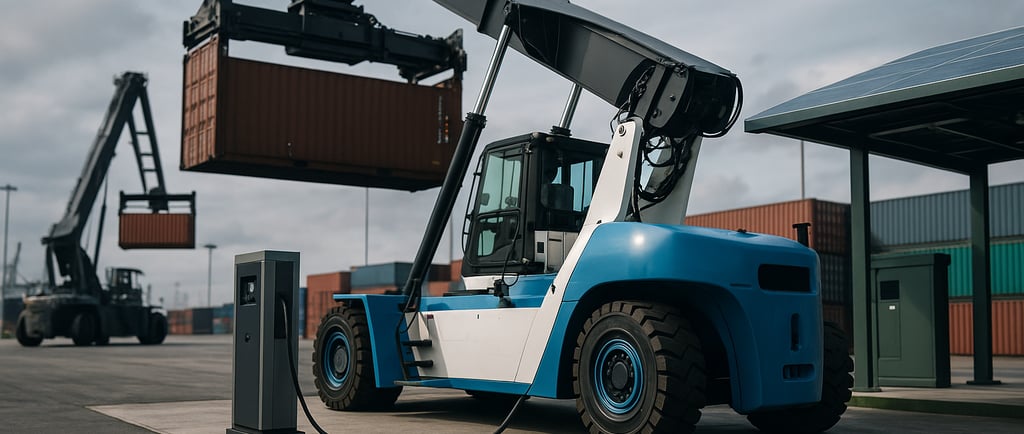
In the race toward net zero, material handling operations sit at the crossroads of opportunity and obligation. Electrifying your material handlers isn’t just a sustainability win—it’s a tactical move to optimize costs, mitigate operational risks, and stay one step ahead on compliance. But while the environmental argument for electric equipment is strong, what about the dollars and cents? Or the complex factors around energy use, LCAs (Life Cycle Assessments), and the evolving regulatory environment?
Whether you’re a logistics operator, fleet manager, or sustainability leader, understanding the full picture of electrifying material handlers versus sticking with diesel models is essential. Let’s break down the actionable decarbonization playbook, diving deep into cost analysis, operational impact, compliance demands, and long-term business value.
Table of Contents
Why Decarbonize Material Handling Operations?
Diesel vs. Electric: The TCO Equation
Actionable Decarbonization Tactics
Energy Considerations: Infrastructure to Grid Impact
Life Cycle Assessments (LCAs): The Full Sustainability Perspective
Operational Performance & Risk Management
Compliance: Meeting Today’s and Tomorrow’s Standards
Practical Steps to Begin Your Electrification Journey
Key Takeaways & Next Steps
1. Why Decarbonize Material Handling Operations?
Sustainability is no longer a branding exercise; it stands as a core pillar of business competitiveness and longevity. For sectors reliant on heavy equipment—construction, warehousing, manufacturing, and shipping—material handlers are operational linchpins, moving goods swiftly, safely, and efficiently. Yet, these essential machines have traditionally been significant contributors to CO₂ and air pollutant emissions.
Key Business Drivers for Decarbonizing Material Handling:
Regulatory Pressure: Around the globe, governments are enacting increasingly stringent emissions standards. California’s Air Resources Board (CARB) zero-emission mandates, the European Union’s Green Deal, and city-level action zones, such as London’s Ultra Low Emission Zone (ULEZ), create direct pressure to phase out diesel in favor of electric alternatives. By 2030, numerous jurisdictions will ban the sale or use of new diesel-powered off-highway vehicles.
Investor and Customer Expectations: The sustainability lens widens annually. Large shippers, e-commerce giants, and industrial leaders are embedding carbon tracking in procurement and supplier mandates. BlackRock, Vanguard, and other institutional investors now prioritize clear ESG disclosures and expect progress in decarbonization. A 2022 PwC report found that 83% of consumers think companies should actively shape ESG best practices.
Cost Volatility and Predictability: Diesel prices remain fiercely volatile, impacted by geopolitical tensions and supply chain disruptions. In contrast, electricity—especially when sourced via long-term contracts or on-site renewables—offers cost predictability and insulation from fossil price shocks. This cost stability is vital in optimizing supply chain budgets.
Brand Value and Competitive Edge: Sustainability is now a powerful differentiator in B2B and B2C markets alike. Companies leading the decarbonization agenda attract top talent, forge trusted partnerships, and appeal to values-driven clients—boosting loyalty and the likelihood of winning large contracts where green criteria are weighted.
The Bottom Line
Decarbonization isn’t a “nice-to-have”; it is now intertwined with operational excellence, compliance, and risk management. Companies that act early can convert sustainability mandates into competitive advantages, future-proofing their business model and maximizing stakeholder value.
2. Diesel vs. Electric: The TCO Equation
Total Cost of Ownership (TCO) takes center stage in any fleet upgrade decision—and for good reason. Focusing solely on initial equipment cost provides only a partial view. Instead, holistic cost analysis reveals long-term financial implications and illustrates the true investment-return profile of electrification.
Initial Acquisition Cost
Diesel: Historically, diesel material handlers present a lower sticker price. For many operators, this upfront affordability appears attractive when cash flow is tight. However, direct acquisition costs often mask subsequent operational expenses.
Electric: Electric models require a higher initial capital outlay, mainly due to battery systems and the need for charging infrastructure. Despite this hurdle, new financial incentives and growing volumes are narrowing the price gap. For example, the U.S. federal Clean Commercial Vehicle Credit offers up to $40,000 per eligible electric off-highway vehicle, while European nations offer VAT exemptions or direct purchase grants for electric equipment.
Energy and Fuel Costs
Diesel: Fuel bills are vulnerable to global oil market shocks and transportation surcharges. Environmental compliance (such as the U.S. EPA’s Tier IV standards) can push costs higher, particularly with surcharges or fossil fuel taxes. Increasingly, industrial operators must pay carbon taxes or buy carbon credits to offset diesel emissions—a trend expected to accelerate.
Electric: Electricity pricing structure depends on location, utility contract, and, increasingly, on-site generation. When fleets utilize solar or wind, marginal energy cost approaches zero after capex amortization. Even when grid-purchased, electricity prices are often lower per “work hour” compared to diesel, and typically, price escalation is slower than fossil fuel inflation.
Maintenance and Servicing
Diesel Handlers: Diesel engines are complex systems requiring frequent oil changes, particulate filter replacement, emissions control system servicing (DEF tanks, EGR/catalytic converters), and complex diagnostics. Engine wear, vibration-induced damage, and exhaust system failures can cause unplanned downtime and mounting maintenance costs.
Electric Handlers: With no exhaust, transmission, or fuel delivery system—and drastically fewer moving parts—electric handlers require only basic preventive maintenance. A 2023 analysis by the International Council on Clean Transportation (ICCT) found electric forklifts and handlers cut scheduled maintenance costs by up to 60% compared to diesel counterparts.
Uptime and Productivity
Downtime directly impacts throughput and delivery reliability. Electric material handlers, equipped with regenerative braking and instant torque, deliver smooth, rapid operations—particularly valued in fast-paced warehouse environments. Charging down-time, once a major barrier, is now mitigated by fast-charging stations, battery swapping, or intelligent fleet scheduling. Each operator must assess their duty cycles to determine optimal electrification models.
Residual Value and Lifespan
Electric: Battery degradation—historically a concern—has improved alongside battery technology, with typical lifespans extending beyond 5–7 years. Unlike diesel, battery packs are replaceable, and end-of-life battery management is maturing, with growing secondary markets and recycling options. Increasingly, the demand for used zero-emission equipment boosts residual values.
Diesel: While robust, diesel engines eventually face major overhauls—turbochargers, injectors, emissions control components—at significant expense. Growing regulatory scrutiny is also devaluing used diesel fleet assets as resale markets dwindle.
Case Study: TCO in Practice
A 2022 McKinsey field study compared conversion scenarios at a European logistics hub. Electric handlers—despite a 20% higher upfront cost—achieved an overall 27% TCO reduction over five years. Key drivers included 48% lower energy costs, 55% lower maintenance spend, and avoided diesel emission penalties. Utilizing on-site solar provided additional operational cost insulation and established a new revenue stream by selling surplus power back to the grid.
3. Actionable Decarbonization Tactics
Transitioning to a greener material handling fleet is a strategic endeavor—requiring a toolkit of cost-, risk-, and compliance-oriented tactics. Here’s how today’s decarbonization leaders get ahead:
1. Run a Customized TCO Analysis
Leverage modern TCO calculators from leading OEMs, which now factor in dynamic energy rates, maintenance schedules, and government incentives.
Analyze different use-case scenarios: peak-shifting, energy arbitrage, battery swapping, and local utility tariffs can all influence the financial equation.
Include potential future costs, such as carbon pricing escalation or non-compliance penalties.
2. Pilot and Benchmark
Deploy a small electric fleet for defined applications (e.g., indoor, shift-based, or high-utilization tasks).
Collect operational data: energy efficiency per task, operator feedback, real downtime, and peak demand impacts.
Set up clear KPIs and compare pilot data with existing diesel equipment—creating a robust ROI model for executive buy-in.
3. Incentive Mining
Government incentives and grants can power dramatic ROI improvements. The European Climate, Infrastructure and Environment Executive Agency (CINEA) and the U.S. Department of Energy both fund programs for off-road equipment electrification.
Utility companies increasingly offer rebates for demand response and load-shifting strategies.
Partner with suppliers (OEMs, energy companies) who can provide incentive consulting to maximize your financial benefits.
4. Staff Training
Onboarding electric material handlers demands upskilling for both operators and maintenance staff.
Industry leaders are investing in digital learning platforms and hands-on workshops, increasing adoption rates and reducing mishandling risks that could void equipment warranties.
5. Renewable Energy Integration
Pairing electric fleets with on-site renewables (solar arrays, small wind turbines) closes the loop on “true zero-emissions.”
Real-world example: As part of its sustainability initiative, a major Scandinavian port installed a 1.2MW solar canopy over its fleet yard. Result: 80% of daytime fleet operations now run on direct solar energy, saving $400,000 per year in grid electricity costs.
6. Smart Fleet Optimization
AI-powered fleet management platforms now monitor battery state-of-health, schedule predictive maintenance, and optimize charging to avoid expensive demand charges.
These platforms provide real-time analytics and can even alert operators to preemptive charging opportunities during off-peak hours—driving up asset utilization rates.
4. Energy Considerations: Infrastructure to Grid Impact
A successful electrification strategy must address the full energy ecosystem—from the charging plug to the utility grid.
Charging Infrastructure
Establishing robust, scalable charging solutions is step one. Questions to answer:
Are existing grid connections sufficient? For smaller fleets, existing commercial capacity may suffice. Scaling up typically requires new transformers, substations, or even on-site energy storage to avoid grid bottlenecks.
What’s the optimal charger type? Fast-charging gets vehicles back on duty quickly, but can trigger high demand charges. Slow or smart charging—spread across shifts—smooths energy load and minimizes bills.
Peak Demand Charges
Utilities often charge “time-of-use” or “demand” fees based on the highest momentary consumption in a billing period. Unmanaged fleet charging, especially during grid peak times, can lead to cost spikes. Smart chargers and IoT-enabled systems now automate off-peak charging, using software controls to minimize energy bills while ensuring fleet readiness.
Grid Cleanliness and Renewable Integration
Your environmental ROI is only as clean as the energy input. Assess:
Carbon Intensity: Locations powered by coal or natural gas grids will see less dramatic CO₂ reductions from electrification. Consult your utility’s fuel mix disclosure or regional renewables share (e.g., California’s grid is now 36% renewables; the U.S. national average is 21%).
Greener Options: Secure green power through utility “green tariff” programs or Renewable Energy Certificates (RECs). Many Fortune 500 firms now require supply chain partners to demonstrate a path to 100% renewable operations.
Utilities as Partners
Engage early with utilities—they are powerful partners in mapping electrical upgrades, unlocking incentives, and identifying “microgrid” strategies. Microgrids integrating battery storage, PV, and flexible loads (such as material handlers) offer resilience during blackouts and can even contribute additional revenue streams when supplying power back to the grid.
Real-World Example
A Dutch logistics company electrified its 60-vehicle fleet after negotiating a bespoke demand response contract with its utility. By agreeing to flexible charging and limited remote curtailment during grid emergencies, it reduced energy costs by 19% and unlocked a new source of revenue—a template for next-generation fleet electrification partnerships.
Life Cycle Assessments (LCAs): The Full Sustainability Perspective
Most internal discussions about electrification focus on tailpipe emissions and fuel cost. That is necessary but incomplete. As soon as your board or customers talk about Scope 3, you will need a full life cycle view. That is where LCAs come in. They quantify environmental impacts from raw materials to end of life. For material handlers, that includes:
Extracting and processing steel and other metals for the chassis and mast
Manufacturing and shipping the machine
Producing fuel or electricity and using it in daily operations
Maintenance, parts, fluids, and consumables
End of life, including recycling of metals and batteries
Studies on forklifts and similar machinery already give you a clear direction. A cradle to gate LCA of heavy equipment found that manufacturing a single forklift emits around 10.8 tons of CO₂ equivalent, roughly 2.8 tons of CO₂ per ton of machine. SpringerLink+1
Operational LCAs then compare diesel versus electric forklift operation per ton kilometer, using ISO 14040 and 14044 methods. These studies consistently show that electric forklifts have a much lower environmental impact per unit of work than internal combustion models, even when you include upstream electricity emissions. Baza Wiedzy+1
You can translate that into a simple mental model.
Imagine a mid sized diesel handler that runs 2,000 hours per year over 10 years. If it emits around 5,300 to 7,900 grams of CO₂ per operating hour, operational emissions alone land in the range of 106 to 158 tons of CO₂ over its life. ep-equipment.com
A comparable lithium electric handler, accounting for both battery production and electricity use, can emit around 1,375 grams of CO₂ per hour under typical conditions. ep-equipment.com Over the same 20,000 hours, that is roughly 27.5 tons of CO₂, plus the 10 to 15 tons tied to manufacturing and battery production. Even with conservative assumptions, you still see a reduction of roughly 40 to 70 percent versus diesel across the full life cycle.
The grid matters, but less than many assume. The global average emissions intensity of electricity sits around 445 to 480 grams of CO₂ per kilowatt hour and is trending downward as renewables grow. IEA+1 In the European Union, the emission intensity of power generation has dropped about 40 percent over the past decade as coal declines and renewables increase. European Environment Agency+1
For you, that means two things:
The same electric handler becomes cleaner every year as the grid decarbonizes.
If you operate in a region with a relatively clean grid or procure green tariffs or RECs, the life cycle gap between electric and diesel widens quickly.
Ports provide a useful benchmark. A case study at a large container port estimated annual CO₂ emissions from cargo handling equipment at over 8,000 tons per year, with cranes and rubber tyred gantry cranes accounting for more than 80 percent of that footprint. MDPI+2ScienceDirect+2 Electrifying RTGs and yard equipment in those studies cut local fuel use and emissions sharply while maintaining performance. kalmarglobal.se+1
LCAs also highlight the role of automation. A recent assessment covering automated guided vehicles and energy efficient electric forklifts found that smarter, more efficient equipment reduces both emissions and total energy demand versus conventional operations. MDPI
For material handling, an LCA led approach lets you:
Compare real options: diesel, electric, hybrid, and possibly hydrogen fuel cell in high duty, fast refuel environments
Quantify how much of your footprint sits in manufacturing, operation, and end of life
Identify improvement levers beyond “switch fuel”, such as higher utilization, better duty cycle planning, and more aggressive recycling of metals and batteries
If your customers are asking for product level carbon footprints or cradle to gate data, the LCA conversation is no longer optional. It is the language the market now uses to judge claims.
Operational Performance & Risk Management
No fleet manager will back electrification if it threatens uptime. Your operators will not accept it either. The performance discussion has to be honest, nuanced, and evidence based.
Performance in real duty cycles
Electric material handlers deliver instant torque and very fine control at low speeds. In warehouses and yards that stop and start frequently, this translates directly into quicker cycle times and smoother handling. Regenerative braking recovers energy in those stop and go cycles and extends battery life. ep-equipment.com+1
Port case studies on electric RTGs and yard cranes show that well specified electric units keep up with or exceed diesel productivity, especially when paired with smart energy management and operator training. easts.info+1
You still need to take a granular look at your own operations:
How many hours per shift, per unit
Typical load profile, including peak lifts
Idle time patterns
Breaks and shift changes that create opportunity charging windows
In high duty, outdoor, rough terrain applications, diesel or hybrid may still be the right choice for now. Mixed fleets will be normal for the next decade.
Workplace safety and environment
For indoor operations, electric equipment brings clear safety and health benefits. Electric forklifts and handlers have zero tailpipe emissions, which directly improves air quality in facilities such as food processing, pharmaceuticals, and distribution centers. HELI - heli+2hifouneforklift.com+2
Noise levels fall sharply as well. Electric units run much quieter than internal combustion machines, which helps communication, reduces fatigue, and lowers long term hearing risk. Patriot Forklifts -+2tailiftcanada.com+2
Fewer hot surfaces and exhaust components also reduce fire and burn risks. Combined with smoother acceleration and more precise low speed control, this gives you a safer yard or warehouse.
Reliability, maintenance, and uptime risk
Electric forklifts and handlers have fewer moving parts and fewer fluid systems to maintain. Industry sources report maintenance cost savings of 15 to 20 percent for electric forklifts compared with internal combustion, driven by the lack of oil changes, filters, and complex emissions control systems. Vitan Equipment+1 Some fleet analyses show that the total cost of ownership can be up to 45 percent lower for electric forklifts over their life. hdvsforklift.com+2tcm.eu+2
From a risk perspective, you trade engine failures and emissions system faults for battery health and charging availability. You manage that risk with:
Proper battery sizing and duty cycle analysis before purchase
State of health monitoring for batteries
Preventive maintenance contracts that include chargers and software
Clear rules on charging patterns to avoid abuse
Technology and financial risk
The main perceived risks include:
Battery life and replacement cost
Residual value uncertainty
Technology change that could make current purchases feel outdated
You can manage these by requiring performance guarantees from OEMs, negotiating fixed price or indexed replacement battery contracts, and tracking real world utilization and degradation curves with telematics.
Operational risk also intersects with energy risk. If you rely on a single grid connection without backup, a power outage can stop operations. On the other hand, diesel supply can also be disrupted. Many leading operators hedge both by combining grid supply with on site solar and storage, or by negotiating demand response contracts that reduce cost and improve resilience. Interreg Baltic Sea Region+2Climate Break -+2
Compliance: Meeting Today’s and Tomorrow’s Standards
Regulation is catching up with material handling. The trend is clear. Your fleet will be expected to produce less local pollution and lower greenhouse gas emissions, and you will have to prove it with data.
Zero emission equipment rules
California is the most visible example for forklifts and handlers. The California Air Resources Board adopted the Zero Emission Forklift Regulation in June 2024. The rule starts to apply from January 1, 2026, and phases out large spark ignition forklifts between 2028 and 2037 as they age out. Many internal combustion forklifts in targeted classes must be replaced with zero emission units, and the regulation aims to remove internal combustion forklifts from the state entirely by around 2043. Western Propane Gas Association+3California Air Resources Board+3DC Velocity+3
This rule targets a specific category, but it sends a global signal. If you supply national or global brands that operate in California, similar expectations will flow through their supplier codes and procurement criteria in other locations.
In Europe, the Green Deal and related policies set a path to reduce transport related greenhouse gas emissions by around 90 percent by 2050, with at least a 55 percent cut in net emissions by 2030. European Commission+2ITF OECD+2 Road and logistics operators are expected to decarbonize both vehicles and material handling assets as part of that trajectory. Climate Action+1
Corporate reporting and Scope 1, 2, and 3 emissions
At the corporate level, the EU Corporate Sustainability Reporting Directive requires large companies and listed entities to report detailed environmental impacts, including Scope 1, 2, and 3 emissions, in a standardized and auditable way. Finance+2circularise.com+2 For many companies, Scope 3 emissions along the value chain represent 70 to 90 percent of the total footprint. PwC+1
Material handling sits squarely in this picture:
Scope 1 covers direct emissions from diesel and gas equipment you own or operate
Scope 2 covers purchased electricity for charging electric fleets
Scope 3 covers the embodied emissions in the machines you buy, plus upstream and downstream logistics in your supply chain
Electrification changes the profile. You reduce Scope 1 emissions substantially as you move away from diesel, and you increase Scope 2. If you source lower carbon electricity over time, your total emissions fall and your LCA picture improves year after year.
Non compliance risk
If you ignore these shifts, you face:
Higher fuel and carbon related charges, especially in regions that extend emissions trading and carbon pricing to transport and logistics
Bans or restrictions on high emitting equipment in ports, urban logistics hubs, and indoor facilities
Lost contracts because you cannot supply emissions data or meet customer procurement thresholds
By contrast, if you can show credible TCO, LCA, and compliance data for your material handling strategy, you position yourself as a preferred supplier to customers under pressure from CSRD style rules, net zero commitments, and investor scrutiny. fleetenergies.io+2EUKI+2
Practical Steps to Begin Your Electrification Journey
You do not need a perfect plan before you move. You do need a clear, staged approach that your operations, finance, and sustainability teams can support.
Step 1: Establish your baseline
Start by mapping your current fleet and its impacts:
Number, type, and age of material handlers and forklifts
Hours of operation by unit and by site
Fuel consumption and cost by unit, including any carbon taxes or surcharges
Maintenance spend and downtime events
Convert fuel use to CO₂ emissions using accepted emission factors. This gives you a baseline for both cost and carbon.
Step 2: Segment use cases and pick early candidates
Not all units are equal. Identify:
Indoor equipment where air quality and noise are already concerns
High utilization units that burn the most fuel per year
Sites that already have relatively strong electrical infrastructure
These are usually the lowest friction starting points. Outdoor, severe duty equipment may follow once technology options and infrastructure improve.
Step 3: Engage your utility and energy team early
Before you order hardware, sit down with your utility or energy provider. Review:
Available capacity at each site and any planned upgrades
Time of use tariffs and demand charges
Incentives for managed charging, on site solar, storage, or demand response
Use this input to shape your charging layout and to identify whether a solar canopy, battery storage, or microgrid style solution will improve resilience and cost over time. Interreg Baltic Sea Region+2California Energy Commission+2
Step 4: Run scenario based TCO and LCA comparisons
With baseline and energy data in hand, you can model:
Total cost of ownership for diesel versus electric over realistic lifetimes
Sensitivities to fuel price, electricity price, carbon price, and utilization
Life cycle emissions using LCA tools or OEM supplied calculators
Many manufacturers and independent platforms now offer TCO and LCA calculators that include incentives, maintenance, and duty cycle parameters. Use them, but validate with your own historical data. MDPI+3hdvsforklift.com+3firstenergycorp.com+3
Step 5: Design and run pilots
Select one or two sites or use cases, and define a pilot with clear objectives and metrics. Include:
Operational KPIs, such as throughput, on time performance, and downtime
Financial KPIs, such as energy cost per operating hour and maintenance cost per unit
Environmental KPIs, such as CO₂ per ton handled and indoor air quality indicators
Run the pilot long enough to cover seasonal variations and peak periods. Capture operator feedback and safety observations. Compare the results with your diesel baseline and your modelled TCO to refine assumptions.
Step 6: Build your internal business case and roadmap
With real data from pilots, you can build a credible internal case that speaks to:
Total cost of ownership and payback for different fleet segments
Emissions reductions aligned with corporate targets and customer expectations
Compliance with emerging regulations in your key markets
From there, develop a phased roadmap that aligns equipment replacement with end of life cycles, avoids stranded assets, and keeps options open as technologies evolve.
Step 7: Scale and continuously improve
Once pilots prove out, you scale:
Standardize procurement criteria and technical specs for electric material handlers
Embed charging and electrical infrastructure design into site master planning
Integrate telematics and fleet management systems to monitor utilization, state of charge, and battery health
Treat electrification as an ongoing program, not a one time project. The grid will keep getting cleaner, regulations will keep tightening, and technology will keep improving. Your roadmap should update with each major change.
Key Takeaways & Next Steps
When you look at electrification of material handlers across cost, performance, and compliance, a few clear points stand out.
First, the TCO story is already compelling in many use cases. Lower fuel and maintenance costs, plus incentives, can more than offset higher purchase prices over a realistic lifetime. Fleet level analyses show reductions in operating cost of 30 to 50 percent in favorable conditions. CFE Equipment+3hdvsforklift.com+3Vitan Equipment+3
Second, the life cycle emissions benefits are real and significant. Even after you account for manufacturing and batteries, electric handlers consistently beat diesel on CO₂ per unit of work, and the advantage grows as grids decarbonize. European Environment Agency+5ep-equipment.com+5SpringerLink+5
Third, regulatory pressure and reporting rules are moving in one direction. Zero emission forklift mandates, Green Deal targets, and CSRD style reporting make status quo diesel fleets riskier every year, both in compliance and in market access. CSR Tools+4California Air Resources Board+4fleetteam.com+4
If you are a logistics, fleet, or sustainability leader, your next steps are clear:
Quantify your baseline and identify your highest impact fleet segments
Use TCO and LCA models, backed by real operational data, to select your first electrification candidates
Engage utilities and OEMs early on infrastructure, incentives, and performance guarantees
Run structured pilots, build an internal roadmap, and align electrification with broader decarbonization and resilience goals
The companies that move now will not just cut emissions. They will gain cost control, regulatory headroom, and a clear story for customers and investors who are under pressure themselves.
Expanded FAQs
Q1. In which applications does diesel still make more sense today?
You may still prefer diesel in very high duty, continuous outdoor operations where:
Equipment runs near full capacity for many hours with minimal breaks
Terrain is rough and unpaved, which increases energy demand and shock loads
Temperatures are extreme and charging infrastructure is limited or unreliable
Examples include some open pit mining loaders, certain logging operations, or remote sites with weak grids. Even there, hybrid or partial electrification of support equipment can reduce fuel use and emissions while you wait for heavier duty electric or fuel cell options to mature.
Q2. How do I account for battery production emissions in my business case?
Battery production has a noticeable CO₂ footprint, often in the tens of kilograms of CO₂ per kilowatt hour of capacity. ResearchGate+2SpringerLink+2 When you spread that over the full life of a well used handler, the additional emissions per operating hour are usually small compared with what you avoid by eliminating diesel combustion.
For your business case, treat battery emissions as part of capital goods emissions in your Scope 3 inventory. Include them in LCA calculations, but compare them fairly against lifetime diesel emissions. You will usually see a net reduction, especially in regions with cleaner power.
Q3. What about fire risk and battery safety?
Modern lithium batteries for industrial equipment are designed with multiple layers of protection, including battery management systems, temperature and voltage monitoring, and rugged enclosures. Incidents are rare compared with total installed base, but they are not zero.
Mitigation steps include:
Selecting equipment that meets recognized safety standards and certifications
Ensuring proper ventilation and fire detection around charging areas
Training staff on correct charging, storage, and emergency procedures
Working with insurers to align on best practice and any additional requirements
Many large distribution centers and ports already run sizable lithium fleets safely. Study their standards and adapt them to your context.
Q4. How often will I need to replace batteries and what does that cost?
Typical industrial lithium battery packs for forklifts and handlers can last 3,000 to 5,000 cycles or more with proper use and charging. In a two shift warehouse, that often equates to 7 to 10 years of life. Shandong Zhuogong Machinery Co., Ltd.+1
Battery replacement costs depend on chemistry, capacity, and supplier. You can manage this by:
Negotiating fixed or capped pricing for replacements in advance
Structuring full service leases that include battery refresh at defined points
Planning for second life uses, such as stationary storage, to improve residual value
Include at least one full battery replacement in your long term TCO scenarios for high utilization fleets. This keeps your financial model conservative and defensible.
Q5. How do cold climates affect electric material handlers?
Cold weather reduces available capacity and slows charging for lithium batteries. At the same time, diesel engines also become less efficient and may require more idling and block heaters.
In practice, you can operate electric material handlers successfully in cold regions if you:
Specify batteries with heating and insulation options
Allow enough capacity margin to account for seasonal performance drop
Provide heated charging areas where practical
Adjust duty cycles and charging windows in the coldest months
Many Nordic ports and warehouses run electric handling equipment year round. Their experience shows that correct specification and operational planning matter more than temperature alone. Interreg Baltic Sea Region+2kalmarglobal.se+2
Q6. Should I consider hydrogen fuel cell forklifts or handlers instead of batteries?
Fuel cell forklifts offer fast refueling and good cold weather performance. Around 50,000 hydrogen forklifts operate worldwide, compared with more than a million battery electric forklifts purchased in 2021. Wikipedia+1
Fuel cells may be attractive if you:
Have very high duty cycles with limited downtime
Already handle or plan to handle hydrogen safely on site
Operate in refrigerated or cold environments where hydrogen performance is stable
They require their own fueling infrastructure and hydrogen supply, which adds cost and complexity. For most warehouses and mixed logistics sites, battery electric options remain simpler and more mature. For some ports and heavy duty yards, fuel cells may become more compelling over time, especially if low carbon hydrogen becomes widely available.
Q7. How do I measure real CO₂ savings from electrification?
You can track three levels:
Fuel and electricity use per unit and per site, converted to CO₂ using recognized emission factors for diesel and local grid electricity. IEA+2IEA Blob Storage+2
Life cycle emissions per handler, including manufacturing and end of life, using LCA tools.
Fleet level emissions per ton handled or per pallet moved, which links directly to your customers’ Scope 3 and product level footprints. Industrial Sustainability Solutions+3Baza Wiedzy+3MDPI+3
Record your baseline before you switch equipment, then update regularly. This gives you hard numbers for internal reporting, customer RFPs, and investor ESG disclosures.
Q8. What if I do not have the capital to electrify my fleet at once?
You have several options:
Prioritize replacements where engines or emissions systems are nearing end of life
Use leases or pay per use models that move part of the cost from capex to opex
Apply for grants and incentives from national programs, utilities, or ports
Start with smaller pilots and reinvest savings from lower fuel and maintenance costs
You do not need to convert everything at once. A staged, financially sound plan is more credible for both finance teams and external stakeholders.
Q9. How do mixed fleets affect maintenance and operations?
For many years, you will run mixed fleets. That is normal. The main considerations are:
Training technicians for both diesel and electric systems
Managing spare parts and tools for both types
Scheduling so that electric units handle the most suitable tasks, while diesel covers edge cases
Telematics can help assign the right machine to each job and track utilization across both sub fleets. Over time, as electric coverage expands, diesel becomes a smaller, more specialized slice of the operation.
Q10. How does electrification of material handlers connect to broader logistics decarbonization?
Material handling is one visible part of a larger shift. As you electrify handlers and forklifts, you also:
Improve indoor and yard air quality, which matters for workforce retention and regulatory compliance
Build electrical and digital infrastructure that supports electric trucks, yard tractors, and automation
Generate credible emissions data that feeds into corporate Scope 1, 2, and 3 reporting and net zero plans
That makes electrification of material handlers both a practical starting point and a key building block in a larger decarbonization strategy for logistics and industrial operations.
Connect
Your trusted partner for scrap metal procurement.
CONTACT
About
haroon@tdcventures.com
+1-307-655-7593
© 2025. All rights reserved.
NEWSLETTER