
Gamified Recycling Apps: Driving Real-World Collection
Discover how gamified recycling apps with AI engagement are closing the awareness-action gap in 2026, reducing contamination, and driving measurable real-world collection improvements.
AI & DIGITAL ENGAGEMENT IN SUSTAINABILITY
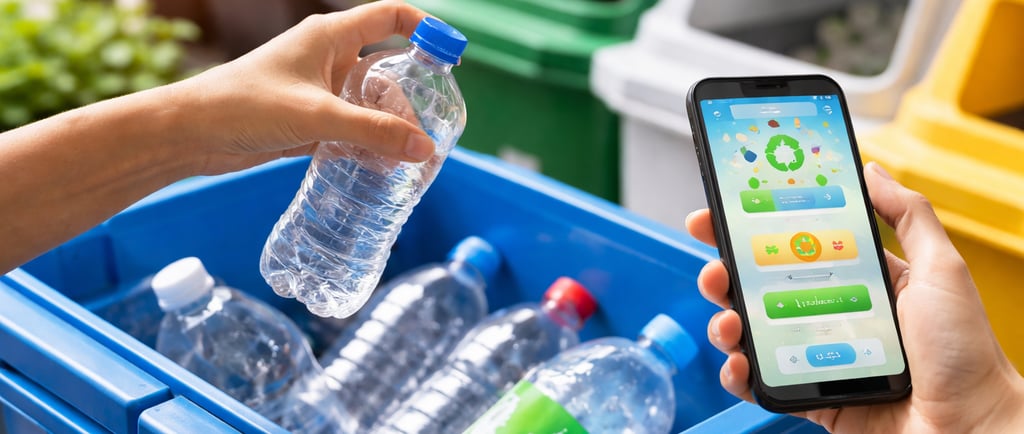
Context: Gamified Recycling’s Critical Role in 2026
In 2026, recycling engagement is more urgent and complex than ever. Municipalities, sustainability leaders, and consumer brands confront persistent, quantifiable gaps between public awareness of recycling and observable, real-world action. Despite widespread information campaigns and investment in infrastructure, global waste management data reveals that only a fraction of recyclables actually make it through the system cleanly. According to The World Bank, more than two billion tons of municipal solid waste are generated globally each year, yet recycling capture rates remain stubbornly low, especially in urban centers and multi-family dwellings.
AI-powered digital engagement has emerged as a game-changer for proactive waste management, leapfrogging older, passive “set-and-forget” solutions. Gamified recycling apps now fuse the addictiveness of leading learning platforms—think Duolingo’s daily streaks or Fitbit’s micro-goals—with the accountability and precision required for circular economy success. The combination of AI engagement with gamification doesn’t just make recycling more interesting; it creates a real feedback loop that converts intent into measurable action.
Case Study:
In Stockholm, a city-led trial of a gamified recycling app with AI habit reminders led to a 17% uptick in container use in just three months. Property managers reported fewer complaints about missed pickups, and local environmental KPIs showed a notable increase in recycling purity—clear proof that digital engagement is more than a passing trend.
Forward-thinking cities, property groups, and ESG-focused consumer brands now compete to equip their residents and customers with digital recycling engagement tools explicitly designed to motivate circular behaviors at scale. As policies tighten and investors eye ESG performance, gamified apps with AI engagement fill a critical gap between intention and action.
SEO Contextual Phrases:
Digital recycling engagement in urban environments
Municipal recycling apps with AI
Measuring real-world collection rates
2. Problem Statement: Why Traditional Recycling Engagement Falls Short
Traditional recycling engagement efforts—door hangers, static information portals, and irregular announcements—fail to produce meaningful and lasting behavior change. Most cities report robust awareness metrics, with internal surveys often showing up to 90% of citizens stating they know recycling is “important” or “required.” Yet, the conversion from knowledge to correct action paints a different story.
The Awareness-Action Gap:
While an estimated 65–90% of residents report knowing about recycling, only 25–45% consistently follow municipal sorting instructions.
Contamination—recyclable bins that include non-recyclable or improperly sorted materials—remains a chronic problem. Some North American cities have reported contamination rates as high as 25–30%, undermining the economics and impact of recycling programs.
“Wishcycling” (optimistically tossing questionable items in the blue bin) persists. Screenings of recycling streams regularly reveal plastic bags, greasy packaging, and other contaminants, which can cause entire truckloads to be diverted to landfills.
Data and Measurement Issues:
Without real-time data, program administrators struggle to understand where and why contamination surges or participation drops.
Static apps that merely remind users of pickup days or provide generic sorting charts have negligible effect on actual collection performance.
Studies in Europe and North America have repeatedly shown that even modest real-world collection and contamination improvements—just 5–10%—translate directly into lower landfill use and better municipal ROI.
By continuing to rely on outdated tools, programs risk significant costs:
Lost funding due to missed waste diversion targets
Reputational damage when sustainability claims cannot be substantiated
Negative impact on ESG ratings for property groups and consumer brands
To address these urgent gaps, a strategic shift toward digital recycling engagement—anchored in behavior science, AI engagement, and gamification—is now the decisive move for cities and sustainability-driven organizations.
SEO Contextual Phrases:
Recycling contamination reduction
Behavior change in municipal recycling
Real-world recycling app ROI
3. Key Concepts: Gamification, AI Engagement, Behavior Loops
Understanding how gamified recycling apps actually work requires a closer look at the driving mechanisms:
Gamification
Transforms recycling into an engaging, game-like experience.
Utilizes proven motivators: points, streaks, levels, badges, leaderboards, and social competition.
Example: A tenant earns points for daily correct sorting and climbs a leaderboard vs. neighboring buildings.
AI Engagement
Employs artificial intelligence to deliver smart, personalized prompts and automated feedback.
Monitors user actions (e.g., streaks broken, bins missed, quizzes answered) to offer customized nudges (“You missed last week’s glass recycling—tap for a refresher!”).
AI algorithms optimize notification timing, delivering reminders during moments when a user is most likely to act—for example, just before leaving for work on collection day.
Adjusts the challenge level to keep users in a “flow” state, neither bored nor overwhelmed.
Behavior Loops
Converts recycling from an occasional act to a durable habit through the scientific cue → behavior → reward cycle.
Reinforces learning and good behavior: “Sort paper now, earn instant points and receive feedback.”
Provides immediate, visible progress—crucial for maintaining momentum and motivation.
Case-in-Point:
The mobile app “RecycleQuest” partnered with a Canadian city to test AI engagement. Users who received adaptive, AI-timed nudges had 57% more completed recycling actions per month compared to those using basic reminder apps. The deeper user involvement led to an 18% drop in bin contamination and a documented reduction in sorting errors, validating the importance of the full behavior loop.
SEO Contextual Phrases:
Gamification strategies for recycling rates
AI-powered nudges for waste reduction
Behavior loop in sustainability apps
4. The “Digital-to-Action” Framework for Recycling Apps
Moving beyond static engagement, the “Digital-to-Action” framework provides a structured approach for recycling apps to bridge the awareness-action gap. This model, created by leading waste-tech strategists, translates behavior science into app features that drive real-world collection.
Step 1: Awareness Trigger
Use omnichannel onboarding: QR codes in move-in packets, vivid posters with NFC tags, and incentives for first logins.
Example: On International Recycling Day, the city hosts digital pop-ups with instant registration rewards.
Step 2: Micro-Tasking
Break down recycling actions into easy, daily micro-tasks: scan a product, answer a quiz, confirm a bin is full.
Integrate AI to suggest “next best actions” tied to common user mistakes or gaps (“Try scanning a new package today!”).
Step 3: Progress Tracking
Provide real-time dashboards: users watch their personal streaks, see bins improve on a map, or challenge their floor/building to friendly competitions.
Social proof: Highlight “neighbors like you” who recently hit new milestones.
Step 4: Rewards and Recognition
Build in both extrinsic (tangible prizes, business discounts, donations) and intrinsic (badges, social shout-outs, access to pro-level content) motivators.
Example: Unlocking a composting webinar or premium badge at “Green Guru Level 5.”
Step 5: Feedback Loops
Deliver instant, personalized feedback after key actions.
Advanced AI analyzes user actions: If a photo submission is incorrect, the app delivers a corrective tip or mini-quiz on common errors, reinforcing correct sorting.
Worked Example:
A mid-sized city deploys a RecycleCoach-like app. New tenants get a unique code and a “Welcome Recycler” badge. Each week, users scan sorted items; the app’s AI analyzes submissions and highlights correct actions with “Streak Boosts.” Neighborhoods with the highest purity rates win local coffee vouchers (donated by sponsors).
Results Over Six Months:
18% (Estimate) drop in contamination
17% increase in consistent bin use
11 local business partnerships for rewards
26% more app-based recycling queries vs. previous info-site model
Data-Driven Impact:
The city’s waste management team, once flying blind on effectiveness, now receives dashboard reports highlighting which zip codes respond best to which rewards—guiding future campaigns with precision.
What Strong Gamified Recycling Apps Actually Need to Change Real-World Collection
A recycling app does not succeed because it has points, badges, and a clean interface. It succeeds when it reduces friction at the exact moment a resident is making a disposal decision. That means the app has to answer the most common question in recycling, fast: “Can this go in my bin, right now?” Programs that do this well combine local sorting rules, product search, image support, reminders, and immediate correction. Programs that do this poorly turn into digital brochures, and digital brochures do not move contamination, capture, or participation in a serious way. The evidence base is moving in this direction. A 2025 systematic review of 133 gamified sustainability interventions found that the strongest programs are purpose-built around education, behavior change, or participation, rather than adding game mechanics as decoration. In waste systems, that distinction matters because the target behavior is specific, repeated, and measurable.
The app also has to match how people actually live. In dense apartment buildings, the problem is often uncertainty, inconvenience, and weak accountability around shared bins. In suburban curbside systems, the problem is often confusion about accepted materials, changing local rules, and contamination from packaging, bags, and food residue. In campuses, malls, airports, and mixed-use districts, the problem is speed. People decide in seconds. A useful app meets those different contexts with different mechanics: building competitions in multifamily settings, collection-day nudges in curbside systems, scan-and-sort tools in retail and campus settings, and localized multilingual content where the user base is diverse. That is why broad waste data and local rule accuracy matter so much. The World Bank’s 2026 update shows that the world generated 2.6 billion tonnes of municipal solid waste in 2022, that volumes could rise to 3.9 billion tonnes by 2050, and that about 30 percent of global waste is still openly dumped or left uncollected. A digital layer that improves correct participation is not cosmetic. It becomes part of service quality, public health, and circular recovery.
The strongest apps also create a short path from action to consequence. If a resident scans an item, gets a sorting answer, disposes of it correctly, and sees progress immediately, the loop closes. If they must wait until a quarterly newsletter to learn that they contaminated a bin three weeks ago, the lesson is mostly lost. This is one reason why tagging programs, app reminders, and feedback tools often work best together. In Brooklyn, Ohio, a simple inspection-and-tagging campaign cut contamination from 38 percent to 20 percent in eight weeks. In Cincinnati, a cart-tagging campaign covering 27,628 households reduced contamination from 28 percent to 19 percent, with a cost per household of about $2.23. Those were not pure app interventions, but they prove a core point: immediate, visible feedback changes behavior faster than passive education alone. A strong app should reproduce that same speed of correction in digital form, then connect it to real-world operations.
Reward Design and the Economics Behind Participation
Rewards matter, but the type of reward matters more than the size. Many programs get this wrong by assuming residents need large prizes. In practice, small, frequent, visible rewards often work better than large, rare ones. The reason is simple. Recycling is a low-intensity action. The reward structure has to fit that. Streaks, neighborhood milestones, donation unlocks, merchant coupons, fee credits, and recognition inside a building or community can all work, as long as they are tied to actions that the system can verify. The point is not to bribe people into recycling. The point is to make the right action easier to repeat and more satisfying to complete. Research summarized in the New Jersey household recycling app study points to this clearly. One referenced experiment paired app-based feedback with points redeemable for vouchers or monetary rewards and reported a rise in recycling from 20 percent to 40 percent, while contamination fell from 40 percent to 2 percent. That is a dramatic result, and it shows the upside when reward design, verification, and feedback are aligned.
The economic case for this is stronger than many procurement teams assume. Even modest contamination reductions can improve payload value, reduce rejected loads, lower MRF residue, and reduce education waste. EPA material shows that the United States recycles at roughly 32 percent today, while a stronger national system could push that much higher if infrastructure and program design improve. State reporting reviewed by EPA also shows how weak measurement still is across many jurisdictions, especially on contamination and capture. That means a well-designed app does not just change resident behavior. It helps create the performance data many systems still lack. Once a city can show that one neighborhood responds to school-based challenges, another to bilingual reminders, and another to merchant rewards, public money stops being spread blindly. It starts following what works.
This is also where brands and producer-funded systems enter the picture. OECD notes that extended producer responsibility schemes generate funding for collection, sorting, and recycling, while also producing more detailed data on products, waste generation, and treatment. In 2026, that matters more because the policy environment is tightening. The EU’s Packaging and Packaging Waste Regulation entered into force on 11 February 2025 and generally applies from 12 August 2026. It is pushing clearer labeling, stronger recyclability requirements, and better packaging outcomes across the market. In plain terms, the more packaging systems are required to be trackable, recyclable, and better labeled, the more useful digital engagement becomes. Apps can become the consumer-facing layer that helps citizens act on those new rules, while EPR funding can help pay for the education and data side.
Data, Trust, Privacy, and Integration with Real Operations
No gamified recycling app will hold attention for long if residents do not trust the data or if operators cannot use it. The app cannot live in a silo. It has to connect to real collection calendars, accepted-material lists, property-level or route-level service logic, and campaign reporting. If a user is told that a carton is recyclable but the local MRF rejects it, trust drops fast. If a property manager sees leaderboard activity but no change in contamination, the app starts to look like a vanity project. The digital layer only matters when it reflects the operational truth on the ground.
This is why data governance must be designed from day one. Municipal leaders and housing operators should know exactly what they are collecting, why they are collecting it, how long they keep it, and what they will never collect. Most programs do not need invasive surveillance. They need event-level signals such as item searches, quiz completion, self-reported actions, collection-day opens, streak retention, building participation, and verified contamination incidents. The cleaner the data model, the easier it is to defend publicly and the easier it is to use. This is especially important in low-trust environments, in schools, and in multifamily housing where residents may already feel over-monitored. Good programs explain the value exchange clearly: the user gets local certainty, reminders, progress, and rewards; the operator gets better participation and cleaner material.
The integration question is equally practical. The app should not only report how many people opened a reminder. It should help answer operator questions such as where contamination is recurring, what materials are most misunderstood, which buildings need a physical intervention, whether a bilingual campaign changed outcomes, and whether reward spend was justified. EPA’s recent assessments show that many jurisdictions still do not collect strong contamination or capture-rate data consistently. That is a major systems gap. A gamified app, if designed well, can become part of the measurement spine for a local recycling program, especially when combined with periodic audits, tagging, or route-level checks.
Implementation Playbook for Cities, Property Groups, Campuses, and Brands
The first step is not to build the app. The first step is to define the behavior that matters most. Is the problem low participation, high contamination, poor organics separation, plastic bag misuse, weak multifamily performance, or low tenant engagement in a new building? Different problems need different mechanics. Newark’s case shows what happens when a program narrows the target sharply. A one-month app-based educational campaign on plastic bags followed an audit of 25 residential homes and led to a reported 82 percent reduction in plastic bag contamination. That is a reminder that narrow targets often create the fastest wins.
The second step is to choose a pilot environment where the signal will be visible. Good pilots are bounded. A single district, a cluster of apartment buildings, a university residence system, or a defined curbside zone works better than a citywide launch with vague goals. Before launch, operators should run a baseline contamination audit, define the top ten material errors, lock the local rules database, and create a short content library in the languages residents actually use. Then the app can launch with one primary goal, one secondary goal, and one feedback mechanism. For example: primary goal, reduce plastic film contamination; secondary goal, raise weekly collection participation; feedback mechanism, in-app correction and curbside tags for repeat issues.
The third step is to set a reward structure that the budget can sustain. Many strong pilots use sponsor-funded merchant offers, donation pools, floor-versus-floor competitions, or recognition rather than heavy cash payouts. Local business partnerships can work well because they tie recycling behavior to community visibility. The original blog draft points in that direction, and real municipal programs support the general lesson that behavior changes faster when the intervention is visible and repeated. Louisville’s experience is useful here. The city has used Recycle Coach since 2019 for reminders and material searches, then added a bilingual Recycle Right tagging program in 2023. Recycle Coach reports that Louisville increased recyclable materials by 74 percent in the covered context. Even allowing for case-study framing from a vendor, the operational lesson is sound: app education works better when paired with physical, repeated field feedback.
The fourth step is to treat the first 90 days as a learning window, not a branding exercise. Run cohort analysis. Watch what happens after day 7, day 21, and day 60. Identify which reminders are ignored, which search terms dominate, which reward types drive repeat use, and which properties or routes show the biggest gap between digital engagement and field results. That is where program leaders learn whether the issue is content, incentives, trust, timing, or operations. In most cases, the answer is not “more gamification.” It is usually better targeting, cleaner local data, and faster correction.
Measurement: What to Track and How to Prove It Works
If a city or property group cannot prove that the app changed material outcomes, the program will struggle in budget review. Vanity metrics are not enough. Downloads, badge completions, and average session duration are useful only if they connect to real performance. The core measurement stack should include contamination rate, capture rate where possible, participation frequency, search-to-action conversion, repeat engagement, and intervention cost per improved household or building. Cities should also track audit-confirmed improvement in the top five contaminant categories, because broad contamination numbers alone can hide important detail.
The practical standard is simple. Run a baseline audit before launch. Repeat the audit during the pilot and after the pilot. Compare changes across active users, lightly engaged users, and control areas where possible. If the app is tied to specific buildings or routes, compare those directly. The reason this discipline matters is visible in the field data. Brooklyn’s “Oops” tagging effort showed a large contamination drop in just eight weeks. Cincinnati’s campaign produced a 32 percent drop in contamination with clear household-level cost data. Those examples prove that short-cycle behavior interventions can be measured, priced, and compared. A digital program should be held to the same standard.
A second layer of proof should focus on economics and system outcomes. Did rejected loads fall. Did residue at the MRF fall. Did complaint volume change. Did customer service inquiries become more specific and easier to resolve. Did local merchants or sponsors renew. Did building managers report less bin-room chaos. These are the indicators that turn a pilot into a durable operating tool. In a world where the World Bank estimates that universal and sustainable waste collection and management may require steady public spending of 0.3 to 0.8 percent of GDP, small gains that improve service quality and material recovery are not trivial. They are part of how systems justify scarce public and private funds.
Case Patterns from the Field
One pattern appears again and again. Focused education on a single contaminant category produces sharper gains than broad messaging. Newark’s plastic bag intervention is a strong example. Another pattern is that multilingual, repeated, point-of-decision correction works better than annual education campaigns. Louisville’s bilingual tagging program supports that point. A third pattern is that digital tools are strongest when they support, rather than replace, physical interventions such as audits, tags, signage, and collection staff follow-through. That is visible across the EPA examples and local campaign data.
A fourth pattern is that residents often accept recycling apps when the value is immediate and local. The New Jersey acceptance study found that intention to use recycling apps is shaped by familiar digital adoption factors, but the broader implication is practical: people use these tools when they solve a real problem in the moment. That means precise local information beats generic sustainability content. It also means app adoption alone should never be treated as success. The value lies in resolved uncertainty and repeated correct action.
A fifth pattern is that the best programs can serve more than one stakeholder at once. Residents get certainty and rewards. Municipal teams get cleaner data and better performance. Property groups get an engagement layer that ties directly to ESG reporting and tenant experience. Producer-funded systems get a channel to explain packaging changes and improve source separation. That multi-sided value is becoming more important as packaging rules tighten and EPR frameworks expand.
Why Programs Fail, Even When the App Looks Good
Most failed recycling apps do not fail because people hate games. They fail because the underlying service design is weak. The local rules are outdated. The reminder timing is wrong. The rewards are not worth the effort. The verification method is flimsy. The app says “recycle this” but the local processor says “do not.” Or the program launches citywide before it proves anything in a pilot. In those cases, the app becomes one more layer of confusion on top of an already confusing system.
Another common failure is trying to do too much at once. A program that mixes curbside recycling, organics, bulky waste, reuse, textile recovery, school competitions, carbon education, and sponsorship activation in the first release will often confuse the user and blur the measurement. Strong programs start with one behavior problem, one audience, and one short-cycle feedback loop. Then they expand. This is consistent with the strongest field examples, which tend to begin with specific contaminants, specific districts, or specific audiences.
The last major failure point is equity. A city cannot claim success if the app works only for digitally confident, higher-income, native-language speakers in low-friction neighborhoods. A serious program needs offline mirrors, multilingual content, accessible design, and physical reinforcement. Digital engagement can drive collection, but it cannot excuse weak service design or leave behind the residents who already face the most friction in local waste systems. The World Bank’s global data, and the ongoing gaps in collection and management worldwide, make that clear. Circular systems that work only for the easiest users are not working systems.
Future Outlook: What Changes Between 2026 and 2030
The next phase of gamified recycling will be less about novelty and more about system fit. By 2030, the most effective programs will likely look less like isolated apps and more like resident-facing layers inside broader circular service systems. Packaging rules are tightening. Producer responsibility is expanding. Clearer labeling is becoming more important. More operators are being asked to prove diversion, contamination control, and public engagement with real data. In the EU, the PPWR is already moving the market toward recyclable packaging, stronger labeling, and better packaging data. That creates a stronger case for digital tools that help residents sort correctly at home and in public spaces.
The second major shift will be verification. Right now, many programs still rely on self-reporting, campaign audits, and periodic field checks. Those will remain important, but more systems will move toward container-level, route-level, and building-level performance views, especially in multifamily housing and campuses. That does not mean a surveillance-heavy future is required. It means the strongest systems will connect resident engagement signals with service outcomes in a tighter, more disciplined way. The goal is not more data for its own sake. The goal is better correction, better spending, and better material quality.
The third shift will be market maturity. Early programs often sold “engagement” in a vague sense. The market is moving toward proof. Buyers will ask harder questions. What happened to contamination. Which materials improved. What was the cost per household. Did the gains hold after 90 days. Which neighborhoods improved least, and why. That is healthy. It will push weak apps out of the market and leave room for systems that actually improve collection. The waste challenge is too large for anything else. Global municipal waste volumes are rising fast, and the cost of weak collection and weak sorting remains high for cities, housing operators, brands, and the climate.
Frequently Asked Questions
What is the main job of a gamified recycling app?
Its main job is to reduce uncertainty and increase correct action at the moment of disposal. The game mechanics help with repetition and motivation, but the core value is local sorting accuracy, repeated participation, and faster feedback.
Do gamified apps actually reduce contamination?
They can, when they are tied to local rules, quick correction, and repeated reinforcement. Field and case evidence shows meaningful drops in contamination, including an 82 percent reduction in plastic bag contamination in Newark, a fall from 38 percent to 20 percent in Brooklyn’s tagging effort, and a fall from 28 percent to 19 percent in Cincinnati’s campaign.
Are rewards necessary?
Usually yes, but they do not need to be large. Small, frequent, visible rewards often work better than big prizes. Recognition, streaks, building competitions, merchant discounts, and donation-based goals can all support repeat behavior when the action is simple and frequent.
Who should pay for these programs?
That depends on the system design. Municipalities, housing operators, campuses, brands, and producer responsibility systems can all have a role. OECD notes that EPR schemes can fund collection, sorting, recycling, and better data, which makes them a natural fit for certain education and engagement layers.
What should a pilot try to prove first?
It should prove one thing clearly. Usually that means lower contamination in a defined area, better participation in a building cluster, or improvement in one hard-to-fix material category such as plastic film. A narrow pilot produces cleaner evidence and lowers rollout risk.
Can an app replace physical education and bin checks?
No. The strongest programs combine digital prompts with physical reinforcement such as signage, tags, audits, and staff follow-through. Digital tools are strongest when they speed up learning and make field interventions more precise.
How should success be reported to leadership?
Report material outcomes first, digital metrics second. Start with contamination, capture, participation frequency, cost per improved household or building, and any change in rejected loads, residue, or complaint patterns. Then show how digital behaviors helped drive those results.
Conclusion
Gamified recycling apps matter in 2026 because the recycling challenge is no longer just about awareness. It is about conversion. People may support recycling in principle, but systems still lose value every day through confusion, contamination, missed participation, weak feedback, and poor local measurement. That is why the best digital programs are not entertainment products wearing a sustainability label. They are behavior systems built to improve collection outcomes in the real world.
The path forward is clear. Start with one measurable problem. Build around local truth. Use game mechanics to support repetition, not distract from it. Pair digital engagement with physical correction. Track hard outcomes, not just clicks. Fund the work through the stakeholders who benefit from cleaner material and better reporting. In a world producing 2.6 billion tonnes of municipal solid waste, heading toward 3.9 billion by 2050, programs that convert intention into correct action will matter more each year. The winners will be the cities, property groups, campuses, and brands that stop treating engagement as a communications exercise and start treating it as operational infrastructure.
Connect
Your trusted partner for scrap metal procurement.
CONTACT
About
haroon@tdcventures.com
+1-307-655-7593
© 2025. All rights reserved.
NEWSLETTER