
Green IT: Efficient Data Systems for Yard Ops
Actionable decarbonization strategies for yard operations. Explore Green IT systems, Life Cycle Assessments (LCA), and efficient data solutions to cut emissions, ensure compliance, and reduce costs.
SUSTAINABILITY & GREEN TECHNOLOGY
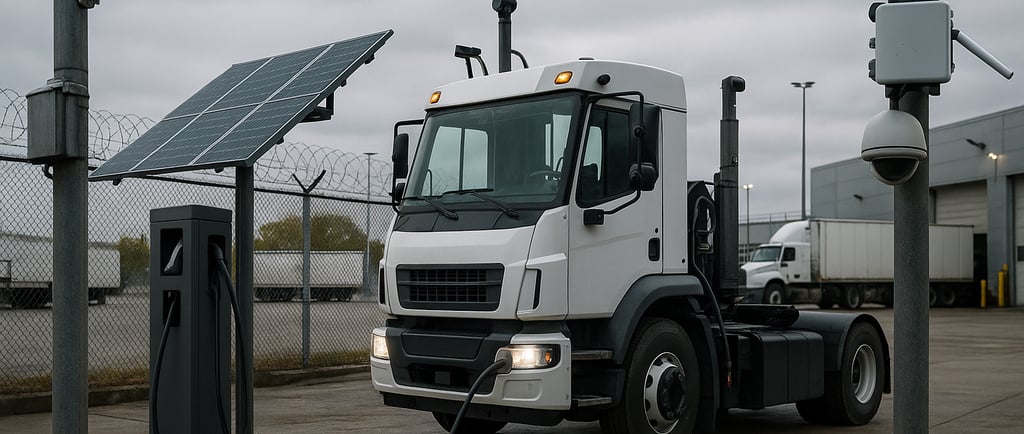

In today’s rapidly evolving logistical landscape, yard operations are no longer just the quiet backbone of supply chains—they’re becoming the driver for meaningful sustainability gains. Traditionally, yards—where goods are received, sorted, and staged—were overlooked in environmental strategies. But that’s changing fast. Modern businesses now recognize that Green IT shifts from mere hype to high-impact tactics for lowering emissions, enhancing compliance, reducing risk, and boosting cost-efficiency.
In this definitive guide, we’ll explore actionable decarbonization methods specific to yard operations, illuminate how Life Cycle Assessments (LCAs) transform decision-making, and showcase the advanced IT solutions powering a new era of yard sustainability. Whether your goals center on cost savings, regulatory compliance, risk reduction, or outpacing competitors on environmental leadership, this roadmap will future-proof your yard ops for a changing world.
Why Focus on Yard Ops for Decarbonization?
Yard operations, often hidden in the day-to-day grind, carry a substantial—sometimes overlooked—environmental burden. Unlike carbon-intensive manufacturing, yard ops’ impacts stem from everyday activities: truck idling, outdoor/indoor lighting, HVAC, diesel-run equipment, and excessive maneuvering. According to the Global Logistics Emissions Council, logistics—yard activities included—can represent up to 10% of a company’s total emissions, making it a critical, yet addressable, emissions sector.
The Threefold Pressure on Yard Ops
Today’s yard managers face a tightening triangle of cost, risk, and compliance:
Cost:
Every wasted kilowatt or idle engine directly slashes margins. In a sector where logistics expenses can be up to 12% of revenue (Statista, 2023), even incremental energy savings matter.Risk:
ESG failures or emissions oversights invite reputational damage, regulatory scrutiny, fines, and potential loss of business from sustainability-focused shipping partners.Compliance:
With ESG frameworks like the EU’s Corporate Sustainability Reporting Directive (CSRD), California’s Advanced Clean Fleets Regulation, and the U.S. SEC climate-related disclosures, documentation is non-negotiable. Increasingly, compliance is table stakes—not a differentiator, but a requirement.
Case Example: Yard Ops Under Scrutiny
Consider a North American retailer fined $250,000 for violating anti-idling statutes at several distribution centers. Beyond financial hits, the company’s ESG ratings plummeted, causing them to lose preferred supplier status for a top customer. This underscores why forward-leaning yard ops now view compliance as a foundation for reputation and revenue.
Green IT delivers the tactical edge here: advanced data systems pinpoint precisely where emissions, waste, and costs accumulate, allowing yard managers to mitigate all three forces with precision and agility.
The Role of Efficient Data Systems in Green Yard Ops
Efficient data systems—often called Green IT—are a broad category of digital technology built to monitor, analyze, control, and optimize energy and environmental footprints across logistics facilities. These systems, driven by IoT, cloud platforms, and intelligent automation, transform traditional yards into precision-tuned, eco-efficient, and resilient operations.
Key Ways Efficient Data Systems Drive Green Yard Ops
1. End-to-End Visibility
Smart sensors on vehicles, gates, loading docks, and assets create a unified, real-time digital view of every process and piece of equipment. This end-to-end transparency uncovers hidden inefficiencies and enables immediate interventions.
Example: A major consumer goods company implemented RFID and GPS-based yard tracking, resulting in a 17% decrease in average truck dwell time and reducing fuel emissions by 105 metric tons annually (Source: Gartner, 2022).
2. Automated Energy Management
Green IT platforms with embedded AI analyze occupancy and weather data to dynamically control lighting, cooling, and energy-demand spikes. Systems fine-tune usage minute-by-minute, shrinking waste and flattening energy demand curves.
Fact: Automated lighting and HVAC often cut energy bills by 18–30% in high-throughput yards, per ENERGY STAR studies.
3. Lifecycle Monitoring
Integrated platforms interlink equipment management with continuous environmental data. This enables ongoing LCAs that factor in both embodied carbon (manufacturing, transport) and operational emissions. Yard managers gain data to time replacements and adopt greener technologies efficiently.
4. Compliance Reporting
With automated data capture, Green IT supports rapid, auditable ESG and regulatory submissions. These systems not only streamline compliance but also bolster internal controls and investor confidence.
Tip: Modern cloud-based YMS systems provide exportable reports tailored for GHG Protocol, CDP, and local regulatory frameworks, ensuring data and audit readiness.
Actionable Decarbonization Tactics for Yard Operations
Now for the most critical part: actionable, proven tactics you can leverage to drive real-world decarbonization in the yard. For each, let’s dive deeper into measurable impact, industry-specific use cases, and practical rollout strategies.
1. Deploy Smart Scheduling and Yard Management Systems (YMS)
How it Works:
Next-generation YMS integrate real-time tracking, AI-based scheduling, and predictive analytics to automate everything from trailer assignments to loading dock rotations. By reducing “dwell time” (trucks waiting with engines running) and unnecessary shuttling, these systems directly cut Scope 1 GHG emissions.
Real-World Results
A US logistics company adopted a data-centric YMS, slashing truck idling by 48 minutes per vehicle per day. Post-implementation, they achieved an annual fuel savings of over $500,000 and avoided roughly 850 metric tons of CO₂ emissions—equivalent to taking 180 cars off the road for a year.
Additional Benefits
Operational Uptime: Improved scheduling minimizes bottlenecks and staff overtime.
Predictive Maintenance: Data flows from YMS can flag unhealthy equipment, reducing breakdown risk and further optimizing resource use.
Compliance: Tracks emissions by trip, empowering granular anti-idling and fleet efficiency reporting for regulators and partners.
Implementation Best Practice
When adopting a YMS, opt for platforms with embedded sustainability modules—these integrate directly with ESG reporting tools, easing compliance and internal benchmarks.
2. Integrate Automated Lighting & HVAC Controls
How it Works:
IoT sensors and advanced algorithms control yard lighting and HVAC in response to real-time occupancy, ambient light, and weather. Rather than running on fixed schedules, systems dim or shut off when areas are unused.
Industry Data
Research by the U.S. Department of Energy shows that “smart” controls can slice yard energy expenditures by an average of 25% with a payback period often under two years.
Case Study
A Midwest distribution center replaced fixed-timer lighting/HVAC with motion and temperature-sensing controls. The outcome: annualized electricity savings of $180,000 and a 320-ton reduction in CO₂ emissions (Source: DOE Commercial Buildings Integration Program).
Compliance & Certification
Implementations support ISO 50001 (Energy Management) and can facilitate ENERGY STAR facility certification, strengthening ESG scores and public sustainability commitments.
3. Implement Electric and Low-Emission Yard Equipment
How it Works:
Transitioning from diesel to electric/hybrid yard tractors, forklifts, or sweepers is a high-ROI move in the journey to low-carbon operations. Electric fleets are quieter, cleaner, and require less maintenance.
Decarbonization Impact
Switching a single diesel yard tractor to electric saves up to 48 metric tons of CO₂ per year, with fleets of 10+ vehicles multiplying that benefit dramatically (EPA Emissions Factors, 2023).
Cost and Incentive Analysis
While capital outlay rises (average electric yard truck costing 60–80% more upfront), total cost of ownership (TCO) analysis shows break-even in less than five years. Incentives and grants, such as California’s Hybrid and Zero-Emission Truck and Bus Voucher Incentive Project (HVIP), can offset up to $150,000 per vehicle.
Additional Attributes
Noise Reduction: Electric fleets may qualify for late-night or urban operations not possible with diesel.
Health & Safety: Reduced diesel particulate matter translates to decreased risk of respiratory illness and stronger workforce retention.
4. Perform Life Cycle Assessments (LCAs) for Major Equipment
How it Works:
Advanced LCA tools, often embedded directly in Green IT suites, map the full life cycle emissions of yard equipment. This includes upstream (manufacturing, transport) and downstream (operation, end-of-life) impacts.
Strategic Advantages
Informed Procurement: Avoids “false green” purchases that reduce operational but increase embedded carbon.
Optimized Replacement: Replaces “time-based” schedules with data-driven, emissions-aware triggers—replacing only when it yields both an emissions and cost win.
Supplier Dialogue: Enables effective conversations with OEMs on greener design, take-back, and recycling options.
Industry Example
A European logistics company discovered their planned forklift upgrades would actually increase total life cycle emissions. LCA data revealed keeping existing units for two more years, coupled with efficiency retrofits, cut both CO₂ impact and capital expense.
5. Monitor and Manage On-Site Renewable Energy Usage
How it Works:
Green IT dashboards now integrate real-time data from yard-mounted solar, wind, or hybrid battery systems. Managers can actively match renewable generation with peak operational loads—maximizing self-consumption and displacing fossil grid energy.
Statistics and Trends
Adoption Surge: The Solar Energy Industries Association reports that U.S. warehouse and logistics solar capacity has grown over 300% in the last five years.
Financial Impact: Companies with real-time renewable monitoring earn up to 6% higher returns on excess energy resold to the grid (NREL, 2023).
Leadership and Compliance
Tracking and reporting renewable usage helps yards achieve net-zero targets, earn LEED or BREEAM green building credits, and shore up scores under frameworks like RE100. Plus, a strong renewables setup future-proofs against rising energy costs and grid instability.
Building a Unified Green IT Architecture for Yard Operations
Most yards already have plenty of systems. WMS in the warehouse. TMS for transport. A YMS pilot in one region. Spreadsheets in the gatehouse. Telematics from trucks. Separate software for energy meters and building controls.
On their own, each system helps. Together, when connected, they become the real engine of Green IT in the yard.
What a unified architecture looks like
In a mature yard, you see at least five layers working together:
Physical layer
Sensors, meters, cameras, RFID, GPS, smart circuit breakers, charging stations, battery systems, and building controls.
Device and edge layer
Local controllers, gateways, and edge servers that collect high-frequency data, run simple rules (for example turn off lights in empty zones), and keep things running if the network goes down.
Platform layer
Cloud or data center platforms that host your YMS, WMS, TMS, energy management system, LCA tools, and emissions calculators.
Integration and data layer
APIs, event streams, and a central data store where you can join trip data, energy usage, equipment telemetry, and weather.
Reporting and decision layer
Dashboards for dispatch, energy, and ESG teams. Alerts. Scenario models for “what if” tests. Automatic exports for GHG Protocol, CSRD, CDP, and local rules.
When these layers speak to each other, yard managers stop flying blind. You can see which dock, which tractor, and which shift is wasting energy. You can also see which changes bring real emissions cuts instead of green theater.
Avoiding common integration traps
Three traps kill many Green IT programs in yards:
One-off pilots that never scale beyond a single site.
Vendor-specific “walled gardens” that refuse to share data.
Custom integrations without standards, which break whenever you change one system.
To avoid this, insist on open APIs, standard data formats (for example time-stamped events with clear unit labels), and a shared data model for key objects such as truck, trailer, dock door, charger, and meter.
Advanced Analytics, AI, and Digital Twins for Yard Ops
Once core data flows, you can move from “monitor and report” to “predict and steer.”
Practical use cases for advanced analytics
Arrival and congestion forecasting
AI models can learn from historical arrivals, seasonality, weather, and production plans. They predict peaks at the gate hours or days in advance. Dispatch can then shift appointments, book more staff, or re-sequence yard moves before queues form.
Energy load forecasting
If you know when yard trucks will charge, when conveyors will run, and when HVAC demand spikes, you can match loads with on-site solar or lower-tariff periods. Studies on smart HVAC show that advanced controls can cut energy use by 20 to 40 percent in commercial buildings when tied to sensors and schedules. etl.energysecurity.gov.uk+2TJ Ref+2
Anomaly detection for energy and equipment
Models track “normal” patterns for electricity, fuel, and equipment loads. When a dock, charger, or circuit starts to look abnormal, the system flags it. This often picks up stuck valves, failing motors, or controls that someone left in manual mode.
Digital twins of the yard
A digital twin is a virtual copy of the yard that you feed with live data. You can test scenarios in it: extra arrival volume, new parking layouts, different charging schedules, or staged electrification of tractors. You see impacts on delays, energy load, and emissions before you invest.
Real-world reference points
A European parcel hub used simulation and digital twins to change gate assignment and dock rules. They cut average truck waiting time by 24 percent and fuel use in the yard by double digits. UTwente Essays+1
Smart lighting and controls in warehouses have delivered 30 to 70 percent lighting energy savings in multiple studies, with short payback periods, once controls are tuned correctly. eta-publications.lbl.gov+1
Linking Yard Decarbonization to Scope 3 and Supplier Collaboration
Yard emissions sit inside a larger supply chain picture. For many retailers, manufacturers, and recyclers, Scope 3 transport emissions now exceed their Scope 1 and 2 combined. Green IT in the yard is one of the few levers they control directly.
Three moves tie yard data into wider Scope 3 cuts:
Shared metrics with carriers and 3PLs
When the yard can report truck idle time by carrier, shift, and lane, you can add idle limits, dwell targets, and scheduling rules into contracts. Some companies already make tender awards conditional on emissions intensity and service scores, not just price.
Appointment and load planning that cuts empty miles
If YMS and TMS exchange live data, you can consolidate pickups and drop-offs, avoid last-minute changes, and keep turn times predictable. That lets carriers plan more backhauls and cut empty running, which can reach 15 to 25 percent of truck kilometers in some regions. AltexSoft+1
Data for joint investments
With shared data, you and your largest carriers can build the case for electric yard trucks, depot chargers, and even on-site renewable projects. One North American site using electric yard trucks reported savings of around 60,000 dollars per vehicle per year from fuel and maintenance alone, plus large emissions cuts. Keller Logistics Group+2ElectricDrives+2
Green IT makes these conversations concrete because both sides see the same numbers.
People, Processes, and Change Management in Green Yard IT
Technology will not deliver decarbonization on its own. Yard teams have to trust it, use it, and help refine it.
Four pillars matter here:
Clear roles and ownership
Decide who owns what: an energy lead, a yard IT lead, and a cross-functional steering group with operations, maintenance, finance, and sustainability. Without named owners, dashboards gather dust.
Targeted training
Forklift drivers, spotter truck operators, and dock staff do not need a long lecture on ESG. They do need simple rules: how to use new tablets, when to switch to eco modes, what good dwell times look like, and why idling limits are strict now. Supervisors need more depth on YMS screens, alerts, and reports.
Incentives and KPIs
Yard KPIs have long focused on throughput and service. Add energy per handled unit, average idle minutes per move, and site-level emissions trends. Keep the list short and publish results per shift and per site. Simple scoreboards work well.
Engagement with unions and health and safety teams
Electric equipment, automation, and digital monitoring raise valid questions on safety and privacy. Engage these groups early. Address concerns on noise, air quality, job security, and tracking. Green IT should feel like a safer, cleaner, more predictable workplace, not a control tool that watches people.
Building a Practical Roadmap for Green IT in Yard Ops
A global “reference” resource should not just say what is possible. It should show how to move from today’s state to that future. Think in stages, but avoid rigid templates. Every site starts from different constraints.
Stage 1: Baseline and no-regret moves (0 to 6 months)
Inventory your current digital systems, meters, and controls. Note gaps.
Measure current energy use in the yard: lighting, HVAC, chargers, fixed equipment, and diesel consumption for yard tractors and forklifts.
Log truck idle time and dwell time manually for at least a few weeks if you do not yet have sensors.
Fix obvious waste: lights on in empty areas, poorly set thermostats, idling culture, broken door seals, and air leaks.
Launch basic reporting: a monthly one-page view of energy, fuel, dwell, and idle for each site.
Stage 2: Connected visibility and smart controls (6 to 18 months)
Roll out YMS or upgrade existing tools at priority sites first. Focus on locations with high volumes and strict anti-idling rules.
Add occupancy and daylight sensors in the largest yards and warehouses. Tie them into smart lighting and HVAC controls. Studies show that smart controls can cut whole-building energy usage by roughly 29 percent when fully applied across HVAC and lighting. etl.energysecurity.gov.uk+2U.S. Energy Information Administration+2
Connect energy meters and building controls to a central platform, so you can track trends and compare sites.
Begin automated ESG and regulatory reporting from this data.
Stage 3: Electrification and on-site renewables (1 to 4 years)
Run a total cost of ownership study for yard tractors and material handling equipment. Use site-specific duty cycles and local power prices. Some electric yard truck suppliers show lifetime CO2 cuts of over 2,000 tons per vehicle and strong operating savings over 10 to 15 years. Supply Chain Brain+3orangeev.com+3TRATON+3
Prioritize e-yard trucks at sites with high utilization and existing grid capacity.
Add smart chargers integrated with your YMS and energy platform, so you can charge when solar output is strong or tariffs are low.
Assess rooftop solar. In the UK, analysis suggests that warehouse roofs could host about 15 GW of solar capacity. That would roughly double national solar capacity and cut emissions by around 2 million tons of CO2 a year if fully used. UKWA - The Voice of Warehousing+2Generation Logistics+2
Start with pilot roofs at a few key hubs, then scale once performance and approval processes are clear.
Stage 4: Advanced analytics and continuous improvement (2 to 5 years)
Introduce forecasting for arrivals, congestion, and energy load using your historical data.
Build or buy a digital twin for at least one strategic yard and use it to test layout and process changes before you commit capital. UTwente Essays+2AltexSoft+2
Add automated anomaly detection for water, electricity, and fuel. Investigate spikes rapidly.
Tie bonuses for senior operations leaders partly to energy and emissions performance in the yard, not only to throughput and cost.
Throughout all stages, keep one principle: every IT or capex decision should be justified in both financial and emissions terms. If a technology saves energy but locks you into closed data or shortens equipment life without clear benefit, treat it with caution.
Global Case Study Snapshots
To help this guide act as a long-term reference, here are concise examples that a reader can reuse in internal business cases.
Electric yard tractors and ESG
A US manufacturer introduced electric yard tractors at a high-traffic site and recorded annual savings of roughly 60,000 dollars per vehicle from fuel and maintenance, along with significant CO2 cuts and lower NOx and particulate pollution. Keller Logistics Group+2ElectricDrives+2
Another supplier of electric terminal trucks reports lifetime reductions of around 2,500 tons of CO2 per heavy-use truck over 15 years. orangeev.com
These numbers help convince finance teams that electrification is not a pure ESG cost. It is a business decision with clear margin impact.
Smart controls and warehouse energy
Studies of lighting controls in warehouses and commercial buildings show typical savings of 30 to 70 percent on lighting energy once occupancy sensors, daylight controls, and scheduling are tuned. eta-publications.lbl.gov+1
Broader research on smart building controls suggests that combining advanced HVAC and lighting controls can reduce overall building energy use by around 20 to 30 percent. etl.energysecurity.gov.uk+1
For large networks of distribution centers and yards, this is often the fastest way to cut both costs and emissions.
Solar on warehouses and yards
In the UK, only a small fraction of warehouses currently have solar on their roofs, even though they account for about one third of commercial roof space. If widely used, these roofs could double national solar capacity and save billions of pounds in electricity costs each year. UKWA - The Voice of Warehousing+2Generation Logistics+2
Global solar capacity additions continue to grow, with hundreds of gigawatts added each year. Logistics facilities are a major part of this build-out due to their large, flat roofs and daytime load profiles. osvftwz.com+3solarpowereurope.org+3SEIA+3
These facts support the case that warehouse and yard solar is no longer fringe. It is mainstream infrastructure.
Conclusion: What a Green-IT-Enabled Yard Looks Like in 2030
Picture a typical high-volume yard in 2030.
Every trailer, tractor, and pallet is visible in real time on a single screen. Electric yard tractors charge mostly during sunny hours or low-tariff windows, guided by a combined YMS and energy platform. Lighting and HVAC respond to real occupancy. Dark or low-use corners no longer burn energy through the night.
Rooftop solar supplies a large share of daily electricity needs. Batteries and smart controls flatten peaks. The grid connection is still important, but the site is far less exposed to price shocks.
Supervisors plan shifts and appointments with clear forecasts for arrivals and congestion. Drivers wait less and idle less. Neighborhood complaints about noise and fumes have dropped. The company can document these improvements line by line in ESG reports and regulatory filings.
Most important, the yard has stopped being an afterthought. It is now a visible part of the company’s climate plan and a real source of margin gains and risk reduction. Green IT did not replace good operations. It gave operations teams the information and tools they needed to run cleaner, cheaper, and more resilient yards.
If you run or influence yard operations today, you do not need to wait for new technology. You can start by measuring what you have, fixing obvious waste, and planning a structured rollout of YMS, smart controls, electrification, and renewables.
Do that well, and your yards will move from hidden cost centers to credible proof points of your company’s climate strategy. This guide can then serve as the document you share with colleagues, partners, and suppliers every time you plan the next step in that journey.
Connect
Your trusted partner for scrap metal procurement.
CONTACT
About
haroon@tdcventures.com
+1-307-655-7593
© 2025. All rights reserved.
NEWSLETTER