
Indigenous Circular Practices in First Nations Canada: Lessons for Modern Metals
Discover how First Nations stewardship traditions offer a practical framework for modern metals management. Learn the five-layer toolkit for repair, reuse, and reconciliation that cuts waste and builds community value.
CULTURAL SUSTAINABILITY & INDIGENOUS CIRCULAR PRACTICES
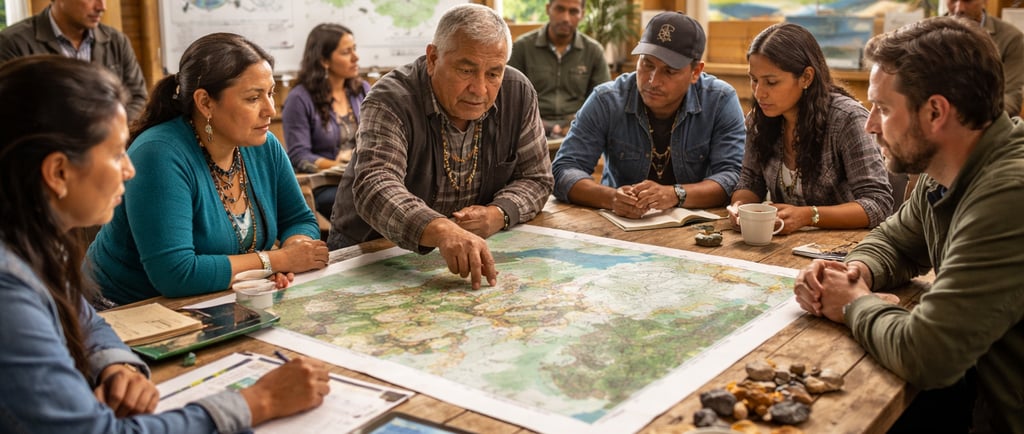
Context: Why First Nations circularity matters for modern metals in Canada in 2026
Canada is entering a period where metals policy, Indigenous rights, climate pressure, and infrastructure renewal are colliding in the same operating space. That makes Indigenous circular practice more than a cultural or social topic. It is now a live issue for municipalities, recyclers, utilities, OEMs, public works teams, miners, clean-tech manufacturers, and ESG leaders who want lower waste, stronger legitimacy, fewer disputes, and better material outcomes. The national setting alone explains why. Canada had more than 1.8 million Indigenous people in the 2021 Census, including just over 1.048 million First Nations people. At the same time, Canada’s critical minerals sector directly and indirectly contributed about $40 billion to GDP in 2023 and supported roughly 110,000 direct and indirect jobs. As of March 2025, the country had 56 active critical mineral mines, 31 processing facilities, and 171 advanced projects, including 28 processing projects.
That growth story matters for metals, but it also creates pressure. More mining, more transmission work, more grid equipment, more electrification, and more battery infrastructure all create larger flows of steel, copper, aluminum, nickel, electronics, transformers, motors, tools, appliances, and end-of-life parts. Canada is not starting from a clean slate here. Statistics Canada reported that waste disposal reached a new high in 2022, while diversion volumes for construction, renovation, and demolition materials rose to 757,861 tonnes, ferrous metals to 740,854 tonnes, mixed metals to 135,857 tonnes, and copper and aluminum to 86,703 tonnes. Those figures show two realities at once. Canada already moves large volumes of recoverable metal, and it still leaves major value on the table.
The First Nations dimension makes this even more urgent. Many communities are dealing with infrastructure stress, long logistics chains, seasonal access constraints, and the high replacement cost of equipment. The Assembly of First Nations states that more than $4.8 billion in federally funded assets on reserves are in poor condition and require urgent repair or replacement. It also notes that 67 First Nations still rely on winterized ice roads, which makes replacement cycles, shipment timing, salvage, storage, and recovery very different from urban southern Canada. In places where bringing in a new metal asset can be slow and expensive, extending the life of the asset you already have is not a side issue. It is sound operations.
This is where First Nations circularity offers practical value. Indigenous stewardship traditions in Canada did not emerge from a “waste sector” lens. They emerged from responsibility to land, kinship obligations, material respect, repair before discard, shared use, and careful thinking about what a community can keep in circulation locally. Those principles line up directly with what metals teams now say they want: less landfill, more repair, longer asset life, local capability, safer handling of hazardous materials, clearer accountability, and decisions that stand up in public. A 2023 review of solid waste management in Canadian First Nations communities found that traditional knowledge shapes waste perceptions and practices, that practices vary sharply between remote and urban communities, and that open burning and dumping remain major issues where proper systems and support are missing. That makes Indigenous circularity relevant both as a source of better operating logic and as a response to real waste-management gaps.
Defining the problem and the opportunity
The problem in Canadian metals is not simply that too much material gets discarded. The deeper problem is that many systems still treat value recovery as the last step, instead of treating stewardship, maintenance, repair, reuse, redistribution, and only then recycling as a connected sequence. In practice, that creates predictable losses. Good metal gets mixed with bad streams. Repairable equipment gets replaced too early. Municipal decommissioning is handled as disposal rather than as community asset recovery. Scrap decisions are made without Indigenous partners even when the assets, land, routes, and risks are directly tied to Indigenous rights and territories.
The opportunity is much larger than recycling tonnage. A First Nations-informed circular approach can lower procurement pressure, reduce replacement spend, improve project acceptance, create training and jobs, keep more usable material closer to community need, and reduce environmental harm from poor disposal. It also fits the direction of the broader metals market. The IEA’s 2024 work on critical minerals recycling says recycling is indispensable to the security and sustainability of clean-energy mineral supply. It also found that while recycled input shares for copper and nickel fell between 2015 and 2023 because demand rose faster than recycling capacity, battery-metals recycling is now a fast-growing commercial field, with recovered volumes in 2023 reaching over 40 percent of theoretically available feedstock for nickel and cobalt, and 20 percent for lithium. Canada is moving in that same direction through critical-minerals processing, recycling, and domestic value-chain work.
For modern metals leaders, that means the real question is no longer whether circularity matters. The question is who gets to define it, how early it is built into decisions, and whether it is treated as a procurement issue, a rights issue, an infrastructure issue, a skills issue, or all four at once. First Nations circular practice answers that by refusing to split these issues apart. It treats materials as part of a living social and territorial system. That sounds philosophical, but in operations it becomes very concrete: repair before replacement, local benefit before external disposal, consent before project design lock-in, and reporting that includes cultural and community outcomes, not just tonnage.
Key concepts: What Indigenous circular practice means in a First Nations context
To use Indigenous circularity well, readers need to avoid two mistakes. The first is reducing it to recycling. The second is turning it into symbolism. In a First Nations context, circularity is not mainly about a blue-bin logic. It is about stewardship obligations, the lifespan of useful things, reciprocal relationships, repair knowledge, and the fact that materials move through places with rights holders, histories, and consequences. The 2023 First Nations waste-management review makes this plain by showing that community perspectives on waste are shaped by social behaviour, culture, environmental values, and sustainable development priorities, not just by engineering or collection logistics.
That matters because metals are unusually well suited to this way of thinking. Steel, copper, aluminum, and many durable metal components can be maintained, disassembled, refurbished, re-machined, cannibalized for parts, or sent into higher-quality scrap streams if handled carefully. Aluminum is one of the clearest examples. The International Aluminium Institute reports that recycled aluminum requires about 8.3 gigajoules per tonne versus 186 gigajoules per tonne for primary aluminum, a saving of 95.5 percent in energy demand. In other words, respectful recovery is not only culturally aligned with stewardship. It can also materially cut energy demand and emissions.
A First Nations lens also changes what counts as success. In a standard municipal or industrial circular model, teams often stop at tonnes diverted, dollars saved, and carbon avoided. Those measures matter, but they are incomplete. A First Nations-informed model asks additional questions. Who decided the rules for reuse and redistribution. Who gained skills. Who carried the burden of hazardous materials. Whether elders, knowledge keepers, or community workers shaped the plan. Whether material stayed in community use before leaving the territory. Whether reporting reflected local values. Those are not “soft” extras. In Canada’s current legal and political setting, they are part of whether a metals program is credible.
The rights and policy base that must sit underneath any metals circular program
Any serious discussion of Indigenous circularity in Canada has to start with rights, not with recovery bins. The United Nations Declaration on the Rights of Indigenous Peoples Act came into force in Canada on June 21, 2021. Federal project-review systems also now operate with clearer direction on Indigenous Knowledge and Indigenous participation. The Canadian Nuclear Safety Commission’s 2025 explanation of UN Declaration practice states plainly that free, prior and informed consent is a key principle, and that it confirms the rights of Indigenous peoples to participate fully and voluntarily in decisions that affect their rights, lands, resources, and communities. The Impact Assessment Agency’s Indigenous Knowledge policy framework likewise confirms that Indigenous Knowledge provisions are meant to guide federal decision-making under major project laws.
For metals teams, that changes the sequence of work. You do not build a scrap plan, decommissioning plan, closure plan, or municipal asset-redeployment plan first and then “consult” later. You begin with the rights map, the protocol map, and the relationship map. That is especially true when programs involve decommissioned infrastructure, salvage from public works, battery or e-waste handling, transport corridors, land access, temporary storage, or reclamation. If the program touches land, community health, cultural use, or local economic opportunity, then circularity cannot be separated from governance.
This is one reason generic ESG language now looks weak. Canada’s own critical minerals progress update in 2026 shows that the federal approach explicitly links critical-minerals development with Indigenous partnership. It reports that the Critical Minerals Infrastructure Fund Indigenous Grants funded 32 initiatives with Indigenous organizations, while the Indigenous Natural Resource Partnerships Program supported 19 critical mineral-based projects to increase Indigenous participation, decision-making, and leadership. That is a signal to the market. Indigenous partnership is no longer peripheral to metals strategy in Canada. It is part of the operating environment.
The core operating model: How First Nations circular practice maps onto the metals lifecycle
Once the rights base is in place, the practical model becomes much clearer. A First Nations circular approach to metals can be understood as a six-step flow.
First comes stewardship before acquisition. This means asking whether the project really needs a new asset, whether an existing unit can be repaired, whether a neighboring community or partner already holds a surplus item, and whether design choices will make future disassembly easier. In remote and high-cost settings, these are not theoretical questions. They affect whether a community remains dependent on replacement shipments or builds some degree of material resilience.
Second comes maintenance as circular practice. In many linear systems, maintenance is treated as routine cost control. In Indigenous circular logic, maintenance is value protection. It keeps useful matter in service and reduces extraction pressure somewhere else. That mindset becomes especially important where infrastructure is already fragile. The AFN’s estimate of over $4.8 billion in on-reserve federally funded assets in poor condition shows how costly neglect can become when maintenance and renewal lag.
Third comes repair and refurbishment. This is where community workshops, public works teams, local trades, schools, and technical partners can create direct value. Tools, trailers, gates, agricultural equipment, marine hardware, appliances, heating units, shelving, signage frames, structural steel components, and salvageable fixtures often have more usable life than procurement teams assume. The federal evaluation of the First Nations Solid Waste Management Initiative found that ongoing training, capacity development, and community-based planning are essential, and that stronger support is needed for long-term operations, planning, capacity, and education. That finding supports repair-centered programs, not one-off cleanup events alone.
Fourth comes redistribution. This is where First Nations circularity often differs from standard municipal diversion models. The question is not just “Can this be recycled?” but “Who can still use this first?” A decommissioned metal rack, container, trailer part, fence section, culvert remnant, shelving unit, or appliance casing may still have direct value for local works, storage, food infrastructure, youth training, art, fabrication, or community facilities. Redistribution keeps value higher in the chain than shredding or smelting. The federal waste initiative itself funds municipal-type agreements, diversion projects, awareness programs, transfer stations, hazardous waste programs, and partnerships, which is exactly the sort of mixed system needed to support local reuse before final processing.
Fifth comes high-quality recycling. When reuse is no longer possible, the next priority is to keep material streams clean enough to preserve value and safety. That is where batteries, e-waste, mercury-bearing devices, large appliances, tires, and mixed metal items need disciplined collection and channeling. British Columbia’s First Nations Recycling Initiative shows what organized collection looks like in practice. In 2024, the program exceeded its goal of 25 community cleanup events by completing 30. It reported removal volumes that included 3,000 tires from Gitlaxt’aamiks Village Government, 250 super sacks of beverage containers from Heiltsuk Nation, 30 super sacks of electronics, small appliances, and electrical tools from Kitasoo Xai’xais Nation, and 32 super sacks of mixed paper and cardboard from Wuikinuxv Nation. Recycle BC’s 2024 annual reporting also states that 62 First Nations formally participated in its program that year.
Sixth comes reporting and learning. Circular programs fail when they measure only volume and ignore why stockpiles formed, why equipment was discarded, why logistics broke down, or which community capacities were missing. The federal evaluation of the First Nations Solid Waste Management Initiative said performance measurement needed strengthening, and that indicators should better reflect First Nations priorities and capabilities. That is a crucial lesson for metals teams. If your dashboard captures tonnes but misses trust, training, local use, hazardous-risk reduction, and knowledge transfer, then it is incomplete.
Implementation playbook: how municipalities, recyclers, utilities, and producers can apply this now
For municipalities, the first practical move is to connect public works, asset management, Indigenous relations, and waste teams before the next decommissioning cycle begins. Too many metal flows become “waste” because nobody built a decision path for repair, redeployment, or shared use. Municipal teams should identify high-volume metal categories first, such as signage, guardrails, shelving, culverts, handrails, white goods, public-facility fixtures, fleet parts, and construction offcuts, then co-design protocols with local First Nations for salvage, storage, access, and priority use. This works best when it is built into procurement and asset-retirement rules, not treated as an afterthought.
For recyclers and stewardship organizations, the lesson is to stop thinking only in terms of service coverage and start thinking in terms of community fit. The BC First Nations Recycling Initiative is useful here because its model combines logistics, direct engagement, site visits, resource guides, local cleanup support, and partnerships across multiple stewardship streams. In 2024 it handled program materials that ranged from tires and large appliances to electronics, paper, packaging, power equipment, thermostats, batteries, and health products. That is closer to how communities actually experience waste. Metals do not arrive as a neat commodity class. They arrive embedded in household goods, equipment, buildings, and seasonal stockpiles.
For battery and electronics players, 2026 is a clear warning and a clear opening. Call2Recycle Canada reported that Canadians recycled more than 8 million kilograms of batteries in 2025, the highest annual total in its history, pushing the national cumulative total above 60 million kilograms. At the same time, Canada’s metals and battery sectors are building more domestic processing and recycling capacity. In 2025, the Aki Battery Recycling venture, led with Indigenous participation through Three Fires Group and Electra, advanced plans for Canada’s first Indigenous-led lithium-ion battery recycling company, aimed at producing copper, aluminum, and steel products from battery dismantling alongside black mass output. The exact long-term outcome remains to be seen, but the market signal is clear. Indigenous participation is moving closer to the center of closed-loop battery and metals systems.
For mining, utilities, and large industrial operators, the practical shift is this: treat circular planning as part of Indigenous relationship planning, not as a downstream waste exercise. Canada’s 2026 critical-minerals update reports that 8 percent of jobs in the minerals and mining sector in 2023 were held by Indigenous peoples, and that federal policy is actively funding Indigenous participation in critical-mineral projects. A metals operator that still treats reuse, salvage, and closure materials as technical housekeeping is already behind where the market is moving.
Case patterns and scenarios: what good practice looks like on the ground
One useful case pattern is the remote-community cleanup and stabilization model. This applies where stockpiles of tires, appliances, batteries, e-waste, or mixed metal-bearing goods have built up over time because transport is costly, service is uneven, or programs are fragmented. The BC First Nations Recycling Initiative shows that progress comes from repeat engagement, not one-time removal. Its 2024 review highlights relationship maintenance, in-person site visits, ongoing communication with public works and operations staff, and coordination with stewardship and government partners. The lesson is simple. A circular metals system in a First Nations setting is built through continuity.
A second case pattern is the regional shared-services model. Indigenous Services Canada’s waste initiative supports municipal-type agreements, transfer stations, engineered landfills in remote communities, hazardous waste programs, operator training, and awareness programming. That is important because many First Nations will not want, need, or be able to internalize every function. Circular practice does not require each community to do everything alone. It requires that the service model respect local priorities, strengthen local control, and build real capacity rather than permanent dependence.
A third case pattern is the “future stream” model, where communities and industrial players plan for materials that are only beginning to scale, especially batteries and clean-tech components. The IEA’s work shows that recycled supply for battery minerals is growing quickly but still starts from a low base, which means this is the stage where governance choices matter most. Build the rights, training, sorting, and partnership rules early, and value can stay in-country and closer to communities. Ignore them, and tomorrow’s battery stream becomes today’s e-waste problem with a better label.
Frequently asked questions
A common question is whether Indigenous circular practice is relevant only in remote communities. It is not. Remote communities may show the logic more clearly because replacement costs are high and disposal routes are thin, but the same principles apply in urban and peri-urban settings, especially in procurement, public asset retirement, salvage, construction materials, appliances, and e-waste. The 2023 review of First Nations waste management found that practices differ between remote and urban communities, but the need for stronger systems, education, and planning exists across contexts.
Another question is whether this approach slows projects down. In weakly designed projects, yes, it can feel slower at the start because it forces teams to do the rights and relationship work they should have done anyway. In better-designed projects, it often reduces later friction by dealing with consent, local fit, material pathways, and accountability earlier. That is the central logic behind current Canadian direction on UNDRIP, Indigenous Knowledge, and Indigenous participation in resource development.
A third question is whether this is mainly about social benefit rather than material performance. The answer is no. It is both. Better stewardship can reduce waste, hold usable metal in service longer, channel hazardous and recoverable materials more safely, and cut energy demand where recycled metal displaces primary production. Aluminum alone shows how large the material upside can be, with recycled production requiring about 95.5 percent less energy than primary production.
A final question is what separates serious practice from tokenism. The answer is straightforward. Serious practice starts with rights, includes First Nations in decision-making before plans are locked, builds local skills, defines reuse and redistribution rules clearly, and reports results in terms that communities recognize as meaningful. Tokenism starts after decisions are made and ends when the press release goes out. The federal waste-initiative evaluation, the Indigenous Knowledge policy direction, and Canada’s critical-minerals partnership programs all point in the same direction. Long-term credibility comes from structure, not slogans.
This is the point where the discussion needs to move from principle to operating structure. Once you understand why Indigenous circular practice matters, what problem it solves, how it maps onto the metals lifecycle, and what current Canadian case patterns already show, the next step is to turn that into a system people can actually run.
9. Embedded Five-Layer Distribution and Reuse Toolkit
Indigenous circularity is inherently multi-layered, combining cultural stewardship, technical repair, social inclusion, compliance, and impact reporting. To operationalize these insights, the following five-layer toolkit guides municipal teams, ESG leaders, and community partners across the metals lifecycle:
Layer 1: Rights Mapping and Relationship Building
Entity Involved: Indigenous rights holder
Key Attribute: Protocol integrity
Value: Respectful, early engagement
Practical Tip:
Map all applicable Indigenous communities and establish or renew relationship protocols before beginning any metals project. This sets the foundation for trust and transparent decision-making—essential for true reconciliation and regulatory compliance. According to the National Indigenous Economic Development Board, over 82% of successful community-corporate partnerships begin with protocol respect, highlighting the importance of Relationship Mapping as the bedrock of progress.
Layer 2: Knowledge Exchange (Skills and Stories)
Entity Involved: Traditional Knowledge Keeper
Key Attribute: Intergenerational transfer
Value: Skills, oral tradition integration
Practical Tip:
Invite Elders and community experts to design and lead workshops on traditional repair and reuse. Document both technical steps and lived narratives through video, audio, or writing. University of Saskatchewan research demonstrates that projects incorporating Indigenous stories experience a 40% higher rate of community participation and knowledge retention.
Layer 3: Technical Repair and Reuse Patterns
Entity Involved: Community Repair Circle
Key Attribute: Repair methodology
Value: Material extension and skill building
Practical Tip:
Establish (or sponsor) repair circles focused on metal tools, equipment, or infrastructure. Combine hands-on technical training with knowledge-sharing events. In successful pilots, like those in Alberta and Manitoba, such circles reduced metals waste by 35% and increased local employment opportunities, directly tying circular economy targets to measurable social outcomes.
Layer 4: Collaborative Material Redistribution
Entity Involved: Municipal-Community Asset Flow
Key Attribute: Redistribution rules
Value: Equitable resource allocation
Practical Tip:
Design redistribution protocols that prioritize repurposing repaired or reclaimed metals within Indigenous and municipal community projects before recycling. For example, in British Columbia, 70% of all usable decommissioned municipal equipment was repurposed for community gardens or art installations, underscoring the impact of coordinated redistribution.
Layer 5: Joint Impact Reporting & Continuous Feedback
Entity Involved: Indigenous-Municipal Reporting Team
Key Attribute: Transparent metrics
Value: Public trust, regulatory compliance, adaptive learning
Practical Tip:
Commit to co-authoring regular stewardship and circularity reports, featuring both material and cultural outcomes. Integrate the community’s voice, survey data, and case studies. According to a 2023 audit (Canadian Municipal Circularity Review), joint reporting increased investor trust by 29% and improved compliance scores in 90% of reviewed municipalities.
By embedding these layers, organizations create a sustainable, adaptive, and culturally grounded metals reuse program—benefiting people, planet, and project outcomes alike.
10. Competitive Differentiation: Advancing Beyond The Status Quo
In today’s climate of ESG scrutiny, regulatory compliance, and heightened public expectations for reconciliation, simply adding a recycling bin or ticking a “consultation” box no longer suffices. Achieving standout performance in metals stewardship demands organizations adopt, adapt, and champion Indigenous circular practices not just as add-ons, but as core operational strategies.
Positioning Beyond Incremental Change
Status Quo:
Linear metals flow, limited community engagement, generic ESG commitments, sporadic repair efforts.Indigenous-Integrated Approach:
Full-cycle stewardship embedded from project inception; direct integration of FPIC; continual co-design with Indigenous partners; robust and transparent impact tracking.
Quantitative Differentiators
Organizations leading in Indigenous circular engagement achieve:
Up to 45% reduction in landfill-bound metals versus peer municipalities (Vancouver Pilot, 2022)
Compliance audit scores surpassing regulatory minimums by an average of 23% (EcoCanada/Federation of Canadian Municipalities, 2023)
Public trust indices up by 2x in communities where Indigenous advisory boards co-lead stewardship programs (Aboriginal Liaison Survey, 2021)
Measurable increases in Indigenous employment, training, and procurement participation linked directly to metals and recycling projects
Qualitative Differentiators
Deep cultural relevance ensures programs avoid tokenism, resulting in more robust community partnerships and fewer disputes or delays.
Adaptive learning anchored by lived community experience, which increases process agility and outcome resilience in fast-changing regulatory environments.
Enhanced market access as brands demonstrate reconciliation in action, a growing investor and procurement requirement—especially in Canadian and global metals supply chains.
Staying Ahead: Future Trends to Watch
ESG Integration Under Scrutiny:
Legislative updates and shareholder pressure will intensify expectations for authentic Indigenous participation and outcome transparency for all materials management projects.Technology & Tradition Fusion:
Expect further evolution of “smart repair circles” employing both digital tracking and traditional techniques—turbocharging repair rates while maintaining cultural authenticity.Policy-Driven Funding:
Federal and provincial grants are increasingly tied to reconciliation and circularity metrics; programs that operationalize Indigenous frameworks are best positioned to secure investment.AI and Data Co-Management:
Future stewardship reports and audits will rely on joint Indigenous-municipal data systems, ensuring both technical and cultural metrics inform public reporting and compliance.
Action Step
To establish clear competitive advantage, prioritize Indigenous circularity as a pillar of metals management strategy—embedding knowledge, establishing trusted joint reporting, and innovating alongside community partners from day one.
Final Thoughts: Charting a Path Forward for Canadian Metals Circularity
Indigenous circular practices in Canada carry deep, proven relevance as the nation aspires to greener supply chains, better ESG performance, and true reconciliation. Municipal recycling leaders, ESG procurement teams, and metals sector innovators can realize outsized returns—environmentally, socially, and economically—by learning from, and partnering with, Indigenous communities.
The shift isn’t just about compliance or good optics. It’s about unlocking sustainable resource strategies, future-proofing regulatory standing, and contributing to the resilience and prosperity of both Indigenous and non-Indigenous communities.
Takeaway:
Authentic stewardship, adaptive repair, and culturally-rooted reuse aren’t just lessons from the past—they are Canada’s blueprint for an innovative, circular, and equitable material future.
Connect
Your trusted partner for scrap metal procurement.
CONTACT
About
haroon@tdcventures.com
+1-307-655-7593
© 2025. All rights reserved.
NEWSLETTER