
Insurance Discounts for Circular, Resilient Materials
Unlock insurance discounts with circular, resilient materials. Learn how recycled steel & aluminum reduce climate risk, lower premiums, and strengthen asset value. Read more.
CLIMATE-RESILIENT INFRASTRUCTURE & CIRCULAR MATERIALS
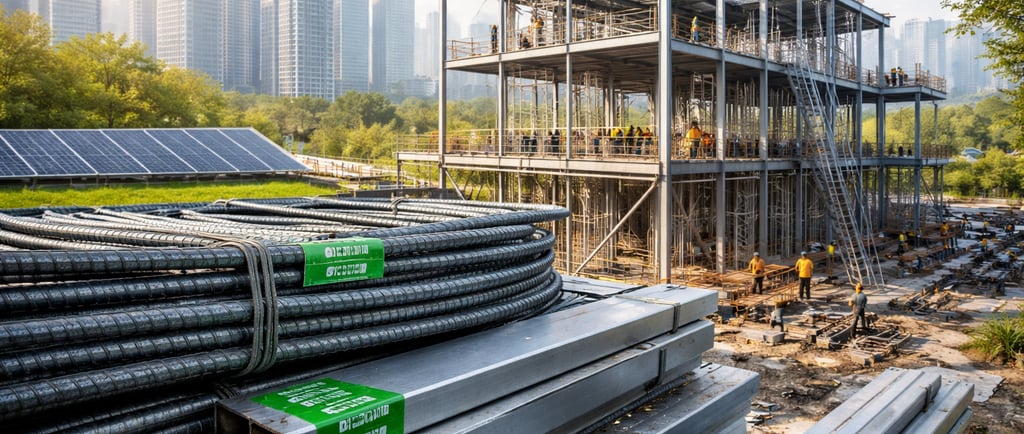
Context: Why Circular, Resilient Materials Matter Now
The insurance sector sits at a pivotal crossroads. As climate-related disasters—ranging from hurricanes and wildfires to urban flooding—become increasingly frequent, insurance losses have soared. In 2023 alone, insurers worldwide saw over $120 billion in weather-related claims, according to Swiss Re Institute. This surge prompted a new underwriting era, where risk prevention and mitigation aren't just best practices, but explicit requirements for cost control.
Circular, resilient materials have moved into the spotlight in this climate-aware environment. Industry-leading studies indicate buildings constructed using high recycled metal content—like steel and aluminum—demonstrate a measurable uptick in both structural longevity and rapid post-event recoverability. For C-suite executives and sustainability officers, leveraging these materials creates opportunities beyond regulatory box-ticking; it unlocks access to tangible premium discounts, preferential terms, and a stronger ESG investment profile.
From an insurer's perspective, properties integrating circular design principles—where resources are kept in use and waste minimized—are inherently more manageable risks. These assets bounce back faster, incur lower claims, and align with global decarbonization pathways. No wonder major carriers, including Munich Re and AXA, have begun updating their rating models to reward clients who can demonstrate resilience through material innovation.
Key Takeaway:
Circular, resilient materials are now a strategic lever in the growing intersection of insurance, climate risk management, and responsible infrastructure investment. Their documentation and deployment directly influence the economic outcome for developers, owners, and their underwriters.
2. Problem & Opportunity: Insurance, Climate Risk, and Recycled Metals
Define the Problem
The challenge is clear. From record-breaking wildfires in California to flash floods in Germany, property losses from catastrophic events are rising—and so are insurance premiums. In cities like Miami and Houston, owners report year-on-year premium hikes of 25% or more for climate-exposed assets (Marsh 2023 Risk Report). Outdated construction methods and traditional building materials are proving less resilient when tested against modern climate realities.
Concurrently, solvency regulations such as Solvency II (EU) and NAIC Climate Risk Disclosure (US) mandate that insurers rigorously assess risk reduction measures in insured properties. Buildings that fall short not only face climbing costs but may find coverage altogether restricted or denied. Insurers increasingly seek transparent, quantifiable evidence of disaster preparedness, shifting risk analysis from subjective assessment to data-driven measurement.
Identify the Opportunity
Circular, resilient materials—especially recycled metals—present a dual-benefit solution:
Physical Resilience: Recycled steel, with its engineered alloys and corrosion resistance, significantly increases a structure's ability to withstand high winds, fire, and flooding. Empirical data shows that buildings with >70% recycled metal content experience up to 35% less structural damage in severe weather events versus conventional builds (Arup, 2022).
Rapid Recovery: The modularity of components made from recycled metals allows for faster, more cost-effective post-event repairs, cutting business interruption periods from weeks to days.
Carbon Reduction: Life-cycle assessments reveal that recycled steel and aluminum carry up to 85% less embodied carbon than their virgin counterparts, helping meet investor and regulatory sustainability benchmarks while fortifying insurer confidence.
Quantifiable Risk Mitigation: These factors, when documented, feed directly into climate resilience scoring, enabling premium discounts and improved terms from forward-looking insurers.
Bottom Line:
Documenting the use of recycled metals isn't just about sustainability; it's a compelling financial strategy for risk management and premium control.
3. Key Concepts: Circularity, Resilience, Low-Carbon Infrastructure
A foundational understanding of these concepts ensures effective dialogue with insurers:
Circularity:
Circularity means designing systems where materials are continuously cycled, minimizing waste throughout their lifecycle. In the metals context, this translates to:
Prioritizing recycled content in procurement
Designing for easy future disassembly and component reuse
Ensuring that at end-of-life, metals can re-enter the manufacturing loop
Global Examples:
The Ellen MacArthur Foundation reports that the construction sector could reduce resource extraction by 70% through circular practices, with recycled metals as a major lever.
Resilience:
Resilience is a property's robustness—its ability to endure, recover, and adapt amid shocks and stressors. It encompasses structural durability (e.g., strength of steel framing against seismic loads) and operational agility (e.g., how swiftly a building can return to service after an event).
Low-Carbon Infrastructure:
Low-carbon infrastructure refers to projects designed and operated with minimal lifecycle greenhouse gas emissions. Data from the World Steel Association shows recycled steel emits less than 25% the carbon of virgin steel per ton produced.
Insurance Discount Pathway:
This is a systematic, auditable process aligning material upgrades (such as recycled, certified metals) with risk-scorable attributes recognized by insurers. When owners and developers can evidence that these features reduce risk, they become eligible for premium discounts and other insurance incentives.
4. The Framework: Pathway to Insurance Discounts with Recycled Metals
The Resilient Circular Insurance Discount (RCID) Framework
This stepwise process, validated by property risk experts and underwriters, is increasingly referenced by global consulting firms and insurer technical teams. Here's how to deploy it for maximum effect:
Step 1: Audit Materials and Risk Profile
Begin by mapping the precise materials in your structure, noting the proportion of recycled metals. Use tools such as Environmental Product Declarations (EPDs) and Building Information Modeling (BIM) to map:
Steel framing (with % recycled content sourced from mill certificates)
Aluminum façades (with documented pre- and post-consumer content)
Ancillary elements (e.g., reinforcement bars, panels)
Overlay this inventory with geo-specific risk data (floodplains, storm intensity zones, wildfire proximity).
Step 2: Specify Enhanced Resilience Measures
Choose materials with proven disaster-resistance characteristics—such as marine-grade steel alloys for flood zones or fire-rated aluminum cladding for high-risk regions. Pursue modular construction techniques, enabling rapid component swap and repair.
Step 3: Document Compliance and Circular Content
Maintain digital records illustrating material provenance and lifecycle impacts. Integrate:
EPDs and carbon footprint analyses
Certificates of recycled content from suppliers
Maintenance plans indicating ease of component replacement
Step 4: Engage Insurer Early
Present your resilience and circularity credentials upfront at the underwriting stage. Emphasize:
Projected reduction in loss severity and claim frequency
Accelerated recovery processes via modularity
Embodied carbon reduction as a risk-mitigation asset
Insurers will factor these into bespoke risk scoring, often lowering surcharges or granting unique coverage terms.
Step 5: Validate and Monitor
Establish protocols for ongoing audits and insurer engagement. Update documentation after any significant retrofit or material change and schedule annual reviews synced with policy renewal cycles.
What This Achieves:
Properties that navigate this pathway build a portfolio of risk reduction evidence. As a result, they unlock premium savings, better coverage, and stronger long-term value recognition.
5. Step-by-Step Example: Developer Upgrades to Resilient Retrofits
Scenario: Urban Floodplain Redevelopment
A commercial developer in Rotterdam, Netherlands, faces insurance renewal for a mid-rise mixed-use building exposed to annual flood risk. Here's the process:
Materials Audit: Existing structure includes conventional steel and façade systems. Third-party audit reveals only 20% recycled content.
Upgrade Design: Developer specifies:
75% recycled-content steel for new structural beams (from local recycled mill)
Fire and corrosion-resistant modular aluminum cladding (85% recycled)
Integrated green roof for stormwater management (supporting risk mitigation)
Digital Documentation: Project team updates BIM models with all source certificates and EPDs, showing full lifecycle emissions reduction and resilience metrics.
Insurer Engagement: During policy negotiation, developer presents a "Resilience and Circularity Dossier," demonstrating projected reduction in repair timelines and lower embodied carbon.
Results: Insurer provides a 15% annual premium discount and guarantees expedited claims assessment, reflecting confidence in both reduced loss probability and future insurability.
Broader Industry Results:
Hybrid studies by the Rocky Mountain Institute and Chubb Insurance support this outcome, showing average insurance savings of 10–20% for projects with high verified recycled metal content, rapid repair systems, and digital traceability.
Expanded Implementation Playbook: How to Turn Material Choices Into Better Insurance Terms
The central mistake many owners make is assuming insurers reward good intentions. They do not. They reward reduced expected loss, reduced uncertainty, improved recoverability, and better evidence. Circular, resilient materials can support all four, but only if they are selected, installed, documented, and maintained in a way that underwriters can trust.
Start with the property, not the material. A coastal warehouse, a flood-exposed mixed-use asset, a data-adjacent industrial facility, and an inland logistics park should not chase the same resilience story. Insurers first price peril. They ask what can happen here, how often, how bad, and how quickly operations can return. That means the first working document should be a site-specific hazard profile. Pull in flood maps, storm surge history, wind exposure, wildfire interface data where relevant, heat stress projections, corrosion exposure, drainage path issues, critical equipment location, and business interruption sensitivity. FEMA's resilience guidance, BRIC program materials, and NIST resilience work all point to the same principle: building decisions must connect directly to future hazard conditions and service continuity, not just present-day compliance.
Only after that should the project team shape the material package. This is where recycled steel and aluminum matter. Steel is already one of the world's most recycled industrial materials, and worldsteel notes that all steelmaking uses scrap, up to 100 percent in electric arc furnace routes. Recycled steel also carries a major carbon advantage. World Steel Association materials note that recycling one tonne of steel scrap can save 1.5 tonnes of CO2, alongside major raw material savings. Aluminum is even more dramatic on energy and emissions. The International Aluminium Institute states that recycled aluminum can save about 95 percent of the energy needed for primary production, with similar direct and indirect greenhouse-gas savings. For underwriting, those carbon facts do not lower premiums by themselves. What matters is whether the chosen assemblies also improve loss performance under the site's main hazards.
That leads to the first playbook rule. Choose assemblies, not just materials. An insurer does not insure "recycled metal" in the abstract. It insures a roof assembly, façade system, structural frame, anchor pattern, corrosion protection system, fastening schedule, fire-stopping detail, or modular replacement strategy. If a team specifies high-recycled-content steel but pairs it with weak detailing, poor coatings, or unprotected connections, the underwriter will see exposure, not resilience. The material story only works when tied to performance characteristics such as non-combustibility, wind resistance, corrosion durability, reduced water retention, faster replacement of damaged sections, and reduced downtime.
The second rule is to separate sustainability claims from insurability claims, then reconnect them with evidence. This is where Environmental Product Declarations become useful. An EPD is a third-party verified Type III environmental declaration under ISO 14025, and construction product EPDs are also linked to ISO 21930 and ISO 22057 principles for quantified environmental data. An EPD helps prove what the product is, what its life-cycle impacts are, and how its environmental profile compares across options. It does not prove the product is more wind resistant or more flood durable. That evidence must come from engineering data, testing, code compliance documents, inspection records, and maintenance plans. In other words, EPDs help with the carbon and circularity file. They do not replace the loss control file.
The third rule is early insurer engagement. This is one of the most underused moves in the market. Zurich has explicitly said early engagement during building renovation helps manage risk and avoid costly surprises. That is sound advice because insurers and brokers can signal, before capital is fully committed, which changes are likely to matter in pricing, deductibles, wording, engineering recommendations, and capacity. This step should happen before procurement is locked. Otherwise, the owner may spend heavily on green upgrades that look good in a report but barely move underwriting terms.
The fourth rule is to build a risk-and-material dossier that an underwriter can actually use. It should contain six layers.
First, a hazard map and exposure summary. Second, the bill of materials showing where recycled-content metals are used and why. Third, EPDs, mill certificates, recycled content certificates, corrosion class data, fire ratings, wind testing, fastening details, and maintenance manuals. Fourth, a statement of recoverability, which explains how damaged panels, members, or modules can be inspected, removed, replaced, and recommissioned. Fifth, a business interruption note showing which material choices reduce restart time. Sixth, a governance file with inspection frequency, responsible parties, digital storage, and renewal-date updates.
This is where digital traceability is becoming important. The EU has made the Digital Product Passport a core tool under the Ecodesign for Sustainable Products Regulation, and the new Construction Products Regulation is pushing construction product information into more digital data flows. The direction of travel is clear. Product origin, environmental attributes, durability information, and technical data are becoming easier to store, share, and check across the chain. For insurers, that means lower information friction. For owners, it means fewer credibility gaps when presenting a resilience case.
The fifth rule is annual renewal discipline. Premium savings are not won once and banked forever. Exposure changes, insurers change appetite, deductibles move, catastrophe models update, and loss history matters. A circular, resilient materials strategy should therefore be treated like a living insurance asset. At each renewal cycle, the owner should update inspection findings, retrofit work completed, incident records, near misses, maintenance logs, and any verified reduction in repair time after smaller events. Over time, that record can become as valuable as the material choice itself.
Advanced Measurement Strategy: What to Measure if You Want a Discount That Holds Up
A serious article on insurance discounts needs a serious measurement section because this is where most sustainability pitches fail. The right question is not, "Did we use recycled steel?" The right question is, "Can we show that this asset is likely to generate lower loss frequency, lower loss severity, lower downtime, or lower uncertainty?"
Begin with physical risk performance. For flood, measure elevation of critical equipment, water contact exposure of metal systems, corrosion protection class, drainage capacity, time to dry-out, and expected replacement scope by flood depth band. For wind, track tested uplift resistance, connection capacity, façade anchoring, edge-zone detailing, and replacement lead times for cladding and roofing. For wildfire, measure non-combustible exterior coverage, ember entry points, vent protection, perimeter defensible space, and heat-resistant detailing. For heat, track thermal stress on façade and roof systems, passive survivability, and heat-related degradation risks to coatings, sealants, and expansion systems.
Then move to recovery metrics. Recovery is often where circular, resilient materials can make the clearest insurance case. The owner should quantify mean time to inspect, mean time to isolate damaged areas, mean time to source replacement parts, mean time to install replacements, and mean time to resume partial and full operations. Modular metal systems can matter here because recoverability is an underwriting value in its own right. NIBS and FEMA have repeatedly tied resilience spending to avoided future losses and faster community and business recovery. NIBS states that every $1 invested in resilience measures can save up to $13, with average savings commonly cited in the $4 to $11 range depending on the measure. That does not mean every retrofit earns a 13-to-1 return, but it does show why insurers care about demonstrable reduction in disruption and repair costs.
Next, measure documentation quality. This sounds boring, but underwriters deal with imperfect information every day. A property with good materials and poor records often gets treated as a property with unknown quality. Owners should score themselves on document completeness, third-party verification, recency of inspection, alignment between drawings and installed conditions, and retrievability of records during underwriting and claims. A missing certificate, an outdated BIM record, or an unverified recycled-content claim can weaken the entire pricing discussion.
Carbon and circularity should also be measured, but in a way that matters to capital markets and insurer sustainability teams. At a minimum, the property owner should track embodied carbon per square meter or per functional unit, recycled content share by major package, design-for-disassembly features, expected salvage value, percentage of assemblies with replacement rather than full-demolition pathways, and percentage of products backed by valid EPDs. These figures do not replace engineering data, but they can strengthen the overall account narrative, especially where the insurer, lender, or investment committee has climate-linked reporting goals. USGBC has long noted that some carriers have offered reduced premiums for LEED-certified buildings, and more recent USGBC sustainable finance materials cite a 10 percent construction insurance premium discount from Suramericana for LEED-certified projects. That does not prove every green building gets a discount, but it does prove the market already rewards credible, verified building characteristics in some contexts.
A mature measurement system should also include event-based learning. After a storm, flood, heat wave, or small fire incident, the team should record which components performed well, which failed, how quickly replacements were sourced, whether modular detailing reduced downtime, and whether corrosion or water ingress spread beyond the first damaged area. This turns every event into underwriting evidence for the next renewal.
One more point matters here. Readers often ask whether resilience standards really change losses at scale. Yes, they can. IBHS found that FORTIFIED designations reduced loss frequency by at least 55 percent and as much as 74 percent in a Hurricane Sally study, while deductibles paid by policyholders fell by more than 60 percent. Alabama's market then linked those upgrades to real financial incentives, including discounts of up to 55 percent off the wind portion of homeowners insurance in some cases. That is residential, not commercial, but it proves the principle that when a market can verify stronger physical performance, insurance pricing can move materially.
Case Scenarios: What This Looks Like in the Real World
Case Scenario One: Coastal logistics warehouse
Picture a 300,000-square-foot warehouse in a port city exposed to storm surge, wind-driven rain, and salt corrosion. The owner has faced three years of premium increases and a sharp deductible jump. A standard green retrofit pitch would focus on embodied carbon and recycled content. That is useful, but incomplete.
The stronger play is to redesign the envelope and replacement logic around recoverability. The owner specifies high-recycled-content steel framing where needed, corrosion-resistant metal panel systems, marine-suitable coatings, modular wall sections that can be removed in damaged bays, elevated electrical gear, and a digital traceability file that links every major component to test data, EPDs, maintenance instructions, and replacement suppliers. The underwriting pitch is not "we are greener." It is "our envelope is less likely to corrode into hidden failure, our critical systems are less likely to be disabled by minor flooding, damaged sections can be replaced in contained zones, and downtime after a moderate event should be shorter." That kind of account is more likely to win engineering credit, better terms, or at least a softer renewal than an owner who presents only a carbon narrative.
Case Scenario Two: Urban office-to-mixed-use retrofit
Now take an older city-center office block being repositioned into mixed use. The asset has heat stress, flash flood exposure, and high tenant sensitivity to business interruption. The owner wants the project to attract green capital and lower insurance friction. Here the circular materials story becomes a bridge between decarbonization and resilience. Existing structural steel is retained where feasible, new steel is sourced with high scrap content, aluminum façade components carry verified recycled content, and selected elements are designed for disassembly. The façade package is then chosen not only for carbon reasons, but for heat resistance, moisture management, replaceable sections, and access for inspection. With early insurer review, the project team can focus on the few changes most likely to matter to pricing, such as water management, façade compartmentalization, and critical equipment placement. The result may not always be a headline discount in year one. Sometimes the win is better capacity, fewer exclusions, stronger renewal confidence, or improved claims handling posture. Those outcomes still have real financial value.
Case Scenario Three: Floodplain industrial plant
Consider a mid-size plant in a European floodplain. The owner needs insurance capacity more than a marketing badge. The best route is to tie recycled metals to hard flood performance. That means stainless or specially protected steel in vulnerable areas, modular catwalk and access structures that can be replaced in sections, corrosion-managed support systems, and a documented maintenance cycle after inundation. Add digital records, inspection photography, and a formal recommissioning plan. The insurer sees a plant that may still flood, but with more controlled damage spread, less uncertainty, and faster restart. In today's market, certainty itself has value.
Case Scenario Four: Affordable housing or multifamily portfolio
A portfolio owner with aging roofs in wind-prone regions wants to cut losses across dozens of buildings. Here the lesson from FORTIFIED is especially useful. IBHS data showed major reductions in claim frequency and loss ratio for homes built or upgraded to the standard, and Alabama's program built a practical chain from stronger construction to premium relief and public grants. A multifamily owner can adapt the same logic: stronger roofing assemblies, metal details designed for wind resistance and water shedding, verified installation, and repeatable documentation. Add recycled-content metal where appropriate, and the owner can tell a more complete story to both insurers and lenders.
The lesson across all four scenarios is simple. Insurance discounts come from a chain of proof. Hazard-aware design leads to better component performance. Better component performance leads to lower expected damage or faster recovery. Verified evidence lets the insurer price that improvement. Circular materials can support the chain, but they are rarely the whole chain.
Future Market Gaps: Where the Industry Still Falls Short
This is the section that can make the article stand apart from ordinary green-building content, because the market still has major gaps.
The first gap is the translation gap between sustainability data and underwriting data. The market has become better at measuring carbon than measuring recoverability. Many projects can now produce EPDs, embodied carbon summaries, and recycled-content declarations. Far fewer can show, in a disciplined way, how those choices reduce claim severity, shorten interruption, or lower corrosion-related failure over time. Until those two data worlds are joined, many owners will leave money on the table.
The second gap is the absence of standard insurer-facing language for circular construction. One carrier may care about fire spread and business continuity. Another may care about flood vulnerability and maintenance quality. Another may reward third-party certifications. Another may ignore them. There is still no universal market template that clearly says, "These material and design choices earn these underwriting credits under these conditions." As a result, brokers and risk engineers still play a huge role in translating a project into insurer language.
The third gap is patchy evidence. There is strong evidence that mitigation, modern codes, and beyond-code standards reduce losses. FEMA's Building Codes Save study says modern building codes lead to major reductions in property losses from natural hazards. NIBS has for years tied resilience spending to avoided losses. IBHS has shown strong post-event results for verified resilient construction. But specific global datasets that isolate high-recycled-content metals as a direct driver of lower insured loss are still limited in the public domain. That does not mean the theory is weak. It means the market has not yet published enough standardized, property-level, before-and-after loss data tied to circular material packages.
The fourth gap is regional inconsistency. In some markets, owners can point to green building incentives, resilience grants, premium credits, or public support. In others, the benefit shows up only indirectly through softer underwriting treatment or easier access to coverage. USGBC materials document that some carriers have offered reduced premiums for LEED-certified buildings, and specific examples such as Suramericana's 10 percent construction insurance discount for LEED projects show that pricing links do exist. But they are not global, uniform, or guaranteed. That is why broad claims like "recycled metals cut premiums by 15 percent" should always be treated cautiously unless tied to a named market, policy type, and underwriting basis.
The fifth gap is digital readiness. The direction of European policy is toward far more accessible product data, with Digital Product Passports and new construction product information rules set to improve transparency and compliance flows. Yet many real estate owners still keep critical material records in disconnected PDFs, emails, spreadsheets, and consultant folders. That slows due diligence, weakens claims documentation, and makes renewal discussions harder than they need to be. The owner who can pull up verified product, performance, inspection, and maintenance data in minutes will look materially better to the market than the owner who cannot.
The sixth gap is commercial adoption of recoverability thinking. The insurance market does understand continuity, but many building projects still treat repairability as an afterthought. In a climate-stressed world, that is a mistake. It is not enough for a building to avoid collapse. The critical question is how quickly and cheaply it can return to use. Circular construction, metal reuse, and replaceable assemblies all become more valuable when viewed through that lens.
This is where the next wave of market advantage will likely appear. The winners will be owners and developers who stop presenting carbon and resilience as separate tracks. Instead, they will show how lower-carbon material choices, especially recycled metals with traceable content and tested performance, can support a building that is easier to inspect, repair, adapt, and insure.
Conclusion: Why This Topic Matters More Than Most Firms Realize
Insurance is where climate theory becomes balance-sheet reality. You can talk about circularity in a sustainability report, a conference panel, or an annual letter, but the insurance market forces the harder question. Does this asset present a better risk, or not?
That is why circular, resilient materials matter now. They sit at the point where climate adaptation, carbon reduction, construction quality, and insurance economics meet. Steel and aluminum with high recycled content can materially reduce embodied carbon. Worldsteel and the aluminum industry make that case clearly. But the larger commercial prize comes when those same material choices are tied to better detailing, lower corrosion risk, stronger non-combustible assemblies, replaceable components, cleaner maintenance records, and faster recovery after damage. That is the moment a green choice can become an insurable choice.
The current draft was already pointing in the right direction. It understood that recycled metals are not just a procurement story. They are part of a risk story. To become a true global reference, though, the piece needs to go further and make one argument impossible to ignore: insurers do not pay for labels, they pay for better risk and better evidence. The owner who can show both has a real chance to secure lower premiums, better terms, stronger capacity, or easier renewals. The owner who cannot may still have a greener building, but not necessarily a cheaper one to insure.
If the market keeps moving as current loss trends, climate supervision, and digital traceability rules suggest it will, then this topic will only grow in importance. Catastrophe losses are staying high. Regulators are asking harder questions. Construction product data is becoming more visible. Resilience spending continues to show strong avoided-loss value. In that setting, circular, resilient materials are no longer a side issue for design teams. They are becoming part of the language of underwriting, asset protection, and long-term asset value.
Connect
Your trusted partner for scrap metal procurement.
CONTACT
About
haroon@tdcventures.com
+1-307-655-7593
© 2025. All rights reserved.
NEWSLETTER