
ISO 50001 for Recyclers: Energy Management Playbook
Discover how recyclers can use ISO 50001 to slash energy costs, drive decarbonization, ensure compliance, and boost profitability. Get the ultimate energy management playbook.
SUSTAINABLE METALS & RECYCLING INNOVATIONS
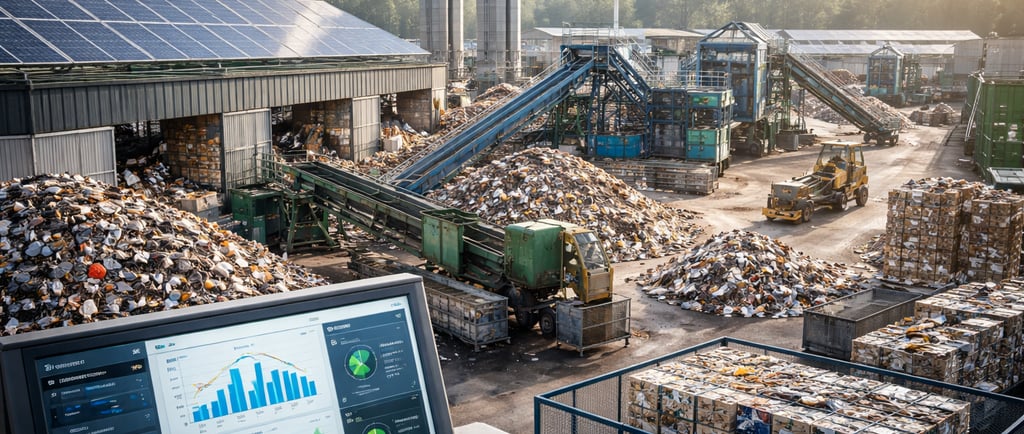
In the race toward a greener future, the recycling industry stands at a critical intersection of sustainability, operational excellence, and mounting regulatory pressure. For recycling companies determined to proactively drive decarbonization while maintaining strong profitability and regulatory compliance, ISO 50001 emerges as a strategic cornerstone and transformational lever for organizational change.
This deep dive breaks down how recyclers across all segments—metals, plastics, paper, e-waste—can harness the power of ISO 50001 to systematize energy management, unlock cost savings, mitigate business risks, and closely align with Life Cycle Assessments (LCAs) and evolving market requirements. The result? A pragmatic roadmap to boosting compliance, credibility, and long-term competitive advantage.
Table of Contents
Step-by-Step ISO 50001 Implementation in Recycling Operations
Actionable Tactics: Decarbonization with Cost, Risk, and Compliance in Mind
Measuring, Reporting, and Iterating for Continuous Improvement
1. Understanding ISO 50001 in the Context of Recycling
ISO 50001 is the globally recognized standard for establishing, implementing, maintaining, and improving an energy management system (EnMS). Its main objective is to help organizations systematically optimize energy use, enhance energy performance, and reduce both energy consumption and greenhouse gas (GHG) emissions. This standard is uniquely tailored for organizations that rely on energy-intensive operations—precisely what defines the modern recycling sector.
For recyclers, ISO 50001 offers a robust and flexible framework to:
Identify and control significant energy uses (SEUs): From energy-guzzling shredders and granulators to air compressors and conveyor belts, recyclers need granular visibility into where power is consumed.
Set and achieve measurable energy reduction targets: ISO 50001 makes it mandatory to set documented energy objectives, not just vague aspirations.
Embed decarbonization into operational workflows: Modern recycling plants increasingly link emissions metrics with process KPIs.
Ensure compliance amid tightening regulations and stakeholder scrutiny: As investors, customers, and auditors demand greater proof of environmental stewardship, ISO 50001 certification signals tangible commitment.
Most critically, ISO 50001’s process-oriented approach (Plan-Do-Check-Act) helps recyclers move beyond one-off energy projects toward company-wide, repeatable systems that drive measurable progress year after year.
Industry fact: According to an ISO survey, companies that have adopted 50001 report average energy savings of 10-30% in the first three years, with recyclers often realizing even higher gains due to historically under-managed energy loads.
Real-World Example
Consider Sims Metal Management, a global leader in metals recycling. After adopting ISO 50001, one of its UK facilities slashed energy consumption by over 20% within 18 months—without sacrificing throughput. The secret lay in enforcing cross-functional energy data accountability and making optimization a plant-wide ethos.
2. Why Energy Management Matters for Recyclers
A. Environmental Impact and Brand Value
Energy use typically represents the largest share of a recycler’s carbon footprint, both in direct (Scope 1) and purchased electricity (Scope 2) GHG emissions. Every kilowatt-hour saved or sourced sustainably translates to lower lifecycle emissions—a powerful narrative as society demands real climate action.
Brand advantage: According to NielsenIQ, 66% of consumers willingly pay more for brands with strong, transparent sustainability credentials. Recycling companies that lower their energy intensity and carbon impact can directly leverage this in B2B and B2C brand visibility, opening new revenue channels and customer preference.
B. Operational Resilience and Cost Efficiency
Unmanaged or erratic energy use is a silent profit killer. By instilling rigorous energy management, recyclers gain:
Protection against energy price volatility: The International Energy Agency (IEA) estimates industrial power rates have risen as much as 60% since 2021 in many regions—erasing margins if unmanaged.
Enhanced process efficiency: Facilities that optimize energy flows experience fewer equipment breakdowns, faster turnarounds, and less production downtime.
Potential for government and utility incentives: Many jurisdictions offer grants or rebates for companies certified to ISO 50001, slashing the cost of capital upgrades.
C. Regulatory and Customer Pressure
New regulations are rapidly amplifying the urgency, including:
EU's Corporate Sustainability Reporting Directive (CSRD) and ESG demands in North America: Mandating transparent, externally audited GHG disclosures—even for medium-sized enterprises.
Supply chain pressure: Automotive, CPG, and electronics OEMs increasingly require proof of decarbonization from suppliers, including recyclers.
ISO 50001 functions as a universal, auditable language for demonstrating responsible energy stewardship to both regulators and business partners. Independent certification positions your recycling enterprise as a low-risk, ESG-forward supplier.
3. Building a Decarbonization-First Strategy
Decarbonization has evolved from a catchphrase to a boardroom-level strategic imperative. With the circular economy gaining traction in global policy, recyclers are ideally placed to lead—but only if decarbonization is built into the business model, not bolted on afterward.
Three Pillars of a Risk-Smart, Decarbonization-Driven Plan
Cost Impact
Identify opportunities that deliver the highest payback—using detailed data to target projects that move the needle on profit and energy use. For example, targeting the 15% of equipment responsible for 50% of total plant consumption can unlock disproportionate value.
Stat: The US Department of Energy found that systematic energy management typically uncovers 5-15% in "low-hanging fruit" efficiency gains requiring little to no capital investment.Risk Mitigation
Evaluate risks spanning: supply interruptions (e.g., volatile grid), compliance/non-compliance fines, and existential business threats from reputational harm. Energy risk registers are now being embedded in enterprise risk assessments.Regulatory & Customer Compliance
Beyond internal savings, external drivers—like low-carbon procurement policies—make ISO 50001 an essential passport to win future contracts and avoid penalties tied to carbon taxation.
A decarbonization-first mindset turns sustainability from a cost burden into a formidable profit center and strategic differentiator.
4. Step-by-Step ISO 50001 Implementation in Recycling Operations
To maximize the potential of ISO 50001, recycling facilities must embed its principles through an iterative, organization-wide Plan-Do-Check-Act (PDCA) process. Here’s a stepwise, best-practice approach:
A. Commitment from Leadership
Without executive buy-in, energy management initiatives wither. Successful recycling companies integrate an energy management policy directly into their business mission, set clear responsibilities at C-suite and plant-manager levels, and align employee incentives with energy and emissions performance.
Stat: According to KPMG, enterprises with board-level sustainability engagement demonstrate 2X higher rates of energy reduction compared to those with isolated, department-led programs.
B. Baseline Assessment
Use advanced energy audits and real-time sub-metering to catalog every process and subsystem—from inbound materials handling to final product baling. Include "hidden" loads such as ventilation or auxiliary infrastructure.
Case Study: A leading plastics recycler in Germany installed IoT sub-meters on shredders and washing lines, unearthing previously invisible inefficiencies worth tens of thousands of euros annually.
Benchmarking against national and international best-in-class standards (such as those published by the Global Recycling Foundation) provides context for where you stand—and what’s achievable.
C. Set SMART Energy Objectives
Draw actionable, time-bound targets directly from your baseline. For example:
"Reduce specific energy consumption (kWh per ton processed) in the e-waste sorting line by 18% by Q3 next year."
D. Identify Significant Energy Uses (SEUs)
Advanced analytics can rank all assets and processes by energy and carbon impact, helping prioritize upgrades and interventions on the highest-value targets—be it a high-frequency conveyor, outdated hydraulic presses, or malfunctioning air compressors.
E. Develop and Launch Action Plans
Tackle low- and no-capex wins first; these might include correcting air leaks, optimizing equipment schedules, or educating staff on shutdown protocols. Next, plan progressive investments (with ROI tracking) in digital automation, high-efficiency drives, and renewable integration.
Fact: Facilities deploying stepwise continuous improvement action plans, rather than one-off projects, realize 30-40% greater persistent savings (ISO case studies, 2022).
F. Employee Engagement
ISO 50001 works best when energy responsibility becomes everyone’s business. Build energy awareness campaigns, encourage creative problem-solving, and celebrate wins. Even a 5-minute huddle on energy KPIs can rally teams and surface new ideas from the shop floor.
G. Monitor, Measure, and Report
Deploy real-time dashboards, mobile alerts for deviations, and integrated KPIs such as:
kWh or MWh per ton of material processed
GHG intensity per output unit
Uptime and downtime linked to energy events
These are invaluable not only for ISO compliance but for ongoing Lean/Six Sigma efforts.
H. Certification and Communication
Upon passing internal and external audits, market your certification. Updating RFPs, sustainability reports, and digital channels with verified ISO 50001 status enhances trust and reputational value among customers, partners, and regulators alike.
5. Actionable Tactics: Decarbonization With Cost, Risk, and Compliance in Mind
ISO 50001 only pays off when you turn your EnMS into plant habits. Your goal is simple. Cut kWh per ton, cut peak demand, and cut unplanned downtime, while you build audit-grade evidence.
Start with the reality of recycling operations. Most of your loads are motor-driven. Think shredders, conveyors, pumps, fans, and sortation drives. In many industrial subsectors, motor-driven systems account for a large share of electricity use, which is why motor and drive choices are usually your fastest path to lower intensity. IEA+1
A. High-impact, low-cost tactics you can start this month
Win the “80/20” fight with meters and focus
Most plants waste time chasing small loads.
You need proof of where energy really goes, by line, by asset, by shift.
A UK recycling and waste operator, Viridor, found that 80% of energy use sat on 20% of sites, then prioritized those sites. They also pushed almost all consumption through smart metering for real-time visibility. Use that idea at plant level. Map your top 10 Significant Energy Uses and ignore the rest until you have results. Featured Customers
Do this:
Sub-meter your top SEUs first, shredder drive, baler hydraulics, air compressor room, wash line heat, dryer, dust collection.
Track kWh, kW peak, run hours, and tons processed, per shift.
Set one weekly review with maintenance, ops, and finance. Keep it 30 minutes. Act on one anomaly per week.
Compressed air, fix the most expensive utility you run
Compressed air is usually a hidden margin leak. A U.S. DOE survey found about 10% of a typical industrial facility’s electricity can go to generating compressed air, and in some plants it can reach 30% or more. The Department of Energy's Energy.gov
Do this:
Run a leak hunt every month, tag leaks, fix within 7 days.
Drop header pressure in small steps, 0.1 bar at a time, while you track scrap quality and tool performance.
Stop using air for cleaning when a blower or vacuum works.
Add sequencers and controls so compressors do not fight each other.
Recover compressor heat for space heating or process water pre-heat when you can, because most input energy ends up as heat.
Fix idle run and bad scheduling
Recycling plants often burn power while waiting for feedstock, trucks, or downstream capacity.
Do this:
Add start-stop rules by line, not by “plant is open.”
Interlock conveyors so they shut down when upstream feed stops.
Schedule the highest-load steps away from peak tariff windows when your utility rates punish demand spikes.
Run “warm start” checks, knives sharp, hammers in spec, screen clean, bearings aligned. Dull cutting tools drive kWh per ton up fast.
B. Medium-capex tactics with predictable payback
Variable speed control on the loads that swing
Most recycling loads do not need full speed all the time.
Targets:
Fans, dust collection, ventilation.
Pumps in wash lines and water loops.
Conveyors with variable throughput.
Hydraulic power units on balers and shears.
What you get:
Lower kWh.
Lower mechanical stress.
Lower trip events, which protects throughput.
Motor and gearbox standards that stop “efficiency backsliding”
If you let procurement buy whatever is cheapest, you lose your gains every time you replace a motor.
Do this:
Set a minimum motor efficiency class for new installs and replacements.
Standardize motor sizing. Oversized motors waste energy at low load.
Require alignment checks after installs, and track bearing failures as an energy signal, not only a maintenance problem.
C. Tactics by recycling segment, what usually matters most
Metals recycling
Shredder and downstream separation dominate electricity. Attack shredder feeding stability, drive control, and downtime.
Magnetic and eddy-current separation runs long hours. Improve controls and maintenance to avoid drag and belt slip.
Baling and shearing are hydraulic-heavy. Tune hydraulics, reduce idle pressure, and maintain seals and filters.
Plastics recycling
Washing and drying often dominate. Heat management is where your kWh per ton hides.
Insulate hot surfaces, recover heat, and keep setpoints tight.
Track water temperature, flow, and detergent dosing. Bad chemistry forces higher heat and longer cycles.
Paper recycling
Pumps, fans, and process water loops run constantly. Focus on motor systems and demand control.
Fix vacuum system losses. Tighten hood and airflow control if you run paper-machine-like steps.
E-waste
Ventilation, dust collection, and sorting lines can dominate.
Control airflow with speed drives and keep filters maintained so fans do not creep up in load.
D. Compliance-ready tactics, built for audits and buyers
Your buyer does not want promises. They want repeatable proof. ISO 50001 helps because it forces documented baselines, documented EnPIs, and documented action plans.
Use DOE’s real-world performance figures as your internal benchmark. DOE materials cite average energy cost reductions around 12% within 15 months for early ISO 50001-style programs, with multi-year energy performance improvements reported across facilities. The Department of Energy's Energy.gov+1
Build compliance evidence as you work:
Keep an energy register of actions, owner, date, expected savings, measured savings.
Store meter screenshots, work orders, and before-after run data.
Write “control plans” for the top SEUs, so auditors can see how you prevent drift.
6. Integrating LCA Into Your Energy Playbook
If ISO 50001 is how you control energy, LCA is how you prove climate impact in buyer language.
ISO 14044 sets requirements and guidance for life cycle assessment, including inventory, impact assessment, interpretation, and reporting. ISO
A. Why LCA integration matters for recyclers
Recycling already delivers big avoided impacts versus primary production, but buyers still scrutinize your operational footprint.
Example: The International Aluminium Institute reports primary energy consumption of 186 GJ per tonne for primary aluminium versus 8.3 GJ per tonne for recycled aluminium, a 95.5% energy saving. Your plant electricity still changes the final product footprint, especially on high-carbon grids. International Aluminium Institute
B. The practical way to connect ISO 50001 data to LCA
Step 1: Define your product and functional unit
Pick a unit buyers understand.
Examples:
1 tonne of shredded ferrous scrap at your gate.
1 tonne of PET flake, washed and dried.
1 tonne of sorted e-waste fractions, copper, aluminum, plastics, PCB concentrate.
Step 2: Build a Life Cycle Inventory that uses your EnMS meters
Do not estimate what you can measure.
Pull from your ISO 50001 system:
kWh by line and by tonnage.
Fuel use for mobile equipment, loaders, forklifts, gensets.
Consumables linked to energy, compressed air, process water heating, dryer fuels.
Step 3: Treat electricity correctly, and document it
Many buyers ask for both:
Location-based Scope 2, based on grid average.
Market-based Scope 2, based on your contracts.
You cannot defend a footprint if you cannot explain your electricity factor and your boundary choices.
Step 4: Use LCA to pick the next SEUs
This is where LCA becomes a decision tool. If the wash line dryer drives most climate impact, move it up your ISO 50001 action plan. If compressed air has a huge loss rate, treat it as a core decarbonization project, not maintenance “nice to have.”
C. Turn LCA results into buyer assets that win work
You need outputs buyers can use in procurement and reporting:
Product carbon intensity, kg CO2e per tonne, with assumptions.
Change log year over year, tied to ISO 50001 actions.
Third-party review path, if the customer requests it.
If you operate in e-waste, add one more reason.
Global e-waste reached a record 62 billion kg in 2022, and only 22.3% was documented as formally collected and recycled. Buyers in electronics care about both recovery and the footprint of recovery. ITU
7. Measuring, Reporting, and Iterating for Continuous Improvement
Most plants can cut energy fast in year one. The harder part is holding the gains in year three.
That is what ISO 50001 is built to do.
A. Choose EnPIs that match how your plant really runs
Do not drown in metrics. Pick a small set that links energy to output and constraints.
Core EnPIs:
kWh per tonne processed, by line and total plant.
kW peak per shift, and monthly max demand.
kWh per operating hour for SEUs, so you catch “creep” when throughput drops.
Downtime events tied to energy, trips, overheating, compressor faults, drive faults.
Normalize when it matters:
Material mix changes.
Moisture changes.
Seasonal HVAC changes.
If you do not normalize, you will argue about data instead of fixing problems.
B. Verify savings with an M&V method buyers trust
Savings claims fail when you cannot prove them.
Use a recognized measurement and verification approach, such as IPMVP, so your before-after story is defensible to auditors, lenders, and customers. evo-world.org+1
C. Run ISO 50001 like a production system, not a project
Use a cadence that never stops:
Daily: operators log anomalies on top SEUs.
Weekly: energy review, pick one corrective action, assign an owner, set a due date.
Monthly: management review of EnPIs, major deviations, and capex decisions.
Quarterly: internal audit on controls, training, and documentation quality.
Viridor’s case study shows what “system” looks like at scale, including smart meter coverage, anomaly spotting, and a structured program that took about 18 months to certify. Featured Customers
D. Expect steady gains when you keep the system alive
Peer-reviewed research on ISO 50001 in manufacturing has reported average first-year energy performance improvement rates around 4.1%, with persistence tied to sustained management practice, not one-off retrofits. Use that as a reality check for your targets and your staffing model. ScienceDirect+1
8. Key Takeaways for Forward-Thinking Recyclers
ISO 50001 works when you treat energy like a controlled production variable, not a utility bill.
Start with the biggest loads, then prove it with meters. The “80/20” rule shows up in real recycling businesses. Featured Customers
Motor-driven systems usually dominate plant electricity. That makes drives, controls, and maintenance some of your highest-return moves. IEA+1
Compressed air is often a top hidden cost. Treat it as a core energy project, because it can represent about 10% of facility electricity in typical industrial sites. The Department of Energy's Energy.gov
Use ISO 50001 data to feed your LCA. Buyers trust measured inventories more than estimates, and ISO 14044 gives you the structure to report it credibly. ISO
Use real benchmarks to stay grounded. DOE materials cite average energy cost reductions around 12% within 15 months for early ISO 50001-style efforts, which gives you a performance bar for year one. The Department of Energy's Energy.gov+1
Keep your system alive with cadence. Daily checks, weekly actions, monthly reviews, quarterly audits.
Make the output buyer-ready. Publish energy intensity, carbon intensity, and year-over-year change tied to documented actions.
Connect
Your trusted partner for scrap metal procurement.
CONTACT
About
haroon@tdcventures.com
+1-307-655-7593
© 2025. All rights reserved.
NEWSLETTER