
LCAs that Convince Buyers: Data & Method
Move beyond green claims with LCAs that prove decarbonization. Learn the data & methodology to build buyer trust, ensure compliance, and unlock competitive advantage in energy operations.
COMPLIANCE & REGULATORY OPERATIONS IN RECYCLING
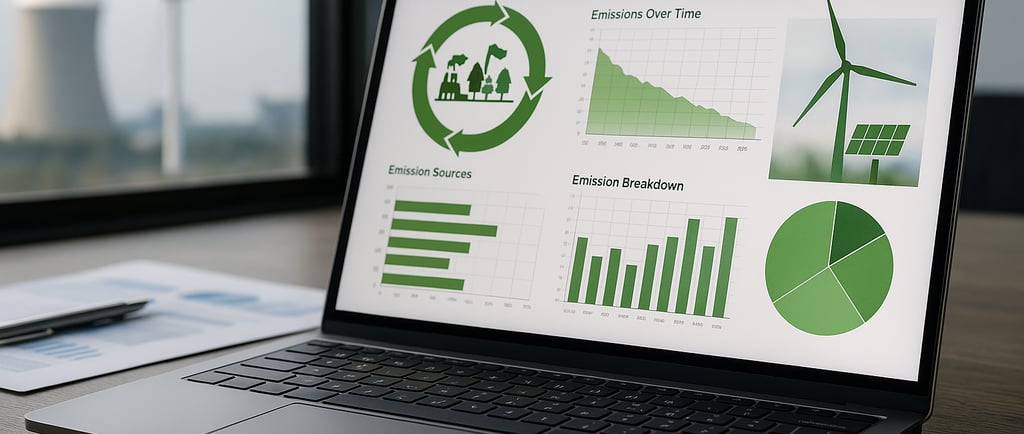

Today’s energy buyers expect more than green rhetoric—they demand rigorous evidence of environmental impact. In the evolving landscape of energy and industrial operations, Life Cycle Assessments (LCAs) have shifted from a niche reporting tool to a mission-critical process. LCAs are no longer a mere compliance checkbox—they’re your ticket to measurable decarbonization, cost efficiency, and bulletproof compliance.
But simply having an LCA isn’t enough. To persuade increasingly discerning buyers—and to catalyze real operational change—your LCA must integrate reliable data, robust methodologies, and actionable decarbonization strategies. Companies that approach LCAs systematically not only unlock cost savings, but also earn trust and a tangible competitive edge.
This guide exposes the blueprint for LCAs that move modern buyers, spotlighting actionable decarbonization within the frameworks of cost, risk, and compliance. If you aspire to be the sector’s benchmark for green credibility and operational efficiency, this roadmap is for you.
What Are LCAs, and Why Do They Matter for Decarbonization?
Understanding the Power of Life Cycle Assessments (LCAs)
Life Cycle Assessment (LCA) is a systematic process to evaluate the environmental impacts associated with every stage of a product’s life—from raw material extraction, production, and distribution, through use and end-of-life disposal or recycling. In the energy sector, an LCA acts as both a microscope and a mirror: it reveals hidden emissions across value chains and reflects progress toward net-zero goals.
Why LCAs Matter in the Age of Decarbonization
Unmasking Hidden Emissions
A McKinsey analysis found that over 80% of many companies’ greenhouse gas (GHG) footprints stem from upstream supply chains or end-of-life stages. High-quality LCAs capture these opaque, indirect (Scope 3) emissions—motherlodes of untapped decarbonization opportunity.Setting Benchmarks for Progress
LCAs provide a data-driven baseline and ongoing roadmap for decarbonization, allowing organizations to objectively track emissions reductions and evaluate whether technology and process investments pay off. Detailed benchmarking enables industry leaders like Unilever and Siemens Energy to transparently disclose improvements, attracting investors and compliant B2B buyers.Building Verifiable Buyer Trust
Procurement teams, investors, and regulators increasingly demand proof, not promises. According to KPMG’s 2022 Sustainable Procurement Report, 63% of corporate buyers have rejected suppliers due to insufficient environmental data or perceived greenwashing. LCAs offer auditable, third-party-validated evidence—a decisive lever in competitive RFPs and investor roadshows.Driving Regulatory and Market Advantage
As regulatory frameworks—from the EU’s Green Deal to the SEC’s climate disclosure rule—grow teeth, robust LCAs are separating industry leaders from the rest. Companies like Schneider Electric have secured key contracts and funding by using LCA-based metrics to outshine peers in ESG scoring.
LCAs have become evidence in a market where green credibility is currency.
The Core Elements of an LCA That Builds Buyer Confidence
Not all LCAs are created equal. For maximum buyer impact, every LCA should be engineered for transparency, auditability, and decision-ready insights.
1. Granular, Audit-Ready Data Collection
Data precision is the bedrock of a credible LCA. Buyers are hyper-alert to greenwashing or hollow, aggregate claims that gloss over operational realities. The most potent LCAs source data from:
Direct measurements (e.g., meters monitoring facility-level energy usage, process-specific emissions sensors)
Supplier-specific, primary data (not regional averages), sourced through standardized submission protocols and digital platforms
Best-in-class emission factors, drawing from global databases like the U.S. EPA, Ecoinvent, or the UK Government GHG Conversion Factors
The Role of Robust Audit Trails
The granularity of your data should extend to meticulous documentation—down to individual meters, invoices, or digital logs. Audit trails are essential for both internal assurance and third-party verification, supporting full transparency for compliance regimes like the ISO 14067 and the EU Taxonomy. For example, Danish wind giant Vestas integrates real-time sensor data into its LCA process, providing audit-ready evidence for both clients and regulators.
2. Transparent and Standardized Methodology
How you model life cycle impacts is as important as the data itself. Buyers gauge credibility by scrutinizing methodology.
Methodological best practices include:
Following ISO 14040 and ISO 14044 standards for scoping, inventory analysis, impact assessment, and interpretation
Defining system boundaries with clarity (e.g., cradle-to-gate for midstream energy components or cradle-to-grave for equipment lifecycle); this avoids cherry-picking and ensures comparability
Explicit assumptions, exclusions, and limitations—documented and justified
Sensitivity analysis to quantify uncertainty and resilience of findings
Case Study: BMW’s manufacturing LCA protocols openly publish methodological choices and include sensitivity analyses on both material sourcing and end-of-life disposal, a move recognized by CDP as best-in-class for transparency.
3. Outcome-Driven Reporting Tied to Buyer Value
Reporting should do more than present findings—it should interpret them for buyer impact:
Highlight emissions hotspots and cost out decarbonization levers
Connect interventions directly to cost savings (e.g., energy use reductions, carbon tax avoidance)
Quantify risk mitigation and compliance assurance
This outcome-centric approach converts technical data into business cases that buyers—from procurement heads to CFOs—can confidently endorse.
Actionable Decarbonization Tactics for Energy Operations
A persuasive LCA does more than diagnose emissions: it prescribes practical, investable decarbonization actions. Here’s how leading organizations translate LCA insights into operational change, analyzed through the critical lenses of cost, risk, and compliance.
1. Energy Efficiency Upgrades: The Foundational Step
Tactic: Deploy high-efficiency motors, LEDs, HVAC optimization, automated controls, and heat recovery.
Cost Impact: According to the IEA, industrial facilities achieve an average 18% reduction in total energy bills with such upgrades, typically realizing a payback in 2–5 years.
Risk Perspective: Minimal technology interoperability risks; often improves system reliability and uptime.
Compliance Angle: Energy efficiency is the central pillar of regulations like the U.S. Energy Policy Act and EU Energy Efficiency Directive, making it a “low-regret” tactic.
Case Example: Coca-Cola’s bottling plants reduced operational emissions by 40% through optimized process control, with an ROI period of under three years.
2. Fuel Switching to Renewable Energy Sources
Tactic: Electrify processes or switch to direct renewable energy (onsite solar, wind, green hydrogen).
Cost Analysis: The IRENA 2023 report finds solar and wind now outcompete fossil counterparts on lifetime cost in 62% of global markets. Power Purchase Agreements (PPAs) provide long-term price certainty, hedging against fossil volatility.
Risk Management: Locks in supply chain resilience; mitigates risk of future carbon price shocks.
Compliance Compatibility: Materially improves Scope 2 GHG scores, boosting compliance with CDP, GHG Protocol, and upcoming SEC climate requirements.
Case Example: Amazon’s pledge to reach 100% renewable energy by 2025 has already reduced its carbon intensity by 18% while stabilizing energy costs across its data center fleet.
3. Material Circularity and Advanced Recycling
Tactic: Increase recycled content input, move toward modular design for end-of-life recovery, and foster three-way agreements with recyclers and suppliers.
Cost Structure: While upfront investment in logistics and tracking systems is necessary, closed-loop models (like Philips’s medical device recycling) can generate new revenue streams and lower material procurement costs over time.
Risk Mitigation: Bolsters supply chain against price spikes in raw materials—a priority as resource scarcity becomes a macroeconomic risk.
Compliance Horizon: Prepares enterprises for EPR (Extended Producer Responsibility) schemes and supports EU Circular Economy Action Plan mandates.
4. Electrification of Fleet and Industrial Equipment
Tactic: Replace internal combustion vehicles and machinery with electric alternatives.
Cost Lens: Capex remains higher, but McKinsey's Global Energy Perspective notes electric fleets cost 15–25% less to operate and maintain over their lifecycle.
Risk Profile: Futureproofs operations against expanding bans on fossil fuel-powered vehicles in urban centers and industrial zones.
Compliance Showcase: Direct, quantifiable Scope 1 emissions reductions—often highlighted in investor sustainability reports.
Trend Alert: Leading logistics firms like DHL and Maersk have committed to electrify delivery and port operations, driven by both LCA findings and client procurement requirements.
5. Carbon Capture & Storage (CCS) Pilots and Investments
Tactic: Deploy pilot-scale CCS technology to capture and either store or reuse carbon emissions on-site.
Cost-Benefit Tally: While capex remains high ($50–$120 per ton of CO₂ abated), government grants and evolving carbon markets (e.g., EU ETS) are making pilots commercially feasible.
Risk Dynamics: Technology risk is mitigated by phased pilot projects and government cost-sharing programs.
Compliance Readiness: Establishes leadership position for anticipated “hard-to-abate sector” regulations and opens access to voluntary and compliance carbon credit markets.
Example: Occidental Petroleum’s direct air capture pilot—validated via third-party LCA—has already secured advance offtake agreements from Microsoft to meet its net-negative emissions promises.
How to build an LCA buyers can actually approve
If a buyer cannot reproduce your number, they treat it as marketing. Your goal is simple. Make your LCA easy to audit, easy to compare, and easy to turn into a decision.
Start with the buyer’s decision, then lock the study design
Before you touch data, write down the decision your buyer needs to make.
Common buyer decisions in energy operations:
Supplier approval, also called “do we accept your emissions claim in our procurement file?”
Contract award, also called “do you win the RFP?”
Capital approval, also called “do we fund your project because the abatement is real?”
Compliance reporting, also called “does this stand up under our disclosure rules?”
ISO 14040 says your goal and intended use must be explicit, including who will use it and how. If you skip this, buyers can reject the work even if the math is fine. ISO
Practical move.
Put a one-paragraph “intended use” statement at the front of the report:
What decision it supports.
Who the audience is.
Whether it supports public comparisons.
What standards you followed.
Define the functional unit like a contract line item
Buyers compare offers. They cannot compare vague claims.
In energy operations, your functional unit should match what the buyer purchases or manages:
1 MWh of electricity delivered at the point of interconnection.
1 GJ of steam at a defined pressure and temperature.
1 ton of chilled water delivered at a defined delta-T.
1 km of pipeline transport per unit of throughput.
1 hour of generator backup power at a defined load factor.
This sounds basic. It is where many LCAs fail. If two vendors use different functional units, the buyer cannot compare. They treat both as risky.
Set system boundaries that match how buyers audit risk
Buyers look for boundary games. They ask what you excluded.
For energy operations, buyers usually expect you to state, clearly, which of these you include:
Fuel supply chain, including extraction, processing, and transport.
On-site combustion emissions, plus methane and refrigerants where relevant.
Purchased electricity and heat.
Capital equipment and major replacements, such as turbines, boilers, compressors, transformers, batteries.
Maintenance and consumables, such as lubricants, filters, sorbents, water treatment chemicals.
End-of-life, including decommissioning, waste, and recycling.
If you are making a public comparative claim, ISO 14044 tightens reporting and review expectations. Treat that as a hard requirement when your numbers show up in sales decks, RFPs, or product claims. SpringerLink+1
Practical move.
Add a short “what we excluded and why” section. Buyers want to see cut-off rules and materiality logic, not silence.
Treat electricity accounting as a first-class topic, not a footnote
Energy buyers challenge electricity assumptions fast, because it swings results.
You must specify:
Which grid factors you used.
Which geography.
Which time period.
Whether you used average grid mix, residual mix, or contract-backed factors.
For corporate reporting, the GHG Protocol Scope 2 Guidance distinguishes location-based and market-based approaches. Buyers often ask you to show both, or to justify your choice. GHG Protocol+1
Where this matters most.
If you claim emissions cuts from renewable procurement, buyers will ask if your numbers reflect the grid average, or your contracted attributes. If your LCA mixes these without explanation, it looks like cherry-picking.
Future pressure point.
Scope 2 expectations are moving toward tighter time and location matching in some proposals, which will increase scrutiny on hourly claims. Ramboll
Handle co-products and allocation the way buyers expect
Energy systems create co-products all the time:
Combined heat and power, electricity plus steam.
Refinery and gas processing, multiple outputs.
Waste-to-energy, electricity plus waste treatment service.
Hydrogen production, hydrogen plus oxygen, plus heat recovery.
Allocation choices can change results a lot. Buyers will ask:
Did you allocate by energy content, exergy, mass, or economics?
Did you test sensitivity to other reasonable allocation methods?
Practical move.
Show the base method, then show at least one alternative allocation as a sensitivity case. If the ranking flips, buyers want to see that upfront.
Build a data plan that proves “primary data coverage,” not effort
Buyers do not care that the work was hard. They care that the data is specific to your operation.
Strong signals for buyers:
Metered energy by process area, not just total site bills.
Measured fuel flow and composition where possible.
Site-specific uptime, load, and capacity factor.
Supplier-specific factors for major inputs where feasible.
A clear data vintage, such as “calendar year 2024,” plus an update cadence.
IEA analysis highlights how large the prize is when firms reach best-practice energy performance, with very large cost-saving potential at system level. That is exactly why buyers push for better data and measurement. IEA
Practical move.
Create an “evidence pack” folder that maps each key input to its source:
Meter ID or historian tag.
Invoice and date.
Lab report.
Supplier declaration.
Database record and version.
If you cannot show the evidence pack, assume the buyer will mark your claim as high-risk.
Quantify uncertainty, then show decisions that stay true under stress
A buyer does not need a perfect number. They need a number that does not collapse when assumptions shift.
Minimum set of sensitivity tests for energy operations:
Grid emissions factor range, including residual mix if relevant.
Capacity factor and degradation, for wind, solar, batteries.
Asset lifetime.
Recycling rate and end-of-life modeling.
Methane leakage assumptions for gas supply chains.
Transport distances for fuels and critical parts.
Add one “buyer-safe” statement:
“Even at the high-case grid factor and low-case performance, the project still reduces emissions by X%.”
Use third-party review and standardized declarations when the buyer needs comparability
When buyers need apples-to-apples comparisons, they prefer standardized outputs.
Common buyer-friendly outputs:
Product carbon footprint in line with ISO 14067. ISO
Type III declarations, also called EPDs, in line with ISO 14025, and for construction-related products often aligned to EN 15804 rules. ISO+1
A product life cycle inventory aligned to the GHG Protocol product standard approach. GHG Protocol+1
Practical move.
If you sell into infrastructure, public procurement, or large industrials, plan for the buyer asking for an EPD-style output even when they do not say “EPD.”
Turn the LCA into a buyer packet that fits into procurement systems
Most LCAs fail in sales because they are written like technical reports, not procurement artifacts.
Build a buyer packet with five parts.
One-page summary.
Functional unit, boundary, key result, verification status, data year.Method appendix.
Allocation, grid factors, databases, cut-offs, uncertainty method.Assurance and review statement.
Who reviewed it, scope, and date.Data exchange file.
If your buyers want supply chain PCF data movement, align to a common data exchange approach used by industry groups, so they can ingest it. WBCSD+1Change log.
What changed since last version, and why.
Convert hotspots into a costed decarbonization plan buyers can fund
A buyer trusts an LCA more when it triggers visible operational action.
Tie each hotspot to:
Operational action.
Capex and opex impacts.
Expected emissions change per functional unit.
Implementation risk and controls.
Monitoring plan and KPI.
Example, motors and drives.
IEA notes that replacing an existing motor with a high-efficiency motor can have an average payback under two years for many industrial uses. They also quantify large global savings if the worst-performing motors are upgraded. IEA Blob Storage
Example, grid decarbonization context.
IPCC assessments show life-cycle emissions vary widely across generation types, with coal and gas far higher than wind and nuclear medians, which is why buyers focus on electricity assumptions and procurement claims. IPCC
Example, renewable cost reality.
IRENA reports that a large share of new renewable capacity produces electricity at lower cost than fossil alternatives, which is why buyers increasingly treat clean power sourcing as a cost and risk decision, not a branding one. IRENA+1
Keep the LCA current, because buyers punish stale numbers
Buyers now ask, “What year is this based on?” If your answer is “a few years ago,” you lose points.
Set update triggers:
Annual refresh for energy, fuel, and grid factors.
Immediate refresh after major equipment changes.
Refresh after switching electricity contracts or PPAs.
Refresh after material throughput changes beyond a set threshold, such as 10%.
This is also where regulation pressure is heading.
EU CBAM moves from a reporting-only transitional phase to full implementation starting January 1, 2026, which raises the value of verified embedded emissions data for covered goods. Taxation and Customs Union+1
EU sustainability reporting timelines have also been in motion, including a “stop-the-clock” style delay package that shifts who reports and when, which makes buyer requirements uneven across markets. Consilium+2Reuters+2
In the U.S., the SEC’s climate disclosure rule has faced legal and regulatory shifts, including the SEC voting to end its defense of the rules in 2025, so many buyers now ask for contract-ready proof even when disclosure requirements differ by jurisdiction. SEC+2DART+2
California’s corporate climate laws have also seen court action, with one law paused while another emissions disclosure requirement remains in effect, which adds more buyer-side compliance variability for companies operating there. AP News
Conclusion: what “LCAs that convince buyers” actually look like in practice
Buyers trust LCAs that behave like audited financial data. They reject LCAs that behave like marketing claims.
If you want repeat wins, build your LCA process like an operating discipline:
Define the decision and unit.
Lock the boundary and electricity method.
Prove primary data coverage.
Show sensitivity and uncertainty.
Use third-party review when claims go public.
Package outputs so procurement can store and reuse them.
Update on a schedule, and keep a change log.
That is how your LCA stops being a report, and becomes a buyer approval tool.
Connect
Your trusted partner for scrap metal procurement.
CONTACT
About
haroon@tdcventures.com
+1-307-655-7593
© 2025. All rights reserved.
NEWSLETTER