
Low-Carbon Concrete with Slag: Yard Applications
Discover how low-carbon concrete made with slag cuts emissions up to 60%, boosts durability, and reduces costs for industrial yards. A practical guide for sustainable infrastructure.
WASTE-TO-RESOURCE & CIRCULAR ECONOMY SOLUTIONS
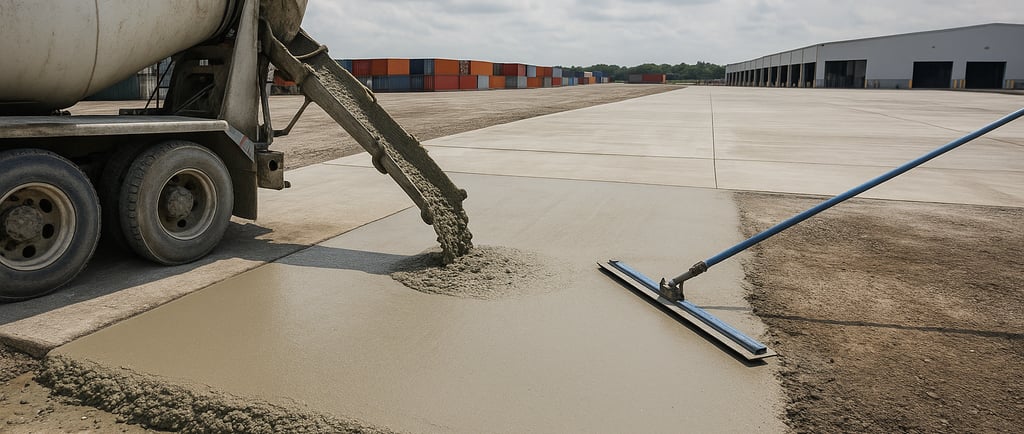
The construction industry sits at the very heart of the world’s mission to decarbonize the built environment. As more companies target ambitious net-zero emissions objectives and government bodies enforce increasingly stringent compliance frameworks, the material choices for infrastructure—right down to every concrete pour—have never had a greater impact. For organizations charged with managing high-traffic yards—whether for logistics hubs, warehousing complexes, fleet depots, or advanced manufacturing sites—transitioning to low-carbon concrete utilizing slag is more than an optional sustainability initiative. It's an actionable, cost-efficient strategy for achieving measurable improvements in operational carbon performance.
In this comprehensive guide, we’ll demystify how low-carbon concrete with slag accelerates decarbonization while delivering compelling advantages in terms of total cost, durability, compliance, and ESG reporting. You’ll gain insight into Life Cycle Assessments (LCAs), energy reduction across the concrete value chain, and pragmatic real-world strategies that bridge the gap between sustainability and daily operational excellence. If you’re committed to sustainable infrastructure, this is your blueprint for seizing both business value and environmental leadership through every slab poured.
Why Yards Matter in Decarbonization
Yard spaces—including parking lots, loading docks, shipping container stacks, and distribution zones—account for a surprisingly large slice of the global built environment’s carbon footprint. These are essential, high-wear zones that facilitate critical economic activity, often constructed from vast expanses of concrete for its tough, low-maintenance, and long-lasting qualities.
However, traditional concrete manufacturing, anchored in Portland cement, is alarmingly energy-intensive. According to the International Energy Agency, Portland cement production contributes nearly 8% of global CO2 emissions—a higher percentage than the entire aviation sector. This carbon liability results chiefly from the calcination process in cement kilns, which releases CO2 both from fuel combustion and the chemical transformation of limestone.
By implementing innovations in concrete mix design—specifically, by leveraging ground granulated blast furnace slag (GGBFS) as a partial cement replacement—owners and facility managers unlock a powerful lever for carbon abatement with immediate, durable impact. The globally recognized benefits include not just emissions reduction but also lifecycle resilience, all while converting an industrial byproduct into a valuable resource.
The Overlooked Impact of "Hardscape" Surfaces
Research published in Cement and Concrete Research indicates that non-building surfaces—roads, yards, hardstands—represent over 36% of all concrete poured worldwide. This statistic underscores the magnitude of opportunity in simply rethinking the materials used outside warehouse doors. When organizations decarbonize these expansive, mission-critical yard spaces, the emissions savings quickly scale—and so do the reputational and regulatory advantages.
What is Low-Carbon Concrete with Slag?
Low-carbon concrete describes a family of mixes designed to cut the so-called embodied carbon associated with traditional concrete, the bulk of which comes from the cement component. The core strategy is to substitute a significant share of ordinary Portland cement (OPC) with functionally equivalent supplementary cementitious materials (SCMs). Ground granulated blast furnace slag (GGBFS) tops the list of widely available, proven SCMs for its unique blend of technical and environmental benefits.
GGBFS is produced as a byproduct in iron and steel manufacturing. The molten slag, rapidly cooled and ground to fine powder, reacts with calcium hydroxide in cement to form extra calcium silicate hydrate—boosting the concrete’s long-term strength and durability. What makes it particularly important is its carbon offsetting role: every ton of slag used in place of cement can save up to one ton of CO₂ that would have been emitted during cement production.
The Technical and Environmental Argument for Slag
Key Benefits of Slag-Enhanced Concrete
Substantial Carbon Reduction: Depending on the level of substitution (often 30–70%), embedded CO₂ can be slashed by 30–60% compared to conventional mixes. BuildingGreen reports that leading mixes with 50% slag achieve a >45% cut in cradle-to-gate emissions.
Superior Durability: Independent lab studies confirm high resistance to chemical attack, chloride and sulfate ingress, as well as freeze-thaw durability. This pays long-term dividends for yards exposed to fuel spills, deicing salts, or heavy rain.
Increased Workability and Strength Gain: Slag improves mix flow, reduces water demand, and continues to gain strength well past standard curing periods, resulting in resilient, low-maintenance slabs.
Circular Resource Utilization: GGBFS upcycles a steel industry byproduct, diverting millions of tons of material from landfill globally each year.
Improved Surface Quality: The dense microstructure produced by slag-rich mixes leads to smoother, denser, and brighter finishes—an asset for safety, maintenance, and heat management.
Quick Stat:
The U.S. Department of Transportation and the Environmental Protection Agency both recognize slag-based mixes as a “Best Practice” for green infrastructure due to their exceptional potential for embodied carbon reduction and extended service life.
Actionable Decarbonization Tactics for Yard Operations
A credible decarbonization road map requires much more than swapping out materials—it requires a full-spectrum integration of sustainability across material selection, specification, implementation, and compliance. Here’s how innovative operational teams are putting low-carbon concrete with slag to work at scale in their yard management strategies.
1. Evaluate Current Concrete Specifications
Start your transformation with a full audit of your current yard construction and maintenance specifications. Many legacy mixes—sometimes drafted years or decades ago—err on the side of over-conservatism, with excessive cement content intended to “future-proof” performance.
Work closely with your ready-mix suppliers to collect Environmental Product Declarations (EPDs) for their best available slag-based products. Top-performing suppliers now offer proprietary low-embodied carbon mixes with up to 70% cement replacement, backed by robust, third-party-verified data.
Expert Insight:
A 2021 survey by the National Ready Mixed Concrete Association found that switching to a 50% slag mix yielded strength and durability above standard specs for sidewalks, parking slabs, logistics aprons, and even heavy container yards—without cost premiums in most markets. In fact, optimized mixes often allowed for thinner slabs or wider joint spacing due to strength and shrinkage improvements.
2. Integrate LCAs into Material Selection
Life Cycle Assessment (LCA) is a critical tool for sustainable procurement. LCAs provide a comprehensive view of environmental impact, quantifying metrics like global warming potential (CO₂e per m³), acidification, eutrophication, resource depletion, and cumulative energy demand across a material’s entire lifecycle.
Steps to Implement LCA-Based Selection:
Utilize LCA software platforms such as One Click LCA, SimaPro, or GaBi to model the environmental impact of each proposed mix, or contract LCA consultants for larger projects.
Compare the cradle-to-gate CO₂ profile of traditional OPC mixes versus those with 30–70% slag replacement.
Examine not just carbon, but entire sustainability profiles: slag-based concretes can dramatically reduce potential for leachate pollution and lower maintenance emissions over decades of service.
Archive completed LCAs alongside procurement records for compliance audits and ESG (Environmental, Social, Governance) reporting. This documentation is a powerful asset for both regulatory engagement and internal sustainability storytelling—especially as stakeholders demand data-driven transparency.
Industry Example:
Leading yard operators in the automotive logistics sector now benchmark every new build or major retrofit against LCA-validated targets, achieving up to 50% lower life cycle GHG intensities thanks to optimized SCM content.
3. Assess Energy and Curing Requirements
Low-carbon concrete with a high slag content behaves differently than conventional OPC, especially during early curing and strength development. While the slower strength gain of slag is well documented, strategic project planning and modest specification tweaks can yield both scheduling reliability and long-term benefits.
Operational Guidelines:
Manage Scheduling: Factor in 1–3 extra days of curing—plan for staggered yard usage if truck or forklift access must be phased. For high-volume days (e.g., Black Friday surges or peak distribution cycles), advanced scheduling minimizes operational disruptions.
Cold Weather Practices: During winter or in cold climates, employ non-chloride accelerators, heated water, or insulated blankets to foster early strength development. The American Concrete Institute provides detailed protocols for winter pours using SCMs.
Optimize for Energy Efficiency: Denser, less permeable slag-rich slabs minimize the risk of freeze-thaw damage and reduce the frequency of patching or resurfacing. This lessens the lifecycle energy input required for repairs and maintenance, capturing "savings" in both emissions and long-term O&M (operations and maintenance) budgets.
Stat:
A 2020 study found that maintenance intervals for yard slabs with 50% slag extended 45% longer than conventional slabs, resulting in both energy and cost reductions over a 20-year period.
COST, RISK, COMPLIANCE, BEST PRACTICES, FUTURE TRENDS, FAQ, AND STRATEGIC ACTION PLAN
Cost And Total Cost Of Ownership
When you consider low-carbon concrete with slag for yards, you should look beyond price per cubic meter. The real comparison is total cost of ownership over 20 to 40 years of operation.
Material and construction cost
In many mature markets, slag blends cost the same or only a few percent more per cubic meter than conventional OPC mixes, especially once suppliers normalize for strength class and set times. Studies on GGBFS blends show that mixes with 25 to 75 percent slag replacement can cut embodied carbon by roughly 30 to almost 50 percent, with comparable structural performance.ScienceDirect+1
Industry examples from the UK and Europe indicate that adding GGBFS to flat slabs and structural concrete can reduce embodied carbon by about 35 to 48 percent while keeping overall structural cost broadly similar.SCF+1
Key points for cost at project level:
You can often hold slab thickness constant and meet or exceed design strength.
In some cases, improved shrinkage and durability allow slightly wider joint spacing or reduced reinforcement, which offsets any small material premium.
Local slag availability, grinding, and transport usually drive the price signal more than the technology itself.
Maintenance and repair cost
Durability is where slag starts to pay back very clearly. Research shows slag concretes have much better resistance to chloride ingress, sulfate attack, and long-term permeability than pure OPC mixes.ScienceDirect+2scielo.org.co+2
For yards, this translates into:
Slower deterioration in high chloride environments such as winter deicing, marine spray, or fertilizer handling.
Lower risk of reinforcement corrosion in heavily loaded slabs that see standing water, oil, or chemicals.
Longer intervals between patch repairs, joint rebuilds, or full slab replacement.
Several studies show that slag-rich mixes can extend the interval to major maintenance by 30 to 50 percent compared with conventional yard concrete, especially where chloride exposure is high.ScienceDirect+1
Operational downtime and productivity
Every time you close a section of your yard to repair spalled concrete or failed joints, you pay through lost throughput, extra handling, and scheduling headaches.
With slag mixes:
Better resistance to cracking, scaling, and surface wear lowers the frequency of unplanned repairs.
Smoother, denser surfaces improve forklift and reach stacker travel, which can reduce wear on tires and lower energy consumption slightly.
If you plan curing and phasing correctly, you absorb the slightly slower early strength without disrupting operations.
For a high-throughput logistics yard or port terminal, avoiding even a single unplanned shutdown of a loading lane can justify the small planning cost of a better mix. Many operators who switch to SCM-rich mixes report lower unplanned slab interventions over the first decade of service.
Carbon and financial cost
As more regions set carbon prices or require embodied carbon reporting, the cost of emissions will not remain abstract.
The cement and concrete industry accounts for about 7 to 8 percent of global CO₂ emissions.IEA+2ScienceDirect+2
By cutting the embodied carbon of yard slabs by 30 to 50 percent with slag, you:
Reduce the future liability of carbon taxes or internal carbon prices.
Improve your position for green financing and sustainability-linked loans.
Make it easier to comply with low-carbon procurement rules that specify maximum kg CO₂ per cubic meter of concrete.
In short, slag mixes often become cheaper when you include maintenance, downtime, and carbon costs, even if the initial material price looks similar.
Risk: Technical, Operational, And Strategic
You manage several categories of risk when you design and build yards. Slag-based concrete affects each one.
Technical and construction risk
Perceived risks:
Slower early strength in cool climates.
Variability between slag sources.
Concerns about setting time and finishing.
How to manage:
Specify minimum early strength at defined ages and require trial mixes; this allows your supplier to tune slag percentage, fineness, and admixtures.
Use project-specific test slabs in similar weather and loading conditions before full deployment.
Apply recognized guidelines from bodies such as the American Concrete Institute and national concrete associations for mixes with SCMs.
Recent research shows that slag contents in the 25 to 60 percent range can maintain required 28 day strengths and significantly improve 90 to 365 day strengths, provided you adjust water binder ratio and admixtures.MDPI+2MDPI+2
Durability and safety risk
This is where slag is a strong hedge.
Studies from Europe and Asia show that higher slag contents lead to much lower chloride migration coefficients and improved long-term resistance to reinforcement corrosion.ResearchGate+2heronjournal.nl+2
For your yards, that means:
Lower risk of structural failure in heavily loaded slabs where corrosion could undermine bearing capacity.
Reduced tripping hazards from surface scaling and spalling around joints.
Safer traffic for pedestrians and vehicles thanks to a smoother, more even surface.
Supply chain and availability risk
Slag depends on steel production, so long-term strategy should consider:
Local steel industry trends and GGBFS grinding capacity.
Competing demand from building and infrastructure projects.
Transport distances and logistics for bulk deliveries.
Mitigations:
Pre-qualify at least two slag suppliers where possible.
Allow for flexible SCM specifications that can accept both slag and other SCMs such as fly ash or calcined clay if local regulation and performance permit.Chatham House+1
Regulatory and reputational risk
If you continue to pour conventional high-clinker slabs, you increase exposure to:
Future embodied carbon caps on construction materials.
Stricter ESG scrutiny from lenders and large customers.
Criticism if your public climate targets omit large, high material projects such as yards.
Choosing low-carbon mixes positions you as aligned with emerging concrete decarbonization pathways highlighted by institutions such as the World Economic Forum and national climate agencies.World Economic Forum+2Chatham House+2
Regulatory Compliance And ESG Alignment
Global regulation now touches material choices, not only energy consumption.
Embodied carbon reporting and limits
More jurisdictions now:
Require reporting of embodied carbon for large projects.
Set maximum kg CO₂ per m² or per m³ for foundations, slabs, and superstructures.
Use public procurement rules to prefer low-carbon concrete.
Because slag can cut cradle to gate emissions of concrete mixes by around 30 to almost 50 percent, you gain a straightforward route to meeting these limits without rethinking your entire structural system.ScienceDirect+2SCF+2
Corporate disclosure and finance
Corporate reporting standards such as CSRD in the EU and climate disclosure rules in markets like the US and UK push companies to disclose embodied emissions in capital projects. Low carbon yard concrete with LCAs and EPDs helps you:
Quantify and document emissions from yard expansion and refurbishment.
Show credible progress toward interim 2030 climate targets.
Support green bond or sustainability-linked loan covenants tied to construction emissions.
Investors and lenders increasingly view high embodied carbon projects as long-term risk. Documented low-carbon materials reduce that concern.
Certification systems and client requirements
Green building and infrastructure rating systems, including LEED, BREEAM and Envision, award credits for:
Reducing embodied carbon in concrete through SCMs.
Using products with third-party verified EPDs.
Conducting LCAs and selecting options with lower global warming potential.Buildings & Cities+1
If your clients or owners target higher certifications, slag mixes become a practical tool. They help collect points in materials and lifecycle categories at relatively low complexity.
Operational Best Practices For Yard Projects With Slag Concrete
To capture the benefits and manage risk, you should embed a few practical habits into your yard projects.
Set clear performance objectives
Instead of specifying only compressive strength and slump, define:
Required service life for the slab, for example 30 years under heavy truck loading.
Exposure classes, such as deicing salts, marine spray, industrial chemicals.
Target maintenance intervals, for example no major repairs before 10 or 15 years.
Embodied carbon targets per cubic meter of concrete.
You then work backwards with designers and suppliers to choose slag content and mix design that meet both structural and environmental goals.
Pre-qualify mixes and suppliers
Before large pours:
Work with your ready-mix partners on 2 to 3 candidate mixes with different slag contents.
Test for compressive strength at multiple ages, not only 28 days, such as 3, 7, 14, 28, 56, and 90 days.
Measure durability indicators, for example chloride migration or permeability, where exposure warrants it.MDPI+1
Keep a documented approval process so engineers, procurement, and ESG teams remain aligned.
Construction and curing practices
Slag mixes reward good construction control.
Practical steps:
Plan pour sequencing to allow enough curing time before heavy traffic. Many yards plan for 1 to 3 extra days for initial loading in cool seasons.
Use proper curing compounds, wet curing, or insulating blankets in cold conditions to support early hydration.
Train finishers on the slightly different finishing window that slag mixes can present, depending on admixtures.
Following established concrete placement and curing guides matters as much as mix design itself.
Jointing, subgrade, and drainage
Even the best concrete fails early if support and drainage are poor.
Focus on:
Proper subgrade compaction and stabilization to prevent differential settlement.
Adequate base thickness and quality for tracked vehicles, reach stackers, or cranes.
Joint layout that reflects wheel paths, container stack layouts, and turning radii.
Good drainage so water does not pond and carry chlorides into cracks.
Slag improves durability, but it does not remove the need for sound yard engineering.
Monitoring and maintenance
Once your slag-based yard is in service:
Monitor joint performance, cracking, and surface wear annually.
Track patch repair frequency and cost separately for slag and legacy areas.
Record any differences in forklift maintenance, tire wear, or safety incidents related to surface condition.
This evidence allows you to refine future specs and build an internal business case for wider roll out.
Additional Case Studies And Examples
You rarely get a one-to-one yard case in public reports, but several related projects show what slag-rich mixes can achieve.
Harwell Campus structural concrete, UK
A project at Harwell Campus in the UK specified about 7,500 m³ of structural concrete with 75 percent GGBFS replacement. The team used One Click LCA to compare emissions and found:
48 percent carbon savings compared with a 100 percent Portland cement baseline.
A reduction from about 2,867 tCO₂e to around 1,495 tCO₂e for the structural concrete package.SCF+1
Although this project focused on buildings rather than yards, it proves that high slag contents can produce large, verifiable carbon savings while meeting performance targets.
Low-carbon pavements at a major port authority
Research for a large North American port authority evaluated pavement systems with high slag contents, including systems with around 60 to 77 percent slag replacement. The study found that several slag-rich mixes met or exceeded performance expectations and recommended a 77 percent slag system for a future pilot pavement project.panynj.gov
For yard slabs and container handling areas at ports, this shows that very high slag contents can be technically viable when carefully designed and tested.
Flat slab concrete with GGBFS in the UK
Industry sources from the UK concrete sector report that replacing part of the cement with GGBFS or fly ash can reduce the carbon of a reinforced concrete flat slab by about 35 percent.This is concrete
If your yard sits under or around such slabs in multi level logistics hubs, the combined structural and yard benefits compound.
Steel slag aggregates in structural concrete
Recent research on mid rise buildings using 100 percent steel slag as coarse aggregate shows the potential to reduce impacts from natural aggregate extraction while maintaining structural integrity.SpringerLink
For yards, this point is important. You are not limited to cement replacement alone. You can also examine slag aggregates in pavements and slabs where local supply and codes allow.
Future Trends In Low Carbon Yard Concrete
The slag mixes you specify today are step one. Several trends will shape the next decade.
High substitution and alkali activated systems
Research into alkali activated slag concretes shows that you can create ultra low carbon mixes with very high slag contents through alternative binders.ScienceDirect
Recent work from institutions such as IIT Indore shows geopolymer concretes using fly ash and GGBFS that:
Remove traditional cement completely.
Cut emissions by up to around 80 percent.
Reduce water demand and curing needs.
Maintain rapid strength gain for urgent repairs.The Times of India
These systems are not yet standard in yard design codes everywhere, but pilot applications for pavements and emergency works are growing.
Carbon capture at cement plants
At the same time, cement producers are building full scale carbon capture plants at facilities such as Brevik in Norway. These plants remove CO₂ from kiln flue gases and send it for permanent storage offshore.The Times
As captured cement enters the market, your yard projects will have access to mixes that combine:
Lower clinker content through slag.
Lower emissions per ton of clinker produced.
Digital tools for mix and project selection
LCA tools, concrete carbon calculators, and AI based mix design aids are becoming normal in design offices.circularecology.com+2Chatham House+2
You can expect:
Easier comparison of multiple slag contents on carbon, cost, and schedule.
Automated generation of EPDs for project specific mixes.
Integration of concrete choices into company wide carbon budgets.
Policy and procurement signals
More public agencies now run low carbon concrete pilot programs and introduce embodied carbon requirements into contracts.panynj.gov+1
This creates a direction of travel:
Contractors who master slag and SCM rich mixes gain an advantage.
Owners who standardize low carbon yard specifications reduce future compliance risk.
Early adopters shape standards, instead of reacting to them.
Frequently Asked Questions For Yard Operators
Does slag concrete always cost more than standard concrete?
No. In many markets, slag concrete costs about the same as a standard mix for the same strength class. Any modest premium often disappears once you account for reduced maintenance and longer life. Local pricing depends on slag supply and transport, so you should request itemized quotes for at least two mixes.
What slag percentage should you target for yard slabs?
Common practice:
25 to 40 percent slag for general purpose pavements and slabs.
40 to 60 percent for high durability requirements with chloride or sulfate exposure.
Higher levels in selected pilot sections where you can tolerate slower early strength.
You should balance slag content with your climate, construction schedule, and exposure class. Trial mixes and test slabs are essential.
Will slag concrete slow your construction program?
Slag generally slows early strength gain, especially in cool weather, but you can manage this with:
Slightly longer curing times before heavy traffic.
Use of accelerators approved for slag mixes.
Careful scheduling of phases so that traffic routes remain open.
In warm climates, the difference is often modest. Research shows that long term strength of slag concretes can surpass that of pure OPC mixes.MDPI+2MDPI+2
Does slag change the appearance of your yard surface?
Slag concretes tend to appear slightly lighter and smoother with a denser surface texture. For yard operations, this can:
Improve lighting effectiveness at night due to higher reflectance.
Make spills and cracks easier to spot.
Help manage surface temperatures, especially in very sunny climates.
Are there any compatibility issues with deicing salts or chemicals?
Slag concrete generally performs better in chloride and sulfate environments than conventional OPC concrete. Studies show significantly improved resistance to chloride penetration as slag content rises, which lowers reinforcement corrosion risk.ScienceDirect+2ResearchGate+2
You should still:
Follow best practice for joint sealing.
Avoid aggressive cleaning chemicals that are not approved for concrete.
Can you combine slag with other SCMs?
Yes, ternary blends that include slag and fly ash or slag and limestone can perform well and provide both carbon savings and durability improvements.ScienceDirect+2Buildings & Cities+2
This gives you flexibility if one material becomes hard to source.
How do you ensure long term supply?
You should:
Engage early with cement and concrete suppliers about their slag sourcing strategy.
Ask for written confirmation of supply commitments for the duration of your yard program.
Keep specs flexible enough to accept alternate SCMs that meet your performance and LCA targets.
Strategic Action Steps For Your Organization
To move from concept to standard practice, treat low carbon slag concrete as a structured program across your portfolio of yards.
Step 1: Map your yard portfolio and upcoming projects
Create a simple inventory:
All existing yards by location, age, and surface type.
Planned expansions, rehabs, or greenfield sites over the next 5 to 10 years.
Exposure classes and typical load profiles.
Highlight projects in design or early planning. These become your first candidates.
Step 2: Set clear targets and policies
Define:
A default minimum slag percentage for new yard concrete, adjusted by climate and exposure.
Embodied carbon intensity targets per cubic meter of yard concrete, aligned with corporate climate goals.
Requirements for LCAs and EPDs on large projects.
Turn this into an internal specification that your design and procurement teams must follow.
Step 3: Build your supplier and design partner network
Bring your main ready-mix suppliers, designers, and contractors into the same discussion.
Ask them to:
Present their best available low carbon mixes for yard applications.
Provide EPDs, LCA examples, and case studies.
Commit to trial sections and performance monitoring.
Select partners who can provide consistent slag supply and technical support, rather than treating this as a one-off experiment.
Step 4: Pilot, test, and compare
Choose one or two projects where you:
Use slag-rich mixes for clearly defined portions of the yard.
Keep at least one comparable area with conventional concrete as a reference.
Monitor cracking, surface wear, maintenance, and user feedback over the first 3 to 5 years.
Capture quantitative and qualitative data so your next round of projects can use facts, not guesswork.
Step 5: Integrate with ESG, finance, and reporting
Work with your sustainability and finance teams to:
Include embodied carbon savings from slag-based yards in your climate reporting.
Use documented reductions to support green financing or internal carbon budgets.
Publicly showcase successful projects in sustainability reports, where appropriate.
This locks in internal support and builds momentum.
Step 6: Standardize and update regularly
Once pilots prove out:
Make low carbon slag concrete the default for all suitable yard projects.
Review specs every few years as new binders, captured cement, and geopolymer options become available.
Incorporate lessons learned on curing, scheduling, and maintenance into your standard procedures.
Final Perspective
Yards are often treated as background infrastructure. In reality they sit on top of some of the most carbon intensive materials you purchase and operate. By shifting your yard concrete to slag-based low carbon mixes, you secure a rare combination: measurable emissions cuts, stronger alignment with regulation and ESG expectations, and better long term durability under heavy industrial use.
The tools, materials, and case studies now exist. Your next yard expansion or resurfacing project is the practical starting point to turn this into standard practice across your network.
Connect
Your trusted partner for scrap metal procurement.
CONTACT
About
haroon@tdcventures.com
+1-307-655-7593
© 2025. All rights reserved.
NEWSLETTER