
Low-NOx Burners for Furnaces: Retrofit Guide
Complete retrofit guide for low-NOx burners in industrial furnaces. Cut NOx emissions, boost energy efficiency, ensure compliance, and calculate ROI with actionable steps and sector-specific playbooks.
SUSTAINABILITY & GREEN TECHNOLOGY
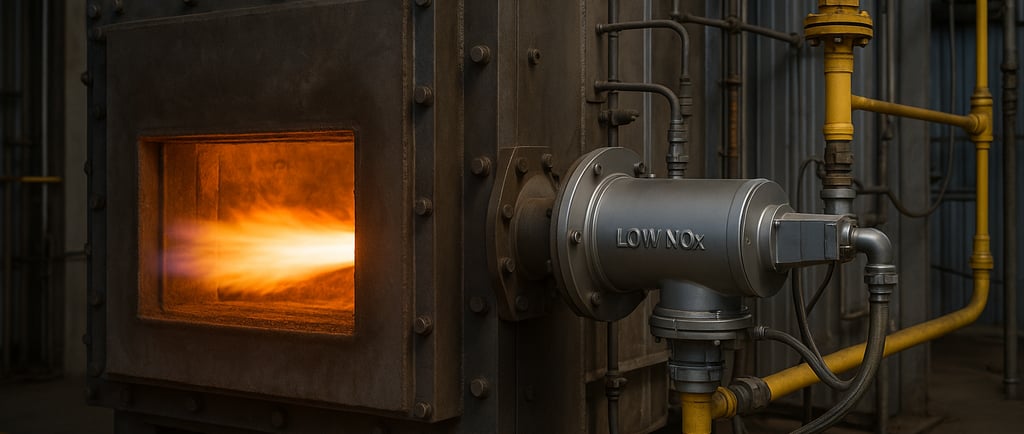
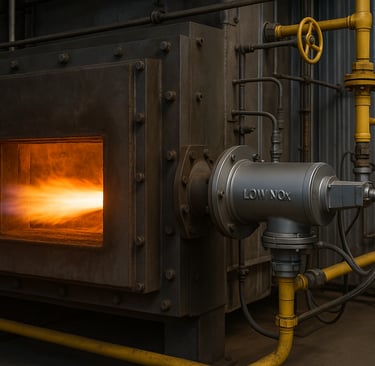
Actionable Decarbonization for Energy-Intensive Operations
Sustainability leaders know that shrinking a facility’s carbon footprint isn’t just a corporate social responsibility—it’s a business necessity in today’s carbon-conscious marketplace. Industrial furnaces are often the backbone of energy-intensive operations, and they remain significant sources of NOx emissions, a primary environmental and regulatory concern. Retrofitting these furnaces with low-NOx burners represents one of the most actionable and cost-effective decarbonization strategies available.
This comprehensive retrofit guide dives deep into the practicalities, risks, compliance requirements, and return on investment for adopting low-NOx burner technology. We’ll help you evaluate options through the intersecting lenses of sustainability, operations, and cost, informing your strategy with life cycle assessments (LCAs) and actionable steps.
Why Target NOx Emissions in Furnace Operations?
Industrial NOx emissions present both environmental and reputational risks. According to the U.S. Environmental Protection Agency (EPA), industrial sources contribute approximately 21% of total anthropogenic NOx emissions in the United States, with combustion equipment ranking as a top emitter in heavy manufacturing, glass, steel, and petrochemical plants.
NOx gases react in the atmosphere to form ozone and particulate matter, which are directly linked to respiratory issues and environmental damage. Reducing these emissions is more than regulatory box-ticking—it meaningfully improves air quality and public health, reinforcing a facility’s social license to operate.
Governments worldwide are tightening limits on NOx emissions. For instance, the European Union’s Industrial Emissions Directive 2010/75/EU, China’s “Ultra-Low NOx” standards for key cities, and India’s Bharat Stage VI norms all require significant NOx reductions. Global brands and supply chains increasingly mandate rigorous emissions disclosures as part of Environmental, Social, and Governance (ESG) compliance, reinforcing the business case.
How Low-NOx Burners Deliver Results
Low-NOx burners drastically reduce NOx emissions at the source. The technology works by altering flame characteristics, air-fuel mixing, and often integrating staged combustion or flue gas recirculation. These design features:
Lower the temperature at which combustion occurs—since NOx formation accelerates at high temperatures, this directly curtails emissions.
Improve mixing for more efficient, complete fuel burn, reducing both NOx and unburned hydrocarbons.
Enhance energy efficiency by minimizing excess oxygen use, which reduces fuel consumption.
Key Benefits:
Decarbonization: Tangibly reduces the facility’s Scope 1 emissions and advances your journey toward net-zero targets.
Energy Optimization: Lowers fuel bills, sometimes by 3–10% post-retrofit, depending on furnace age and operational discipline.
Compliance: Keeps you ahead of evolving local, national, and international air quality standards, minimizing legal and financial exposure.
Reputation & Risk: Signals ESG priority to investors, customers, and employees; demonstrates industry leadership; and—critically—secures access to green capital and contracts.
Pro Tip: In a 2020 IEA report, companies that disclosed NOx-reduction results alongside decarbonization milestones saw a 12% boost in their ESG ratings compared to sector peers.
Constructing a Decarbonization Strategy: The Retrofit Decision Framework
Retrofitting is rarely “plug and play.” Success depends on careful planning, data-driven analysis, and stakeholder alignment. Leading companies follow a systematic retrofit framework tailored to maximize ROI, sustainability metrics, and operational performance.
1. Baseline Assessment & LCA
An accurate baseline is your launchpad. Conduct an energy audit integrating digital sensors and advanced analytics to establish:
Baseline NOx and greenhouse gas (GHG) emissions (Scope 1), often measured in mg/Nm³ for NOx and tCO₂e for carbon
Fuel type, volume, and cost–analyzing historical trends
Maintenance log review to spot inefficiencies (e.g., combustion instability, flame impingement, excess air)
Temperatures, heat loads, duty cycles for each furnace
Map of process constraints, especially where product quality or throughput is non-negotiable
LCA Integration Tip: Where possible, use digital twins or process simulation tools connected to your data historian. This allows for ongoing recalibration post-retrofit, helping you capture incremental improvements over time.
2. Risk Analysis: Costs, Downtime, and Compliance
Hidden costs matter. Prepare a robust cost-benefit scenario:
Direct costs: Burners, engineering, removal/installation, controls integration, start-up services, and emissions certification testing.
Indirect costs: Lost production during retrofit (typically 2–7 days per furnace), operator re-training, and any necessary permits or approvals.
Risk protection: Include contingencies for unforeseen delays, upstream or downstream process tweaks, and spare inventory needs.
Case Study: A leading steel mill in Germany reported a 15% drop in unplanned downtime by synchronizing a low-NOx retrofit during a routine maintenance outage—amortizing labor and maximizing asset availability.
Compliance Questions:
What are the emissions limits for your plant by 2025? By 2030?
Are there financial incentives (grants, tax credits) for NOx/GHG reduction technologies available in your geography?
Would delayed compliance expose you to the risk of mandated retrofits or production cap penalties?
3. Technology Selection: Matching Burners to Operations
Navigating the burner marketplace requires careful due diligence. Consider these parameters:
Furnace Configuration: Is your process batch (e.g., glass melting, ceramics), continuous (steel strip), or rotary (cement, lime)? This affects flame management, burner orientation, and control requirements.
Process Temperature: Lower-temperature applications (e.g., heat treatment around 800°C) permit different solutions than high-temperature applications (glass fusion at ~1600°C), with distinct NOx profiles.
Fuel Flexibility: Natural gas is currently dominant but consider hydrogen-readiness, especially given Europe’s and Asia’s growing hydrogen infrastructure.
Automation: Modern low-NOx retrofits integrate seamlessly with distributed control systems (DCS) or SCADA platforms, enabling precision control, fault diagnostics, and remote monitoring for continuous improvement.
Technical Comparison Table:
Burner TypeNOx ReductionEfficiency ImpactFuel SuitabilityComplexityStaged CombustionHighModerateGas/OilMediumFlue Gas RecirculationVery HighSlightly LowerGasHighLean PremixModerate-HighHighMainly GasMedium/Advanced
Insider Advice: Ask for performance validation from independent labs, not just vendor data. Many credible suppliers—such as Zeeco, John Zink, and Bloom Engineering—can offer references and case studies from your sector.
The Retrofit Roadmap: From Planning to Performance
Executing a successful retrofit requires aligning stakeholders, minimizing business interruption, and ensuring long-term gains. Let’s break down the critical steps:
Step 1: Feasibility Study and Pilot
Leverage simulation tools (e.g., Aspen HYSYS, Honeywell UOP) to digitally prototype burner integration and anticipate emissions impact. A controlled pilot on a non-bottleneck furnace allows validation of anticipated NOx and fuel savings, offering invaluable operational learning and reducing large-scale rollout risk.
Case Study Highlight: After a pilot retrofit on a 10 MW reheat furnace, a major US automaker documented a 58% NOx cut and 8% fuel savings, justifying an $8M investment to roll out the technology sitewide.
Step 2: Engineering Design and Procurement
Customization is king. Work with seasoned process engineers to:
Adjust burner orientation and air management systems, especially in older furnaces with limited headroom or atypical geometries.
Integrate robust, cloud-connected sensors for real-time emissions tracking, a requirement for many environmental regulators and buyers.
Specify parts and service contracts with lifecycle support to maximize uptime.
Bulk ordering during multi-site retrofits, where feasible, often unlocks significant cost savings due to economies of scale.
Step 3: Installation, Commissioning, and Testing
Success in this phase hinges on preparation:
Coordinate retrofits within existing planned outages (such as major turnarounds or holidays) to avoid excess downtime.
Certify that all work meets or surpasses NFPA, EPA, and local authority regulations. Some jurisdictions now require third-party verification of emission performance.
Pilot the new equipment under full-load scenarios, ensuring data is collected and troubleshooting is swift.
Launch operator onboarding programs, covering both hardware and digital dashboards for ongoing optimization and early warning.
Step 4: Continuous Monitoring and Optimization
Decarbonization isn’t a one-off achievement. Build a culture of constant improvement:
Connect burner performance data to your plant-wide energy management software for ongoing tracking and real-time alerts.
Plan quarterly reviews to recalibrate controls, verify emissions, and update LCA calculations.
Publish progress against targets in sustainability reports. Transparent reporting can unlock access to ESG-linked financing, which increasingly rewards proven decarbonization in heavy industry.
Key Metric Benchmarks:
Average post-retrofit NOx: ≤30-80 mg/Nm³ depending on industry and region
Typical fuel savings: 3–10%
Payback period: Often 2–4 years, accelerated by incentives
Future Trends:
As decarbonization accelerates, expect low-NOx technology to dovetail with:
Hydrogen-Ready Burners: Prepping for carbon-free fuels
AI-Monitored Combustion: Predictive optimization based on real-time analytics
Digital Twin Integration: Allowing continuous, adaptive improvements
For facility leaders, the time to future-proof operations is now—transforming compliance into a competitive advantage.
Part 2 – Advanced Tactics, Cost Benefit Playbooks, and Implementation Checklists
Part 1 covered why NOx control matters, how low NOx burners work, and a structured path from baseline to pilot and continuous improvement.
Part 2 goes deeper into three questions most leadership teams ask:
What tactics work best for my sector and furnace type.
What does the math look like at plant level for cost, savings, and compliance.
What concrete steps should my team follow from idea to steady state operation.
SECTION 1: Sector specific playbooks for low NOx burner retrofits
Not all furnaces behave the same. Duty cycle, temperature profile, fuel mix, and uptime targets vary by sector. Low NOx burner strategy should follow that reality.
Steel and non ferrous: reheat, annealing, and heat treatment
Typical starting point
Fuel: mostly natural gas, sometimes mixed with coke oven or blast furnace gas.
Baseline NOx: often 150 to 300 mg per Nm3 for older gas fired reheat furnaces, and higher for mixed fuels, depending on local rules and tuning.
Constraints: very tight control of temperature uniformity and surface quality, high availability requirements, frequent door openings on some units.
What low NOx burners can realistically achieve
Demonstration and commercial projects show NOx levels around 20 to 50 mg per Nm3 at 3 percent O2 in well tuned gas fired furnaces with lean premix and external flue gas recirculation.
In practice, many mills aim for 50 to 80 mg per Nm3 to keep a margin against limits and allow load swings.
Key tactics
Favor staged or premix designs with strong turndown, so you keep flame stability during slow production or idle modes.
Use CFD and digital twin tools to test burner placement and flame shape before cutting steel, especially in long walking beam or pusher furnaces.
Add high quality O2 and flue gas analyzers tied into the DCS. You cannot hold 50 mg per Nm3 without tight excess air control.
In multi zone furnaces, start with NOx critical zones (preheat and soak) and leave discharge zones for a later phase.
Why this matters
Reheat and annealing furnaces often dominate the direct combustion footprint in a steel plant. Large European and Asian furnaces now must hit NOx limits in the 80 to 150 mg per Nm3 range, with some BAT levels below that. Low NOx burners provide the primary path to stay under these values without full flue gas treatment.
Glass furnaces
Typical starting point
Continuous, high temperature operation around 1450 to 1600 degrees Celsius.
Baseline NOx often above 800 mg per Nm3 on air firing with air preheat, sometimes above 1000 mg per Nm3.
Regenerative furnaces and oxy fuel variants add complexity.
What recent projects show
Advanced regenerative and flameless burner designs for glass have reached NOx levels below 200 mg per Nm3 while maintaining efficiency, and even lower when combined with oxy fuel concepts.
Tactics that matter here
Use flameless or high internal recirculation designs that spread heat release and avoid hot spots.
Pay close attention to checker and regenerator condition. Air preheat and mixing are tightly linked.
If you are planning a glass furnace rebuild, coordinate low NOx burner selection with campaigns on regenerator brick and port geometry, not as an afterthought.
Refining and petrochem fired heaters
Typical starting point
Box and cylindrical heaters, various coil layouts, wide range of duties.
Baseline NOx: many older units at 80 to 120 ppmv on natural gas (about 100 to 150 mg per Nm3) or higher on mixed refinery gas.
Emissions rules and API heater guidelines often force tighter limits at new projects.
What low NOx retrofits have delivered
Case studies from refineries show retrofitted burners running below 26 vppm (around 0.03 lb per MMBtu) on fuel gas, with performance verified by independent stack tests.
Other design families reach less than 50 mg per Nm3 with moderate combustion air preheat and small fuel savings from better air control.
Tactics for heaters
Treat each heater as a project. Coil layout, bridgewall temperatures, and draft constraints can differ even within the same train.
Involve process safety teams early. Flame shape and heat flux shifts can affect tube metal temperatures.
Consider low NOx burners as a way to cut reagent costs on existing SCR. One study showed low NOx combustion cut SCR inlet NOx by about 42 to 45 percent and reduced ammonia costs per MW by roughly half.
Cement and lime kilns
Typical starting point
Very high thermal loads, solid and alternative fuels, complex gas paths.
Baseline NOx often in the 500 to 1500 mg per Nm3 range for older kilns.
What low NOx burners can do here
In kilns, burner design interacts with meal chemistry, flame shape, and alternative fuel strategy. Low NOx burners, plus careful secondary air and calciner tuning, can reach 200 to 400 mg per Nm3 in many cases without SCR.
Tactics
Combine primary low NOx burners with secondary measures like staged air or low NOx calciners, rather than treating the burner in isolation.
Use pilot projects on one line to define a package of measures, then roll out to other kilns once the plant team is comfortable.
Food, pharma, and light industry
Smaller packaged boilers and ovens often face:
Tight site constraints, little room for large flue gas treatment units.
Strong pressure from city level air quality plans.
For these users, low NOx burners that reach below 80 mg per kWh, meeting EN 676 Class 3 (gas) and EN 267 Class 2 (liquid), are now standard for medium combustion plant rules in Europe. For many sites, this single measure is enough to clear regulatory hurdles.
SECTION 2: Cost benefit analysis: how the economics usually work
You want more than generic payback claims. Here I break the economics into three blocks: capital and operating cost, fuel and reagent savings, and compliance and risk.
Capital cost and cost per ton of NOx removed
Capital cost ranges
Studies that compare different NOx controls give a consistent picture:
For large coal fired industrial boilers, low NOx burner retrofits can cost around 6500 dollars per MMBtu per hour of heat input, while SCR can reach about 12000 dollars per MMBtu per hour. SCR also brings higher ongoing costs.
For utility size boilers, several programs report low NOx burner projects at less than 10 dollars per kW of capacity, with levelized costs around 100 to 350 dollars per ton of NOx removed depending on unit type and extent of changes.
Studies for ultra low NOx burners in some regions show higher cost effectiveness values, in the range of 4000 to 8000 dollars per ton removed, reflecting tighter targets and more complex retrofits, but still lower than SCR installations that can exceed 10000 dollars per ton.
European work on a 50 MW industrial natural gas boiler shows:
Baseline NOx of 100 mg per Nm3 with annual emissions of around 40 tons of NOx.
Retrofit to ultra low NOx levels of about 20 mg per Nm3 cuts that to about 8 tons per year.
Total capital cost in the example is 200 to 230 thousand euro including burner, skid, burner management system and flue gas recirculation.
Annualized cost per ton of NOx removed comes out near 130 euro per ton in the base case presented.
Takeaway: for many plants, low NOx burners sit in a cost effectiveness band of roughly 100 to a few thousand dollars per ton of NOx removed, while SCR often sits from the high thousands up into five figures per ton.
Fuel savings
Low NOx burners are installed for emissions, but they can also reduce fuel use:
One refinery example with a free jet burner plus improved air control recorded less than 50 mg per Nm3 NOx with about 0.68 percent fuel savings compared with operation at 20 percent excess air.
Broader reviews of high efficiency low NOx designs report fuel savings in the two to five percent range in some furnace and boiler applications, mainly through reduced excess air and better mixing.
Sample fuel saving scenario
Consider a 10 MW gas fired furnace:
Thermal input: about 34 MMBtu per hour.
Operating hours per year: assume 8000.
Annual fuel use: roughly 272,000 MMBtu.
Fuel price: take a mid range value of 6 dollars per MMBtu.
Annual fuel spend is then about 1.63 million dollars.
If a low NOx retrofit gives a three percent fuel saving through better control and tuning, you save around 49,000 MMBtu per year, or close to 295,000 dollars per year at this gas price.
Now compare that to a capital cost of roughly 220,000 dollars based on 6500 dollars per MMBtu per hour. In this scenario, the fuel saving alone pays back the project in under one year, before you count emission fee reductions or avoided SCR reagent costs.
In practice, not every retrofit will deliver three percent. Some will deliver less. Even at one percent in this example, you still see around 98,000 dollars per year in savings, giving a payback of a little over two years on fuel alone.
Impact on secondary NOx control and fees
Low NOx burners also interact with other parts of the stack:
Reducing NOx at the burner lowers the duty on SCR. In one documented case, low NOx combustion cut SCR inlet NOx by more than 40 percent and reduced annual ammonia cost per MW by roughly 45 percent.
Lower NOx can also reduce band charges and emission fees where regulators price NOx per ton. Some European policies show that tightening average NOx limits from 400 to 85 mg per Nm3 for large plants would cut national NOx from coal plants by around half. For an individual plant, staying ahead of that curve reduces the risk of sudden mandated retrofits.
In markets with NOx trading or credit schemes, units with lower NOx intensity can generate or save credits, adding another line to the benefit case.
SECTION 3: Implementation checklists your team can actually use
This section gives you concrete checklists across the retrofit life cycle. You can adapt these to your internal stage gate process.
A. Strategy and scoping checklist
Use this when you start talking about low NOx burners at leadership or portfolio level.
Confirm regulatory path to 2030 and 2040 for NOx in each region where you operate.
Map all furnaces, heaters, and boilers above an agreed size threshold. Note fuel type, duty, age, and current NOx performance.
Flag units that:
Sit in regions with tightening rules or city air quality action plans.
Have the highest NOx per ton of product.
Face customer or investor scrutiny for Scope 1 performance.
Decide on a pilot candidate. Prefer a high NOx, high hours unit that is not the single bottleneck for the site.
Set clear targets for the pilot: NOx level in mg per Nm3, fuel saving percentage, and acceptable payback window.
Align with maintenance planning so the pilot can sit inside an existing outage.
Confirm internal decision rights: who signs the specification, who owns the safety assessment, and who will run the commissioning.
B. Technical pre work and design checklist
Use this after you choose a pilot unit.
Gather high quality baseline data for at least three to six months where possible: NOx, O2, stack temperature, fuel flow, production rate.
Validate instrument quality. Fix faulty analyzers before you evaluate burner performance.
Engage at least two or three burner vendors with proven references in your sector. Ask for:
Documented NOx levels at reference conditions (fuel, air preheat, load).
Independent test results or regulator reports, not just brochures.
Hydrogen blending and future fuel compatibility.
Run a structured risk review with operations, maintenance, and safety:
Effects on product quality and temperature uniformity.
Possible flame stability issues at low load.
Impact on tube and refractory life.
Decide on measurement and control scope:
Burner management system upgrade.
New field devices (O2, pressure, temperature, flow).
Links to plant historian and energy management systems.
If possible, run CFD or digital twin studies to test burner layout, flame trajectory, and NOx formation regions.
C. Procurement and contracting checklist
Write a performance based specification that sets:
Maximum NOx at specified load and fuel.
Allowed CO and unburned hydrocarbons.
Acceptable turndown ratio.
Emission guarantee conditions (O2, temperature, fuel composition).
Require vendors to:
Provide lifecycle service support and spare strategies.
Train operators and maintenance staff.
Support tuning after start up to lock in NOx and efficiency.
Address hydrogen and alternative fuels in contract language, even if you will not use them on day one. Specify tested hydrogen blend ranges and expected NOx behavior at those blends.
Build in performance tests after commissioning with third party verification if this supports ESG reporting or financing.
D. Installation and commissioning checklist
During outage planning and execution:
Freeze scope and drawings early enough to avoid field surprises.
Coordinate the burner change with refractory repairs, coil inspections, and general furnace maintenance.
Pre stage all equipment and check shipping damage and completeness before shutdown.
During installation:
Inspect alignment and mounting.
Verify all fuel, air, and flue gas recirculation connections for proper size and materials.
Confirm interlocks and safety logic in the burner management system.
During commissioning:
Start at conservative excess air, then gradually trim while watching NOx, CO, and temperature profiles.
Capture data at several loads and product recipes.
Run a formal performance test at high, medium, and low load.
Prepare a “new normal” operating envelope document that defines safe and efficient ranges for O2, NOx, and temperatures for operators.
E. Post start up and continuous improvement checklist
Once the burner is in regular service, avoid drift.
Daily and weekly
Review NOx, O2, and CO trends against baseline conditions.
Check flame scanners, igniters, and air registers for early signs of fouling.
Confirm that operators follow agreed lighting and shutdown procedures.
Monthly and quarterly
Recalibrate analyzers and validate flow and temperature instruments.
Review heat balance and specific fuel use per unit of product.
Compare actual NOx and fuel use against the business case. If results lag, schedule tuning.
Recalculate emissions factors and update your LCA models and ESG dashboards.
Yearly
Revisit the plant wide burner roadmap. Decide which furnace or heater will be next in line.
Update your internal standards to reflect what you have learned about burner selection, controls, and hydrogen readiness.
SECTION 4: Integrating low NOx burners into your wider decarbonization path
Low NOx burners are not the only tool you have, but they are a key early move.
Combine with combustion tuning and good practice
Before or alongside the retrofit, many plants carry out low cost improvements:
Better air and fuel balancing across burners.
Routine sealing and leak reduction.
Improved burner cleaning schedules.
These steps often yield five to fifteen percent NOx reduction and one to three percent fuel savings even before new hardware arrives.
Position relative to SCR and SNCR
Large plants often ask whether they can skip low NOx burners and go straight to SCR. Evidence from multiple studies suggests that:
Low NOx combustion on its own can often cut NOx by 30 to 60 percent at lower cost per ton than SCR.
When plants still need SCR to meet very tight limits, starting with low NOx burners reduces the required catalyst volume and reagent use. This reduces lifecycle cost and extends catalyst life.
For some furnace types, such as steel reheat furnaces with frequent door openings, SCR can be technically difficult to apply. Several regulators and industry studies name low NOx combustion as the primary route in these cases.
Link to hydrogen readiness
Hydrogen blends and pure hydrogen firing change NOx behavior. Tests show that:
Burners designed for natural gas plus 15 percent hydrogen by volume can keep NOx below 100 mg per Nm3, but NOx rises with higher hydrogen content if the burner is not redesigned.
New burner families that are flexible for gas and hydrogen blends can stay below future NOx targets, such as 80 mg per Nm3 at 5 percent O2 at 1250 degrees Celsius, in test conditions.
When you specify low NOx burners today, you should:
Ask for proven performance at hydrogen blend levels that match your local hydrogen roadmap.
Require clear limits and derating curves so you know what happens at different blends.
Include burner tests or guarantees for at least one realistic hydrogen scenario if you expect to decarbonize fuel supply in the next decade.
Use digital tools to keep gains over time
AI based combustion control and digital twins are now live in several boiler and furnace settings and can:
Predict NOx and CO formation based on real time inputs.
Suggest setpoint adjustments for air, fuel, and load to keep NOx low while holding product quality.
Detect drift in burners that need cleaning or maintenance, before emissions spike.
The key is to ensure that:
Your burners expose the right data points.
Controls engineers and operators trust the system enough to act on its recommendations.
Cybersecurity practices keep external access under control.
What This Means For Your Next Retrofit
Low NOx burner retrofits sit at the intersection of compliance, cost control, and future fuel strategy.
From the numbers and case studies above, three themes stand out:
For many furnaces, low NOx burners offer some of the lowest cost per ton of NOx reduction available, often in the low hundreds of dollars per ton, while SCR and some other options can sit several times higher.
Fuel savings and reduced SCR reagent use are not small bonuses. On a mid size 10 to 50 MW plant, realistic fuel savings in the one to three percent range can repay capital in a few years even without incentives.
Plants that pair low NOx burners with strong monitoring, regular tuning, and a clear multi year roadmap for further measures tend to stay comfortably ahead of tightening rules rather than chasing every new limit.
If you run energy intensive operations, you can use this two part guide as a playbook:
Start with a clean baseline and a focused pilot.
Use sector specific tactics to pick the right burner type and control scope.
Build a clear economic case that counts fuel, reagent, and risk.
Follow structured checklists through design, installation, and long term operation.
Align burner choices with hydrogen and digital strategies so you are not locked in.
Handled this way, low NOx burner retrofits stop being a narrow compliance project. They become one of the most practical levers you have to lower emissions, cut fuel waste, and keep your furnaces ready for the next decade of change in industrial energy and air quality policy.
Connect
Your trusted partner for scrap metal procurement.
CONTACT
About
haroon@tdcventures.com
+1-307-655-7593
© 2025. All rights reserved.
NEWSLETTER