
Mastering Downstream Decarbonization: A Strategic Guide
A strategic guide for senior leaders on mastering downstream decarbonization. Learn how to engage buyers, tackle Scope 3 emissions, and build the operating system for value-chain climate success.
SUSTAINABILITY & GREEN TECHNOLOGY
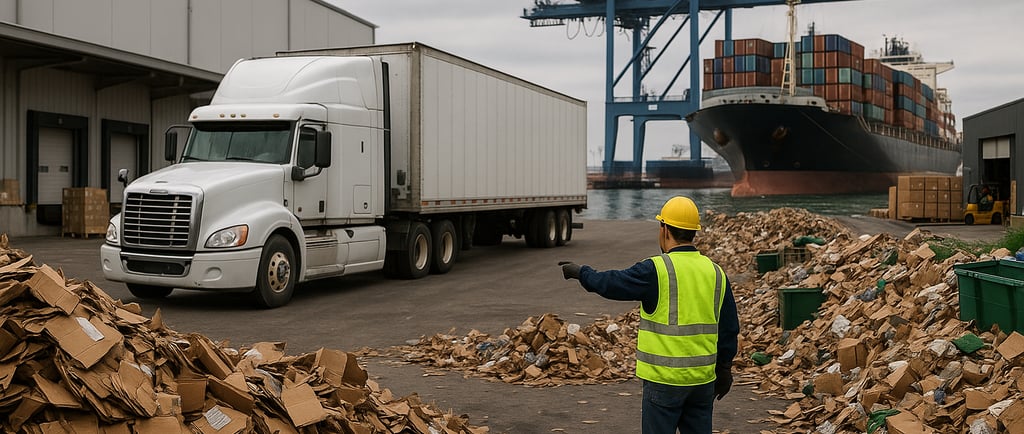
WHY DOWNSTREAM DECARBONIZATION IS THE NEXT BIG STRATEGY BATTLEGROUND
If you lead a company today, you sit in the middle of the most significant industrial transition in decades. Your regulators, lenders, investors, and customers now expect you to cut greenhouse gas emissions across your entire value chain, not only in your factories and offices.
Net zero is no longer a slogan that fits in a slide deck. It is written into climate laws, reporting rules, and procurement standards across major markets. Thousands of companies have set public climate targets that extend across their full value chain. Many of the buyers you sell to now carry reduction targets for 2030 and beyond and they expect you to help them hit those goals.
In this context, downstream decarbonization is rising from a technical topic to a board-level strategy issue. Results in this area will shape market access, capital access, and brand trust for the next decade.
From operational emissions to value chain emissions
For years, most climate programs focused on what you directly control. You measured fuel and electricity use, invested in efficiency, signed renewable power contracts, and reported your Scope 1 and Scope 2 emissions. That work still matters. In many sectors, you can cut a large share of your direct footprint with energy, process, and equipment upgrades.
However, as disclosure rules tighten and data quality improves, one message keeps coming back. For many companies, the majority of climate impact sits outside their own walls.
In consumer goods, apparel, food, technology, and automotive, value chain emissions often account for more than three quarters of total climate impact. These emissions sit upstream in raw materials and logistics, and downstream in product use and end-of-life treatment. Only a small slice sits in your own fuel and electricity meter.
That is why global regulators, standard setters, and investors now expect you to understand and manage emissions across the entire life of your products, from design and production to use and disposal.
Why downstream emissions deserve a dedicated guide
Upstream and downstream decarbonization share some principles. You need clear data, credible accounting methods, technical solutions, and strong internal governance. Yet they are very different management problems.
Upstream, you influence suppliers through specifications, purchasing terms, and long-term contracts. You can set minimum performance levels, design scorecards, and build supplier development programs.
Downstream, you influence buyers, distributors, retailers, and end users who may be larger than you, smaller than you, or spread across multiple regions and channels. You do not control how they transport, use, maintain, or dispose of your products. At best, you can inform, guide, incentivize, and partner with them.
That brings new questions for you and your team:
How do you build climate partnerships with customers without hurting sales or margins.
How far can you steer product use without creating liability or customer pushback.
How do you connect technical emissions data to commercial conversations, contracts, and product design.
How can your sales, marketing, and service teams talk about climate performance in a way that is accurate and helpful, not vague and confusing.
These questions sit at the heart of downstream decarbonization. They require you to think across sustainability, product management, sales, marketing, aftersales service, and legal in a coordinated way.
Why this matters now: regulatory and financial pressure
The timing is not accidental. Governments and financial regulators are tightening rules on climate disclosure and climate risk management.
In the European Union, the Corporate Sustainability Reporting Directive requires thousands of companies to report detailed climate information, including value chain emissions where material. That pulls downstream emissions data into the spotlight for European firms and for any suppliers and customers linked to them.
In the United States and other markets, securities regulators are pushing listed companies to improve climate disclosures and climate risk reporting. Large buyers then turn around and ask their suppliers and downstream partners for better data, better plans, and clearer governance.
Banks and investors are doing the same. Large asset managers and lenders now screen portfolios based on climate risk, transition plans, and exposure to carbon intensive activities. If you cannot explain where your emissions sit, including in downstream product use, you risk higher capital costs, tougher loan terms, or exclusion from key investment universes.
In parallel, carbon pricing and product standards are expanding. Energy performance rules for buildings, vehicles, appliances, and industrial equipment keep tightening. These rules directly affect emissions in the use phase of your products. If your products do not keep up, you lose ground to competitors who can show better performance with clear numbers.
The demand side is shifting too
Customers are changing, both in consumer and business markets.
Retail consumers are more informed about climate topics than at any time in the past. Large surveys show that many are willing to switch brands if they believe a company is avoiding climate responsibility. Younger buyers in particular look for product information that covers the full life cycle, from sourcing to disposal.
In B2B markets, procurement teams now include climate and broader sustainability metrics in tenders and supplier scorecards. They want products that help them hit their own energy, emissions, and resource goals. That is especially true in construction, automotive, technology, retail, and fast-moving consumer goods.
In practice, this means your downstream climate profile can become a direct source of competitive advantage or disadvantage. If you can show that your products perform better over their life cycle, you can support your price, win long-term contracts, and build stickier relationships with key accounts.
Why traditional approaches are no longer enough
Many companies responded to early climate pressure with offset purchases or high-level pledges. They bought carbon credits, funded tree planting, or invested in external projects while keeping business models mostly unchanged.
Regulators, investors, and civil society now expect more. They want real reductions in physical emissions, supported by traceable data and clear governance. They question heavy reliance on offsets, especially when value chain emissions continue to rise.
That is where downstream decarbonization comes in. For many sectors, significant reductions are only possible if you work with customers on:
Energy efficient use of products.
Smarter operation and maintenance.
Product design that enables reuse, refurbishment, and recycling.
New service models that shift from one-off sales toward performance based models where you retain a stake in how equipment is used and maintained.
This requires a shift in mindset. You are no longer finished with your climate responsibility at the factory gate. Your role extends through the full life of the product in the market.
Who this guide is for
This guide is written for senior leaders and specialists who need to turn downstream decarbonization from a vague ambition into a clear program.
You might be:
A chief sustainability officer or climate lead who has strong data on Scope 1 and 2, but limited visibility into the use and end-of-life phases.
A commercial or key account leader who hears more climate questions in sales meetings and wants to respond with credible, practical offers.
A product or portfolio manager who must redesign offerings so that they meet future climate, resource, and circularity expectations.
A finance, risk, or strategy leader who sees climate transition risk rising in the business and needs a structured approach to manage it.
You need more than high-level principles. You need a clear picture of the emissions sitting downstream, the levers that actually move those emissions, and the partnership models that make progress realistic for both you and your buyers.
How this guide is structured
Mastering Downstream Decarbonization: A Strategic Guide is built as a practical reference you can revisit when you design strategies, run workshops, or brief your board.
Part 1 gives you the big picture. It sets out why downstream decarbonization matters now, how it connects to regulation, finance, and demand, and what kinds of decisions you and your teams will face.
From there, the guide moves into the heart of the topic.
You will explore how to build partnerships with your downstream buyers, how to understand and manage emissions across transport, processing, use, and end-of-life, and how to turn these insights into concrete programs.
Scope 3 Partnerships: How to Engage Downstream Buyers for Decarbonization Success
Understanding Scope 3 Downstream Emissions
Scope 3 emissions have quickly become central to business sustainability strategies as companies look beyond their direct emissions and scrutinize their extended value chains. Specifically, downstream Scope 3 emissions encompass all indirect greenhouse gas (GHG) emissions that occur after a company’s products leave its direct control. These emissions typically occur during:
Transportation & Distribution: Emissions generated as products travel from company warehouses to customer or retailer locations. For example, consumer electronics brands like Apple calculate Scope 3 emissions based on global shipping and last-mile delivery footprints.
Processing of Sold Products: Emissions released when buyers or customers further process or assemble products. In sectors such as chemicals, plastics, or automotive, these processes are significant emission drivers.
Use of Sold Products: The most substantial downstream category for many companies – particularly for those selling energy-intensive products like vehicles, electronics, HVAC units, or appliances. The end-user’s operation of a product (think about the energy used by a refrigerator over its lifetime) is often the top contributor to a company’s downstream footprint.
End-of-Life Treatment: Emissions from disposal, recycling, incineration, or landfilling. In the apparel and fast-moving consumer goods industries, improper disposal can drive significant GHG output.
The Scale of Downstream Emissions: The Numbers Speak
For context, leading organizations face eye-opening numbers:
A 2022 McKinsey report found that for typical consumer goods manufacturers, 80% or more of their carbon footprint resides in Scope 3 emissions, the majority of which are downstream.
Automotive giants like Ford and General Motors have publicly disclosed that over 85% of their lifecycle emissions originate from consumers actually driving their vehicles—not manufacturing or transport.
According to the World Business Council for Sustainable Development (WBCSD), electronic component suppliers now face demands to report and manage Scope 3 downstream emissions from leading device manufacturers as part of supplier contracts.
These statistics highlight why supply chain decarbonization, and specifically engaging downstream buyers, has become an industry-defining priority.
Why Should Companies Engage Downstream Buyers?
Addressing Scope 3 downstream emissions involves complex relationships, but the imperative is undeniable—and growing stronger by the year. Here’s why progressive organizations have moved quickly to collaborate with downstream buyers:
Regulatory Pressure: Across the globe, governments are embedding comprehensive carbon disclosure mandates. The EU’s Corporate Sustainability Reporting Directive (CSRD) and SEC climate disclosure rules in the US require companies to account for emissions across the value chain, not just what happens under their roof. Non-compliance could result in financial penalties, blocked market access, or lost public contracts.
ESG & Investor Demands: Investors are shifting billions towards sustainability-focused funds—and demand rigorous, auditable Scope 3 reporting. BlackRock’s CEO has stated that companies ignoring value-chain emissions risk being dropped from the asset manager’s portfolios.
Brand Reputation & Consumer Demand: Consumers, particularly Gen Z and Millennials, require brands to demonstrate climate action from “cradle to grave.” In 2023, a Deloitte Global survey revealed that 64% of consumers would switch brands if they perceived a lack of environmental responsibility.
Competitive Differentiation: Decarbonizing a value chain can open new markets, attract B2B customers, and deliver PR wins. Take Unilever, which reports that its sustainable brands grow 1.7 times faster than the rest of its portfolio.
Risk Mitigation: Climate regulations, carbon taxes, and supply disruptions tied to resource scarcity or extreme weather can upend business as usual. By driving Scope 3 emissions down, companies insulate themselves from volatile regulatory shifts.
Key Takeaway: Scope 3 downstream engagement is table stakes for compliance—and a lever for resilience and leadership in the low-carbon economy.
Key Challenges in Scope 3 Downstream Engagement
While the urgency to act is clear, the road isn’t smooth. Organizations consistently cite several challenges in building impactful Scope 3 partnerships, especially with downstream buyers:
Data Visibility and Traceability
Downstream partners, especially further along the value chain or in international markets, may have limited capabilities or willingness to provide emissions data. This can obscure true emissions profiles and hinder LCA accuracy.
Limited Control and Influence
You don’t typically own how a distributor, retailer, or end-consumer uses or disposes of your product. Convincing buyers—who may have different priorities—to modify energy use, maintenance, or disposal practices is a distinct management challenge.
Cost Sensitivity
Cost concerns are paramount. A CDP Supply Chain survey (2023) showed that while 80% of suppliers recognize the importance of decarbonization, over 60% hold back due to perceived or real cost increases, particularly when solutions require new capital or operational practices.
Fragmented Standards & Methodologies
Buyers might use disparate emissions accounting or LCA methodologies, complicating data comparison and joint action. For example, the electronics industry faces challenges from patchwork requirements in Europe, North America, and Asia.
Confidentiality and Trust
Establishing open, honest data-sharing relationships can be difficult, especially when downstream buyers are also customers or competitors.
Resource and Capability Gaps
Distributors, retailers, or even smaller customers may lack the budget, technical expertise, or dedicated sustainability teams to drive meaningful reductions.
Case Study: Tackling Downstream Challenges
Philips Lighting (Signify), a global leader in lighting solutions, faced the challenge of reducing Scope 3 emissions associated with the use-phase of its LED products. By initiating partnerships with key retail and B2B customers, they provided training, product usage analytics, and incentives for efficient product selection. This combination addressed data gaps and catalyzed buyer buy-in, resulting in a reported 46% reduction in use-phase emissions intensity over five years.
Actionable Decarbonization Tactics with Cost, Risk, and Compliance Lenses
With the groundwork and challenges mapped, let’s explore robust strategies to turn intent into output. Leading organizations blend technical rigor and commercial acumen with a long-term vision.
1. Conduct Life Cycle Assessments (LCAs) and Share Findings
LCAs serve as the scientific backbone for understanding emissions at every product lifecycle stage. Rigorous LCA work, standardized to ISO 14040/44 or GHG Protocol Product Standard, offers buyers the transparency to act meaningfully.
Case in Point:
BASF, a leading chemicals company, systematically performed LCAs across thousands of its products. By sharing clear LCA results with downstream buyers, it enabled automotive and consumer goods clients to select lower-carbon materials, boosting their ability to hit climate targets cost-effectively.
Pro Tip: Leverage digital LCA tools like Sphera or One Click LCA to automate data flows and present findings via interactive dashboards—giving buyers actionable information in real time.
SEO Optimization: Use pivotal phrases like “product carbon footprint analytics,” “LCA-based product design,” “GHG reduction guidance,” and “science-based emissions insights.”
2. Develop Collaborative Decarbonization Roadmaps with Buyers
Co-creating shared decarbonization objectives cements joint accountability. Host strategic workshops, set mutual reduction targets, and codify these ambitions into roadmaps with clear milestones and responsibilities.
Case Study:
Nestlé has launched “Sustainable Partnership” programs with retail buyers like Tesco and Carrefour. By jointly mapping out targets and redesigning packaging for recyclability, they achieved a 17% reduction in downstream emissions from packaging waste in targeted markets within three years.
Expert Tips:
Use software platforms like Salesforce Sustainability Cloud or SAP Sustainability Control Tower to co-monitor progress.
Involve legal and compliance teams early to ensure new partnership roadmaps align with global climate disclosures.
Entity-Attribute Tie-in: “Downstream buyer engagement: decarbonization roadmap, KPI alignment, emissions milestone tracking.”
3. Offer Low-Carbon Product Options and Incentives
Introducing alternative product lines not only reduces emissions but also positions you as a responsible market leader. Establish Environmental Product Declarations (EPDs) and utilize carbon labels on packaging to empower efficient buyer choice.
Data Point:
Tetra Pak reports that its low-carbon cartons have a climate impact 60% lower than traditional packaging—incentivizing downstream buyers to switch and showcase the change to their end-customers.
Best Practice: Launch customer loyalty or rebate programs tied directly to carbon footprint reductions (“Buy Green, Get Rewarded”).
4. Integrate Sustainability into Buyer Contracts and Tenders
Embedding sustainability in contracts drives measurable climate action. Modern procurement templates now include clauses requiring:
Use of renewable energy
Mandatory participation in recycling take-back schemes
Regular GHG reporting from buyers
Sample Contract KPI:
“Buyer must achieve a 10% year-on-year reduction in product-use phase emissions by FY2030.”
5. Provide Decarbonization Toolkits and Enablement
Scale your impact by making complex emissions accounting and management accessible. Create sector-specific decarbonization playbooks, calculators, and digital training modules. Many companies also partner with technology providers to offer cloud-based Scope 3 emissions tracking tools to buyers.
BUILDING THE OPERATING SYSTEM FOR DOWNSTREAM DECARBONIZATION
By this point, the logic is clear. Downstream emissions are large, visible, and tied to your future access to markets, capital, and talent. You know why you must act and you have a first set of tactics. The next question is simple and hard at the same time.
How do you build an operating system that makes downstream decarbonization part of how your company runs, not a one year campaign that fades when budgets tighten.
The answer sits in four linked areas. Governance. Incentives. Data. Planning.
Governance and accountability
First, you need clear ownership. Without this, downstream decarbonization floats between sustainability, product, and sales. It becomes everyone’s job and no one’s job.
Many leading companies now put value chain emissions, including downstream, on board and executive agendas. Nearly eleven thousand companies have either validated science based climate targets or committed to do so. Together they represent more than forty percent of global market value. That shows how fast expectations are rising around the quality of those targets and the delivery plans behind them. Science Based Targets Initiative+1
At the same time, a growing share of large firms link climate and wider sustainability metrics to executive pay. Recent global studies show that around three quarters of major companies now integrate sustainability criteria into board level compensation. In Europe, the share is even higher. Edie+4KPMG+4ESG News+4
For downstream decarbonization, that shift matters. When board members and senior leaders have targets tied to real reductions across the value chain, they pay attention to how products are designed, used, and retired. They ask harder questions about product strategy, sales models, and buyer engagement.
In practice, this often looks like:
A clear executive sponsor. Many companies assign joint sponsorship to the chief sustainability officer and a commercial or product leader. Together they can translate climate goals into offers that customers understand.
A cross functional steering group. This group should include sustainability, product management, sales and key account management, service, legal, finance, and IT. It meets regularly, reviews progress, and clears roadblocks.
Board level visibility. Major decisions on product portfolio, capital plans, and pricing for low carbon options go to the board with clear analysis of emissions and financial impact.
The goal is simple. You want downstream decarbonization treated like any serious business priority, with visible owners, clear targets, and real consequences for performance.
Data and digital backbone
You cannot manage what you cannot see. That line is overused, but in downstream decarbonization it is still true.
Data needs fall into three buckets.
First, you need credible product level emissions profiles, from cradle to grave. That is why LCAs and product carbon footprints matter so much. They tell you and your buyers where emissions really sit across use and end of life.
Second, you need insight into how customers actually use products. The same piece of equipment can have very different emissions profiles depending on load factors, maintenance patterns, and energy sources. For devices that consume electricity, use phase emissions often depend more on hours of operation and grid mix than on the energy rating printed on the label. Environmental Protection Agency
Third, you need a way to share and update this information with buyers in a simple form. Static pdfs are no longer enough. Many companies now use shared dashboards, portals, or digital product passports so that customers can see emissions data, recommended settings, and improvement options in one place.
The good news. External disclosure is already pushing companies to build these data muscles. In 2023 more than twenty three thousand companies reported environmental data through CDP, a rise of almost a quarter compared with the previous year. cdp.net
Those reporting systems focus on transparency to markets and stakeholders. The next step is to use the same data streams inside commercial decision making. That means linking product emissions data into pricing tools, sales playbooks, product roadmaps, and aftersales service routines.
Financing and commercial models
Downstream decarbonization rarely happens for free. Buyers often need to change equipment, update processes, or adopt new digital tools. Even when changes cut total cost of ownership, the early cash outlay and perceived risk slow decisions.
You can help in three main ways.
First, you can adjust offer design. For example, equipment suppliers in sectors such as lighting, building systems, and industrial machinery have built service contracts where buyers pay for performance outcomes, such as light levels or uptime, rather than owning the asset outright. This keeps technical control with the supplier, allows better maintenance, and often cuts energy use in operation.
Second, you can share investment or risk. Some companies support buyers with leasing models, guaranteed savings contracts, or tiered pricing tied to performance and volumes. Others work with banks, export credit agencies, or climate finance platforms to create shared programs for low carbon upgrades in key customer segments.
Third, you can connect commercial incentives with climate impact. For example, large retailers and manufacturers that report on avoided emissions from use of more efficient products can highlight partners that adopt those products early and at scale. That gives buyers both a financial and reputational reason to move.
One illustration from retail shows the scale possible. Walmart reports that its Project Gigaton program has helped suppliers and partners avoid more than one billion metric tons of emissions since 2017, much of it through changes in products, logistics, and use phase performance. Aquila
This type of collaboration depends on clear rules for attribution, standard methods for avoided emissions, and open dialogue with buyers about who gets credit for what. The technical details matter, but the commercial signal is simple. Buyers who lean into lower emission products and use patterns see benefits beyond compliance.
Sector snapshots: what leading practice looks like
The right mix of tactics depends on your sector, product mix, and customer base. Still, a few patterns show up repeatedly across industries.
In fast moving consumer goods and retail, leaders focus heavily on packaging, product design, and end of life. They work with retailers and recyclers to set up take back schemes, standardize materials, and use clear labels that guide consumer behavior. They also rethink product formats, for example concentrates and refill systems that reduce both transport emissions and waste.
In technology and electronics, leading firms invest in energy efficient product design, long product lifetimes, and high quality repair and refurbishment channels. They publish product level carbon footprints and work with cloud and data center providers to reduce emissions in use. Device makers increasingly expect their own component suppliers to measure and report downstream emissions as part of long term contracts.
In automotive and transport, the shift to electric vehicles and more efficient drivetrains is only one part of the story. Companies also work on charging infrastructure, route planning, driver training, and digital tools that cut energy use during operation. Many run joint pilots with fleet customers to test and scale new patterns of use, from depot charging schedules to regenerative braking strategies.
In heavy industry and building systems, suppliers of equipment such as boilers, chillers, furnaces, and compressors move toward service models and real time monitoring. They help customers tune equipment, schedule maintenance, and select energy sources in ways that reduce emissions over time. Some share access to digital twins or simulation tools so that industrial clients can test scenarios before making large changes.
Across all these sectors, the most important common point is this. Downstream decarbonization succeeds when climate objectives sit inside offers that buyers already care about: lower energy bills, better reliability, improved comfort, higher productivity, and reduced regulatory risk.
A practical roadmap for the next three years
Large decarbonization programs can feel overwhelming. You do not need to solve everything at once. What you need is a clear sequence that gets you from early measurement to steady, repeatable practice.
First 90 days. Use this period to define scope and build alignment.
You map where downstream emissions are likely to sit across your portfolio, based on product types, regions, and customer segments. You review existing data and LCAs, identify gaps, and pick two or three segments where downstream emissions are both large and influenceable. You secure executive sponsorship and set up the cross functional steering group. You agree on principles for working with buyers, including data sharing, confidentiality, and commercial boundaries.
Months 4 to 12. Use this period to prove what is possible in real settings.
You run pilots with a small number of downstream buyers in your priority segments. Each pilot has clear goals. For example, cut use phase emissions by a given percentage, increase take up of a low carbon product line, or shift a portion of sales to service based contracts. You bring in external tools and partners where needed, such as LCA platforms, training providers, or financing partners. You capture detailed results, from emissions to financial outcomes and customer satisfaction. You also refine your internal data systems so you can track progress more easily.
Year 2 and 3. Use this period to expand, standardize, and embed.
You use lessons from pilots to shape your product roadmap, pricing, and sales playbooks. You scale successful approaches across more regions and customer segments. You standardize key elements, such as contract clauses, technical specifications, and toolkit content, while leaving room for local adaptation. You align your climate targets and external commitments, including science based targets where relevant, with what you now know about downstream levers and costs. Science Based Targets Initiative+2Science Based Targets Initiative+2
During this phase, you also close the loop with investors, lenders, and regulators. You show how downstream decarbonization is built into your capital plans, risk management, and product strategy. You explain how you will track and report progress, and how you will adjust course if conditions change.
Common pitfalls to avoid
Even strong programs can stall. Three traps show up often.
The first is treating downstream decarbonization as a communications exercise. If your offers to buyers are vague, lack numbers, or change from year to year, they will lose interest. Clarity on baselines, targets, and methods matters more than glossy messages.
The second is trying to cover every product and region at once. That leads to thin, scattered effort. It is better to pick a few high impact segments, do deep work there, and then expand once you have proof of value.
The third is leaving sales and account teams out of the design. If they see climate offers as extra work that slows deals, they will sidestep them. You need to bring them in early, equip them with clear propositions, and show how these offers help them grow and defend business.
Bringing it all together
Downstream decarbonization is not a separate climate project. It is a long term shift in how you design, sell, and support what you put into the market.
The companies that will stand out over the next decade will be those that combine three things.
They understand, at product level, where emissions arise across use and end of life, and they share that information with buyers in a clear form.
They build credible partnership models with downstream buyers, backed by LCAs, joint roadmaps, stronger contracts, and practical toolkits.
They create an operating system that links downstream decarbonization with governance, incentives, data, and financial planning, so that progress continues even as leadership and market conditions change.
You cannot control everything that happens to your products once they leave your warehouse. You can, however, shape how they are used, maintained, and retired through design choices, commercial offers, and the quality of partnerships you build.
Start with one product line, one region, and a handful of committed buyers. Build real results there, on emissions and on business value, then extend what works.
Do that consistently and downstream decarbonization stops being a risk you report and becomes a source of stability, access, and long term advantage in a low carbon world.
Connect
Your trusted partner for scrap metal procurement.
CONTACT
About
haroon@tdcventures.com
+1-307-655-7593
© 2025. All rights reserved.
NEWSLETTER