
Material Banks to Support Relocation Waves: Accelerating Circular Infrastructure for Climate Migration
Discover how material banks enable cities to rapidly deploy circular infrastructure during climate migration waves—cataloging, storing, and redistributing reused steel and microgrid systems to cut carbon, reduce waste, and accelerate resettlement.
CLIMATE MIGRATION & CIRCULAR INFRASTRUCTURE PLANNING
Instant Answer
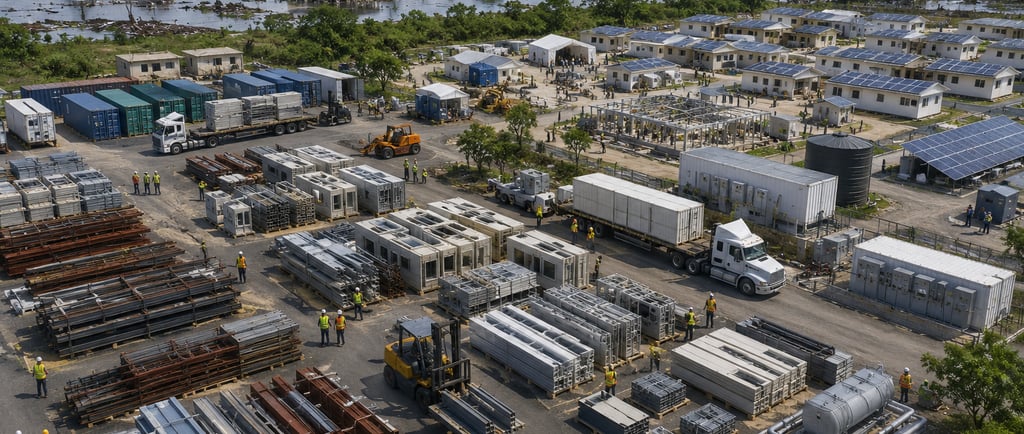
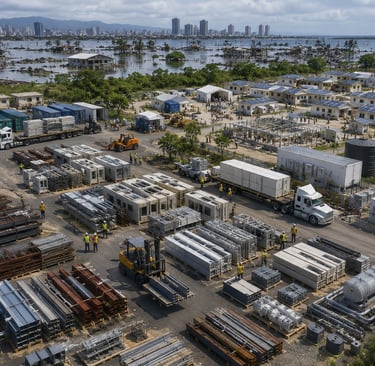
Material banks enable governments and cities to rapidly deploy humane, circular infrastructure during climate migration waves by cataloging, storing, and redistributing decommissioned materials (such as reused steel) and systems (like microgrids) for reuse. By integrating a material bank model, municipalities can optimize resource use, reduce waste and embodied carbon, and support scalable, sustainable relocation of populations under climate stress.
Table of Contents
1. Context and Why It Matters for the Target Niche
2. Defining the Problem and Opportunity
3. Key Concepts and Definitions
4. Core Framework: Circular Material Bank Operations
5. Step-by-Step Example: Urban Steel Salvage for Microgrid Hubs
6. Implementation Playbook: From Intake to Redeployment
7. Measurement and Quality Assurance
8. Case Patterns and Scenario Overviews
9. Frequently Asked Questions (FAQs)
10. Embedded Five-Layer Toolkit for Material Banks
11. Conclusion
1. Context and Why It Matters for the Target Niche
Climate-driven migration is becoming a mainstream risk management issue for city leaders, policymakers, infrastructure planners, and procurement strategists. According to the World Bank, over 216 million people could become internal climate migrants by 2050 if urgent action is not taken to reduce emissions and bridge development gaps. In the U.S. alone, research from the Internal Displacement Monitoring Centre (IDMC) highlights that natural disasters led to over 1 million new internal displacements in 2022, with the number projected to rise as climate extremes intensify.
Traditional approaches—linear construction, long procurement cycles, and insufficient deconstruction standards—fall short in the face of relocation surges. This means delays in resettling vulnerable populations, excessive waste to landfills, and overuse of scarce construction resources, all while cities are under immense pressure to cut carbon emissions and build for resilience.
Circular infrastructure, enabled by digital and physical material banks, is increasingly recognized as a game-changing lever. Top global cities (including Amsterdam, Toronto, and Helsinki) now pilot circular deconstruction and digital registries to recover, store, and redeploy high-value materials from decommissioned assets. In a climate migration context, these material banks offer a practical path to fast-tracking safe shelter, energy, and mobility for incoming populations—particularly when new supply chains are disrupted or climate events strike without warning.
For decision-makers working across urban planning, public procurement, demolition, and disaster response, understanding and preparing material banks is essential. This model can serve public sector organizations, large NGOs, construction networks, and regional governments looking to future-proof against acute and chronic climate migration scenarios.
2. Defining the Problem and Opportunity
The Problem
Urban decommissioning remains highly wasteful: estimates from the Ellen MacArthur Foundation suggest up to 600 million tons of construction and demolition (C&D) waste are generated annually in Europe and North America alone. Yet, over 50% of these materials have strong potential for high-value reuse—if only there were robust systems for capture and redeployment.
As climate migration accelerates, densely populated areas are seeing surges in demand for housing, energy, and critical services—all underpinned by supply chains that are already strained by global shocks, inflation, and logistics bottlenecks. Steel, for example, faces cyclical global shortages, and rising commodity prices can halt new construction just when urgent shelter is required. Likewise, with intensified demand for electrical panels and cabling (driven by electrification and disaster recovery), traditional procurement timeframes do not align with the needs created by climate-motivated relocations.
Existing inventory management systems are not designed for real-time, trustable matching between available reused materials and the specific, often urgent, needs of climate migration projects. Traceability, quality assurance, and digital integration are typically afterthoughts rather than core principles. As a result, high-value structural and electrical components often go to landfill, despite intense demand elsewhere.
This operational gap has direct human and financial consequences: resettlement is slower, more expensive, and less sustainable, while cities miss the chance to capitalize on the embodied value already present in their urban fabric.
The Opportunity
Material banks unlock a circular flow of building materials and infrastructure assets, allowing cities to treat existing, decommissioned assets as urban mines. When buildings are slated for demolition or upgrade, material banks can:
Systematically identify, test, and store valuable materials (e.g., reused steel beams, modular wall panels, HVAC systems, microgrid controls)
Digitally tag and track provenance, compliance, and characteristics for instant downstream discovery
Enable real-time or predictive matching (using AI and demand forecasting) against needs for modular housing, emergency clinics, or energy microgrids in resettlement zones
Accelerate procurement and deployment using pre-approved smart contracts and logistics pipelines
Circularity generates measurable climate and financial value: World Green Building Council data shows that reused steel retains up to 96% of its original value with far lower carbon intensity than new. Pioneering cities such as Rotterdam have shown that integrating material flow tracking cuts project delivery time by 30–50% and can reduce embodied carbon emissions on major projects by 40% or more.
Crucially, a well-networked material bank builds trust with regulators, insurers, and procurement agencies—by guaranteeing quality, compliance, and transparent data on every asset. This unlocks scale: when governments trust the QA process, reused materials can become a first-class option for both public and private projects.
Operational Stakes
How quickly can cities clear, test, and redeploy vital infrastructure materials in a crisis?
What systems exist to manage quality, safety, and documentation across the whole lifecycle of a banked material—from decommissioning to on-site integration?
Are regulators, supply chain leaders, and project managers equipped to choose circular procurement strategies, especially under emergency conditions?
3. Key Concepts and Definitions
Material Bank:
A hybrid physical-digital operation designed to catalog, warehouse, and redistribute reusable building elements—from structural steel and modular panels, to electrical equipment and microgrid components. Material banks prioritize data integrity, QA certification, and rapid access for high-value redeployment.
Circular Infrastructure:
A design and operational approach to infrastructure (encompassing buildings, utilities, energy systems, and transport) where new uses are supplied, wherever possible, from high-quality reused or remanufactured resources, minimizing waste and reducing environmental impact.
Climate Migration:
The movement of people within or across regions due primarily to climate change impacts—such as rising seas, temperature extremes, storms, drought, or disasters. Often, these movements are rapid and require flexible, adaptive infrastructure responses.
Reused Steel:
Steel beams, rebar, and modular elements systematically salvaged, inspected, and certified for reuse—delivering significant carbon and cost savings versus new stock.
Microgrids:
Compact, modular energy networks—often integrating renewable sources like solar or wind—deployed for disaster relief, off-grid settlements, or new communities established during population relocations.
Entity attributes for search/tracing:
- Data: Type, grade, dimensions, original use, certification details, deployment history
- Named entities: BIM registries, circular procurement platforms, QA certification agencies (e.g., UL, CE), climate migration NGOs
4. Core Framework: Circular Material Bank Operations
A successful circular material bank relies on four tightly integrated pillars—each connecting supply, demand, quality assurance, and deployment at pace and scale essential for climate migration.
1. Input & Intake
Conduct city-wide or facility-specific audits to map all buildings slated for demolition or significant retrofit.
Employ certified deconstruction teams to carefully disassemble, rather than demolish, prioritizing high-value and high-demand elements.
Use digital mapping tools (RFID tags, QR codes, BIM-integration) at the point of extraction, ensuring each asset’s specs and provenance are captured instantly.
Establish clear QA and certification steps per material class—drawing on international standards for reused components (e.g., EN 15804 for construction products).
2. Banking & Storage
Allocate specialized warehousing (temperature-controlled for sensitive elements; secure for high-value stock) near urban centers and transit hubs.
Digitally catalog every item in an accessible, BIM-compatible registry. This data backbone must include batch testing results, certification scans, dimensions, compliance references, and lifecycle condition scorecards.
Enable smart contracts on a procurement marketplace, allowing instant reservation and automated release when needs arise.
3. Match & Mobilize
Integrate AI demand matching systems that cross-reference forecasted needs (modular homes, microgrid stations) with inventory in real time.
Pre-package “kits” or bundles based on typical deployment scenarios (e.g., structural frame sets for rapid-build shelters, pre-tested microgrid kits with inverter and battery config).
Maintain flexible inventory thresholds so that cities can respond to both sudden surges (post-disaster relocation) and planned population shifts.
4. Redeploy & Verify
Coordinate logistics partners for just-in-time transport from warehouse to construction site, based on up-to-the-minute project schedules.
Require on-site QA team sign-off and digital verification on delivery and fit-out, ensuring compliance.
Operate a tightly coupled data feedback loop—condition reports, performance reviews—so that the bank continuously updates lifecycle status and informs future redeployment decisions.
Step-by-Step Process
Identify Decommissioning Pipeline:
Map out city, district, or corridor-scale assets scheduled for teardown or heavy retrofit within a set time horizon. Working with urban informatics, real estate developers, and public planning, compile pre-demolition material assessments.Intake and QA:
Engage certified crews to extract and test highest-value batches first (usually steel, modular floor or wall systems, quality glazing, HVAC, and electrical panels). Every asset receives an identification tag immediately, and standardized tests are completed and digitally logged.Catalog in Digital Bank:
All attributes entered into the central registry: detailed material type, grade, original use, compliance with city/state/national standards, and current quality status. Using this, buyers can rapidly search for precise matches—by structural load, configuration, and compatibility with green building standards.Prioritize Demand:
When an anticipated climate migration surge is forecast (by government, disaster response, or migration modeling), the anticipated needs are input by project managers: X modular homes, Y grid nodes, Z water or sanitation systems.Procure and Deploy:
Cities, NGOs, or contractors “pull” banked assets from inventory, finalizing terms through digital procurement portals. Integrated logistics schedules route items for timed delivery—often with just a few days between requisition and on-site arrival when pipelines are mature.Post-Deployment QA:
As soon as assets are installed, teams run quality and fit-out inspections, and update records: ensuring every batch meets safety, performance, and sustainability benchmarks. Updates are fed back to the central digital bank, closing the traceability loop.
5. Step-by-Step Example: Urban Steel Salvage for Microgrid Hubs
To see the material bank model in action, consider the following hypothetical—but strongly evidence-based—scenario:
Scenario:
A coastal metropolitan area faces ongoing flood risk, with predictive climate data showing that up to 5,000 residents will require expedited resettlement to higher ground within 12 months. Several older office buildings in declining zones are scheduled for demolition. The city’s integrated material bank is activated to prioritize resource capture and circular redeployment for this migration.
Step 1: Early Coordination
- City agencies and the demolition network flag the office assets as high-potential. A digital pre-audit, using satellite and field surveys, estimates ~1,200 tons of reusable high-grade steel, dozens of modular floor slabs, and significant HVAC inventory.
Step 2: Controlled Deconstruction and Intake
- Certified material bank teams, working with city QA officers, dismantle core beams, supports, paneling, and major energy/mechanical units. Every asset is tagged, dimensioned, and placed in climate-protected transit.
Step 3: Digital Banking and Match
- All steel beams and supporting assemblies are entered into the digital registry. AI-powered tools identify the precise mix of elements needed for rapid microgrid-compatible housing clusters—prioritizing reuse for new settlement hubs in safe zones.
Step 4: Rapid Reserve and Redeploy
- Demand forecast triggers instant asset reservation. Within four weeks, bundles of steel, pre-tested HVAC, and modular microgrid panels are scheduled for transport.
- Pre-approved logistics ensure shipment flows directly to the project site, ready for “plug-and-play” assembly by modular builders.
Step 5: Installation and QA
- On-site teams fit the reused steel frames into modular housing units, coordinate the microgrid install, and perform post-install integration and safety tests.
- Stakeholders report that total project time is reduced by 40% versus an equivalent “build-from-scratch” approach, while embodied carbon is slashed compared to sourcing all-new materials.
Key Data and Value:
Time-to-deploy: Cut by 40%
Embodied carbon savings: Up to 90% for the steel elements compared to virgin production (World Steel Association)
End-user outcomes: Secure energy access on day one; regulatory confidence due to certified QA and full traceability
Scalability: Process is repeatable for other asset types and multiple city zones
6. Implementation Playbook: From Intake to Redeployment
A material bank is only useful during relocation waves if it can move from “available inventory” to “installed infrastructure” fast enough to matter. For climate migration, speed is not a luxury. It determines whether displaced families are moved into safe housing, whether clinics can operate during heat waves or floods, and whether new settlement zones have reliable power before residents arrive.
The implementation playbook begins long before a disaster. It starts with preparation, not reaction. Cities, regional governments, utilities, port authorities, school districts, hospitals, demolition firms, and major property owners need to treat existing buildings as future supply reserves. This matters because the building and construction sector remains one of the largest pressure points in the climate transition. UNEP’s 2024/2025 Global Status Report notes that buildings and construction consume 32% of global energy and contribute 34% of global CO2 emissions. It also highlights that cement and steel alone account for 18% of global emissions, which makes reused structural and infrastructure materials one of the highest-impact intervention points available to cities.
In 2026, the strongest material bank programs will not operate like passive warehouses. They will operate like public-interest logistics platforms. They will know what is coming out of old assets, what is needed in future relocation zones, what quality checks are required, where the bottlenecks sit, which materials must be reserved for emergency use, and which materials can flow into normal public procurement.
The first step is to create a decommissioning pipeline. Every public agency should maintain a rolling 3-year to 10-year list of buildings, bridges, schools, hospitals, warehouses, parking structures, substations, treatment plants, and transport assets scheduled for demolition, retrofit, relocation, or major upgrade. This list becomes the supply forecast. It should include asset age, location, ownership, likely material volumes, demolition timeline, hazard risk, and reuse potential. A vacant office building is no longer just a liability on a city ledger. It may contain structural steel, raised flooring, cable trays, glazing, doors, pumps, lighting, ductwork, switchgear, furniture, sanitary fixtures, and fire-rated assemblies that can support future housing, energy, clinics, shelters, schools, water points, or community hubs.
The second step is the pre-demolition audit. This is where a material bank shifts from guesswork to usable inventory. Teams should inspect buildings before demolition contracts are finalized, not after heavy equipment is already on site. The audit should identify high-value, high-demand, and high-risk materials separately. Structural steel, aluminum framing, modular panels, copper wiring, electrical cabinets, HVAC systems, raised floors, access doors, pumps, water tanks, and solar-compatible mounting hardware need early attention because they often require careful removal, testing, packaging, and documentation. By contrast, bulk aggregates and concrete may still have value, but they usually flow through lower-value recycling channels unless there is a local reuse pathway.
A strong audit should produce a digital record for every major recoverable component. For steel, that means member size, grade, length, condition, coating, connection type, corrosion evidence, previous load context, and required testing. For electrical assets, it means voltage rating, manufacturer, model, age, compliance status, maintenance history, and inspection results. For modular building components, it means fire rating, dimensions, thermal performance, acoustic rating, moisture exposure, and installation method. For microgrid components, it means capacity, compatibility, warranty status, inverter type, battery chemistry, control system version, and safe redeployment requirements.
The third step is contract alignment. Most demolition contracts are still written for speed, clearance, and disposal. A material bank needs contracts written for recovery, sorting, traceability, and reuse. Procurement language should require selective dismantling where reuse value is high, give contractors recovery targets by material class, and separate reusable components from recyclable waste. Payment structures also matter. If contractors are paid only to clear sites quickly, reuse loses. If they are paid for verified recovery, clean sorting, and complete documentation, the material bank gains inventory it can actually trust.
The fourth step is controlled extraction. Materials intended for reuse must be removed differently from materials intended for scrap. Reused steel beams should not be cut randomly into shorter lengths unless the bank’s demand model supports those sizes. Doors, glazing, fixtures, ducts, panels, and switchgear must be removed with enough care to preserve function and resale or redeployment value. This changes labor planning. Cities need certified deconstruction crews, not only demolition crews. They also need inspection points at removal, staging, transport, and storage.
This shift is not theoretical. The U.S. Environmental Protection Agency estimates that 600 million tons of construction and demolition debris were generated in the United States in 2018, more than twice the amount of municipal solid waste generated in the same period. EPA data also shows that demolition accounts for more than 90% of total C&D debris generation, while construction accounts for less than 10%. This means the biggest material bank opportunity sits in planned demolition, retrofit, and infrastructure renewal, not only in new construction waste management.
The fifth step is triage and testing. Not every recovered item should be banked. A good system sorts materials into five categories: direct reuse, reuse after repair, reuse after remanufacture, recycling, and disposal. Direct reuse applies to components that pass visual and technical checks with minimal intervention. Repair may apply to doors, fixtures, pumps, panels, furniture, and modular assemblies. Remanufacture may apply to façade panels, steel assemblies, modular frames, or energy equipment requiring rework. Recycling applies when reuse risk is too high or the item has lost functional value. Disposal should be the smallest category, reserved for contaminated, unsafe, or nonrecoverable materials.
The sixth step is digital registration. A material bank cannot depend on photographs and spreadsheets alone once relocation demand grows. Every banked asset needs a material passport or component record. This should include physical description, origin, ownership, testing status, compliance notes, storage location, condition grade, embodied carbon estimate, reuse restrictions, and redeployment history. Platforms such as Madaster show how material passports can document composition, origin, and location of materials inside buildings, giving owners and public agencies a better basis for circular construction decisions.
The seventh step is storage strategy. Material banks need more than one storage type. Fast-moving emergency assets should sit close to deployment corridors, ports, railheads, or relocation zones. High-value technical assets such as electrical systems, controls, batteries, inverters, medical-grade fixtures, and pumps need secure and climate-protected storage. Large steel members, panels, and modular frames may need outdoor yards with weather protection, lifting equipment, corrosion controls, and clear access routes. Inventory that cannot be found quickly during a relocation wave is inventory that does not exist in practice.
The eighth step is demand forecasting. Relocation waves are not random from an infrastructure planning perspective. Flood maps, wildfire risk models, heat vulnerability maps, insurance retreat zones, coastal erosion projections, drought exposure, housing shortage data, and migration records can all be combined to estimate likely infrastructure demand. The World Bank’s Groundswell report warns that climate change could force 216 million people to move within their own countries by 2050 without urgent action, and that strong climate and development action could reduce this movement by as much as 80%. That scale demands pre-positioned infrastructure capacity, not one-off emergency procurement.
The ninth step is kit design. Material banks should not wait for every project to request items one by one. They should develop repeatable deployment kits. A housing kit might include reused steel framing, modular wall panels, doors, sanitary fixtures, electrical cabinets, cable trays, water tanks, and solar mounting parts. A microgrid kit might include steel skids, mounting frames, inverters, switchgear, batteries, control cabinets, cabling, grounding parts, and weatherproof enclosures. A health post kit might include cleanable panels, stainless fixtures, aluminum frames, HVAC equipment, water storage, power backup, lighting, and shade structures. The point is to turn mixed inventory into ready deployment packages.
The tenth step is redeployment governance. When a relocation wave begins, public agencies need clear rules for who gets access to banked materials first. Priority should be tied to life safety, housing readiness, critical services, and climate exposure. Emergency housing, clinics, water systems, sanitation, schools, cooling centers, and power systems should rank above routine municipal projects. A material bank cannot be treated only as a marketplace. In climate migration, it is part of public resilience infrastructure.
The final step is feedback. Every redeployed component should return performance data to the bank. Did it pass installation checks? Did it save time? Did it reduce cost? Did it require unexpected modification? Did it fail under heat, moisture, load, or transport stress? Did it meet user needs? The bank becomes stronger every time it learns from deployment. Over time, this creates a trusted loop between decommissioning, storage, procurement, construction, inspection, and future planning.
7. Measurement and Quality Assurance
Measurement is what separates a serious material bank from a storage yard. Quality assurance is what separates safe circular infrastructure from risky reuse. For climate migration, both matter because relocation projects carry public safety, political, legal, financial, and humanitarian consequences.
A material bank should measure performance in six areas: speed, carbon, cost, material value, quality, and social benefit. These indicators should be tracked from intake through redeployment, then published in a way that regulators, insurers, funders, contractors, and communities can understand.
The first measurement area is time-to-redeploy. In relocation planning, the key question is not only “How much material was recovered?” The harder question is “How quickly did recovered material become useful infrastructure?” A material bank should track days from deconstruction approval to inventory registration, days from registration to reservation, days from reservation to dispatch, and days from delivery to installation sign-off. For emergency relocation, the target should be measured in days and weeks, not months. If a city can reduce the procurement and installation window for core components by 30% to 50%, it can house people faster, open service centers faster, and reduce reliance on expensive temporary imports.
The second measurement area is embodied carbon avoided. Reusing structural and infrastructure materials can avoid the emissions linked to new extraction, processing, manufacturing, and transport. This is especially relevant for steel, aluminum, concrete products, glazing, insulation, electrical components, and technical equipment. UNEP’s 2024/2025 buildings report makes the carbon case clear: the building sector remains a major climate driver, and cement and steel are among the largest contributors because of their energy-intensive production.
Carbon accounting should be conservative. A material bank should not claim broad savings without item-level assumptions. Each material class needs a baseline. Reused steel should be compared with new steel of equivalent grade and function. Reused aluminum should be compared with new aluminum. Reused electrical equipment should include testing, repair, and transport impacts. The bank should also account for avoided landfill, avoided recycling energy where relevant, and any additional emissions from deconstruction, cleaning, storage, and transport.
The third measurement area is landfill diversion, but this must be treated carefully. Diversion alone can mislead. A project can divert material from landfill by downcycling it into low-value aggregate, but that is not the same as preserving high-value components for direct reuse. A stronger material bank should measure “highest practical value retained.” For example, a steel beam reused as a beam has much higher circular value than the same beam melted into scrap. A door reused as a door has higher value than a door crushed or burned. A working pump reused after testing has higher value than a pump broken for parts.
EPA data shows why this distinction matters. In the United States, just over 455 million tons of C&D debris were directed to next use in 2018, while just under 145 million tons were sent to landfills. However, much of the next use was aggregate-related, which means many materials may be leaving landfill without being preserved at their highest function.
The fourth measurement area is cost avoided. Material banks should track avoided purchase cost, avoided disposal cost, avoided storage waste, avoided emergency freight, avoided import delays, and avoided project downtime. During climate shocks, emergency procurement often carries price premiums because demand rises while supply chains are disrupted. A material bank gives cities an internal reserve of tested assets. That reserve has financial value even before deployment because it reduces exposure to sudden price spikes and lead-time risk.
The fifth measurement area is quality performance. Quality assurance must start at intake and continue through installation. For structural materials, this may include visual inspection, dimensional checks, coating assessment, corrosion checks, connection evaluation, non-destructive testing, mechanical testing where required, and engineering approval. For electrical assets, QA should include insulation resistance testing, load compatibility, safety certification, age assessment, firmware or control compatibility, and code compliance. For plumbing, water, and sanitation components, QA should include leak testing, pressure testing, contamination checks, cleanability, and compatibility with local standards.
The sixth measurement area is social outcome. A climate migration material bank should not measure success only in tons, dollars, or carbon. It should also measure people served. How many housing units were supported? How many clinic modules were opened? How many kilowatts of resilient power were deployed? How many liters of water storage were installed? How many school or community spaces became operational? How many days of displacement were reduced? How many vulnerable households gained access to cooling, lighting, sanitation, or medical support?
This matters because global displacement pressure is rising. IDMC’s 2025 Global Report on Internal Displacement recorded 83.4 million people living in internal displacement at the end of 2024, the highest figure ever recorded. Of these, 9.8 million were displaced by disasters. The same trend shows that cities cannot treat relocation infrastructure as an occasional emergency function. It must become a measured public capability.
A mature QA model should also include chain-of-custody rules. Every component should have a documented path from source asset to new installation. This reduces disputes, supports insurance, and helps building officials approve reuse. It also protects communities. A displaced family should not be placed into housing built from unknown or poorly tested components. A clinic should not depend on unverified electrical equipment. A microgrid should not be assembled from parts with unclear history.
Digital tools can improve this process, but they do not replace field discipline. QR codes, RFID tags, BIM records, and material passports are useful only if the underlying data is accurate. Research on material passports has shown that digital records can support component reuse across life-cycle stages, but static QR-based records are limited when projects need live process data and ongoing condition updates. For climate migration, this means the bank should record both static identity data and live operational data.
By 2026, artificial intelligence and machine learning are also becoming more relevant for material forecasting. Research published in 2024 on BIM and machine learning for construction and demolition waste found that demolition waste quantities could be predicted with high accuracy using project data, with an XGBoost model achieving an R2 of 0.9977 in the study dataset. For material banks, this points to a practical future: cities can predict what materials are likely to come out of scheduled demolitions, match those forecasts against relocation needs, and reserve recovery crews before valuable components are lost.
A strong measurement system should report monthly operational indicators, annual public outcomes, and project-level case records. Monthly reporting should track intake, testing, storage, dispatch, and failures. Annual reporting should track carbon, cost, material value, and people served. Project records should show what was recovered, what was rejected, what was redeployed, what issues occurred, and what changed for future practice.
The best material banks will be trusted because their data survives scrutiny. The numbers should be clear enough for a finance director, detailed enough for an engineer, credible enough for a regulator, and meaningful enough for affected communities.
8. Case Patterns and Scenario Overviews
Material banks for climate migration are still emerging, but the building blocks already exist across circular construction, disaster logistics, deconstruction, structural steel reuse, material passports, microgrids, and public procurement. The strongest approach in 2026 is to learn from these case patterns, then adapt them to relocation planning.
The first pattern is the digital material passport model. In the Netherlands and wider European market, platforms such as Madaster have helped normalize the idea that buildings can be documented as material reserves. A material passport records what a building contains, where those materials are located, and what they may be worth in a future circular economy. This is important because relocation response often fails before construction begins. Cities do not know what they own, what can be recovered, or what can be redeployed. Material passports reduce that uncertainty.
For climate migration, the lesson is direct: every public building, school, hospital, transport facility, utility asset, and large social housing block should have a recoverable material record before disaster strikes. That record should not sit in a sustainability report. It should connect to procurement, emergency planning, and capital works. When a flood-prone district is scheduled for retreat or retrofit, planners should already know which materials can support higher-ground receiving areas.
The second pattern is the deconstruction marketplace model. Rotor DC in Brussels is a practical example of a reuse organization that dismantles, processes, and sells salvaged building components. Its work focuses on making reclaimed materials easier to use by combining deconstruction, conditioning, resale, and design support.
The lesson for relocation is that material banks need human expertise, not only software. Salvaged materials often require judgment. Can this door be reused in housing? Can this lighting system work in a clinic? Can this fixture be cleaned to the right standard? Can this beam be recertified? A platform can show availability, but trained teams make reuse practical. In climate migration, where speed and safety matter, the bank must combine marketplace logic with public-interest QA.
The third pattern is structural steel reuse. Several European case studies have shown that reclaimed steel can be reused in real construction projects when engineering, documentation, and logistics are handled carefully. The PROGRESS project on reclaimed structural steel identified multiple reuse scenarios and concluded that structural steel reuse is technically possible, with potential benefits in embodied carbon, cost, and time.
This matters because steel is one of the most important materials for rapid relocation infrastructure. Modular housing, clinics, shade structures, elevated walkways, microgrid shelters, water towers, sanitation blocks, and school structures all rely on strong, predictable framing systems. Reused steel can be especially valuable when new steel prices rise or when logistics delays slow delivery. But reused steel cannot be treated like random scrap. It needs grade verification, dimensional records, traceable source history, and structural sign-off.
The fourth pattern is adaptive urban mining. Cities with aging office districts, obsolete malls, underused industrial buildings, and flood-exposed assets are sitting on large reserves of materials. In many cities, commercial real estate shifts after the pandemic left older buildings underused, while housing demand rose. A material bank can connect these two realities. Old structures can become supply for new housing clusters, clinics, schools, cooling centers, and energy hubs.
A relocation scenario might look like this: a coastal city identifies 20 flood-exposed public buildings and commercial blocks that will be phased out over five years. Pre-demolition audits estimate recoverable steel, aluminum, panels, doors, mechanical systems, cable trays, and fixtures. The city reserves the highest-quality stock for three inland receiving zones. When a major storm accelerates relocation, the material bank can release pre-tested kits for modular housing and service buildings within weeks. Without the bank, the city would enter the same crowded market as every other disaster-affected region.
The fifth pattern is microgrid redeployment. Climate relocation is not only about shelter. New settlements need reliable power, especially during heat waves, storms, and grid instability. Microgrids can support clinics, cooling centers, water pumps, communications, refrigeration, lighting, and charging. Material banks can support microgrids by stocking steel skids, mounting frames, weatherproof enclosures, cable trays, electrical cabinets, inverters, panels, batteries, transformers, and backup components. Some technical components may be new or refurbished rather than reused, but the surrounding infrastructure can often draw from banked material.
The sixth pattern is disaster displacement planning. Global displacement figures show why material banks need to be linked with humanitarian and urban planning systems. IDMC reported that disaster displacement reached record levels in 2024, while total internal displacement remained historically high. UNHCR reporting has also warned that climate-related disasters have displaced hundreds of millions of people over the past decade, with fragile regions facing severe exposure and limited resources.
This creates a planning problem. Relocation infrastructure cannot be procured only after people move. By then, prices may rise, roads may be damaged, warehouses may be inaccessible, and contractors may be overloaded. Material banks allow cities and humanitarian agencies to build a reserve before the peak demand moment.
The seventh pattern is public procurement reform. Circular material banks need procurement rules that allow reused components to compete fairly. Many public tenders still assume new materials by default. Specifications may unintentionally exclude reused steel, reclaimed doors, refurbished fixtures, or recertified equipment. This is a policy problem, not only a technical one. Cities should write performance-based specifications where possible. Instead of requiring “new steel,” they should require a verified grade, load capacity, condition standard, and compliance approval. Instead of requiring “new fixtures,” they should require safe, cleanable, tested fixtures that meet the intended use.
The eighth pattern is regional reserve planning. A single city may not generate enough reusable material at the right time. A regional bank can pool inventory across municipalities, ports, utilities, universities, hospitals, military bases, transit agencies, and private developers. This is especially useful for climate corridors where multiple communities may face the same hazard. A regional coastal authority, for example, could bank materials from planned retreat zones and allocate them to inland receiving communities.
The ninth pattern is quality-led reuse for insurance and finance. Insurers, lenders, and public finance agencies need confidence before they approve reused components in critical infrastructure. A material bank can reduce perceived risk by standardizing testing, certification, documentation, and warranties. This is where material passports, chain-of-custody records, and QA protocols become financial tools. They make reuse easier to insure, easier to finance, and easier to approve.
The tenth pattern is local job creation. Material banks create work in pre-demolition audits, deconstruction, testing, transport, repair, remanufacture, digital cataloging, storage, installation, and maintenance. This can support local employment in receiving areas and displacement-affected regions. Instead of importing every component, cities can build local circular construction skills. This matters because climate migration is not only an infrastructure issue. It is an economic transition issue.
A useful global case pattern is this: the places best prepared for relocation waves will be the places that know their material stock, control their demolition pipeline, pre-certify recovery channels, connect circular procurement to emergency planning, and measure outcomes publicly. The technology matters, but the governance matters more.
9. Frequently Asked Questions (FAQs)
What is a material bank in climate migration planning?
A material bank is a physical and digital system that identifies, stores, tests, tracks, and redeploys reusable building and infrastructure components. In climate migration planning, it helps cities prepare for relocation waves by creating a reserve of materials for housing, energy, water, sanitation, clinics, schools, and public services. It treats existing buildings and infrastructure as future supply, not waste.
How is a material bank different from a recycling center?
A recycling center usually processes waste into raw or lower-value material streams. A material bank aims to preserve function. A steel beam remains a beam. A door remains a door. A pump remains a pump if it passes testing. This distinction matters because direct reuse usually retains more economic value and avoids more embodied carbon than low-value recycling or disposal.
Why are material banks important for climate migration?
Climate migration creates sudden and long-term demand for infrastructure. Receiving areas may need housing, power, clinics, sanitation, schools, roads, and water systems faster than normal procurement can deliver. Material banks reduce delay by pre-identifying and pre-testing materials before the crisis. They also reduce pressure on new material supply chains and lower embodied carbon.
Are material banks only useful after disasters?
No. The best material banks are built before disasters. They support planned relocation, managed retreat, affordable housing, public retrofits, modular construction, emergency response, and infrastructure maintenance. During a crisis, the bank becomes a reserve. During normal periods, it supports circular public works and reduces waste.
What materials are best suited for a climate migration material bank?
The highest-priority materials are those with strong reuse value, high carbon impact, long lead times, or direct relevance to settlement infrastructure. These include structural steel, aluminum framing, modular wall and floor panels, doors, glazing, HVAC units, pumps, water tanks, sanitary fixtures, electrical cabinets, cable trays, solar mounting systems, inverters, batteries, lighting, furniture, and raised flooring. Some materials need strict testing before reuse, especially structural, electrical, and life-safety components.
Can reused steel be safe for structural use?
Yes, reused steel can be safe when it is properly inspected, tested, documented, and approved by qualified engineers. The key is not whether the steel is reused. The key is whether its grade, dimensions, condition, previous use, and performance requirements are known. Case work on reclaimed structural steel in Europe shows that reuse is possible, but success depends on documentation, testing, and design coordination.
What role do material passports play?
Material passports record the identity, composition, origin, location, condition, and potential reuse value of materials and components. They make future recovery easier because the next owner, contractor, or public agency does not have to start from zero. In a climate migration context, passports help cities know what materials are available and which ones can be trusted for rapid redeployment.
Do material banks need AI?
Not at the beginning. A city can start with audits, clear categories, digital records, storage controls, and procurement rules. AI becomes useful as the bank grows. It can help predict demolition material volumes, forecast relocation demand, match inventory with projects, flag shortages, and recommend kit configurations. Research on BIM and machine learning for demolition waste prediction shows strong potential for high-accuracy forecasting when project data is available.
Who should own or manage a material bank?
Ownership can vary. A city may own it directly. A regional authority may coordinate it. A public-private entity may operate it. A nonprofit or cooperative may manage deconstruction and resale. In climate migration planning, public oversight is important because the bank must serve emergency housing, public health, energy, water, sanitation, and vulnerable communities. Pure market logic may not allocate materials where they are most needed during a crisis.
How should cities fund material banks?
Funding can come from public resilience budgets, climate adaptation funds, waste diversion fees, demolition permits, green bonds, development charges, disaster preparedness funds, circular procurement savings, and public-private partnerships. Cities can also require large demolition projects to contribute recoverable materials or recovery fees. Over time, avoided disposal costs, avoided purchase costs, and carbon value can help support the model.
Do material banks slow down demolition projects?
Poorly planned reuse can slow demolition. Well-planned material banking should be integrated before demolition begins. Pre-demolition audits, clear recovery targets, contractor incentives, and selective dismantling schedules reduce delays. The key is to identify high-value components early and avoid trying to recover everything. A practical bank focuses on materials with strong demand, high value, and manageable QA requirements.
Can material banks support emergency housing?
Yes. They can support emergency and transitional housing by supplying structural frames, panels, doors, fixtures, electrical parts, water tanks, shade systems, and modular service components. They are especially useful when paired with modular builders and pre-approved housing designs. The bank should stock standard kit components that match repeatable housing layouts.
Can material banks support microgrids?
Yes. A material bank can supply mounting frames, skids, enclosures, cable trays, switchgear, electrical cabinets, grounding equipment, solar support structures, and refurbished technical components where safe. Microgrids are critical in relocation zones because they can power clinics, cooling centers, water systems, communications, and lighting even when the main grid is weak or damaged.
What are the main risks?
The main risks are poor quality control, unclear ownership, weak data, contamination, unsafe reuse, bad storage, insurance resistance, code barriers, and materials that do not match demand. These risks can be reduced through standards, testing, documentation, chain-of-custody records, qualified inspections, and performance-based procurement.
How can regulators approve reused materials?
Regulators need reliable evidence. That means material passports, test certificates, inspection records, engineering sign-off, installation documentation, and clear use restrictions. Public agencies should create approved pathways for common reuse categories so every project does not have to negotiate from scratch.
How do material banks affect embodied carbon?
Material banks can reduce embodied carbon by avoiding new production of high-impact materials such as steel, cement-based products, aluminum, and technical components. The exact savings depend on the material, transport distance, testing requirements, repair needs, and the new product baseline. Carbon claims should be calculated by material class and project, not stated as generic percentages.
How do material banks help with supply chain shocks?
They create local or regional reserves of usable materials. During disasters, global supply chains may be delayed, prices may rise, and transport may be disrupted. A material bank gives cities access to tested inventory that is already nearby. This is especially useful for steel, electrical equipment, modular parts, and water or sanitation components with long lead times.
Can smaller cities use material banks?
Yes, but smaller cities may need regional cooperation. A single municipality may not have enough demolition volume or storage capacity. Regional banks can pool inventory across several towns, counties, utilities, schools, hospitals, and private owners. This makes the model more practical and reduces storage waste.
What is the first step for a city starting in 2026?
Start with a material opportunity audit. Identify the top 20 to 50 public or private assets likely to be demolished, retrofitted, or replaced in the next five years. Estimate recoverable materials. Identify likely relocation or resilience projects that could use them. Then create procurement language, QA rules, and a pilot storage process for the highest-value materials.
10. Embedded Five-Layer Toolkit for Material Banks
A climate migration material bank needs a practical operating structure. The five-layer toolkit below gives cities, NGOs, developers, utilities, and public agencies a way to move from idea to execution.
Layer 1: Governance and mandate
The first layer is governance. A material bank needs a clear mandate before materials start moving. Without governance, inventory decisions become political, inconsistent, or wasteful. The city or region should define who owns the bank, who can access materials, who pays for storage, who approves reuse, who carries liability, and how emergency priorities are triggered.
The mandate should connect the material bank to climate adaptation, disaster response, housing, public procurement, waste reduction, and infrastructure planning. It should not sit inside a narrow recycling department with no authority over construction or relocation projects. The bank needs cross-department power because its value depends on coordination.
A strong governance model should include public works, planning, emergency management, housing, procurement, legal, finance, building control, sustainability, utilities, and community representatives. It should also include private demolition firms, modular builders, engineers, insurers, and logistics providers. For climate migration, community input matters. Receiving communities need to understand how materials will support housing and services. Displaced communities need safe, dignified infrastructure, not second-tier facilities.
Layer 2: Material intelligence
The second layer is material intelligence. This is the data layer that tells the bank what exists, where it is, what condition it is in, what it can become, and when it may be available. It includes pre-demolition audits, BIM records, material passports, asset registers, inspection records, photos, test results, and location data.
Material intelligence should be structured around real deployment questions. Can this beam support a modular clinic? Can this electrical cabinet be reused in a microgrid hub? Can this door meet fire and accessibility standards? Can this panel survive humid or flood-prone conditions? Can this fixture be cleaned for health use? Can this component be transported with standard equipment?
The bank should avoid collecting data for its own sake. Every data field should help with safety, matching, valuation, carbon accounting, storage, logistics, or approval. A useful record is one that lets a project team make a decision quickly.
Layer 3: Quality and certification
The third layer is quality. This is the trust layer. It determines whether the bank can move beyond low-risk reuse and into critical infrastructure. Quality protocols should be written by material class. Structural steel needs different checks from furniture. Electrical cabinets need different checks from doors. Water tanks need different checks from aluminum frames.
Quality systems should include intake inspection, testing, grading, repair rules, rejection rules, storage requirements, and installation sign-off. Every item should have a status: pending inspection, approved for direct reuse, approved after repair, approved for limited use, reserved for parts, recyclable, or rejected. This prevents unsafe assumptions.
Certification also helps the market. Contractors are more likely to use banked materials when they know the approval route. Insurers are more likely to accept reuse when records are complete. Building officials are more likely to approve projects when the bank can show testing and traceability. In climate migration, this trust is essential because projects may move quickly under public pressure.
Layer 4: Logistics and deployment
The fourth layer is logistics. A material bank is only as strong as its ability to move inventory. Storage yards, warehouses, transport contracts, lifting equipment, route planning, packaging, weather protection, and dispatch protocols all matter. Relocation waves often occur under difficult conditions. Roads may be damaged. Ports may be congested. Fuel prices may rise. Labor may be stretched. Warehouses may be full.
The bank should classify inventory by deployment speed. Some materials should be ready for dispatch within 24 to 72 hours. Others can move within two to four weeks. Some can sit as long-term reserves. Emergency kits should be pre-bundled and stored near likely receiving zones. For example, a clinic support kit should not require teams to search across six warehouses for frames, panels, doors, lighting, and power components.
Logistics should also include reverse flows. After a temporary settlement is upgraded, moved, or decommissioned, materials should return to the bank if still usable. This keeps the circular loop alive and prevents “temporary” infrastructure from becoming future waste.
Layer 5: Performance, learning, and public reporting
The fifth layer is performance. The bank should publish what it does, what it saves, and where it falls short. Public reporting builds confidence and helps other cities copy what works. It should include materials recovered, materials redeployed, carbon avoided, cost avoided, projects supported, people served, failures, rejected materials, and lessons learned.
Performance reporting should also connect to wider climate and displacement trends. Internal displacement has reached record levels, and disaster-related movement continues to place pressure on cities and regions. At the same time, buildings and construction remain a major source of global emissions and material demand. A material bank sits at the intersection of these two pressures. It helps cities reduce waste and emissions while preparing for population movement.
Public reporting should be honest. A bank will not reuse every material. Some components will fail inspection. Some will cost too much to store. Some will not match demand. Some projects will still need new materials. That is normal. The goal is not perfect reuse. The goal is a disciplined system that preserves high-value materials, speeds up critical infrastructure, reduces carbon, lowers waste, and protects people during relocation waves.
11. Conclusion
Material banks are becoming one of the most practical tools for cities facing the combined pressure of climate migration, infrastructure stress, construction waste, and carbon reduction. They turn the existing built environment into a strategic reserve. They help governments move from reactive procurement to prepared redeployment. They give planners a way to connect demolition, disaster response, circular construction, housing, energy, and public health into one working system.
The case for material banks is stronger in 2026 than it was even a few years ago. Climate-related movement is rising. Internal displacement remains at historic levels. Construction and demolition waste remains massive. The building sector still consumes huge amounts of energy and produces a large share of global emissions. Steel, cement, aluminum, electrical systems, and modular components remain central to both the carbon problem and the infrastructure solution.
A material bank does not solve climate migration by itself. It does not replace land-use planning, emissions cuts, affordable housing policy, managed retreat, resilient utilities, or humanitarian protection. But it does solve a specific and urgent problem: how to get safe, tested, useful infrastructure materials into the right place faster, with lower waste and lower carbon, when people need relocation support.
The next generation of relocation planning will not be judged only by how quickly governments respond after disaster. It will be judged by what they prepared before the disaster arrived. Cities that know their material stock, audit their decommissioning pipeline, test reusable components, build regional reserves, reform procurement, and connect material banks to housing and energy plans will be better placed to protect people.
The strongest material bank programs will work like public infrastructure. They will have governance, data, QA, logistics, and reporting. They will support emergency shelter, modular clinics, microgrids, sanitation systems, schools, cooling centers, and community facilities. They will create local jobs in deconstruction, repair, testing, storage, and installation. They will reduce landfill pressure. They will preserve embodied carbon already invested in the built environment.
Climate migration requires speed, dignity, and resilience. Material banks give cities a way to deliver all three.
Connect
Your trusted partner for scrap metal procurement.
CONTACT
About
haroon@tdcventures.com
+1-307-655-7593
© 2025. All rights reserved.
NEWSLETTER