
Modular Console Design: Make Repair Easy with XR Electronics Recycling
Discover how modular console design can reduce e-waste, simplify repairs, and align gaming hardware with the EU Right to Repair. The blog outlines a practical blueprint for OEMs, refurbishers, and recyclers to build circular XR electronics.
IMMERSIVE TECH RECYCLING & CIRCULAR ELECTRONICS
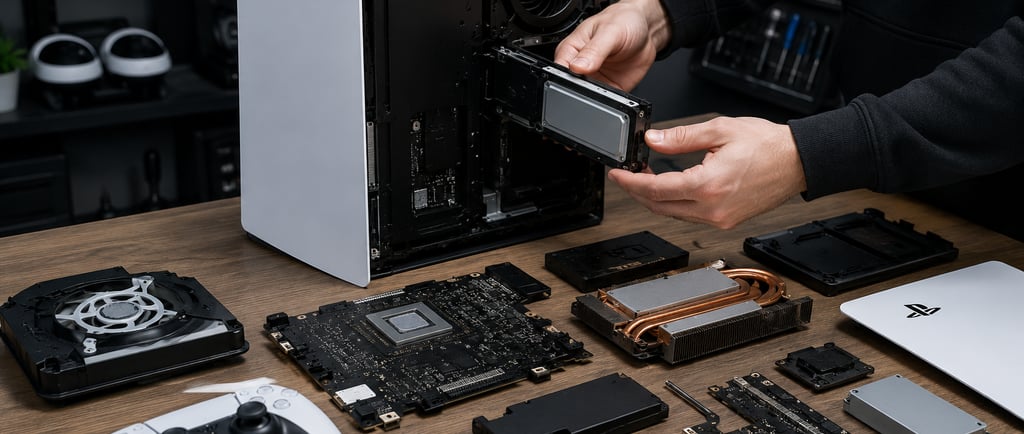
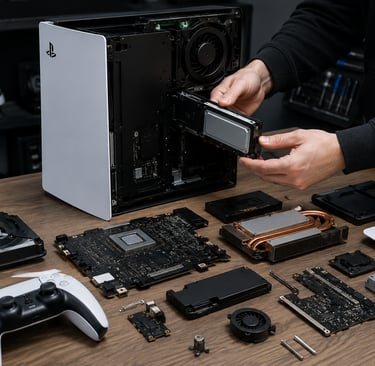
Why Modular Design for Consoles Matters in XR Electronics Recycling
Gaming hardware and XR electronics are entering a more serious phase of product responsibility. Consoles, handheld gaming systems, VR headsets, AR glasses, mixed reality devices, haptic controllers, charging docks, motion sensors, cameras, and wearable accessories now sit inside the same fast-moving hardware cycle. Devices are becoming more powerful, more compact, more sensor-heavy, and more integrated. That creates better performance for users, but it also creates a harder repair and recycling problem for OEMs, refurbishers, repair networks, recyclers, retailers, and regulators.
The global electronics waste problem is no longer theoretical. The Global E-waste Monitor 2024 reports that the world generated 62 million tonnes of e-waste in 2022, up 82% from 2010, and is on track to reach 82 million tonnes by 2030. Only 22.3% of e-waste was formally collected and recycled in 2022, and the formal collection rate could fall to 20% by 2030 under a business-as-usual path. That means electronics consumption is growing faster than the systems built to recover it. It also means every sealed battery, glued display, soldered port, locked storage module, and unmarked sensor assembly increases the burden on the recovery chain. 
Gaming and XR hardware matter because these devices are no longer niche products. Sony reports that PlayStation 5 cumulative worldwide hardware unit sales passed 93 million units as of March 30, 2026. Nintendo reports that the original Nintendo Switch reached 155.92 million hardware units and Nintendo Switch 2 reached 19.86 million hardware units as of March 31, 2026. These numbers show the scale of gaming hardware already in circulation before counting Xbox consoles, handheld gaming PCs, VR headsets, AR glasses, controllers, docks, chargers, accessories, and enterprise XR deployments. 
This scale changes the repair conversation. A console with one failed port should not become waste. A controller with stick drift should not need full replacement. A headset with a worn strap, degraded battery, damaged facial interface, or cracked lens housing should not be pushed straight into low-value recycling. If a high-volume gaming platform sells tens of millions of units, even a small design flaw can become a major waste stream. If a component fails across 2% of a 90 million unit install base, that is 1.8 million devices or accessories requiring repair, replacement, parts harvesting, or disposal. That is why modular console design is a product strategy, a compliance strategy, and a recycling strategy at the same time.
Modular design means a console or XR device is built from parts that can be safely accessed, removed, diagnosed, replaced, refurbished, reused, or recycled without destroying the rest of the product. In a console, that can include the power supply, fan, storage, ports, controller modules, battery packs, display assemblies, buttons, speakers, cooling parts, boards, and external shells. In XR hardware, it can include batteries, straps, facial interfaces, lenses, displays, camera modules, depth sensors, eye-tracking modules, speakers, haptic parts, cables, and sensor clusters.
The timing matters because regulation is moving toward repair access, product life extension, and clearer consumer information. The EU Right to Repair Directive was adopted on June 13, 2024, entered into force on July 30, 2024, and must be applied by EU Member States from July 31, 2026. The directive promotes repair as a consumer route beyond the legal guarantee period for covered goods. Even where gaming consoles and XR devices are not always the first category named, the direction is clear. Electronics brands will face more pressure to make products repairable, document service routes, support spare parts, and prove that reuse and repair were considered before disposal. 
The EU has already moved in this direction for adjacent electronics. From June 20, 2025, smartphones, feature phones, cordless phones, and slate tablets placed on the EU market became subject to new ecodesign and energy labelling requirements. These labels and rules include energy efficiency, battery life, resistance to drops, protection against dust and water, and repairability information. The European Commission’s Joint Research Centre also notes that a new repairability score is displayed on the energy label for these products. This is relevant for consoles and XR because handheld consoles, tablets, phones, XR headsets, and gaming accessories share many design challenges: sealed batteries, compact boards, fragile displays, high-use ports, thermal stress, firmware pairing, data wiping, and spare parts access. 
France also changed how buyers see repairability. The French Repairability Index, introduced in 2021 under France’s anti-waste and circular economy law, scores covered electric and electronic products against five repairability criteria and makes that score visible at the point of sale. The European Environment Agency describes the index as a mandatory consumer label designed to make repair potential visible before purchase. This matters because repairability is no longer hidden inside technical manuals. It is becoming a buying signal. 
For gaming and XR OEMs, modular design lowers future risk. It reduces warranty cost, improves service speed, supports certified refurb programs, gives recyclers safer handling routes, and strengthens resale value. It also protects brand reputation. In 2026, users expect expensive devices to last longer than one hardware cycle. A $400 to $700 console, a $500 to $3,500 XR headset, or a $70 to $200 controller now carries a reasonable expectation of repair, parts availability, and responsible end-of-life handling.
Fairphone proves that modular design can be part of brand value. Its smartphones are not gaming consoles, but the lesson applies. Fairphone built a reputation around user-replaceable modules, spare parts, repair information, and longer device life. Framework has done something similar in laptops by making key parts replaceable and upgradeable. Valve’s Steam Deck showed the gaming market that official repair parts and guides can coexist with a popular gaming device. Microsoft expanded Xbox Series X and Series S repair options in 2025 through authorized service partners and repair access channels, which shows that console repair is moving from an exception to a service model. 
The bigger point is simple. Modular console design prevents waste before recycling begins. Recycling is necessary, but it should not be the first answer for a device that can still be repaired, refurbished, upgraded, resold, or harvested for parts. The strongest circular electronics strategy is not only about recovering metals after failure. It is about delaying failure, making common repairs easier, preserving parts value, and giving every device a second or third useful life before material recovery.
2. Key Problems and Operational Stakes for Gaming OEMs
Modern gaming and XR OEMs face a difficult product challenge. Users want smaller devices, better graphics, longer battery life, richer haptics, faster storage, quieter cooling, lighter headsets, cleaner industrial design, and lower prices. At the same time, regulators want repair access, consumers want product longevity, repair shops want documentation, refurbishers want parts, and recyclers want safer disassembly. These goals often collide.
The first problem is assembly complexity. Consoles and XR devices now pack more value into less space. That means more glued batteries, laminated displays, delicate ribbon cables, soldered ports, custom fasteners, dense boards, thermal compounds, magnets, sensors, antennas, speakers, cameras, and haptic parts. These design choices help manufacturing speed and product thinness, but they often make repair slower and riskier. A technician replacing a simple port may need to remove multiple layers. A recycler trying to separate a battery may need to deal with adhesives, fragile plastics, and hidden screws. A refurbisher testing a headset may not know whether the fault sits in firmware, optics, battery, sensors, cooling, or storage.
The second problem is repair access. A product may be technically repairable but practically blocked if manuals are unavailable, spare parts are restricted, firmware tools are locked, or component pairing prevents replacement. For repair to work at scale, OEMs need more than good internal service processes. They need a product support model that gives the right repair information to the right actor. Consumers need simple guides for safe external and low-risk repairs. Authorized technicians need diagnostics and calibration tools. Refurbishers need testing, grading, and secure wiping procedures. Recyclers need battery locations, material markings, disassembly sequence, and hazardous component guidance.
The third problem is warranty cost. Every sealed or difficult-to-service part increases the cost of supporting the product after sale. When a high-failure part is buried under other components, the repair may require full unit replacement. That means more shipping, more labor, more replacement inventory, more customer frustration, and more returned devices. In high-volume categories, small service inefficiencies become large financial losses. If a console platform has tens of millions of users, even a minor defect pattern can create a major service burden.
The fourth problem is controller failure. Controllers are one of the clearest examples of why modularity matters. Joystick drift has affected major platforms and has become a public repairability issue. iFixit has repeatedly highlighted the difficulty of replacing drifting joystick parts in modern controllers, including Sony DualSense and Nintendo Joy-Con designs. The problem is not only that a joystick can fail. The problem is that a small, high-wear part can make the full controller feel unusable. 
The fifth problem is battery safety. XR headsets, handheld consoles, wireless controllers, motion trackers, haptic vests, and charging accessories often rely on lithium-based batteries. These batteries can create fire risks if damaged, crushed, punctured, overheated, or improperly handled in recycling streams. The World Health Organization states that e-waste is one of the fastest growing solid waste streams and notes that informal recycling, dumping, and open burning can release hazardous substances such as lead into the environment. For battery-bearing electronics, poor design increases safety risks across repair benches, warehouses, shipping routes, recycling lines, and informal waste systems. 
The sixth problem is regulatory exposure. EPR rules, right-to-repair policies, product labels, battery regulations, and ecodesign requirements are tightening in major markets. Even when rules begin with smartphones, tablets, appliances, or laptops, they create design expectations for the wider electronics industry. France’s Repairability Index made repair scores visible. The EU smartphone and tablet rules brought repairability and battery life into consumer labels. The EU Right to Repair Directive pushes repair into mainstream consumer rights. Gaming and XR OEMs should expect this logic to expand, especially as XR hardware becomes more common in education, healthcare, defense, enterprise training, remote collaboration, and entertainment. 
The seventh problem is brand perception. A console or headset is no longer judged only by graphics, game library, processing power, or launch-day reviews. Users also judge noise, heat, battery life, controller reliability, repair price, part availability, warranty experience, and resale value. A device that cannot be repaired becomes a trust problem. A device that can be repaired, upgraded, and resold earns a longer relationship with the user.
The eighth problem is material loss. E-waste contains valuable metals, boards, plastics, magnets, batteries, copper, aluminum, steel, gold, silver, palladium, rare earth elements, and other recoverable materials. The Global E-waste Monitor 2024 states that only 1% of rare earth element demand is met by e-waste recycling, despite the valuable materials inside discarded electronics. That is a missed recovery opportunity. Sealed and mixed assemblies make recovery harder. Modular assemblies help recyclers identify and separate higher-value streams before they are damaged or diluted. 
The ninth problem is resale value. The used electronics market rewards devices that can be tested, graded, repaired, cleaned, reset, and resold with confidence. A modular console with a replaceable storage module, serviceable fan, accessible ports, replaceable battery, and documented diagnostics is easier to refurbish. A sealed device with unknown battery health, firmware locks, and no parts access carries more risk. Refurbishers price that risk into lower purchase offers or avoid the category entirely.
The tenth problem is service channel control. OEMs often worry that more repair access will reduce quality control. That concern is valid, especially for batteries, displays, high-voltage parts, calibration-sensitive sensors, and safety-critical components. But the answer is not to block repair. The better answer is tiered repair access. Users can handle low-risk modules. Certified technicians can handle moderate repairs. OEM service centers can handle safety-critical repairs. Recyclers can receive end-of-life disassembly guidance. This structure protects quality while reducing waste.
The strongest OEMs will treat repairability as part of product economics. Modular design is not an extra feature added at the end. It affects product margins, reverse logistics, warranty reserves, secondary sales, compliance readiness, parts revenue, and customer lifetime value. If design teams only measure launch cost, they will miss the full cost of sealed hardware. If they measure product life, service cost, resale value, and recovery value, modularity becomes a business decision.
3. Essential Concepts: Modular, Design for Repair, and Circular Electronics
Three concepts shape the future of repairable consoles and XR devices: modular design, design for repair, and circular electronics. They overlap, but they are not the same.
Modular design means a product is divided into defined modules that can be accessed, removed, replaced, upgraded, refurbished, reused, or recycled with minimal damage to surrounding parts. In a gaming console, modules may include storage, fan, power supply, ports, cooling assembly, optical drive, wireless card, controller board, battery, casing, and interface components. In handheld gaming systems, modules may include joysticks, buttons, speakers, display, battery, SSD, microSD reader, cooling fan, triggers, and motherboard. In XR hardware, modules may include lenses, displays, battery packs, facial interfaces, head straps, speakers, depth cameras, eye-tracking sensors, cooling parts, haptic modules, and processing boards.
Modularity does not mean every part must be hot-swappable by a consumer. That is a common misunderstanding. A good modular product has a repair hierarchy. Some parts are user-replaceable. Some are technician-replaceable. Some require certified service because of safety, calibration, or data protection. The key is that the product is not designed as a sealed block where one failed component destroys the value of the whole device.
Design for repair is the discipline of making repair possible, safe, repeatable, and economically sensible. It includes visible screws, standard fasteners, pull tabs, labeled connectors, non-destructive access paths, service manuals, diagnostics, spare parts, software reset procedures, battery safety guidance, repair time targets, and calibration tools. A product can be modular in theory but poor for repair in practice if parts are unavailable or software blocks replacement.
Circular electronics is the wider product life model. It means electronics are designed and managed so value is retained for as long as possible. The preferred order is longer use, maintenance, repair, reuse, refurbishment, parts harvesting, and then material recovery. Recycling remains critical, but it should come after higher-value life-extension routes are exhausted. This is especially important for consoles and XR devices because they contain mixed material streams. A headset may include plastics, aluminum, copper, magnets, lithium batteries, displays, lenses, sensors, adhesives, flexible circuits, rare earth elements, and printed circuit boards. The more mixed the assembly, the harder it is to recover value cleanly.
Repairability also depends on information. A QR code on a module, a part number on a board, a battery chemistry label, a disassembly map, or a digital product record can reduce guesswork. This helps repair shops identify the right part. It helps refurbishers confirm repair history. It helps recyclers separate hazardous or valuable modules. It helps OEMs prove take-back and recovery activity. A device without information is harder to repair and harder to recycle, even if the physical design is accessible.
The EU’s Digital Product Passport direction under wider circular economy policy is relevant here, even if implementation differs by category. The idea is simple: products and components should carry better data through their life cycle. For consoles and XR hardware, this could include model data, battery chemistry, repair history, spare parts compatibility, firmware status, recycled content, safe disassembly instructions, and end-of-life routing. The technology does not need to be complex. A serialized QR code, NFC tag, or secure product record can be enough if the data is accurate and accessible to the right actors.
Case studies from adjacent categories show the value. Fairphone’s modular smartphones show how user-replaceable parts and spare parts access can become a brand position. Framework’s laptops show how modularity can support upgrades and long-term repair. Valve’s Steam Deck repair partnership with iFixit showed that a mainstream gaming device can have repair guides and replacement parts without destroying demand. Microsoft’s 2025 expansion of Xbox repair service through authorized repair partners shows that major console platforms can move toward broader repair support. 
Repairability scores also show how design choices are now being compared publicly. Wired reported that iFixit scored Switch 2 at 3 out of 10, the original Switch at 4 out of 10, and PlayStation 5 and Xbox Series X at 7 out of 10. Whether a brand agrees with each score or not, the market effect is clear. Repairability is now part of public product evaluation. 
For gaming and XR OEMs, the lesson is practical. Modularity should focus first on high-failure, high-wear, high-risk, and high-value parts. That means batteries, ports, fans, storage, joysticks, triggers, straps, facial interfaces, lenses, displays, sensors, speakers, charging contacts, and cooling systems. These parts directly influence user satisfaction, repair cost, resale value, and recycling safety.
The circular value is strongest when design supports every downstream actor. Consumers keep devices longer. Repair shops complete repairs faster. Retailers resell certified refurbished hardware. OEMs reduce returns and strengthen compliance reporting. Recyclers remove batteries safely and separate valuable modules. This is what makes modular design bigger than repair. It becomes the structure that connects product engineering to the full electronics recovery chain.
4. The Modular Console Blueprint: How OEMs Can Make Repair, Refurbishment, and Recycling Work at Scale
A repairable XR console is not created at the service center. It is created at the design desk, inside the bill of materials, inside the fastening plan, inside the firmware policy, inside the parts strategy, and inside the take-back model. By the time a device reaches a recycler, most recovery outcomes have already been decided. If the battery is glued under fragile display layers, repair becomes slow. If the SSD is paired to the board without a service route, reuse becomes limited. If the controller battery is sealed inside a shell with no safe opening method, refurbishment becomes expensive. If the sensor module has no part number, QR code, or diagnostic path, the recycler must treat it like lower-value mixed electronics rather than a recoverable module.
This is why modular design must move from product feature to product architecture. In 2026, gaming and XR hardware manufacturers are competing on more than graphics, latency, haptics, and content libraries. They are competing on product life, repair access, parts support, compliance readiness, resale value, and end-of-life recovery. The Global E-waste Monitor’s 62 million tonne figure for 2022 and 82 million tonne projection for 2030 make the old model harder to defend. A device that cannot be repaired, safely opened, or responsibly recycled is no longer only a design compromise. It is a future liability. 
A practical modular console blueprint starts with failure mapping. OEMs should identify the parts most likely to fail, wear out, become obsolete, or create safety concerns. In consoles and handheld gaming systems, these include batteries, USB-C ports, HDMI ports, fans, charging boards, storage drives, joysticks, triggers, speakers, optical drives, power supplies, cooling systems, and external shells. In XR devices, they include batteries, straps, facial interfaces, lens assemblies, displays, speakers, cameras, depth sensors, eye-tracking modules, cables, and haptic parts.
Once these parts are mapped, the OEM should assign each part a service category.
User-replaceable parts should include low-risk, high-wear items such as covers, straps, facial interfaces, external storage, some controller modules, and simple battery packs where safety design allows it.
Technician-replaceable parts should include internal batteries, ports, fans, displays, storage, speakers, and cooling modules.
Certified-only repairs should cover safety-critical batteries, calibrated optics, sealed display assemblies, advanced sensor systems, and parts requiring firmware calibration.
Recycler-accessible parts should include batteries, boards, magnets, plastics, aluminum, copper-rich assemblies, and labeled hazardous components.
The battery is the first priority. Lithium-based batteries carry safety, shipping, storage, and fire risks when they are swollen, punctured, crushed, overheated, or hidden inside sealed assemblies. In XR headsets and handheld consoles, the battery often sits close to displays, sensors, speakers, cooling hardware, and flexible circuits. A modular battery bay, accessible without heat guns or chemical solvents, reduces repair risk and improves recovery value. The EU’s 2025 smartphone and tablet ecodesign rules show where product policy is moving: longer battery life, stronger durability, clearer repairability information, and access to critical spare parts. 
Ports should be the second priority. Charging ports, display outputs, audio jacks, cartridge readers, accessory connectors, and docking contacts face constant mechanical stress. A damaged port should not turn a high-value console into scrap. OEMs can reduce waste by placing ports on replaceable daughterboards instead of soldering them directly to the main board. This design choice can turn a board-level repair into a module swap. It also helps refurbishers grade devices faster. A console with a dead USB-C port but a healthy board, battery, and display should be recoverable within minutes, not written down as low-value salvage.
Storage should be the third priority. Gaming consoles and XR systems rely on large storage for high-resolution assets, game libraries, spatial maps, user profiles, training content, enterprise applications, and media capture. Modular storage allows users to expand capacity and allows refurbishers to sanitize, replace, or resell devices with less risk. The design challenge is security. OEMs need to protect user data while allowing legitimate replacement. This can be handled through firmware-backed data wiping, secure pairing reset, documented service modes, and serialized module tracking. A secure replaceable storage module is better than a sealed storage component that blocks reuse.
Cooling systems deserve equal attention. Fans, vents, thermal pads, heat sinks, dust pathways, and thermal compounds affect performance and lifespan. A console that overheats after two years because of dust buildup or degraded thermal material is not only a maintenance issue. It is a service design issue. Modular fan cartridges, accessible vent covers, replaceable thermal pads, and built-in dust-cleaning guidance can extend useful life. This matters even more for XR hardware because heat affects user comfort, battery safety, display performance, sensor stability, and processor throttling.
Controllers and haptic accessories need their own repair plan. Stick drift, trigger failure, battery wear, shell damage, worn haptic motors, damaged charging contacts, and broken shoulder buttons are common reasons controllers are replaced. A circular controller should allow joystick modules, trigger assemblies, grip shells, batteries, vibration motors, haptic actuators, and charging contacts to be replaced independently. This is where modularity delivers immediate user benefit. The user does not care about product circularity when a controller fails during a game. The user cares that repair is cheaper than replacement, parts are available, and the device can be fixed without destroying the shell.
The Switch 2 repairability debate makes this point clear. Reports based on iFixit’s teardown criticized the device for soldered parts, glued components, difficult joystick replacement, and lack of official parts or documentation. At the same time, other handhelds have shown more repair-friendly paths. PC Gamer reported that the ROG Xbox Ally X earned a 7 out of 10 iFixit repairability score because several internal components were accessible, including its SSD, thumbsticks, button board, fans, and speakers, although parts access and some glued or soldered components remained limitations. The lesson is that gaming users can see the difference between repair-friendly and repair-hostile design. 
XR devices add another layer: optics and sensor modules. Lenses, cameras, depth sensors, eye-tracking modules, facial interfaces, light seals, straps, speakers, display assemblies, microphones, and haptic elements have different failure rates and recovery values. A modular XR headset should separate hygiene parts, wear parts, optical parts, electronic parts, and hazardous parts. Facial interfaces and straps should be simple to replace. Batteries should be safe to remove. Sensor clusters should be labeled. Optical assemblies should be protected during removal. If these modules are glued into one mixed assembly, recyclers lose time and value. If they are separated by design, refurbishment becomes realistic.
Documentation is the next major piece. Repairable hardware without repair information is only half repairable. France’s Repairability Index shows how policy is pushing repair visibility into buying decisions. The index scores covered products against repairability criteria and displays that score at the point of sale. This makes repairability visible before the consumer buys the product, not after the product fails. 
For gaming and XR OEMs, repair instructions, spare part access, service manuals, diagnostic codes, exploded diagrams, firmware reset paths, calibration tools, module identification, and end-of-life disassembly instructions should be treated as product assets. This does not mean every internal document must be public. It means each actor needs the right information. A consumer may need a battery replacement warning and strap guide. A technician may need calibration software and fault codes. A refurbisher may need secure wiping and grading procedures. A recycler may need battery chemistry, screw locations, hazardous material notes, and module separation instructions.
Parts availability is where many repair programs fail. A device can be designed for repair, but if spare parts are unavailable after two years, the repair path collapses. OEMs need minimum parts support windows for high-failure modules. In practical terms, this means maintaining supply for batteries, ports, fans, controllers, power supplies, storage covers, straps, facial interfaces, shells, and common sensor modules. The EU Right to Repair Directive’s 2026 application deadline strengthens this direction by making repair a more formal consumer expectation in covered categories. 
The strongest modular strategy also includes a digital identity for each major module. A QR code, serial number, NFC tag, or digital product record can identify the part, material family, repair history, firmware status, battery chemistry, recycled content, and end-of-life handling instructions. For recyclers, this reduces guesswork. For refurbishers, it speeds grading. For OEMs, it improves take-back reporting. For consumers, it supports resale trust. A used console with verified battery replacement, clean storage wipe, tested port module, and updated firmware can command stronger resale value than a mystery device with no history.
This is where modular design links directly to XR electronics recycling. Recycling is often described as the final step, but in a modular system it becomes one route among several. The first route is continued use. The second is repair. The third is refurbishment. The fourth is parts harvesting. The fifth is material recovery. A sealed device often skips straight to shredding or low-value dismantling. A modular device gives every actor more options before destruction.
That difference matters financially. OEMs can reduce warranty cost by making common failures faster to service. Retailers can sell certified refurbished units with stronger quality control. Repair networks can create recurring revenue through parts and service. Recyclers can separate batteries, boards, plastics, magnets, cables, optics, and sensors with better speed and lower hazard. Consumers can keep hardware longer or resell it with more confidence. The environmental gain is important, but the business case is direct.
A modular console blueprint should follow six design rules.
First, avoid permanent joining where service access is likely. Screws, clips, pull tabs, and replaceable brackets are better than glue, welding, and destructive adhesives for high-failure parts.
Second, separate hazardous parts early in the disassembly path. Batteries should be reachable before boards are crushed, shredded, heated, or chemically processed.
Third, make high-wear parts independent. Joysticks, triggers, ports, fans, straps, pads, covers, and charging contacts should be replaced without replacing major assemblies.
Fourth, support repair with software. Diagnostics, calibration, secure reset, firmware pairing, and error logs should help technicians confirm the fault before replacing parts.
Fifth, keep parts available long enough to matter. A repairable device with no parts supply becomes a locked device by another route.
Sixth, design for the recycler who has 90 seconds, not 90 minutes. Labels, access points, material markings, and safe battery removal instructions can decide whether a device is recovered carefully or processed as mixed waste.
5. Implementation Roadmap: How Console and XR Brands Can Move From Sealed Hardware to Repairable Product Systems
The shift to modular console design cannot happen through design intent alone. OEMs need a product roadmap that connects engineering, procurement, compliance, service, retail, reverse logistics, repair networks, refurbishers, and recyclers. A repairable console is not only a better device. It is a different operating model.
The first step is a repairability audit. OEMs should review each device family and score every component against failure rate, replacement difficulty, safety risk, repair time, part cost, resale value, and recycling value. This audit should include the console, controller, charging dock, headset, motion sensor, power supply, cables, straps, and accessories. The goal is to find the parts that create the most waste and service cost. In most gaming and XR systems, these are batteries, ports, joysticks, fans, storage, display assemblies, straps, facial interfaces, charging boards, and haptic components.
The second step is service time benchmarking. A practical repairability target should not only say “replaceable.” It should define how long replacement takes, what tools are required, what risk exists, and who can perform the repair. A battery that takes 75 minutes, heat, solvent, and display removal is not functionally comparable to a battery that takes 10 minutes with standard tools. A port soldered to the motherboard is not comparable to a port on a replaceable daughterboard. A joystick that requires full controller teardown is not comparable to a joystick module accessible behind a service panel.
The third step is parts tiering. OEMs should divide parts into three service tiers. Tier 1 parts are user-facing wear items such as straps, face pads, controller shells, thumbstick caps, storage covers, removable batteries where safe, and external accessories. Tier 2 parts are technician-serviceable modules such as fans, ports, joysticks, internal batteries, speakers, buttons, power supplies, storage, and displays. Tier 3 parts are certified-service parts such as calibrated sensors, optical assemblies, safety-critical batteries, and firmware-paired boards. This tiered model protects safety while still opening repair access.
The fourth step is documentation planning. Repair documentation should be created during product development, not after launch. Engineers should produce disassembly sequences, torque specifications, fastener maps, adhesive warnings, safe battery procedures, diagnostic codes, and calibration steps as part of release readiness. Refurbishers and recyclers should receive end-of-life guidance that identifies batteries, boards, magnets, plastics, optical parts, and hazardous materials. Documentation should be updated when hardware revisions change.
The fifth step is spare parts forecasting. OEMs already forecast replacement devices, warranty units, and accessories. They should also forecast spare parts. The forecast should use expected failure rates, install base size, regional repair demand, warranty trends, and refurb channel volume. For example, if a controller platform sells 30 million units and joystick module failure affects even a low single-digit percentage over several years, spare parts demand can reach hundreds of thousands of units. Without parts planning, the repair program fails even if the design is repairable.
The sixth step is software support. Repairable hardware needs repairable software. Service diagnostics should identify faulty modules. Secure reset tools should protect user data. Firmware should allow legitimate replacement parts to be paired without blocking repair. Calibration tools should support sensors, displays, controllers, haptics, and cameras. Error logs should help technicians avoid replacing good parts. A product that physically accepts a replacement part but rejects it in software is not truly repairable.
The seventh step is reverse logistics design. Modular repair works best when broken devices and parts flow through the right channel. A returned console should be triaged into repair, refurbishment, parts harvesting, or recycling. A returned controller should be tested for joystick drift, battery health, button wear, charging contact failure, and shell damage. A returned XR headset should be assessed for hygiene components, battery health, optical damage, sensor function, and strap condition. This triage preserves value and keeps repairable devices out of the scrap stream.
The eighth step is recycler integration. Recyclers should not be treated as the last stop with no product information. They should be included in design feedback loops. If recyclers report that a battery is hard to remove, a housing splinters during disassembly, material markings are unclear, or a sensor module cannot be identified, the OEM should feed that back into the next product revision. Recycling yield improves when end-of-life realities influence product design.
The ninth step is public repair communication. Consumers do not need a technical manual to understand repair value. They need clear messaging: battery replacement available, controller modules serviceable, storage upgrade supported, certified refurbished units available, take-back accepted, and parts supplied for a defined period. Repairability should be part of the product page, not hidden under support menus. The EU’s repairability labels for smartphones and tablets show that buyers are being trained to compare repair factors before purchase. Gaming and XR brands should prepare for the same behavior. 
The tenth step is measurement. OEMs should report repair rate, refurb rate, parts reuse, take-back volume, battery recovery, device life extension, spare parts availability, and material recovery. These metrics help prove that modular design is reducing waste and service cost. They also support ESG reporting, EPR compliance, and circular economy claims. Claims without data will not be enough in a stricter regulatory environment.
A strong implementation roadmap should therefore move in phases. Phase one focuses on audit and failure mapping. Phase two redesigns high-failure modules. Phase three creates documentation and parts channels. Phase four expands repair networks. Phase five builds refurb and take-back loops. Phase six feeds field data into the next hardware generation. This creates a product system that improves with every cycle.
6. Conclusion: Modular Console Design Is Now a Repair, Compliance, and Recycling Strategy
The next generation of consoles and XR devices will not be judged only by launch-day performance. They will be judged by what happens after year two, year three, and year five. Can the battery be replaced? Can the ports be repaired? Can the controllers be restored? Can storage be wiped and upgraded? Can a headset be cleaned, repaired, and resold? Can a recycler remove hazardous parts safely? Can the OEM prove that take-back material was handled properly?
That is the real shift for 2026. Modular design is no longer a niche repairability feature. It is becoming the operating model for circular gaming hardware. E-waste is growing, formal recycling is not keeping pace, and regulators are moving toward longer product life, repair rights, better labels, and clearer product responsibility. The Global E-waste Monitor’s 82 million tonne projection for 2030 should be read as a warning to every electronics brand that still treats repair as secondary. 
For OEMs, the business case is clear. Modular design can reduce warranty cost, improve repair speed, strengthen resale value, support certified refurb channels, create parts revenue, reduce regulatory risk, and improve recycling outcomes. For consumers, it means devices last longer and cost less to maintain. For repair shops, it means better access to parts and documentation. For recyclers, it means safer battery removal and better material separation. For regulators, it means product design begins to match circular economy goals.
The brands that design consoles, controllers, handhelds, and XR accessories for repair will protect margin, improve user trust, and build stronger recovery systems. The brands that keep sealing devices shut will face higher service costs, weaker refurb value, more public criticism, and rising compliance pressure. In a market where gaming hardware now sells in the tens and hundreds of millions of units, even small repair choices have global consequences.
Modular console design is the practical bridge between performance and responsibility. It keeps devices useful for longer. It makes repair easier. It makes refurbishment more credible. It makes recycling safer. Most importantly, it changes the role of product design from creating the next device to preserving the value of every device already in circulation.
Connect
Your trusted partner for scrap metal procurement.
CONTACT
About
haroon@tdcventures.com
+1-307-655-7593
© 2025. All rights reserved.
NEWSLETTER