
Onsite Solar + Battery for Yards: Sizing, ROI and Permits
Complete guide to onsite solar + battery systems for yards: cut energy costs 50%+, reduce demand charges, achieve energy resilience, and meet decarbonization targets with proven ROI.
SUSTAINABLE METALS & RECYCLING INNOVATIONS
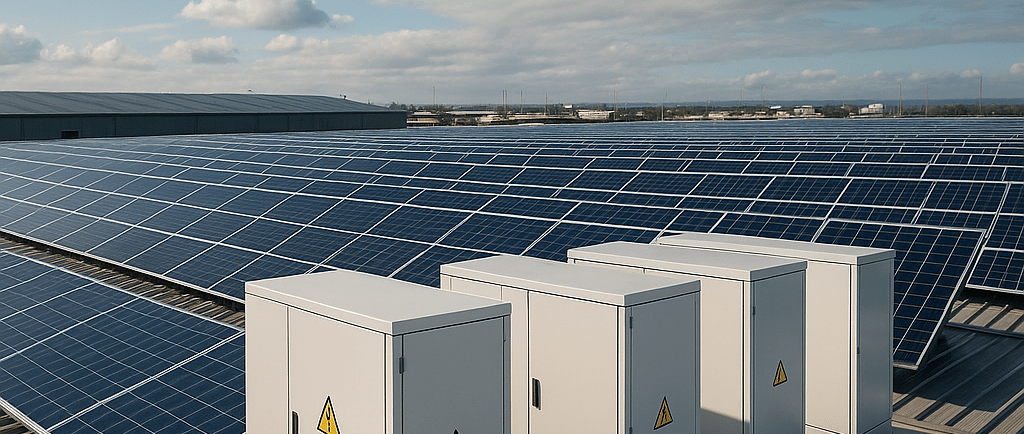
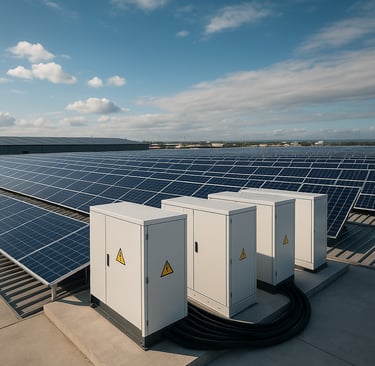
PART 1: CONTEXT, LOADS, AND SIZING FOUNDATIONS
Introduction: Why Yards Are Rethinking Power Now
If you run a yard today, your business sits inside several powerful shifts at once.
Electricity prices are volatile. Grid reliability is under pressure in many regions. At the same time, customers, lenders, and regulators are asking for clear, credible decarbonization plans, not vague promises.
Solar and battery storage have moved from pilot projects to mainstream infrastructure. Solar PV already supplies about 5.4 percent of global electricity, and capacity is growing faster than any other source of new power.IEA Between 2010 and 2023, the cost of utility-scale solar power fell by about 90 percent, from 0.46 USD per kWh to roughly 0.044 USD per kWh, turning it into one of the cheapest sources of new generation worldwide.IRENA
Battery costs followed a similar trajectory. Global analysis shows that utility-scale battery storage costs have dropped by about 93 percent since 2010 to around 192 USD per kWh in 2024.IRENA+1 This is exactly the technology pairing yard operators can use to reshape their energy profile: solar to supply clean, low-cost power, and batteries to shift that power in time, cut demand charges, and provide backup.
The result is simple. Yards, warehouses, depots, and scrap operations with large roofs, consistent loads, and growing electrification are now prime candidates for onsite solar plus storage. The global rooftop solar market for warehouses and logistics facilities alone is already in the low billions of dollars and is forecast to grow at double-digit rates through the 2030s.Dataintelo+1
This first part of the guide builds the foundation. It explains why yards are a natural fit, how their electricity use really behaves, and what technology and sizing concepts you need before you start running numbers.
Once these basics are clear, you can move into financials, LCAs, and permitting with far more confidence.
Why Onsite Solar + Battery Matters For Yards
A. Yards at the heart of freight and materials emissions
Freight and logistics now sit at the center of climate and energy debates. In the United States, transportation accounts for about 29 percent of total greenhouse gas emissions, and freight's share within transportation has grown from roughly a quarter in 1990 to nearly a third today.Environmental Protection Agency+2World Resources Institute+2 Heavy trucks, yard tractors, material handling equipment, and energy-hungry depots all contribute.
At the same time, many logistics and metals companies have public targets to cut emissions in line with the Paris Agreement or similar national goals. That pressure flows down the chain to yard operators. Large shippers and OEMs now ask concrete questions when they choose suppliers:
What are your yard emissions per ton handled or per vehicle processed?
Do you run on grid-only power or have onsite renewables?
How resilient is your site to outages and extreme weather?
Onsite solar plus storage gives you credible answers. It cuts the carbon intensity of every ton shipped, sorted, or shredded, and it does so in a way that can be verified with meters and LCAs, not only with certificates.
B. Roofs, yards, and car parks are under-used energy assets
Most yards and warehouses have large, flat roofs and adjacent land or car parks that do little beyond keeping the rain off or holding vehicles. From the energy system's point of view, these surfaces are valuable real estate.
Recent research on building rooftop potential estimates that residential and commercial roofs worldwide could generate around 47.5 petawatt-hours of electricity per year if fully used for solar PV.ScienceDirect That is more than global electricity consumption today. Logistics and industrial facilities account for a meaningful slice of that potential because of their scale and roof characteristics.
For yard operators, this means:
You already "own the site" for an energy project. No land acquisition cost.
You can often build without interfering with core operations if design and construction are planned well.
You can add carport solar over parking, employee vehicles, or truck staging areas for extra capacity and shade.
C. From solar-only to solar plus storage
A decade ago, most commercial projects stopped at rooftop solar. That still helps, but solar alone has limits for yards.
Many yards see their highest loads in late afternoon or early evening when crews are still working, processing equipment is active, and lighting is already on. Solar generation peaks around midday and falls off by late afternoon. Without storage, a yard may export cheap power at noon and still face high demand charges at 5 p.m.
Battery storage fixes that gap. It lets you:
Store surplus solar at midday and discharge during peak periods.
Cap your maximum grid demand by discharging during spikes.
Provide backup power for critical loads during grid outages.
Global energy storage deployments reflect this shift. Forecasts show that battery storage capacity is on track to grow roughly fifteen-fold between 2021 and 2030, reaching more than 400 GW globally and around 0.65 TW in some outlooks.GridBeyond+1 A significant share of that capacity will sit behind the meter at commercial and industrial sites, which includes yards and warehouses.
D. Why now, not "sometime later"
Three forces make timing important:
Economics: Solar and storage costs have fallen sharply and are now mature, with global average solar power from new projects often priced well below new fossil fuel generation. In 2024, about 91 percent of new renewable projects were cheaper than comparable fossil options, with solar PV electricity around 41 percent below the lowest-cost fossil plants on a levelized basis.Reuters+1
Policy: Many jurisdictions offer tax credits, rebates, and accelerated depreciation, and some are starting to tilt electricity tariffs toward higher demand charges and carbon pricing. Early movers capture incentives before they phase down.
Competitive positioning: Shippers, OEMs, and global buyers increasingly prefer low-carbon supply chains. Onsite solar and storage is a tangible, visual signal that aligns with those expectations and makes ESG reporting easier.
If you see energy as a strategic input, not a fixed cost, solar plus storage becomes a core yard asset, similar to a shredder, crane, or weighbridge.
2. How Yards Use Power Today: Loads, Bills, And Risk
Before talking about system sizing or financial returns, you need a clear picture of how your yard uses electricity.
A. Typical yard load profiles
Different yard types have different load shapes, but many share common features.
Scrap and metal recycling yards
Heavy loads from shears, balers, shredders, conveyors, torch cutting ventilation, and dust control.
Fast starts and stops that produce sharp power spikes.
Office, lighting, and IT loads that run for extended hours.
Logistics, e-commerce, and distribution yards
Large HVAC and lighting loads across high-bay buildings.
Conveyor lines, sortation systems, packaging equipment, and scanning systems.
Yard tractors, dock equipment, and, increasingly, charging for electric forklifts, pallet jacks, and yard trucks.
Cold storage and food logistics sites
Very high, steady refrigeration loads.
Backup generation already in place, which can be complemented or partially replaced by storage.
Most yards operate on one of three patterns:
Single shift: Morning start, midday peak, gradual decline in late afternoon.
Extended shift: Long peaks into evening, with higher lighting loads.
Near 24/7: Warehousing and sorting facilities serving e-commerce and just-in-time supply chains.
For system design, the important feature is not only how many kilowatt-hours you use in a month, but when those kilowatts happen within the day and how high your peaks rise.
B. How your tariff and demand charges work
Commercial electricity tariffs usually have two big components:
Energy charges based on total kilowatt-hours used.
Demand charges based on your highest kilowatt draw in a set interval, commonly 15 minutes.
Analyses by NREL and others show that demand charges can represent 30 to 70 percent of a typical commercial customer's electricity bill, especially in regions with high peak pricing.NREL+2Clean Energy Group+2 Many yard operators do not fully realize this. They watch total usage but do not track when and why peaks occur.
For a yard, these demand charges often arise from:
Several large motors starting at the same time.
Overlapping shifts combined with EV charging.
Rare events, such as cranes, shears, and large HVAC units running together during a hot spell.
This is where storage becomes powerful. A well-sized battery can discharge during those minutes of extreme load and keep your "metered peak" below the level that drives expensive demand charges. Solar reduces daytime grid draw, and storage controls the spikes.
C. Baseline cost and emissions example
Consider a mid-size logistics yard:
Annual consumption: 3,000,000 kWh.
Average energy charge: 0.12 USD per kWh.
Demand charges: 40 percent of the bill.
Annual energy charges would be about 360,000 USD. Demand charges and other fixed charges might add another 240,000 USD, for a total near 600,000 USD per year.
From an emissions perspective, if the local grid averages 0.4 kg CO₂ per kWh, that 3,000,000 kWh equates to around 1,200 metric tons of CO₂ per year. Reducing grid consumption by half through solar and storage would avoid roughly 600 tons per year, equal to the annual exhaust of well over 100 typical passenger vehicles.
The exact figures will vary with local tariffs and grid emission factors, but the direction is clear. Your site likely spends hundreds of thousands on electricity and emits hundreds to thousands of tons of CO₂ per year from purchased power alone.
D. Outage risk and operational resilience
Many yards underestimate the cost of even short outages.
A one-hour outage in peak season can halt loading, tipping, or sorting and cascade into missed truck or rail slots.
Smaller sites may lose production for a full day if their IT systems, scales, and safety systems restart slowly.
Critical loads such as security systems, lighting, and pumps must survive outages for safety and compliance reasons.
Diesel backup generators are common, but fuel storage, maintenance, noise, and emissions bring their own issues. Solar plus storage does not replace every generator, but it can cover critical loads for extended periods and reduce how often you start diesel sets. That cuts fuel costs and improves your ESG profile.
E. Why "interval data" is your best friend
To design a good system, you need 15-minute or hourly interval data from your meters, not only monthly bills.
Interval data helps you see:
When your daily peaks occur.
How "spiky" your loads are.
How weekends and holidays differ from weekdays.
How much load is daytime and how much is evening or night.
This is why the action plan later in the guide starts with gathering 12 to 24 months of interval data. It is the foundation for every sizing and ROI discussion that follows.
3. Technology And Sizing Fundamentals
With context and load behavior in place, you can now look at the technology components and basic sizing logic. This section will not turn you into a design engineer, but it will prepare you for productive conversations with EPCs, integrators, and utilities.
A. Core building blocks of a yard solar + storage system
A typical yard system includes:
Solar PV modules on roofs, carports, or ground mounts.
Mounting structures and racking suitable for local wind and snow loads.
Inverters that convert DC panel output to AC power.
Battery energy storage, often lithium-ion racks in cabinets or containers.
A battery inverter or hybrid inverter.
A site controller or energy management system that decides when to charge or discharge.
Switchgear, protection equipment, metering, and communication links.
Design choices vary by site, but the goal is consistent: deliver clean, reliable power that integrates with your existing electrical system and your utility's requirements.
B. Solar PV basics for yards
Key variables for solar design include:
Available surface area: roof, carports, or spare land.
Structural capacity: whether roofs can support extra weight.
Solar resource: local irradiance and shading.
DC power density: how many kilowatts you can install per square meter.
As a rough rule, 1 kW of rooftop solar requires about 6 to 8 square meters, depending on module efficiency and layout.
Example:
Roof area: 10,000 square meters.
Assumed 7 square meters per kW installed.
This supports roughly 1,400 kW (1.4 MW) of DC solar. In a location with about 1,300 kWh per kW of annual production, that system would generate around 1.8 million kWh per year.
For a yard using 3,000,000 kWh per year, this single roof could cover about 60 percent of annual consumption, before considering storage.
You do not need these exact numbers at the start, but you should have an order-of-magnitude feel for what your site can host and what fraction of your load solar alone can realistically cover.
C. Battery storage basics for yards
Battery storage design rests on two key parameters:
Power rating in kW: how much instantaneous power the battery can deliver.
Energy capacity in kWh or MWh: how long it can deliver that power.
Why this matters:
For demand charge control, power rating is critical. You often need a few minutes to a few hours of discharge at a high rate to cap peaks.
For backup and resilience, energy capacity becomes more important. You may want several hours of support at a lower power level.
Lithium-ion chemistries dominate commercial projects today because of their cost, compactness, and mature supply chain. The large cost reductions since 2010 are what make yard-scale systems financially attractive.IRENA+1
D. Common yard use-cases for storage
For most yards, storage delivers value through a combination of:
Solar self-consumption
Store surplus solar output at midday and use it later instead of exporting at low prices and buying back at high ones.
Demand charge management
Discharge during high-load intervals to keep your metered peak below the demand threshold that drives charges.
Backup for critical loads
Keep key systems running during outages: weighbridges, IT, security, lighting, pumps, or critical process equipment.
Market participation (where available)
In more advanced markets, batteries can supply services such as frequency regulation or capacity, generating extra revenue. This requires careful coordination with your utility and market rules.
E. Step-by-step sizing logic
Every yard is different, but a repeatable sizing logic looks like this:
Clarify objectives
Decide what matters most to you. Typical goals are:
Cut total electricity cost by a specific percentage.
Reduce demand charges and smooth bills month to month.
Cover critical loads for a defined number of hours during outages.
Achieve a clear emissions reduction target that feeds into ESG reporting.
Map your load profile
Use interval data to find:
Daily and seasonal peaks.
The ratio of daytime to night loads.
The size and frequency of demand spikes.
Size solar against annual consumption and surface area
Ask two questions:
How much solar can you physically host?
What share of your annual kWh do you want solar to cover?
Often, the roof and carports cap your maximum DC size. If your roof can host 1.4 MW and you want to cover half your load, you may aim close to that physical maximum and then tune the final design for shading, fire codes, and structural limits.
Size storage against demand peaks and resilience needs
For demand charge management, a common pattern is:
Power rating at roughly 20 to 40 percent of your maximum site demand.
Energy capacity of 1 to 4 hours at that power, depending on how long peaks last.
For resilience, you first define critical loads and then decide how many hours you need. For example, you might want to run core IT, security, and minimal lighting for 8 hours, while leaving heavy industrial loads offline during an outage.
Check grid and equipment constraints
Make sure preliminary sizes respect:
Utility interconnection limits at your point of connection.
Transformer and switchgear ratings.
Fire and safety codes for battery siting and ventilation.
Iterate with financial modeling
Once you have preliminary sizes, you can start modeling bill savings, incentives, and capex to find the design that meets your financial thresholds. That is where the financial analysis and LCA content in the next section comes in.
F. Integration with fleet electrification and future growth
Many yards are also planning or already rolling out:
Electric forklifts and pallet jacks.
Electric yard tractors and, in some cases, heavy trucks.
More automation and robotics inside warehouses.
Each of these adds new electric load and increases your dependence on a stable, affordable power supply. A well-planned solar plus storage system can serve as the backbone for this growth, as long as you size with a view to future loads, not only today's.
That usually means:
Leaving room on roofs, carports, and inverters for expansion.
Designing the battery system and controls so that additional storage or EV chargers can be added without major redesign.
Coordinating fleet charging schedules with solar output and battery dispatch.
Good planning here prevents you from having to rebuild your system in a few years when electrification ramps up.
You now have the essentials: why yards are natural candidates for solar plus storage, how their loads and bills work, and what the main technology and sizing concepts look like.
The next step is to put numbers to the ideas.
In the following section, you will walk through detailed financial analysis, incentives, and life cycle assessments, and see how to turn these technical concepts into a clear capital decision for your yard.
4. FINANCIALS: Calculating ROI & Using Life Cycle Assessments (LCAs)
Making the Business Case: ROI Dissected
Strong financial returns drive adoption of onsite solar plus storage projects. But quantifying the bottom-line and sustainability impact requires thorough analysis. Let's break down a robust, scalable ROI approach:
A. Upfront and Operating Costs
System costs: Solar panel installation averages $1.30–$2.50/watt (as of 2024), while battery storage ranges from $600–$900/kWh installed, depending on scale and chemistry (lithium-ion most common).
Soft costs: Permitting, engineering, incentive application, and interconnection often make up 15%–25% of total project cost.
Operating expenses: Minimal for solar; batteries require periodic maintenance and potential cell replacements.
B. Revenue Streams & Savings
Electricity bill reduction: Direct offset of grid purchases translates to lower kWh and demand charges.
Demand charge mitigation: Many yards face demand charges for their peak interval usage (can be 30–60% of total bill). Batteries dispatched during these periods shrink charges rapidly.
Grid services revenue: In some regions, "virtual power plant" participation or frequency response programs unlock supplemental income streams.
C. Incentives & Tax Credits
Federal Investment Tax Credit (ITC): Covers up to 30% of project costs for solar (with prevailing-wage requirements); batteries may also qualify if charged from solar.
State/Local incentives: Many states offer cash rebates, property tax exemptions, or accelerated depreciation (MACRS). Example: California's SGIP offers incentives up to $400/kWh for commercial batteries.
D. Life Cycle Assessment (LCA): The Decarbonization Lens
A comprehensive LCA reviews the system's full emissions profile—from material extraction through disposal or recycling. LCA tools (e.g., SimaPro, OpenLCA) let organizations quantify "net carbon savings" over project life and validate claims for stakeholders or regulators.
Statistic: According to the National Renewable Energy Laboratory (NREL), a typical California distribution center with an 800 kW rooftop system plus 1 MWh battery can achieve a net GHG reduction of 650 metric tons of CO₂ per year, or roughly the annual emissions of 140 passenger vehicles.
E. ROI & Payback Period Example
Simple payback: Most commercial solar-battery installations reach payback in 4–8 years, depending on local rates and incentives.
IRR (Internal Rate of Return): Frequently falls in the 10–18% range, outperforming many mainstream investments.
Pro insight: Use a discounted cash flow analysis for a holistic financial picture, accounting for degradation rates (solar modules decline ~0.5%/yr, batteries ~2-3%/yr) and escalating utility costs.
5. Permitting and Regulatory Compliance
A great project can stumble on red tape. Navigating permits, utility approvals, and evolving rules is essential to onboarding solar plus storage with minimal delays.
A. Permitting Pathways: Local to National
Building permits: Required for structural, electrical, and sometimes fire code compliance. Most jurisdictions fast-track solar, but battery storage may require additional review.
Utility interconnection: Utilities must approve grid-connected systems; review timelines and fees vary widely.
Environmental review: For larger ground-mount systems, expect site/environmental impact assessments.
Fire/life safety: Battery installations above certain sizes may require hazardous materials permits and compliance with NFPA 855.
Best Practice: Engage a code specialist or experienced EPC to streamline paperwork and interface with AHJs (Authorities Having Jurisdiction).
B. Regulatory Frameworks & ESG Reporting
National Electric Code (NEC 2023): As of 2024, incorporates advanced requirements for energy storage safety and labelling.
Policy drivers: State-by-state mandates (e.g., California Title 24 requires solar + storage for many new commercial buildings).
ESG/CSR alignment: Transparent project documentation supports sustainability disclosures—feeding into CDP, GRESB, or SEC climate filings.
C. Streamlining Permits: The Future
The U.S. Department of Energy's SolarApp+ aims to standardize/automate residential and commercial solar permitting, paving the way for "instant permitting" across jurisdictions.
Fact: According to SEIA research, projects that "design for code" and pre-engage with AHJs achieve deployment up to 30% faster and with 40% lower soft costs.
6. Decarbonization Success: Case Study & Best Practices
Real-World Case Study: Logistics Yard Transformation
Company: National freight logistics provider
Location: Inland Empire, California
Project Specs:
Facility: 120,000 sq. ft. distribution yard
Solar: 600 kW rooftop + 100 kW carport array (~900,000 kWh/yr)
Battery: 1.5 MWh lithium-ion system
Investment: $2.2M (before incentives)
Results—Three Years Later:
Grid energy consumption: Down 53%
Demand charges: Cut by 46%, saving $70,000/yr
Emissions: Reduced by 690 metric tons CO₂e/yr
Resilience: Battery provided >8 hours backup for critical systems during two major grid outages.
LCA impact: Net-zero energy yard status, used as evidence in annual GHG/ESG filings, boosting client acquisition.
Key Takeaways:
Early modeling, including battery sizing for actual operational risk, unlocked both cost and resilience wins.
Upfront engagement with local fire department facilitated smooth hazardous materials permitting for battery system.
Visibility of project performance (public dashboard) enhanced customer and community buy-in.
Best Practices
Integrate energy modeling early. Don't rely on "rule of thumb" system sizes—start with granular interval data.
Design for dual value: Align battery operation to both economic (demand shaving) and resilience (outage protection) priorities.
Cultivate stakeholder alignment. Engage facility, operations, safety, and finance teams for buy-in and smoother implementation.
Document rigorously. Good documentation is vital for both permitting and ESG proof points.
7. Key Considerations: Cost, Risk, and Compliance
A. Cost Analysis and Finance Options
Direct ownership: Yields highest ROI/NPV but has biggest upfront cost.
Power Purchase Agreements (PPAs): No upfront expense; third party owns/operates system, yard buys solar energy at set rate.
Leasing: Similar to PPAs with potential to take ownership at term's end.
Emerging Trend: Energy-as-a-Service models bundle solar, storage, and maintenance into unified contracts—simplifying budget forecasting.
B. Mitigating Risks
Technological risk: Choose bankable, warrantied equipment with strong local support.
Performance risk: Monitoring and O&M contracts ensure optimal output and fast troubleshooting.
Regulatory risk: Stay ahead of code/policy shifts (e.g., battery fire code, net metering reforms).
C. Compliance and Reporting
GHG reduction claims: Use third-party verified LCA or utility "green-e" attributes for defensible environmental reporting.
Safety compliance: Adherence to fire/safety code (NFPA, NEC) is non-negotiable—especially for battery systems.
D. Future Trends
Vehicle-to-grid (V2G) integration: Electrified yard trucks and forklifts can serve as mobile batteries, further boosting yard flexibility.
AI-optimized dispatch: Algorithms managing battery dispatch optimize savings and carbon avoidance autonomously.
Stacking revenue streams: As market rules evolve, more yards participate in energy markets, stacking savings with revenue from grid support services.
Stat: BloombergNEF predicts commercial solar + battery system deployments will grow 32% annually through 2030 as equipment costs decline and regulations tighten.
8. Next Steps: Your Action Plan
Ready to translate insights into impact? Here's a proven 7-step process to initiate your yard's solar + storage transformation:
Gather 12-24 months of interval energy data for load analysis.
Schedule a feasibility study with an experienced solar + storage integrator.
Explore incentives early: Identify and apply for local/state/federal programs.
Conduct stakeholder workshops: Align operations, finance, and EHS teams.
Model both financial & decarbonization impacts: Use robust software (e.g., Homer, Aurora Solar, OpenLCA).
Engage permitting authorities upfront: Tackle compliance challenges head-on.
Develop an implementation roadmap: Include procurement, construction, and O&M planning.
Final Word
As sustainability imperatives accelerate and costs fall, onsite solar + battery investments at logistics yards, warehouses, and depots present a rare win–win: shrinking carbon footprints, reinforcing business resilience, and unlocking sharp financial returns. With the right sizing, ROI diligence, and compliance strategy, your yard can lead the way in the renewable energy transition.
Ready to move forward?
Unlock the operational and financial rewards of onsite solar and energy storage—today and for the rapidly evolving energy landscape of tomorrow.
Connect
Your trusted partner for scrap metal procurement.
CONTACT
About
haroon@tdcventures.com
+1-307-655-7593
© 2025. All rights reserved.
NEWSLETTER