
Permit Playbook: Air, Water and Noise Compliance for Recyclers
A complete playbook for recyclers on air, water, and noise permit compliance. Learn to manage permits, avoid fines, ensure operational continuity, and build a scalable compliance system.
COMPLIANCE & REGULATORY OPERATIONS IN RECYCLING
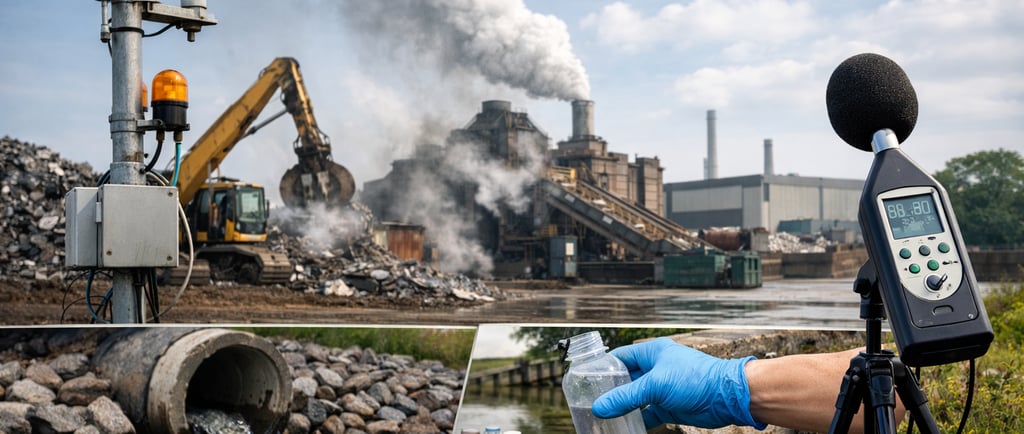
Instant Answer: Recyclers must secure and manage air, water, and noise permits to remain compliant and operational. The playbook includes identifying required permits, understanding key standards, tracking deadlines, avoiding common pitfalls, and implementing systems for ongoing audits—reducing regulatory risk without slowing facility operations.
Table of Contents
Why Air, Water, and Noise Compliance Matters for Recyclers
Defining the Permit Challenge: Risk and Opportunity
Key Regulatory Concepts Every Recycler Must Know
The Permit Playbook Framework: Zero Downtime Compliance
Permit Implementation Checklist and Decisions
Monitoring, Measurement, and Quality Control
Case Patterns and Practical Scenarios
Frequently Asked Questions
Embedded Five-Layer Toolkit for Recycler Permit Dominance
1. Why Air, Water, and Noise Compliance Matters for Recyclers
For scrap yards, electronics recovery, and metal recycling facilities, environmental permit compliance is more than a checkbox—it’s the backbone of sustainable and legal operations. The significance of air, water, and noise control manifests in three core business functions: risk management, operational continuity, and reputation building.
Regulatory Risk Management:
Every recycling operation falls under the oversight of the Environmental Protection Agency (EPA) and state or municipal environmental agencies. These bodies enforce the Clean Air Act, Clean Water Act (including the NPDES program), and a web of local ordinances for noise. According to the EPA, environmental violations by recyclers resulted in millions of dollars in fines nationwide in 2022 alone, with facility shutdowns and criminal prosecutions occurring in severe cases.
Operational Continuity:
Non-compliance can trigger immediate consequences—permit revocation, unplanned closures, or escalating enforcement actions. For example, in 2023, a Southeast scrap yard halted operations for six weeks following a missed air permit renewal, losing over $700,000 in revenue and causing downstream supply disruptions. Reliable compliance keeps your facility running without surprise interruptions.
Reputation and Community Trust:
Environmental compliance is increasingly public. Many states publish enforcement actions online, and social media gives nearby residents a direct voice. A facility that consistently meets air, water, and noise standards is less likely to face complaints, negative press, or activist scrutiny. Over 60% of commercial manufacturers surveyed in a 2022 industry study said strong environmental records directly improved local partnerships and reduced insurance premiums.
Sustainability and Growth:
With tightening environmental regulations and growing ESG (Environmental, Social, and Governance) expectations, compliance isn’t just about “what we must do”—it increasingly forms the foundation for sustainable facility growth, investor confidence, and customer acquisition.
Bottom Line:
Environmental permit compliance is essential. Managed well, it prevents regulatory headaches and supports the long-term success and expansion of recycling businesses.
2. Defining the Permit Challenge: Risk and Opportunity
The Multi-Layered Challenge
Recycling facilities must navigate an intricate landscape of air emissions standards (volatile organic compounds, particulate matter), industrial wastewater parameters (metals, pH, flow), stormwater pollution prevention, and mechanized noise regulation. Each process—shearing, shredding, torching, vehicle draining, or surface washing—carries unique compliance obligations.
Major Risk Elements:
Regulatory Citations:
EPA and state agencies can cite violations for excessive emissions, unmonitored discharges, or incomplete records. Citations not only impose fines but can also trigger mandatory corrective actions. In 2019, a Pennsylvania scrap processor was fined $850,000 after unpermitted stormwater discharges contaminated local waterways.Missed Deadlines:
A single missed renewal or reporting deadline can leave operations legally exposed. Unlike routine paperwork, permit lapses are often reported by state databases, creating a digital trail of noncompliance. In Texas, permit lapse led to an immediate order for operational shutdown pending investigation.Audit Risk:
Audits—both scheduled and unannounced—are a fact of life. Inspectors seek proof of compliance: records, emissions logs, water sampling data, staff training files, and real-time monitoring outputs. Lack of ready documentation delays compliance and can escalate into formal investigations.Staff and System Weaknesses:
In many facilities, permit management relies on overburdened staff or outdated paper logbooks, creating single points of failure. A study by the Institute of Scrap Recycling Industries (ISRI) found 41% of small yards had no digital tracking system for permit deadlines or self-audits.
The Opportunity in Proactive Compliance
Operational Advantage:
Organizations with an integrated permit management system aren’t just checking boxes—they’re building a scalable, expansion-friendly operation. Streamlined systems:
Enable faster response to regulator inquiries and customer questionnaires.
Open doors to reduced insurance rates and preferential status in supply contracts.
Support expansion by demonstrating robust compliance, making local governments and financial partners more likely to approve projects.
Case in Point:
A Midwest scrap metal yard adopted digital compliance tracking, integrating auto-reminders and mobile logbooks. Over two years, they cut time spent on permit tasks by 60% and faced zero enforcement actions—compared to two violations in the previous three years.
Compliance: Not Just Defense, but Growth
For high-performing recyclers, compliance is a proactive business tool, not just a defensive measure. Facilities that invest in training, automation, and SOPs find competitive advantages in audits, reputation, and cost control. This mindset shift is transforming the recycling industry from reactive to resilient.
3. Key Regulatory Concepts Every Recycler Must Know
To build a solid compliance foundation, every facility must master the following regulatory pillars:
Air Permits for Emissions and Equipment
Every process generating emissions—including shredders, shears, torch cutting, and balers—requires explicit air permit coverage. These range from minor source permits (e.g., Non-Title V) to major Title V (for larger emission sources). Permits specify:
Equipment or process covered
Allowable emission rates (e.g., pounds/hour of particulates or VOCs)
Monitoring and recordkeeping requirements
Reporting frequency (monthly, quarterly, semi-annual)
Good Practice:
Maintain up-to-date logs quantifying actual equipment usage and emissions against permit limits. Automated air monitoring is increasingly common as digital sensors drop in price and accuracy improves.
Water Permits: Wastewater, Stormwater, and Discharge
NPDES (National Pollutant Discharge Elimination System) Permits:
Any discharges of process wastewater to storm sewers, public treatment works, or the environment must have NPDES coverage. These permits include sampling requirements for heavy metals, oil & grease, pH, and flow.
Stormwater Pollution Prevention Plans (SWPPPs):
Most recyclers must implement SWPPPs, documenting how they minimize stormwater pollution from outdoor storage, vehicle processing, and waste piles.
Proven Statistic:
The American Society of Civil Engineers reported that over 25% of stormwater violations at industrial sites from 2020–2022 were due to missing or incomplete SWPPP documentation, not just site runoff readings.
Noise Permits and Controls
Local ordinances or state guidelines may prescribe maximum allowable noise levels, typically measured at property lines and in decibels (dBA). Noise violations often stem from equipment operations outside permitted hours or lack of monitoring. Increasingly, cities require routine reporting of noise data and complaint logs.
Compliance Calendar: Scheduling and Monitoring
Establish a master compliance calendar tracking:
Permit renewal deadlines (with multi-tier alerts)
Sampling dates and submittal deadlines
Scheduled self-audits and corrective action review
Training requirements
Entities to Manage:
Assign responsibility for each compliance area (air, water, noise) to dedicated staff, supported by backup and digital tools.
Self-Audits and SOPs
Internal inspections and SOPs ensure every compliance requirement is addressed, from sample collection protocols to daily logbooks and data validation. This documentation forms the backbone of “audit-ready” operations and is vital for rapid, transparent regulator response.
Robust Recordkeeping
Keep all compliance records—permits, logs, training docs, inspection reports—digitally accessible, backed up, and organized by permit type. According to EPA audit data, 72% of cited facilty records were missing at least one required document during spot inspections; robust records can prevent costly citations and prove due diligence in case of investigations.
4. The Permit Playbook Framework: Zero Downtime Compliance
The Core Operational Framework
To move from scattered paperwork and reactive scrambling to scalable, “zero downtime” compliance, implement this operational playbook:
Identify Permit Needs:
Conduct a full inventory of every regulated activity: shredding, drainage, surface washing, vehicle depollution. Map these activities to city, state, and federal requirements using a compliance matrix.Example:
If adding a new automotive fluid draining area, identify required hazardous waste, stormwater, and air permits.
Map Requirements:
Visualize requirements in a tracker—spreadsheets or compliance management software—listing:All permits required (air, water, noise)
Renewal windows and submittal deadlines
Responsible parties for each area
Related SOPs and monitoring regimes
Implement Controls and SOPs:
Standardize data collection, sampling, and reporting actions. Invest in monitoring technology—digital sensors, online logbooks, automated weather stations for stormwater, noise meters for property perimeter checks. Configure dashboard reporting for corrective actions.Monitor & Record:
Maintain real-time logs and audit trails. Use cloud-based storage for all reports, making data accessible for staff and inspectors. Set up automated flagging for anomalies or deadline proximity.Quarterly/Monthly Internal Auditing:
Schedule regular self-audits. Test all SOPs, capture deviations, and log findings. Successful recyclers treat audits as preemptive inspections—fixing issues before regulators spot them.Update:
Whenever an operational change or regulation update occurs (new equipment, process change, updated city ordinance), redo the permit requirements review, update SOPs, and retrain staff.
Walkthrough: Real Facility Example
Scenario:
A mid-sized steel scrap yard in Ohio adds a new hydraulic shear. Here’s how they apply the framework:
Step 1: Flag equipment as a new air emissions source; consult state EPA air division.
Step 2: Update permit matrix; assign air permit file ownership to EHS manager.
Step 3: Draft new SOP for recording shear operating hours and maintenance.
Step 4: Install continuous noise monitoring at the fence line facing a residential area.
Step 5: Schedule quarterly sampling at new stormwater outfall created by expansion.
Step 6: Train machine operators and maintenance techs on data collection, SOP compliance, and regulator engagement.
Step 7: Store every document, reading, and report in a shared compliance folder for internal and external audits.
This systematic approach allows the operation to remain fully compliant and scalable. In the event of regulator inquiries, all responses are swift and evidence-based.
Why This Framework Works
The zero-downtime compliance approach turns compliance from a regulatory burden into an operational pillar. According to a 2022 industry benchmarking report, facilities with standardized, digital compliance frameworks experienced 80% fewer violations and handled regulator audits in 50% less time compared to peers with manual or fragmented systems.
5. Permit Implementation Checklist and Decisions
Permit implementation fails for two reasons. Teams mis-scope what they need, or they treat the permit as a one-time event instead of a managed system. The goal is simple. You want permits that match real operations, you want controls that staff can run daily, and you want records that stand up during a surprise inspection.
Start with a scope that matches how recycling yards actually run.
5.1 Build the regulated activity map first
Do this before you touch an application.
Map each activity to an impact pathway:
Air drivers
Torch cutting, shredding, shearing, baling, material handling, truck traffic, and stockpiles. Air compliance often turns on particulate matter and fugitive dust, plus combustion sources if you run boilers, engines, or certain thermal units. Title V applies when you are a “major source,” and EPA summarizes the core thresholds as 100 tons per year for a criteria pollutant (default), and 10 tons per year for a single hazardous air pollutant or 25 tons per year combined for HAPs. Nonattainment areas can lower thresholds for the pollutant in question.
Water drivers
Outdoor storage, vehicle processing, outdoor draining, surface washing, and any industrial drainage that reaches an outfall or storm system. In the US, industrial stormwater often sits under NPDES stormwater coverage, commonly through a multi-sector general permit where applicable. EPA’s 2021 MSGP is the reference point where EPA is the permitting authority, and it ties permit coverage to a SWPPP, inspections, and monitoring.
Noise drivers
Shredders, shears, loaders, idling trucks, backup alarms, and impact noise from scrap handling. Noise is usually local, and that makes it politically sensitive. You need a baseline, controls, and a complaint process.
Output of this step should be a one-page “permit boundary statement.” It defines what operations and areas the permits cover. It also lists excluded activities so you can catch scope creep.
5.2 Decide your permit path early, then lock it
Most delays come from late changes. You avoid that by making the hard decisions up front.
Key decisions you must make in writing:
Air permit category
Do you qualify as a minor source, a synthetic minor, or a major source subject to Title V? You decide based on actual and potential-to-emit, not just what you think you emit. EPA’s Title V page gives the plain-language major source thresholds and flags that nonattainment can lower them.
Stormwater permit type
Can you use a general permit, or do you need an individual permit? Many facilities start under a general permit structure with SWPPP obligations, then get pushed into tighter requirements if they show repeated exceedances or site-specific issues.
Wastewater pathway
Do you discharge to surface waters, to a municipal system, or do you haul offsite? Each path triggers different permits, sampling, and reporting expectations.
Noise compliance model
Do you plan to comply by schedule, by boundary limits, or both? For many yards, a schedule-based model with boundary checks and documentation works best because it matches how complaints get filed.
5.3 Build the application package like an engineer, not a clerk
Permitting staff do not want marketing language. They want inputs they can verify.
Prepare these core artifacts before submission:
Site plan and drainage plan
Show stockpiles, traffic, processing zones, outfalls, stormwater flow direction, and control points.
Process description that matches your equipment list
List shredders, shears, torches, conveyors, baghouses, misting systems, and any engines. Include normal hours and peak scenarios.
Emissions basis
Document how you calculated emissions and controls. If you claim limits through controls, you must show inspection and maintenance methods that keep those controls effective.
SWPPP draft
In the US context, a SWPPP is not a binder that sits on a shelf. Under the MSGP model, it functions as the operational manual for stormwater risk control, inspections, monitoring, corrective actions, and training.
Noise baseline and receptor map
Identify nearest homes, schools, and sensitive receivers. Take baseline readings during representative operations, then use the data to set control priorities.
5.4 Expect public visibility, then manage it
Permitting is public in many places. That matters because complaints and public records can trigger inspection attention.
Build a “community-ready” packet:
What you do. When you operate. What controls you run. How to report issues. How you respond. Keep it factual and short.
5.5 Treat modifications as a controlled change process
Most violations happen after a change.
Typical triggers:
New shredder or shear, adding torch cutting capacity, adding outdoor storage area, expanding paved area, adding new outfall, changing drainage, or changing hours. In the EU context, permits often tie to BAT expectations and permit conditions reference BAT conclusions as a basis for requirements. Waste treatment BAT references under the Industrial Emissions Directive system often shape permit conditions.
Operational rule:
No new equipment goes live until you complete a permit impact review, update SOPs, update training, and confirm monitoring coverage.
6. Monitoring, Measurement, and Quality Control
Monitoring is where “paper compliance” turns into real compliance. It is also where you win audits fast.
A good monitoring program has three traits:
Clear ownership. Clear frequency. Clear response steps.
6.1 The monitoring spine
Set up a compliance calendar that includes:
Sampling windows, reporting due dates, inspection cadence, training cadence, maintenance checks for controls, and internal audit dates.
Add redundancy.
Assign a primary owner and a backup for each permit area. Missed reports and missed renewals still count as violations.
6.2 Air monitoring that matches real recycler risks
Recyclers often get hit on visible emissions, fugitive dust, and uncontrolled process emissions.
Air monitoring should include:
Control equipment performance checks
If you run baghouses, cyclones, wet suppression, or capture systems, log the checks that show they are working. Include differential pressure ranges, maintenance actions, and shutdown conditions.
Visible emissions and dust patrols
Run documented yard walks during active operations. Log observations, weather, wind direction, and corrective actions.
Activity logs tied to permit limits
Track operating hours and throughput for regulated equipment when permit limits depend on usage.
Incident documentation
Fires, smoke events, abnormal operations, and malfunctions must trigger a written incident record, root cause, and corrective action.
Why this matters in enforcement:
EPA settlements with recyclers often focus on failures to control emissions or run required capture systems. For example, EPA announced a Clean Air Act settlement with a scrap metal recycler in Flint, Michigan that required installation of a pollution capture and control system.
6.3 Stormwater monitoring that survives scrutiny
US stormwater enforcement is frequently about failures in basics, not exotic chemistry.
EPA’s MSGP structure places heavy emphasis on SWPPP implementation, inspections, and quarterly visual assessments in many cases. The permit text references routine inspections and quarterly visual assessments, including documentation requirements.
Use EPA’s monitoring guide to standardize how you sample, document, and store results, including definitions of “sampling” versus “monitoring,” and the practical steps around representative collection.
Stormwater monitoring that works in practice includes:
Quarterly inspection discipline
Inspect drainage controls, storage areas, and housekeeping conditions. Document findings, fixes, and the date completed.
Quarterly visual checks at outfalls
Collect grab samples when practicable and document color, odor, sheen, turbidity, and solids.
Analytical sampling where required
Use consistent labs and chain-of-custody forms. Keep calibration records for field meters.
Benchmark exceedance playbook
When results exceed benchmarks, trigger a defined corrective action timeline, then document what you changed. Do not argue with the data first. Fix the system, then validate.
What enforcement looks like:
EPA’s 2024 news release on a Kansas City scrap metal facility described alleged failures that read like a common pattern, including not updating and implementing runoff prevention practices, not performing inspections, and not training employees, plus a penalty and a compliance order.
EPA also posted a Clean Water Act public notice involving SA Recycling that included a civil penalty figure, showing how these actions become public records.
6.4 Noise monitoring that reduces complaints and citations
Noise is a human issue before it is a technical issue. People complain when noise feels unpredictable, late-night, or ignored.
Your noise program should include:
Baseline study during normal and peak operations
Measure at the property line, and at nearest sensitive receptors when possible. Record time of day, operations running, and weather.
Routine boundary checks
Do short checks during the loudest operations. Document results and compare to local limits or internal targets.
Complaint log and response protocol
Log the complaint, confirm the time window, pull your equipment activity logs, conduct a boundary check, and document your response to the complainant if appropriate.
Engineering and operational controls
Adjust scheduling, re-route trucks, install barriers, maintain equipment, use quieter backup alarms where allowed, and reduce impact noise through material handling practices.
For health context, WHO’s environmental noise guidance summarizes noise as a public health issue and gives a useful backbone for why communities react strongly. It is not a permit limit, but it helps you justify controls to management.
6.5 Quality control, the part most sites forget
You need QA because inspectors do not just review results. They review how you got them.
Minimum QA set:
Sampling SOPs
Who samples. How you avoid cross-contamination. Where you take grabs. How you store samples. How fast you deliver to the lab.
Data validation
Check for impossible values, missing units, missing dates, and broken chain-of-custody. You catch errors before they become “false reporting” questions.
Corrective action closure
Every finding needs a close-out record, with date, owner, and proof of fix.
7. Case Patterns and Practical Scenarios
These patterns show up across countries and permit systems. Treat them as reusable playbooks.
Pattern 1: “We had a permit, but we did not run the program”
This is stormwater’s most common failure mode. Facilities have coverage but fail inspections, SWPPP updates, training, or documented corrective actions. EPA’s Kansas City scrap metal enforcement example highlights this pattern directly.
What you do:
Assign stormwater ownership, schedule inspections, train staff, and treat housekeeping as a control, not a cleanliness preference.
Pattern 2: “We upgraded equipment, but we did not update the permit”
A new shear, shredder change, or expanded storage shifts your emission and runoff profile. Regulators treat the site as operating outside its permit basis when you do not revise.
What you do:
Run a change review before install. Trigger air and water reviews together because yard layout changes both airflow dust patterns and drainage.
Pattern 3: “Control systems existed, but we did not prove performance”
This is common in air cases. EPA settlements show that regulators care about capture and control being installed, maintained, and operated as required.
What you do:
Keep control checks simple and consistent. Build logs that show date, readings, abnormal conditions, and what you did.
Pattern 4: “We relied on one person”
When one EHS lead owns every deadline, you create a single point of failure. Staff turnover then becomes a compliance event.
What you do:
Create backups, shared storage, and shared calendars. Document tasks so a new person can step in within a day.
Pattern 5: “Noise became political”
Noise issues tend to escalate through local government, zoning boards, and media. Once it becomes political, regulators increase scrutiny across all permit areas.
What you do:
Measure noise, document controls, respond to complaints fast, and avoid late-night variability that triggers distrust.
Pattern 6: “Enforcement is trending up, so your margin for error shrinks”
EPA reported strong enforcement outcomes in FY 2024, including $1.7 billion in penalties, 1,851 civil cases concluded, and 8,500+ inspections. That signals higher inspection risk in practice, even for facilities that are not chronic offenders.
What you do:
Stay audit-ready. Keep records organized. Run internal audits like you expect a visit.
8. Frequently Asked Questions
Do I need a Title V air permit?
You may if you are a “major source” based on potential-to-emit and thresholds that depend on pollutants and area status. EPA’s Title V overview lays out the default 100 tpy criteria pollutant threshold and the 10 tpy single HAP or 25 tpy combined HAP thresholds, with lower thresholds possible in nonattainment areas.
If I am a minor source, can I relax?
No. Minor source status still comes with permit conditions, recordkeeping, and often visible emission and fugitive dust expectations. Minor sources also get cited for operating outside permit conditions, late reports, or missing records.
Do I always need an NPDES stormwater permit?
If your industrial activities discharge stormwater associated with industrial activity to waters of the United States, you typically need coverage under NPDES, either through a general or individual permit, depending on where you operate. EPA explains the role of the MSGP where EPA is the permitting authority and the effective dates for the 2021 MSGP.
What is the single most important stormwater document?
Your SWPPP, but only if it matches reality and staff follows it. Regulators will compare your written controls to what they see onsite and what your records prove.
How often should we inspect and visually check stormwater outfalls?
Permit conditions vary by authority, but quarterly inspections and quarterly visual assessments are common features in the MSGP model, with documentation expectations and limited exceptions.
What records do inspectors ask for first?
Permits and coverage letters, SWPPP and updates, inspection logs, sampling results, corrective action records, training records, and maintenance logs for control equipment. When you can produce these fast, you shorten inspections and reduce escalation risk.
What do we do when results exceed a benchmark or limit?
Treat it as a process failure, not a paperwork failure. Document the exceedance, run a root-cause review, install or tighten controls, retrain staff if needed, then show follow-up results and closure evidence.
How do we handle fires, smoke, and emergency water runoff?
Pre-plan. Build an emergency response plan that includes air incident documentation, runoff containment actions, and coordination steps. After any event, document the timeline, actions taken, and corrective steps so you can show control and due care.
How does this work outside the US?
The structure stays similar. You still map activities, set controls, monitor, and keep records. The legal instruments change. In the EU, the Industrial Emissions Directive approach and BAT reference documents for waste treatment shape permit conditions and monitoring expectations.
In the UK, regulators apply BAT-based expectations for metal shredders and waste operations in permitting and permit review work.
9. Embedded Five-Layer Toolkit for Recycler Permit Dominance
This toolkit is built to help you run compliance like an operating system. It is also built for buyers, lenders, and regulators who want proof, fast.
Layer 1: Permit inventory and obligation register
Build a single source of truth that lists every permit, every condition that requires action, every deadline, and every required record. Tie each obligation to an owner and a backup. Store permits, coverage letters, and regulator correspondence in the same place.
Layer 2: SOP library that operators can follow
Write SOPs that match the yard floor. Include photos if possible. Cover stormwater inspections, spill response, sampling steps, dust control checks, noise checks, and incident reporting. Train new hires within their first week, then refresh annually.
Layer 3: Monitoring and instrumentation plan
Use the monitoring guide approach for stormwater sampling so your methods stay consistent and defensible.
For air, standardize daily, weekly, and monthly control checks. For noise, standardize boundary checks and a complaint-driven verification process.
Layer 4: Audit-ready record pack
Create an “inspection folder” that always stays current:
Most recent inspections, latest sampling results, corrective actions with closure proof, training roster, and equipment maintenance logs. Keep it ready to print or share onsite within minutes.
Layer 5: External proof pack for customers and community
Many buyers now screen suppliers for environmental risk, and communities track repeat offenders. EPA’s FY 2024 results show how visible enforcement outcomes are becoming, with high inspection volume and large penalties.
Build a short proof pack:
A one-page compliance summary, your monitoring cadence, recent improvements, and your complaint response process. Keep it factual. Keep it current.
Connect
Your trusted partner for scrap metal procurement.
CONTACT
About
haroon@tdcventures.com
+1-307-655-7593
© 2025. All rights reserved.
NEWSLETTER