
Personalized Carbon Dashboards for Suppliers
Discover how AI-powered personalized carbon dashboards transform metals supply chains—boosting Scope 3 data quality, supplier engagement, and circular action to meet CBAM, CDP, and net-zero targets.
AI & DIGITAL ENGAGEMENT IN SUSTAINABILITY
Context and Why It Matters for Metals Supply Chains
Recent years have seen a seismic shift in how metals supply chains approach emissions accountability. Due to regulatory momentum, such as the European Union’s Carbon Border Adjustment Mechanism (CBAM) and SEC climate disclosures, global metals manufacturing now faces unprecedented scrutiny. According to McKinsey, Scope 3 emissions—those upstream and downstream not directly produced by the reporting company—regularly constitute upwards of 70-90% of total greenhouse gas (GHG) output in metals industries, dwarfing direct, on-site emissions (Scopes 1 and 2). For example, steel production in Europe alone faces strict decarbonization targets that demand robust, supplier-driven data for compliance and investment eligibility.
The magnitude of this challenge goes beyond numbers. Multinational buyers now enforce green procurement requirements. Public and investor scrutiny grows alongside net-zero pledges. The competitive bar has risen: failure to capture granular Scope 3 emissions data directly threatens contract eligibility, market entry, and access to capital.
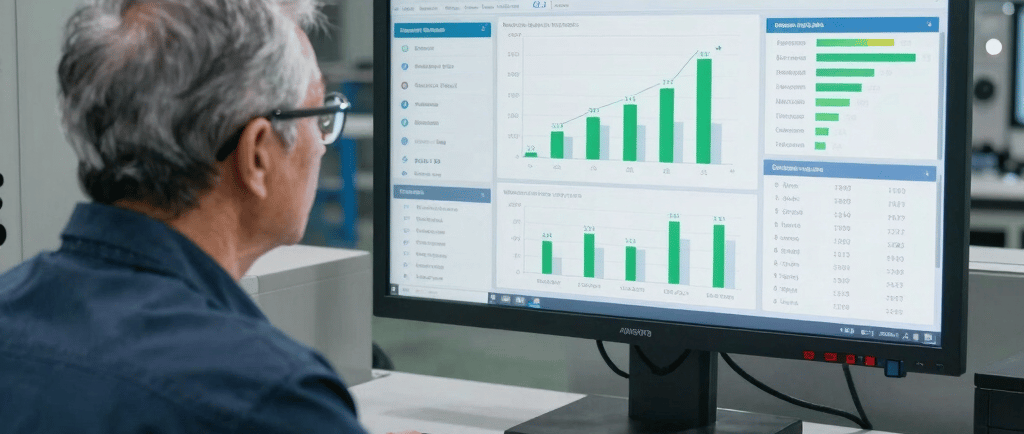
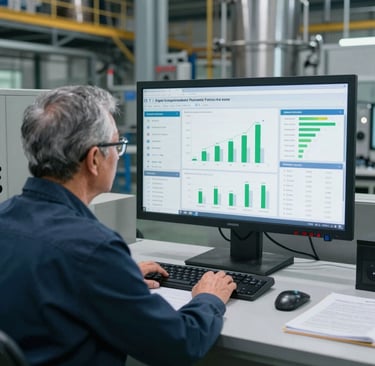
Personalized, AI-powered carbon dashboards are transformative in this context. Unlike static report templates, these tools provide real-time, supplier-specific data and analytics, empowering all tiers—from mining and smelting to component fabrication—to take actionable steps daily. Dashboards deliver curated recommendations, automated compliance reminders, and useful recycling workflows built for each supplier’s context and maturity, from global steelmakers to specialty alloys SMEs.
By reframing carbon accounting as an ongoing digital engagement, these dashboards enable measurable change. For metals suppliers, that means pivoting from viewing compliance as a burden to seeing it as a lever for innovation, cost saving, and competitive advantage. Procurement teams, meanwhile, gain confidence in chain-of-custody and emissions traceability—critical for reporting under bodies like CDP or CSDDD. With investment, contracts, and even reputation riding on ESG transparency, the operational stakes for metals suppliers in adopting these solutions could not be higher.
Key Fact:
A recent Accenture study found that organizations actively digitizing supplier carbon tracking are 2.3x more likely to hit annual reduction targets and 1.8x more likely to secure preferred partnership status in competitive procurement events.
2. The Problem: Scope 3 Blind Spots and Supplier Engagement
Traditional Obstacles
Across the global metals sector, Scope 3 emissions have remained stubbornly opaque. Why? Most supplier engagement platforms are built for compliance checklists, not real change. Supplier data collection is too often a one-off exercise: emails with Excel templates, annual survey links, and generic recycling apps that never take root in business-as-usual operations.
When sustainability teams and procurement officers rely on periodic, manual outreach for hundreds (or thousands) of upstream suppliers, major challenges emerge:
Data quality issues: Incomplete, inconsistent, or outright missing supplier data sabotages emissions inventories. Bloomberg cites that as of 2022, less than 30% of metal suppliers submit complete Scope 3 data to their buyers annually.
Resource overload: Teams spend vast labor hours chasing suppliers for updates, causing delays in ESG reporting cycles and increasing compliance risks.
Low supplier buy-in: Viewing decarbonization as an external requirement, not an operational opportunity, suppliers often deprioritize data submission and circular actions.
Competitive Risks
With governments tightening due diligence, and brands like Apple and Volvo demanding verified, continuous improvements in Scope 3, the bar for supplier performance is rapidly elevating. Suppliers unable to demonstrate auditable reduction in carbon and track record in recycling not only fall out of favor—many run the risk of contract exclusion and diminished revenue streams.
The net result? Existing tools fail to drive ongoing engagement, behavior change, or verifiable action. The future—and the pressing opportunity—lies in deploying AI-powered digital dashboards that convert Scope 3 accountability into meaningful, easy-to-measure progress.
3. Key Concepts and Definitions
Grasping the building blocks of AI-powered carbon dashboards is essential to understanding their transformative impact on metals supply chains:
AI Engagement
At the heart of next-gen dashboards, AI engagement refers to the dynamic application of machine learning algorithms and behavioral analytics to personalize communications, predict optimal interventions, and trigger actionable nudges for each supplier. AI interprets performance data, assesses risk of non-compliance, and intelligently cues up relevant actions, moving beyond traditional “one-size-fits-all” messaging.
Personalized Carbon Dashboard
Unlike conventional reporting tools, a personalized carbon dashboard adapts to each supplier’s context: benchmarking emissions, setting tailored reduction targets, and providing action checklists based on the supplier’s process maturity, product mix, and historical data. These dashboards leverage procurement platform integrations, recycling app connectivity, and real-time analytics to continuously update supplier profiles and recommendations.
Digital Behavior Change
Borrowing principles from behavioral science, digital behavior change in this setting applies nudge theory, gamification, and instant feedback to move suppliers from passive awareness to active participation. Techniques include congratulatory messages for progress, visual achievement badges, peer benchmarking, and “next step” prompts—tools proven in workplace wellness and digital banking, now optimized for industrial sustainability.
Recycling Apps Integration
Whereas traditional recycling software operates in silos, embedded recycling apps within the dashboard ecosystem link scrap collection, sorting, and material returns directly to emissions reporting, making it seamless for suppliers to record circular actions. For instance, suppliers can schedule pickups, submit documentation photos, or track closed-loop returns directly through single sign-on (SSO) environments.
Scope 3 Reporting Owner
This strategic role oversees the collation, quality assurance, and verification of upstream supplier emissions data—often a sustainability manager or procurement team lead. Responsible for alignment with frameworks like the GHG Protocol, they use dashboards to monitor compliance status, track improvement over time, and address data anomalies proactively.
Circular Actions
These are tangible, trackable interventions that close resource loops—e.g., increasing recycled content in production, reducing single-use packaging, participating in shared scrap pools, or implementing take-back programs. Circular actions directly boost both Circularity KPIs and Scope 3 performance, key pillars in the ESG metrics buyers demand.
4. From Awareness to Action: The Carbon Dashboard Framework
Core Framework Explained
Personalized carbon dashboards follow a maturity model that systematically advances suppliers through stages of awareness, engagement, and verified action:
1. Onboarding & Baseline Assessment
Suppliers receive curated onboarding experiences—video walkthroughs, interactive guides, and SSO links—tailored for digital adoption regardless of company size. The AI engine pulls relevant existing data from ERP and procurement systems, minimizing manual entry and reducing onboarding friction. Baseline metrics on recycling rates, energy consumption, and emissions are established, leveraging both supplier-filled digital forms and connected IoT/sensor feeds where applicable.
2. Segmentation & Personalization
AI-driven clustering sorts suppliers based on process type (e.g., primary smelting, secondary remanufacturing), region, and sustainability maturity. Dashboards generate custom KPIs—such as “emissions per ton” for steel or “percent post-consumer scrap input” for aluminium—making benchmarking both fair and actionable.
3. Continuous AI Feedback & Nudges
No more annual “black hole” data requests. Instead, AI algorithms analyze new data streams in real-time, automatically surfacing personalized recommendations: e.g., “Switching your feedstock to 50% recycled content would cut your monthly emissions by 10%.” Nudges also include “missed-action” reminders, motivational alerts (“you’re in the top 15% for recycling improvements!”), and dynamic infographics to visually track progress.
4. Action Modules for Measurable Change
Beyond carrot-and-stick, dashboards embed actionable toolkits. Suppliers can:
Book a virtual waste audit via an app integration,
Download tailored efficiency playbooks,
Access vetted secondary materials suppliers,
Schedule routine recycling pickups that are instantly logged as circularity improvements.
Each action generates a digital record, facilitating both supplier and buyer audits. Integrating these modules with existing business systems (procurement software, recycling provider apps) reduces platform fatigue and multiplies impact.
5. Gamification & Peer Benchmarking
Studies show peer visibility increases participation—suppliers can see anonymized leaderboards, earn digital certifications and badges, and unlock exclusive best-practice content. Highlighting high performers and improvement trends fosters a healthy, competitive spirit proven to drive external supplier buy-in.
6. Automated Reporting & Seamless Integration
All data feeds—recycling actions, emissions data, circularity metrics—are automatically compiled into real-time dashboards for both suppliers and buyers. Automated email recaps, instant alerts, and direct ERP/procurement platform integration ensure that internal teams and external partners always work from the same, verified data—enabling on-demand Scope 3 disclosures and third-party audits.
Step-by-Step Process: Example in Action
Import baseline data—automation reduces manual errors, ensures up-to-date figures.
AI segments suppliers and identifies risk/opportunity clusters using both quantitative and qualitative signals.
Individual dashboards set “stretch” targets with AI-calibrated achievability, building supplier confidence.
Ongoing nudges maintain momentum—whether it’s a text reminder to schedule a scrap collection, or a congratulatory message for hitting a milestone.
Engagement analytics measure not just who logs in, but who takes action, completes circularity modules, or improves data quality.
Recommendations adapt as suppliers progress, with advanced modules unlocked for mature performers.
Full integration supports data transfer into procurement award systems, ESG compliance dashboards, and regulatory reporting portals.
Automated notifications highlight top performers and flag non-responders, creating continuous improvement loops.
Dashboards evolve with user behavior—with AI retraining modules on what interventions most reliably drive impact.
Worked Example (Metals Supplier: ExampleCo Steel)
ExampleCo Steel, a mid-tier supplier, completes onboarding, and their recycling stats are automatically uploaded via integration with the preferred recycling app. AI spots missed opportunities in scrap returns. The dashboard nudges facility managers: “Increase closed-loop scrap use to boost your circularity score by 12%—see how with the Verified Partner Recycling App.” The company books recycling pickups within minutes, and completed actions are tracked, verified, and reported against both internal targets and customer ESG scorecards. The cycle of data, AI-powered suggestions, and digital action closes the loop.
5. Implementation: How to Build Personalized Carbon Dashboards That Suppliers Actually Use
The hardest part of supplier carbon reporting is rarely the math. It is adoption. Metals buyers can procure software, define templates, and issue supplier codes of conduct, yet still end up with thin primary data, weak engagement, and poor repeat participation. That is why implementation has to start with operating reality, not platform features. In 2025, CDP’s supply chain program alone involved roughly 45,000 suppliers, which shows the scale at which buyers are now trying to gather comparable environmental data. At the same time, SBTi continues to require meaningful Scope 3 coverage for companies whose value-chain emissions dominate their footprint, and its guidance ties supplier engagement targets to getting suppliers onto science-aligned pathways. In practice, that means your dashboard cannot be a static disclosure portal. It has to become the operating system through which suppliers report, improve, and prove progress over time.
A strong rollout begins with supplier segmentation. Metals supply chains are too varied for a single onboarding flow. A primary aluminium smelter, a secondary copper recycler, a toll processor, and a regional fabricator do not start with the same data maturity, cost structure, or emissions profile. The dashboard should therefore classify suppliers into at least four groups at launch: strategic high-emissions suppliers, high-spend but low-data suppliers, fast followers with existing ESG systems, and SMEs with limited reporting capacity. This is not cosmetic. It determines which suppliers receive product carbon footprint requests, which receive facility-level activity data templates, which are routed to lighter workflows, and which need technical support before they can report reliably. WBCSD’s latest product carbon footprint guidance places heavy emphasis on calculation standards, data requirements, and data quality, which is another way of saying that supplier requests must match what the supplier can credibly calculate.
The second step is to reduce reporting friction as far as possible. If suppliers have to leave their normal workflow, hunt for historic fuel and electricity records, translate unit systems, and manually interpret category boundaries, completion rates collapse. The dashboard should pull from procurement, ERP, logistics, utility, and recycling records wherever possible, then ask suppliers only for the missing pieces. For metals, that usually includes energy mix, process route, recycled content, transport legs, yield loss, and treatment of scrap and by-products. The best systems also separate required fields from advanced fields. Required fields support immediate disclosure and risk screening. Advanced fields improve precision over time. This matters because GHG Protocol’s ongoing Scope 3 revision work is moving toward stronger integrity and usability of Scope 3 data, with more attention on data quality and reporting boundaries. Companies that design for staged data improvement now will be in a far better position than those that keep rebuilding one-off templates.
Third, the dashboard has to connect carbon to money, contracts, and operational choices. Suppliers do not sustain engagement because a buyer asks nicely. They stay engaged when the system shows what actions change commercial outcomes. In metals, that can mean showing the emissions effect of higher recycled input, the energy effect of switching process routes, the margin effect of lower scrap loss, or the procurement advantage tied to verified data submission. This approach mirrors the supplier-engagement playbooks now being pushed by SBTi and procurement-focused decarbonization guidance: require, enable, and incentivize. Some organizations already embed decarbonization expectations into procurement with thresholds, timelines, and rewards. That direction is likely to intensify as CBAM moves into its definitive regime from 2026 and importers prepare for the first declaration and certificate surrender deadline on 30 September 2027 for 2026 embedded emissions.
For metals specifically, circularity cannot sit in a side module. It has to sit inside the core carbon logic. World Steel states that every tonne of steel scrap used avoids 1.5 tonnes of CO2, as well as 1.4 tonnes of iron ore, 740 kilograms of coal, and 120 kilograms of limestone. For aluminium, Reuters reported in 2025 that recycling uses only about 5% of the energy required for virgin production. These are not minor efficiency gains. They are dashboard-worthy action pathways. A supplier should be able to log scrap returns, recycled-content substitution, by-product recovery, and packaging redesign, then see the carbon and material effects update on screen. If the platform cannot connect circular actions to auditable emissions outcomes, it will fail to drive the daily behaviors that procurement teams actually need.
The most effective dashboard builds also include a supplier success layer, not just a software layer. That means multilingual onboarding, office hours, prebuilt sector templates, escalation routes for methodological questions, and quarterly business reviews for top suppliers. Many buyers skip this because it looks expensive. In reality, poor supplier support is more expensive. It drives rework, estimation, non-response, and audit risk. A better model is to launch in waves. Start with the suppliers that represent most embedded emissions or spend. Set a 90-day baseline window, a six-month improvement cycle, and a 12-month assurance plan. Then expand outward. This phased design reflects how serious supplier engagement programs already operate. It also respects the reality that only a small share of suppliers today can provide high-confidence, product-level carbon data without support. Procurement guidance published with WBCSD-backed materials in 2025 noted that only 2% of suppliers reported product-level carbon footprints in one cited benchmark, while 56% still had no targets in place. That gap is exactly why personalization matters.
6. Measurement: What to Track, What to Verify, and What Proves the Dashboard Is Working
A personalized carbon dashboard should be judged on three layers at once: data quality, behavior change, and emissions outcomes. Most programs fail because they measure only one. If you track only logins, you get activity without impact. If you track only estimated emissions, you may miss whether suppliers are actually improving their underlying data and operating choices. The right measurement architecture starts by separating leading indicators from lagging indicators. Leading indicators tell you if the dashboard is changing supplier behavior now. Lagging indicators tell you whether those actions are reducing emissions, improving circularity, or lowering reporting risk later.
The first group of metrics should focus on coverage and completeness. What share of supplier emissions is covered by primary data rather than spend-based proxies? What share of high-risk suppliers has submitted facility or product-level data? How many suppliers have passed basic validation checks for boundaries, units, time periods, and methodology? These measures matter because coverage is the bridge between ambition and decision-making. CDP’s Supplier Engagement Assessment explicitly rewards reporting of upstream Scope 3 emissions and third-party verification because this is what gives confidence in the reported numbers. In other words, the dashboard should not just collect more data. It should collect data that is decision-grade.
The second group should focus on data quality. For a metals dashboard, that means tracking source hierarchy. Was the number estimated from spend? Derived from secondary datasets? Calculated from site activity data? Verified by a third party? Product carbon accounting guidance from WBCSD’s PACT work is increasingly explicit that consistency, comparability, standards alignment, and data quality are central to supply-chain carbon exchange. A mature dashboard should therefore score each supplier record on timeliness, methodological alignment, granularity, and verification status. It should also flag where old data remains in use past acceptable thresholds. Without this layer, buyers end up mixing precise and weak data in the same procurement scorecard and treating both as equally reliable.
The third group should measure engagement depth. This is where most programs learn whether the dashboard is simply being opened or actually used. Track completion of onboarding, repeat submission rate, action-module usage, response time to nudges, correction turnaround, and percentage of suppliers moving from passive reporting to active reduction planning. Add behavioral markers such as whether suppliers set targets, nominate owners, book technical sessions, or complete circularity workflows. These are the signals that the platform is becoming part of supplier operations. SBTi’s supplier-engagement approach and CDP’s guidance both point in the same direction: the goal is not a disclosure event, but an ongoing engagement cycle that turns expectations into supplier action.
The fourth group should track operational and financial outcomes. In a metals context, emissions intensity per tonne, recycled content share, scrap recovery rate, return rate of production offcuts, transport-mode shifts, and energy mix changes are the core performance measures. Where possible, the dashboard should convert these into commercial terms: avoided carbon cost exposure, likely procurement score improvement, reduced audit effort, avoided raw-material use, and margin protection from lower waste. This is where circularity standards such as ISO 59020 become useful. They give organizations a structured way to measure and assess circularity performance with consistent indicators, which is exactly what supplier dashboards need if they want to link material-loop improvements to carbon and procurement decisions without relying on vague sustainability claims.
A final measurement layer should focus on system credibility. Buyers should be able to answer five hard questions at any moment. How much of our reported supplier footprint is backed by primary data? How much of that primary data is current? Which suppliers improved in quality tier this quarter? Which actions delivered the largest verified reduction? Which suppliers remain commercially important but methodologically weak? If the dashboard cannot answer those questions on demand, it is not ready for procurement decisions, CBAM preparation, customer reporting, or financing conversations. The best systems do not wait until year-end to discover data problems. They expose them early, assign them, and measure closure rates. That is what turns the dashboard from a reporting interface into a management tool.
7. Case Scenarios: What Good Looks Like in the Real World, and Where This Model Is Heading
The clearest proof that personalized carbon dashboards matter is that the market is already moving toward supplier-specific carbon transparency, even if the tooling quality still varies widely. Consider the automotive and metals link. In 2025, Mercedes-Benz highlighted low-carbon aluminium from Norsk Hydro for its electric CLA, with Hydro’s aluminium reported at about 3 kilograms of CO2 per kilogram compared with a global average of 16.7 kilograms, helped by renewable power and recycled material. That is the commercial future in one example: buyers do not just want an annual sustainability PDF. They want specific, supplier-level carbon characteristics tied to actual products and purchasing decisions. A personalized dashboard is how that information becomes repeatable, comparable, and operational across hundreds of suppliers rather than one flagship deal at a time.
A second case comes from steel and scrap. World Steel reports that scrap use materially lowers emissions and raw-material demand, but scrap supply itself is constrained and strategic. That means a dashboard cannot simply tell every steel supplier to use more scrap and declare victory. It has to identify where scrap substitution is feasible, where yield improvement will matter more, where energy switching is the better lever, and where data certainty is still too low for confident decision-making. This is where personalization earns its name. In one supplier cohort, the biggest gain may come from closed-loop scrap programs. In another, it may come from electricity procurement, logistics changes, or more accurate process-route data. The dashboard becomes valuable when it helps suppliers see their best next move instead of pushing generic climate advice.
A third case is not from metals, but its structure is directly transferable. Salesforce’s supplier engagement case study with SBTi describes a model built around requiring, enabling, and incentivizing suppliers to set science-based targets. That logic is exactly what metals procurement teams need, especially where they buy from a mix of large industrial firms and smaller specialist processors. The reason this model translates well is simple: supplier decarbonization fails when companies rely on mandates alone. It scales when expectations, support, and commercial signals all move together. A good carbon dashboard is the delivery mechanism for that model. It is where the requirements are shown, the guidance is delivered, and the incentives become visible.
A fourth signal comes from the scale of disclosure itself. CDP reported that more than 22,100 companies disclosed environmental data through CDP in 2025, and its supply-chain program reached about 45,000 suppliers. That tells you two things. First, climate-related supplier data is no longer a niche request. Second, standardization pressure is rising. Suppliers will increasingly be asked to provide the same classes of data to multiple customers, across multiple jurisdictions. The winners will be the suppliers and buyers who build once, govern well, and reuse high-quality data many times. Personalized dashboards support that future because they reduce duplicate reporting, preserve audit trails, and improve comparability across customer requests.
Where does this lead by the late 2020s? Three shifts are already visible. First, carbon data is moving closer to product and shipment level, pushed by product carbon footprint standards and procurement demand. Second, circularity is moving from narrative to measurable performance, supported by standards such as ISO 59020. Third, supplier carbon data is becoming more commercially consequential because of border mechanisms, customer scorecards, and financing expectations. The practical effect is that carbon dashboards for suppliers will stop being side tools owned only by sustainability teams. They will become shared infrastructure across procurement, operations, finance, compliance, and commercial teams.
Conclusion: Why Personalized Carbon Dashboards Will Separate Leaders From Suppliers Who Get Left Behind
Personalized carbon dashboards are quickly moving from useful sustainability tools to core commercial infrastructure for metals supply chains. That shift is happening because the external pressure is no longer theoretical. CDP says more than 270 major buyers asked about 45,000 suppliers to disclose through its Supply Chain program in 2025, which shows how wide supplier-level climate scrutiny has already become. At the same time, the EU’s CBAM has entered its definitive phase in 2026, with the first declaration and certificate surrender deadline set for 30 September 2027 for 2026 embedded emissions. In plain terms, supplier carbon data is now tied more directly to market access, procurement decisions, audit readiness, and cost exposure.
For metals companies, this changes the role of supplier engagement completely. The old model, annual templates, scattered spreadsheets, and generalized follow-up emails, cannot keep up with the speed, granularity, and verification demands now shaping the market. Buyers need fresher data. Suppliers need clearer guidance. Sustainability teams need proof that actions were taken, not just promises made. A personalized dashboard solves that only when it is built as a working system for onboarding, segmentation, action tracking, circularity measurement, and reporting discipline. That is the difference between a portal that collects data and a platform that changes supplier behavior. Standards are also moving in this direction. ISO 59020 provides a structured way to measure and assess circularity performance, which strengthens the case for linking recycling, material recovery, and carbon data in one supplier-facing environment.
The strategic upside is bigger than compliance. A well-built dashboard helps suppliers understand where they stand, what they need to fix next, and which actions will matter most commercially. It helps buyers identify weak data, prioritize intervention, compare suppliers more fairly, and reward credible improvement. It also creates a repeatable audit trail that becomes more valuable every year as customer requests, regulations, and financing scrutiny all tighten. In a market where carbon quality, traceability, and circularity claims are being examined more closely, the companies that build these systems well will make better sourcing decisions, reduce reporting risk, and strengthen their position with customers who increasingly expect decision-ready emissions data.
The bottom line is simple. Personalized carbon dashboards are not the conclusion of supplier decarbonization. They are the mechanism that makes it operational. In metals supply chains, where Scope 3 emissions are large, supplier maturity varies widely, and circular material flows can materially change carbon outcomes, that mechanism is becoming essential. The leaders will be the companies that treat supplier carbon data as a managed business system now, before the market fully forces everyone else to do the same.
Connect
Your trusted partner for scrap metal procurement.
CONTACT
About
haroon@tdcventures.com
+1-307-655-7593
© 2025. All rights reserved.
NEWSLETTER