
Refill & Reuse in Industrial Packaging: Drums and IBCs
Discover how circular economy models transform steel drums & IBCs into reusable assets. Learn strategies to cut costs, reduce waste, and ensure compliance.
WASTE-TO-RESOURCE & CIRCULAR ECONOMY SOLUTIONS
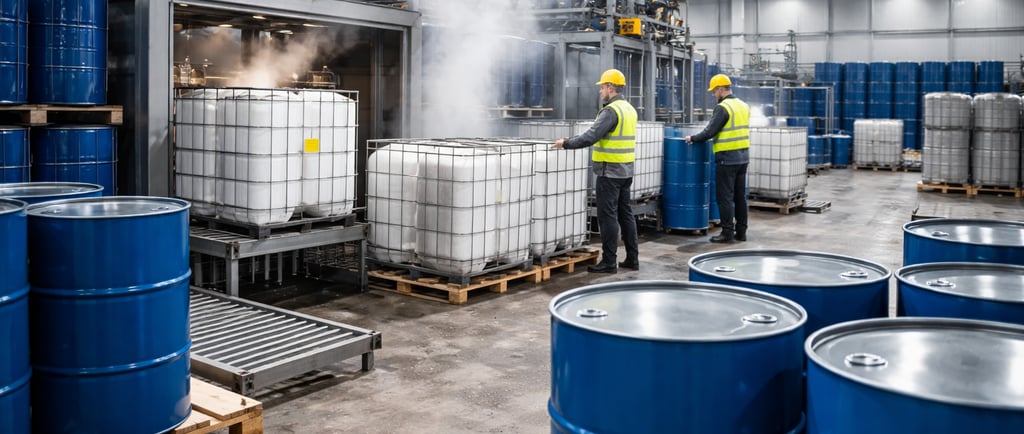
Introduction: Unlocking the Full Potential of the Circular Economy in Industrial Packaging
Industrial packaging—particularly steel drums and intermediate bulk containers (IBCs)—serves as the backbone of supply chains across sectors ranging from chemicals to food production. Although often eclipsed by consumer-facing sustainability efforts, these durable assets play a pivotal role in shaping global material flows. As climate concerns and resource scarcity intensify, businesses increasingly recognize the financial and ecological value in rethinking how these containers are produced, circulated, and managed.
By transitioning from the traditional linear “take-make-dispose” approach to closed-loop systems focused on refill, reuse, and remanufacturing, enterprises are not only mitigating environmental impact but also unlocking significant economic and regulatory advantages. Circular strategies in industrial packaging drive new efficiencies, reduce operational cost, and reinforce compliance with a rising tide of global sustainability mandates. These practices transform what was previously regarded as ‘waste’ into a resource—turning packaging from a sunk cost into a value-generating asset.
This article digs into the latest blueprints, enabling tools, and business models that are redefining how steel drums and IBCs maintain their value in circulation. We will explore how industry leaders leverage technology and service-based models to support a regenerative supply chain, offering statistics, case studies, and emerging trends that illustrate the market’s rapid evolution.
Understanding the Stakes: Why Focus on Drums and IBCs?
The Carbon and Cost Footprint of Industrial Containers
Steel drums, typically 200 liters (55 gallons) in volume, and IBCs, usually 1,000 liters (275 gallons), are essential for bulk transportation of a wide array of goods. Manufacturing them is resource-intensive—producing a single steel drum emits an estimated 40–60 kg of CO₂, and crafting an HDPE IBC produces nearly 80 kg of CO₂. Extrapolated to the global scale, with an estimated 450 million new steel drums and over 60 million IBCs manufactured each year (source: Industrial Packaging Association), the carbon and cost impact is immense.
Linear Paradigm: Missed Opportunities
Historically, after delivering their contents, these containers would often end up landfilled, downcycled, or incinerated, leading to:
High material input: Frequent ordering of new packaging strains both budgets and raw material supplies.
Waste management challenges: Steel and plastic containers can persist in environments for centuries, creating long-term waste heaps and hazardous legacy issues.
Value loss: Each non-reused drum represents a financial outlay that could otherwise generate multiple cycles of productivity.
The Circular Shift: Economic and Environmental Gains
Shifting to refill and reuse models generates quantifiable rewards:
Reduced CO₂ emissions: Life-cycle analyses show that reusing drums can cut the per-use carbon footprint by up to 85% compared to single-use models.
Material savings: Each reuse defers extraction and processing of new steel or plastics.
Lowered cost per use: With strategic assets in circulation, businesses often report payback periods of less than a year.
Alignment with regulations: Legislation like the EU’s Waste Framework Directive and US EPA’s RCRA encourage or require reuse, recycling, or extended producer responsibility (EPR).
Market Drivers
Recent global market research (Grand View Research, 2023) projects the industrial reused packaging market to surpass $13 billion by 2027, fueled by regulatory tailwinds, cost pressures, and growing stakeholder demand for circular solutions.
Blueprints for a Refillable-Ready Future
For a packaging system to operate in true circularity, its foundational design must facilitate durability, traceability, and efficient reverse logistics. Leaders in the industrial packaging industry are deploying the following blueprints:
1. Product Design for Durability and Multiple Lifecycles
Material Engineering
Choosing corrosion-resistant stainless steels extends usable lifespans, allowing containers to withstand aggressive chemicals, repeated cleaning, and physical impact. Polyethylene IBCs now often feature UV stabilizers and multi-layer construction to prevent degradation and leaching.
Modularization
Adopting modular designs—with easily replaceable gaskets, valves, and liners—lowers costs, minimizes downtime, and supports remanufacture rather than replacement. For example, Schütz, a global IBC supplier, offers swap kits whereby parts are replaced and reused multiple times, achieving up to seven life cycles per unit.
Cleanability and Standardization
Smooth internal ply and specialized coatings prevent contamination, ensuring rapid turnover and safety. Simultaneously, adopting sector-wide sizing and connection standards guarantees compatibility across manufacturers and users, fostering efficient asset pooling.
Case Study: Shell Chemicals
Shell’s adoption of standardized, modular steel drums equipped with anti-corrosive coatings across their European supply chain led to a 33% reduction in annual packaging spend and slashed single-use drum waste to near zero within three years.
2. Digital Traceability: The Backbone of Reuse
IoT and Smart Asset Management
Next-generation drums and IBCs deploy RFID chips, QR codes, and GPS sensors integrated with enterprise resource planning (ERP) systems. These allow real-time monitoring of container:
Geolocation and movement
Fill levels, temperature, and humidity (critical for pharma and food sectors)
Maintenance and hygiene status
Compliance and Transparency
Digital records satisfy regulatory requirements and reassure clients, especially for hazardous materials, providing tamper-proof custody chains and cleaning logs.
Real-World Example
BASF tracks nearly 100,000 drums globally via IoT, monitoring not only logistics but also predictive maintenance, reducing container loss by 17% within 18 months.
3. Reverse Logistics at Scale
Discovering Circular Returns Efficiency
Centralized depots or regional hubs allow for collection and rapid turnaround of used containers.
Partnership models with specialized 3PL providers leverage route optimization algorithms—drastically cutting empty-mile emissions and handling costs.
Automated cleaning stations deploy robotics and closed-loop water systems, ensuring sanitation while minimizing resource consumption.
Fact: Logistics Network Innovation
CHEP (a leader in pallet and container pooling) estimates that route-optimized reverse logistics networks save clients up to 30% on transportation compared to traditional “distributors-only” container returns.
Tools Powering Industrial Packaging Circularity
Emerging digital and automated tools are rapidly scaling industrial packaging circularity. Here are the most impactful innovations:
IoT-Enabled Asset Tracking
End-to-End Container Visibility
IoT-powered hardware in every drum or IBC feeds real-time data to cloud platforms, providing:
Usage analytics: Detect how often and where each container is reused, supporting asset optimization.
Loss prevention: Sensors alert owners of unauthorized movements, curbing shrinkage.
Impact: Data-Driven Decisions
According to McKinsey (2021), companies leveraging IoT-based asset management achieve 15–25% higher utilization rates for their packaging fleets.
Automated Cleaning & Reprocessing Facilities
Robotics and Water Reuse
Fully automated clean-in-place systems use:
Machine vision to inspect for residue and wear
Programmable robotic arms for consistent cleaning, reducing human labor cost
Advanced filtration to recycle up to 90% of cleaning water, as documented by Greif’s drum reconditioning plants
Regulatory Benefit
These systems now meet stringent FDA and REACH guidelines for food and pharma packaging reuse.
Blockchain for Tamper-Proof Compliance
Secure Data Sharing
Blockchain’s distributed ledger framework ensures every sterilization or repair event is logged and unalterable. This:
Eases compliance with hazardous materials transport regulations (e.g., ADR, DOT)
Streamlines multi-party audits, enabling cross-border reuse
Industry Example
Dow Chemical’s collaboration with blockchain startup Chronicled reduced regulatory paperwork and audit times by 40% for cross-border chemical shipments.
Business Models: Monetizing Metal Circulation
Circularity thrives when business models put service over sales—monetizing usage cycles rather than one-off container transactions.
1. Container Pooling & Leasing
Pay-Per-Use Advantage
Major providers like Mauser and Schütz own and maintain vast fleets, offering subscription-like access to clean, certified containers. Clients benefit by:
Avoiding upfront capital expense
Paying only for the actual use period
Leveraging automated logistics and cleaning
Case Study: IFCO
IFCO’s pooling model for food IBCs in Europe delivers reuse rates above 95%, with annual environmental savings equivalent to removing 50,000 cars from roads.
2. Take-Back & Remanufacture Programs
Closed-Loop Loyalty
Producers guarantee end-of-life buyback, managing all inspection, cleaning, and component swaps. Clients enjoy streamlined compliance, quality assurances, and sustainability reporting.
Success Story
Mauser’s buyback and remanufacturing cycle more than doubles a steel drum’s usable lifespan, reducing client packaging costs by nearly 50% versus one-way models.
3. Integrated Reverse Logistics as a Service
Third-Party Specialization
Companies like Rebox and CleanHarbors act as neutral logistics experts, serving multiple industries and optimizing return flows. This mutualized approach delivers lower per-unit costs, better route optimization, and industry-wide benchmarking.
Market Impact
Integrated reverse logistics services are projected to grow by 18% CAGR through 2028 (Allied Market Research), driven by multi-user cost-sharing and data aggregation advantages.
The Circular Advantage: Tangible Benefits for Industry
Cost Savings
Independent studies and customer reports confirm: When reuse and remanufacturing are implemented, packaging costs drop by 50–70% over container life.
Environmental Impact
Coca-Cola EuroPacific Partners, after adopting reusable IBCs for syrup concentrates, slashed packaging-related waste by over 1,500 tons annually, with parallel reductions in carbon intensity.
Regulatory Readiness
As global EPR regulations expand, packaging reuse not only meets but future-proofs compliance, helping businesses sidestep costly landfill taxes and plastic bans.
Brand Value and Stakeholder Perception
Circular packaging strengthens ESG scores and resonates deeply with corporate procurement teams and end-users, differentiating brands in increasingly sustainability-driven markets.
Overcoming Challenges: Ensuring Safety and Scalability
Contamination and Safety
Strict industry standards (including ISO 9001, 22000, and HACCP) require validated cleaning, testing, and issuance protocols for reused containers, especially for sensitive applications.
Logistical Hurdles
Deploying digital infrastructure and forging cross-industry partnerships is crucial to streamlining container returns and avoiding bottlenecks.
Market Confidence
Educating users about the reliability and cleanliness of reused packaging, backed by transparent audit trails, accelerates market adoption.
Best Practice
Global chemical manufacturer BASF relies on AI-powered cleaning monitoring and automated certification, reassuring clients and regulators alike.
Future Horizons: Innovations Shaping Next-Gen Circular Packaging
AI-Driven Lifecycle and Predictive Analytics
Machine learning algorithms now predict failure points and optimum retirement/re-manufacturing cycles, maximizing asset lifespan and ROI.
Circular Ecosystem Integration
Leading companies are developing zero-waste “circular hubs”—integrated logistics facilities that handle cleaning, refurbishment, and dispatch for multiple supply chain players.
International Standards
The push toward unified global standards for reusable industrial packaging (e.g., ISO 21067-2) will further remove barriers for cross-border commerce and reporting, magnifying impact.
Market Outlook
Analysts forecast a compound annual growth rate (CAGR) of 16% for refillable industrial packaging through 2030, as major industries and regions accelerate their circular transitions.
Conclusion: Industrial Packaging as a Catalyst for the Circular Economy
Every additional lifecycle achieved by a steel drum or IBC conserves critical resources, reduces emissions, and contributes to a more resilient, future-ready supply chain. Adopting refill and reuse blueprints, digital traceability, and new service-based business models transforms industrial packaging from a cost center into an engine of sustainability and value creation.
Now is the time for proactive companies to lead the charge—reimagining packaging as a circular asset and solidifying their place at the forefront of the regenerative economy.
Are you ready to transform your industrial packaging strategy? Implement these best practices to future-proof your business and contribute meaningfully to a circular, resource-secure world.
Sign up to our newsletter for exclusive updates, in-depth case studies, and the latest insights on circular economy innovations in industrial packaging and beyond.
Connect
Your trusted partner for scrap metal procurement.
CONTACT
About
haroon@tdcventures.com
+1-307-655-7593
© 2025. All rights reserved.
NEWSLETTER