
Refurbish Marketplaces for XR Devices
Discover why XR refurbishment is becoming a serious market opportunity. Learn how trusted refurbish marketplaces for VR, AR, and mixed reality devices can drive affordability, reduce e-waste, and build buyer confidence through certified grading, repair standards, and circular economy models.
IMMERSIVE TECH RECYCLING & CIRCULAR ELECTRONICS
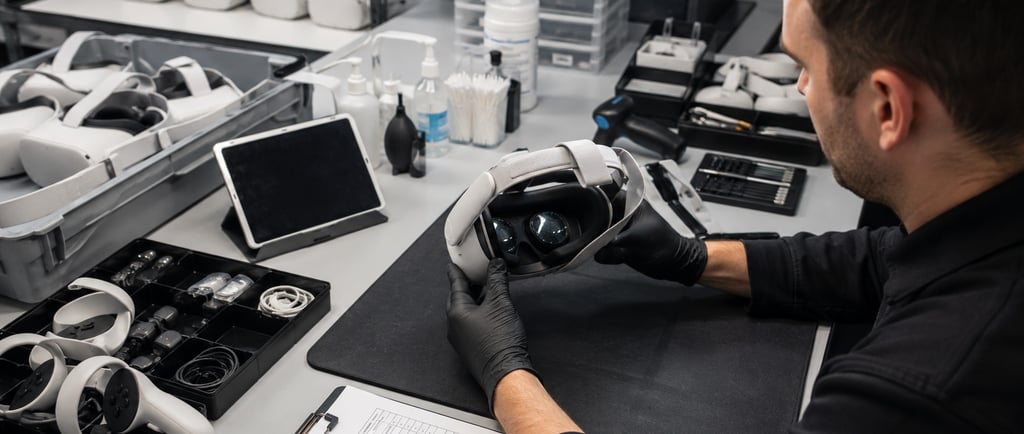
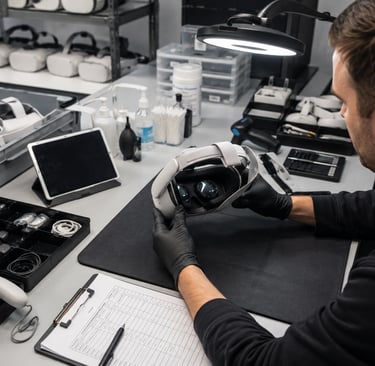
Context: Why XR Refurbishment Has Become a Serious Market Opportunity
Extended reality hardware has moved past the novelty stage. VR headsets, mixed reality devices, AR smart glasses, enterprise headsets, spatial computing systems, controllers, sensors, charging docks, battery packs, prescription inserts, and modular accessories are now entering homes, schools, hospitals, factories, design studios, warehouses, training centers, and defense environments. That growth creates a second market that cannot be ignored: the market for returned, repaired, refurbished, certified, redeployed, resold, and responsibly recycled XR devices.
The timing matters. IDC reported in March 2026 that global XR device shipments grew 44.4% in 2025 and are forecast to grow another 33.5% in 2026, with smart glasses without displays driving much of the expansion. That shift signals a wider hardware base, more product variety, and more device turnover across consumer and enterprise channels. XR is no longer one headset category. It is becoming a layered device category that spans gaming, productivity, remote assistance, industrial training, education, health, field service, and AI-enabled wearable computing. (IDC)
This growth creates a familiar problem. New hardware categories often scale faster than their aftermarkets. Smartphones, laptops, tablets, and gaming consoles already have mature trade-in and refurbishment systems. XR does not. Most XR resale activity is still scattered across consumer marketplaces, small refurbishers, brand-owned replacement programs, enterprise IT asset disposition partners, warranty channels, and informal secondary sellers. That fragmentation makes it harder for buyers to trust used XR devices and harder for sellers to recover maximum value.
The opportunity is clear. A strong XR refurbish marketplace can sit between three pressures that are now moving in the same direction: device affordability, supply recovery, and circular electronics compliance. Consumers want cheaper access to high-end hardware. Enterprises want lower-cost fleet expansion and controlled disposal. OEMs want customer retention beyond the first sale. Regulators want longer product life, better repair access, and less e-waste. Refurbished XR sits at the intersection of all four.
The broader electronics resale market supports this direction. Back Market, one of the largest refurbished electronics marketplaces, says it now connects 17 million customers globally and forecast more than €3 billion in gross merchandise value for 2025. That is important because it shows refurbished technology is no longer positioned only as a bargain-bin option. It is becoming a mainstream buying behavior when grading, warranty, data erasure, and seller quality are credible. (backmarket.com)
XR devices can follow that path, but only if the refurbish experience is better than the current secondhand experience. A used headset is not the same as a used phone. A phone can be assessed through battery health, screen condition, camera function, storage, network status, and cosmetic grade. XR assessment is more complex. Buyers need confidence in lens clarity, display uniformity, controller tracking, inside-out cameras, hand-tracking sensors, straps, facial interfaces, battery safety, audio, microphones, firmware status, account locks, hygiene, and comfort components. A marketplace that treats XR like ordinary consumer electronics will miss the technical risk.
This is why XR refurbishment deserves its own operating model. The winners will not simply list used devices. They will build trusted intake, testing, repair, certification, content, warranty, logistics, and lifecycle data systems around a product category where buyer confidence is still fragile.
2. Market Demand: Why Buyers Are Ready for Refurbished XR
The demand case for refurbished XR starts with price. Premium XR devices remain expensive for many households, schools, small businesses, and field teams. Even when entry-level headsets are more affordable, the total cost can rise quickly once buyers add controllers, carrying cases, charging docks, prescription inserts, facial interfaces, replacement straps, warranty coverage, software subscriptions, and fleet management tools. A trusted refurbished option can reduce the upfront barrier without forcing the buyer into outdated hardware.
The same pattern has already played out in smartphones and laptops. Assurant reported that mobile trade-in programs returned a record $6.4 billion to consumers in 2025, up 42% from 2024. That figure matters for XR because trade-in behavior teaches buyers that old devices still hold value. It also teaches sellers that structured return programs can feed resale, refurbishment, parts harvesting, and recycling channels instead of letting working devices sit unused. (Assurant)
This buyer readiness is strongest when the marketplace removes uncertainty. In 2026, industry discussion around refurbished smartphones continues to show that consumers are often less worried about the word “used” and more worried about battery health, warranty, grading, performance, and data safety. XR buyers have the same concerns, with extra sensitivity around hygiene and immersive performance. A scratched lens, weak strap, drifting controller, cloudy passthrough camera, or degraded battery can destroy the experience faster than a cosmetic mark on a phone. (TechRadar)
Enterprise demand adds another layer. Companies that bought XR for training, remote support, medical simulation, architecture, safety instruction, virtual collaboration, or field operations now face refresh decisions. Some fleets are too valuable to recycle and too inconsistent to redeploy without testing. Others need to be wiped, sanitized, repaired, reboxed, and moved into lower-intensity use cases. A mature marketplace can give enterprises three options at once: resell usable devices, redeploy internally, or recycle responsibly when reuse is no longer viable.
Education is another practical use case. Schools and universities often want immersive learning tools but face tight budgets and long procurement cycles. Refurbished XR can help them buy more units for the same budget, especially when devices come with standardized grading, software reset, warranty, and support. This matters because XR learning programs often fail when there are too few headsets for classroom use. A reliable refurbished supply can increase access without forcing every institution to buy new hardware.
Healthcare, manufacturing, logistics, and defense-adjacent training environments also create demand for certified secondary devices. These buyers care less about novelty and more about function, uptime, compliance, and repeatability. They may accept refurbished devices if the grading system is clear, sanitation is documented, data erasure is certified, accessories are complete, and replacement units are available. For them, refurbished XR is not just a lower-cost purchase. It can be a fleet continuity strategy.
3. The E-Waste Problem XR Cannot Ignore
The environmental case for XR refurbishment is becoming stronger because the global e-waste problem is getting worse. The Global E-waste Monitor 2024 reported that the world generated a record 62 million tonnes of e-waste in 2022, up 82% from 2010. It also projects e-waste to reach 82 million tonnes by 2030. Only 22.3% of e-waste was documented as properly collected and recycled in 2022, leaving large volumes unmanaged, informally processed, landfilled, or stored in homes and businesses. (E-Waste Monitor)
That is the backdrop for XR. Headsets and smart glasses may represent a smaller share of global e-waste today than phones, laptops, TVs, or appliances, but they contain dense mixes of valuable and problematic materials. A typical XR device can include lithium-ion batteries, aluminum, copper, printed circuit boards, magnets, speakers, cameras, sensors, lenses, adhesives, foams, plastics, cables, antennas, display assemblies, infrared components, and rare earth elements in small but important quantities. When devices are dumped or poorly processed, material value is lost and environmental risk increases.
The Global E-waste Monitor also found that only 1% of rare earth element demand is currently met by e-waste recycling. That is a serious warning for advanced electronics categories. XR devices depend on high-performance components, miniaturized assemblies, optical systems, and sensor stacks. Even when the recoverable material per headset seems small, the combined value across millions of units becomes meaningful. Refurbishment keeps those materials in use before recycling becomes the last option. (E-Waste Monitor)
This is where refurbish marketplaces can do more than move used products. They can extend product life, improve collection rates, create tested parts streams, reduce unnecessary recycling, and capture device-level data before final material recovery. Recycling is essential, but reuse normally preserves more value than shredding. A working headset should not be treated as scrap because the strap is damaged, the facial interface is worn, or a controller needs pairing. A headset with a failed display may still supply usable controllers, straps, cameras, boards, speakers, shells, screws, and charging parts.
The e-waste challenge is also economic. The Raw Materials Information System summary of the Global E-waste Monitor highlights that about US$62 billion worth of recoverable natural resources are lost annually because of inadequate recycling and collection. For XR marketplaces, this supports a clear business logic. Every device that is properly collected, diagnosed, repaired, resold, cannibalized for parts, or recycled through a formal channel protects both margin and material value. (RMIS - Raw Materials Information System)
The core issue is not only disposal. It is device leakage. Devices disappear into drawers, office storage rooms, school cupboards, repair bins, warehouse shelves, and informal resale channels. The longer a device sits unused, the more value it loses. Batteries degrade. Accessories get separated. Firmware support windows shrink. Hygiene condition worsens. Documentation disappears. Refurbish marketplaces need fast, simple, trusted return pathways because delayed intake turns usable devices into lower-value inventory.
4. What Makes XR Refurbishment Different From Phones, Laptops, and Tablets
XR refurbishment is harder because the product experience is physical, optical, sensory, and software-bound at the same time. A phone sits in the hand. A headset sits on the face. That single difference changes buyer expectations, testing standards, sanitation needs, accessory completeness, and return risk.
The first difference is optics. Lens scratches, haze, coating damage, dead pixels, mura, brightness imbalance, display persistence, field-of-view issues, and passthrough quality can make or break the experience. A buyer may accept a small scuff on the outside shell, but a visible lens mark in the center of the viewing area can make the device feel unusable. Marketplaces need grading rules that separate cosmetic wear from experience-impacting optical defects.
The second difference is tracking. XR devices depend on sensors, cameras, inertial measurement units, controller pairing, hand tracking, room mapping, boundary setup, and calibration. A device can power on and still deliver a poor experience if tracking is unstable. Refurbishers need diagnostic routines that simulate real use, not just basic boot tests. A headset should be tested for controller recognition, tracking stability, button function, haptic feedback, microphone input, audio output, Wi-Fi, Bluetooth, charging, battery drain, display quality, passthrough, and factory reset.
The third difference is hygiene. Phones are personal, but XR devices are more intimate. Facial interfaces absorb sweat and skin oils. Straps, foam, silicone, lenses, nose bridges, and headbands need stricter inspection and replacement rules. A marketplace that does not make sanitation visible will struggle to build trust. For many buyers, a fresh facial interface and cleaned strap may matter as much as a warranty.
The fourth difference is accessory dependency. A phone can often be sold with a cable or without one. A headset may need controllers, wrist straps, spacers, prescription insert compatibility, charging cable, adapter, head strap, battery strap, carrying case, dock, or specific facial interface. Missing accessories reduce usability and increase returns. Marketplaces need clear completeness grades, such as headset-only, full kit, enterprise kit, controller-included, charger-included, replacement interface included, or tested with dock.
The fifth difference is software and account status. XR devices can be tied to accounts, enterprise management systems, app stores, region settings, firmware versions, developer modes, device management policies, and content licenses. A marketplace must ensure devices are wiped, unlocked, deregistered, and ready for new ownership. This is especially important for enterprise devices that may be enrolled in mobile device management or tied to training software.
The sixth difference is obsolescence risk. XR hardware is changing fast. Devices may become less useful because of app support, tracking limitations, display quality, comfort standards, battery age, or platform direction. Microsoft’s HoloLens 2 is a strong example. Microsoft stopped manufacturing the headset and continues security and critical software support through December 31, 2027. That creates a specific secondary-market window where remaining devices may still be useful for enterprises, but buyers must understand support timelines before purchasing. (Microsoft Learn)
This makes XR marketplace content more important than ordinary listings. Buyers need compatibility notes, support status, warranty terms, expected use cases, accessory requirements, and known limitations. A refurbished headset for casual fitness use is not the same as a refurbished headset for surgical simulation, warehouse training, remote field service, or classroom deployment.
5. The Role of Regulation: Right to Repair, Repair Scores, and Circular Product Rules
Regulation is moving in the direction of longer product life. The EU Directive on common rules promoting the repair of goods was adopted on June 13, 2024 and entered into force on July 30, 2024. EU Member States have until July 31, 2026 to transpose it into national law. This matters for refurbish marketplaces because repair rights, access to repair, consumer protection, and post-sale service are becoming part of the normal electronics business environment. (European Commission)
The EU Ecodesign for Sustainable Products Regulation entered into force on July 18, 2024. It is designed to set sustainability requirements across product groups, including durability, repairability, recyclability, resource efficiency, and product information. XR devices may not be the first product category targeted in every rule, but the direction is clear. Electronics that are hard to repair, hard to document, hard to recycle, or hard to verify will face more pressure over time. (whitecase.com)
Repairability labeling is also advancing. In June 2025, the European Commission introduced a repairability score system for smartphones and tablets, displayed on the Energy Label. The score helps buyers understand how easy a product is to repair. XR devices are not yet treated with the same maturity in most markets, but buyers and procurement teams will increasingly expect similar signals for complex electronics. (Joint Research Centre)
For XR refurbish marketplaces, this creates a first-mover opportunity. Platforms do not need to wait for every regulation to become mandatory. They can build voluntary repairability and refurbishment labels now. These labels can include parts availability, battery replacement difficulty, controller repairability, lens replacement status, strap availability, firmware support, teardown complexity, and average repair time. This kind of transparency can help buyers compare devices in practical terms rather than relying only on brand, price, and cosmetic grade.
Right to repair also affects parts supply. Refurbishment depends on access to genuine or compatible parts, manuals, diagnostic software, calibration tools, and safe battery handling procedures. Without parts, many devices become uneconomic to repair. Without documentation, repair quality varies. Without software tools, refurbished devices may pass basic checks but fail in real use. Marketplaces that secure parts partnerships, repair documentation, and testing standards will have an advantage.
Consumer protection is another regulatory factor. Refurbished does not mean risk-free for sellers. Marketplaces need clear warranty policies, return rules, defect disclosure, grading language, data erasure proof, and support pathways. As repair and circularity laws mature, vague claims such as “tested,” “working,” or “good condition” will not be enough. Buyers will expect evidence.
6. The Marketplace Trust Gap: Why Refurbished XR Needs Better Proof
The main barrier to refurbished XR is not demand. It is trust. A buyer may want a lower-cost headset but hesitate because they cannot verify lens condition, battery health, controller reliability, sanitation, warranty coverage, or account status. A procurement manager may want to buy 200 refurbished units but hesitate because inconsistent grading could increase support tickets. A parent may want a used headset for a child but worry about hygiene, safety, and durability.
Trust begins with grading. Most secondhand marketplaces use broad categories such as fair, good, very good, excellent, or like new. Those labels are too weak for XR unless they are tied to specific inspection points. A strong XR grading system should separate the outer shell, straps, lenses, display, battery, controllers, sensors, ports, speakers, microphones, cameras, and included accessories. A headset with excellent electronics but worn straps should not be graded the same as a headset with clean straps but visible lens scratches.
Trust also depends on proof. Buyers should see actual device photos, not only stock images. They should see lens closeups, controller photos, strap condition, port condition, serial-level test results, battery condition when available, firmware version, included accessories, warranty term, and return policy. For higher-value enterprise devices, buyers may also need chain-of-custody records and data erasure certificates.
Apple’s Certified Refurbished program shows how much trust can be created through simple, clear signals. Apple states that its certified refurbished products include full functional testing, savings up to 15%, and a one-year warranty. XR marketplaces can learn from that structure even if they are not OEM-owned. The buyer needs to know what was tested, what was replaced, what warranty applies, and what happens if the device fails. (Apple)
Back Market offers another lesson. Its growth shows that refurbished electronics can scale when the marketplace standardizes seller expectations, customer experience, warranties, and brand trust. The same model can work for XR, but the testing checklist must be category-specific. A headset needs more than a power-on test. Controllers need more than button checks. A device should be tested as an immersive system.
Trust also depends on language. Refurbish marketplaces should stop hiding behind vague labels. Buyers respond better to plain explanations. “Minor shell scuffs, clear lenses, tested tracking, new facial interface, battery within acceptable range, controllers included, 12-month warranty” is stronger than “Grade B refurbished.” The more specific the listing, the lower the buyer’s perceived risk.
7. Core Business Models for XR Refurbish Marketplaces
XR refurbish marketplaces can be built in several ways. The strongest models often combine more than one.
The first model is the consumer trade-in marketplace. Consumers sell or trade in used headsets, the marketplace tests and grades them, and buyers purchase certified refurbished units. This model works well when there is steady device supply and clear pricing. It also works best when the platform makes trade-in simple, with instant quotes, prepaid shipping, data wipe instructions, and fast payment.
The second model is the enterprise fleet recovery model. Businesses, schools, hospitals, labs, and training providers return devices in batches. The marketplace or refurbisher audits the fleet, grades each unit, wipes data, repairs viable devices, resells surplus units, redeploys usable units, and recycles end-of-life units. This model can produce predictable inventory and higher average order value, but it requires stronger logistics, asset tracking, and reporting.
The third model is the OEM-certified resale model. In this structure, the manufacturer or authorized partner controls the refurbishment process and sells certified units. This can create high trust because buyers believe parts, diagnostics, and repair processes are closer to factory standards. The downside is that OEM programs can be limited in selection, slower to scale, or tied to specific brands.
The fourth model is the repair-first marketplace. Instead of focusing only on resale, the platform connects buyers and owners with repair providers, replacement parts, refurbishment services, and warranty support. This model is useful when devices are valuable enough to repair but supply is inconsistent. It can also help marketplaces build technical authority and collect repair data.
The fifth model is the parts recovery and component marketplace. Damaged XR devices can supply controllers, straps, shells, cameras, speakers, boards, ports, batteries, optical assemblies, and other components. This model matters because not every returned device should be resold as a complete unit. Some should be harvested to repair other devices. A parts marketplace can reduce repair costs, shorten turnaround times, and prevent working components from being shredded too early.
The sixth model is the recommerce-as-a-service model. Retailers, OEMs, insurers, device management firms, and enterprise resellers may not want to operate refurbishment themselves. They may need a partner to handle intake, testing, grading, resale, warranty, returns, recycling, and reporting. In this model, the refurbish marketplace becomes infrastructure for other brands.
The seventh model is the circular procurement model. Public institutions and enterprises buy refurbished XR through approved procurement channels with sustainability reporting attached. This can include carbon savings estimates, landfill diversion, asset recovery value, data erasure records, and recycling certificates. As procurement teams face stronger environmental reporting requirements, this model can become more important.
The right model depends on inventory source, buyer segment, repair capability, warranty appetite, and brand position. A consumer gaming headset marketplace will operate differently from an enterprise mixed reality fleet partner. A low-cost resale platform will operate differently from a certified refurbishment program for hospitals or industrial training centers.
8. Operational Requirements Before Scale
Before an XR refurbish marketplace can scale, it needs operational discipline. More listings do not create a stronger marketplace if devices arrive inconsistently tested, poorly cleaned, vaguely graded, or badly supported. Scale without standards increases returns, negative reviews, warranty losses, and buyer distrust.
The first requirement is intake control. Devices must be identified by model, storage size when relevant, region, serial number, accessory set, account status, condition, and source. Enterprise lots should be processed with chain-of-custody controls. Consumer trade-ins should be checked for activation locks, account ties, missing controllers, and obvious physical damage before final quote approval.
The second requirement is diagnostics. XR devices need a repeatable test flow that covers power, charging, battery behavior, display, lenses, cameras, tracking, controllers, buttons, haptics, microphones, speakers, Wi-Fi, Bluetooth, ports, firmware, factory reset, boundary setup, and heat behavior. Higher-end devices may need additional checks for eye tracking, hand tracking, depth sensors, passthrough quality, spatial audio, and prescription insert compatibility.
The third requirement is sanitation. The marketplace should define which parts are cleaned, which parts are replaced, and which defects make a device unsuitable for resale. Facial interfaces, foam pads, straps, and nose pieces need special treatment. For many categories, replacing low-cost contact parts can raise buyer trust and reduce returns.
The fourth requirement is repair routing. Not every defect deserves the same response. Some devices should be repaired and resold. Some should be sold as lower-grade units. Some should be split into parts. Some should be recycled. A profitable operation needs clear thresholds for repair cost, resale value, parts value, warranty risk, and device age.
The fifth requirement is data erasure and account release. Devices must be wiped, deregistered, and cleared for resale. Enterprise devices need stronger documentation because they may contain user profiles, network records, app data, training content, device management policies, or sensitive operational history. Buyers and sellers both need proof that the device is clean.
The sixth requirement is listing quality. Each listing should answer the buyer’s real questions: What model is this? What is included? What condition are the lenses in? Are the controllers tested? Is the facial interface new or cleaned? Is there a warranty? What is the return window? Does it work with current software? Are there known support limitations? Can it be used for enterprise deployment?
The seventh requirement is post-sale support. XR buyers may need help with setup, pairing, firmware updates, comfort adjustments, account setup, app compatibility, boundary errors, controller drift, or returns. A marketplace that provides clear setup guides and support flows can reduce avoidable returns.
The eighth requirement is sustainability reporting. Marketplace dashboards should track units collected, units resold, units repaired, parts recovered, devices recycled, estimated e-waste diverted, and certified recycling volumes. This matters for brand trust, enterprise reporting, and circularity claims.
Once these foundations are in place, the marketplace is ready to move from isolated resale to a structured XR circular commerce system. That is where the next layer becomes critical: a practical distribution and reuse toolkit that connects intake, grading, repair, buyer education, logistics, and e-waste diversion into one operating model.
9. Five-Layer Distribution and Reuse Toolkit
To bring meaningful scale and operational resilience to the XR refurbishment ecosystem, a toolkit grounded in five interconnected layers must be leveraged. The following framework empowers marketplaces, OEMs, and retailers to coordinate, optimize, and differentiate in the increasingly competitive circular electronics landscape.
Layer 1: Source & Intake Optimization
Efficient sourcing underpins high-margin recommerce. Marketplaces should diversify intake channels—expanding beyond consumer trade-ins to include enterprise fleet refreshes, retailer returns, and OEM buyback programs. Advanced AI-driven screening can further optimize this layer:
AI-Powered Diagnostics: Many leading recommerce platforms deploy machine learning to pre-classify device photos, accelerating intake triage and reducing manual handling time. For example, startup Back Market reports a >30% reduction in intake labor costs after implementing image-based defect detection.
Bulk Enterprise Offloads: Recent IDC surveys show large educational institutions are turning over as many as 1,500 units per refresh cycle. Streamlining logistics with B2B portal integrations strengthens intake predictability—critical for supply planning.
Layer 2: Grading & Data Security Standardization
The absence of transparent grading standards and robust data erasure undermines trust and compliance. Elevate operations with:
Multimodal Grading Systems: Integrate computer vision and IoT diagnostics to objectively score device condition (e.g., optical clarity, pixel anomalies, controller responsiveness). This mitigates subjective grading variance and supports real-time pricing.
Data Protection Innovations: Secure erasure is not just a legal obligation—it is a buyer-expected trust signal. Companies offering blockchain-based erasure certificates are emerging, guaranteeing tamper-proof audit trails for privacy compliance under frameworks like GDPR and CCPA.
Layer 3: Repair & Refurbishment Excellence
Highly repairable, modular designs are table stakes for circularity enablement. But most XR devices today have not been optimized for open repair. Successful players drive this layer forward through:
Collaborative Design-for-Repair Initiatives: In 2023, Google announced new partnerships with modular component vendors to make future AR headsets easier to service, aiming for a 25% reduction in average repair time.
Refurb Specialist Training: As XR tech evolves (think LiDAR, haptics), refurb teams must be upskilled continuously—for example, via partnerships with IFIXIT or in-house micro-soldering academies.
Layer 4: Marketplace Trust & Buyer Education
True scale comes from converting skeptical buyers into brand advocates. Marketplaces win loyalty by emphasizing:
Radical Transparency: Provide 360° images, full grading manifests, device histories, and even teardown videos. According to a 2023 eBay study, listings with detailed trust indicators and video content converted at up to 48% higher rates than standard listings.
Warranty Leadership: Extend warranties well beyond the industry norm (e.g., 18 months vs. 6 months). Some European platforms have reported double-digit NPS increases after offering “no-questions-asked” returns and user-friendly warranty claims.
Layer 5: Distribution, Logistics & E-Waste Diversion
Optimized logistics and last-mile solutions directly determine customer satisfaction and sustainability metrics:
Green Fulfillment: Bundle returns reuse packaging, offer carbon-neutral shipping choices, and print QR-coded recycling labels. Patagonia's Worn Wear program lifted repeat buys 22% after making circular returns effortless.
E-Waste Analytics: Build dashboards for real-time tracking of landfill diversion, recycled volume, and environmental impact. Showcasing these stats boosts consumer trust and differentiates green brands.
Toolkit in Action:
By layering intake optimization, data/repair standards, radical transparency, and eco-conscious logistics, XR refurb marketplaces can simultaneously increase unit margins, reduce return rates, and differentiate themselves as genuinely circular businesses.
10. Competitive Differentiation
The XR recommerce space is becoming highly competitive as more players recognize the lucrative potential of device lifecycle management. To secure market leadership and customer allegiance, marketplaces and refurbishing teams must push beyond basic operational excellence.
Core Levers for Competitive Advantage
1. OEM Partnerships and Access
Direct collaboration with original equipment manufacturers is a formidable differentiator:
Genuine Parts Supply: Marketplaces with priority access to OEM components and diagnostic software consistently achieve higher refurbishment yield and lower warranty claims.
Model-Exclusive Recertification: For example, select platforms are testing “factory recertified” labels for premium VR/AR headsets, mirroring the car industry’s CPO (Certified Pre-Owned) playbook, which delivers a 20–30% pricing premium.
2. Experience-Driven Marketplace Design
The best platforms treat buyers as community members, not just customers:
Live Chat & XR Demos: AR/VR-enabled try-before-you-buy features, immersive product tours, or live repair streaming integrate digital experience with trust-building.
Education Hubs: HubSpot-style content hubs—guides, teardown videos, XR repair tips—empower buyers and drive organic SEO, boosting traffic at lower acquisition costs.
3. Circularity Credentials and Social Proof
Unambiguous circular electronics commitments attract eco-conscious buyers and institutional fleet customers:
Third-Party Sustainability Certifications: EPEAT, TCO, or custom ‘green’ badges offer quantifiable proof (e.g., “98% e-waste diverted”), which can factor into procurement decisions.
Impact Storytelling: Customer spotlights, case studies, and before-after landfill impact visualizations can drive emotional resonance.
4. Future-Ready Tech Integration
AI, blockchain, and IoT promise to shape the next wave of XR refurbishment:
Predictive Device Health Scoring: Leveraging machine learning for dynamic pricing and predictive maintenance recommendations.
Blockchain-Provenance Tracking: Immutable records for the device’s lifecycle, boosting auditability for enterprise and government buyers.
Future Trends to Monitor
Repair Legislation: ‘Right to Repair’ is gathering global momentum. New regulations may require XR manufacturers to publish repair manuals, supply parts, and support independent refurbishers.
Smart Contract-Based Returns & Warranties: Automated claims, returns, and post-sale support powered by smart contracts could soon be table stakes for leading recommerce platforms.
Decentralized Component Sourcing: Global micro-warehouses and part-sharing networks facilitated by blockchain may cut turnaround times and improve sustainability in the recommerce chain.
Market Dynamics: Statistics & Growth Projections
According to Allied Market Research, the global XR market is forecasted to surpass $500 billion by 2030, and recommerce of electronics—including XR hardware—is expected to deliver a CAGR above 13% from 2024 to 2028. As e-waste volumes climb past 60 million metric tons annually (Global E-Waste Monitor 2024), the business case for integrated refurbish marketplaces is stronger than ever.
Takeaway: Winning in XR Device Recommerce
The winning formula for XR device refurbishment is not just about handling more used headsets—it’s about building systems, processes, and buyer journeys that deliver reliability, trust, and sustainability at scale. By embracing modular design, securing OEM-grade refurbishment, championing grading/data transparency, and doubling down on eco-centric logistics, platforms and partners will not only grow their market share—they’ll help define the future of circular electronics.
For organizations, retailers, and procurement specialists looking to launch or scale XR refurbishment and recommerce, the time to build capability, credibility, and circular impact is now.
Connect
Your trusted partner for scrap metal procurement.
CONTACT
About
haroon@tdcventures.com
+1-307-655-7593
© 2025. All rights reserved.
NEWSLETTER