
Renewable PPAs for Recyclers: Spotting and Avoiding Contract Traps
Learn how recyclers can use Renewable PPAs (Power Purchase Agreements) to cut costs and decarbonize. Spot critical contract traps and align PPAs with LCA for CSRD compliance.
SUSTAINABLE METALS & RECYCLING INNOVATIONS
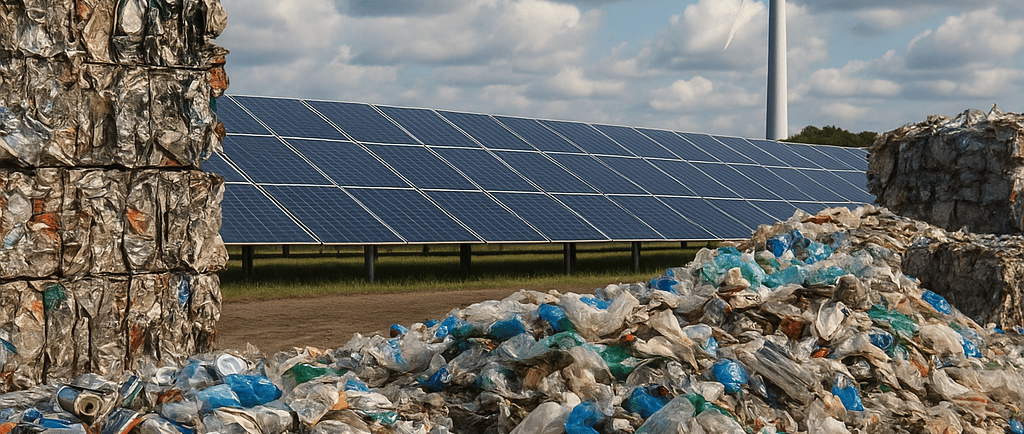
As global pressure mounts on the materials sector to decarbonize, recycling companies increasingly find themselves at a transformational crossroads. Activist investors, multinational customers, and new regulatory frameworks such as the EU’s Corporate Sustainability Reporting Directive (CSRD) are no longer just suggesting sustainability—they’re embedding it in the very fabric of business value and supply chains.
But energy procurement, a significant component of most recyclers’ carbon footprints, presents a pathway as well as pitfalls. Enter renewable energy Power Purchase Agreements (PPAs)—recognized by CDP, RE100, and supply chain leaders as a credible lever to accelerate Scope 2 emission reductions and unlock new economic and reputational value. Yet, as the renewable PPA market matures, contract complexity is increasing, and so are the risks for unwary buyers.
This guide will help you strategically leverage renewable PPAs, dissect their true costs, expose the most frequent contract traps, and show how harmonizing procurement with Life Cycle Assessments (LCAs) maximizes compliance, competitiveness, and genuine decarbonization.
Why Recyclers Need to Prioritize Decarbonization—Now
The industrial recycling and materials reprocessing sector sits at a unique inflection point. According to the International Energy Agency (IEA), industrial processes—including recycling—account for approximately 24% of direct CO₂ emissions from fuel combustion globally. As energy costs and carbon prices rise, so does the strategic risk of “business as usual.”
Stakeholder Pressures Are Converging
Clients demand transparency. Over 90% of S&P 500 companies now publish ESG reports—and many scrutinize their suppliers’ emissions. Large CPG firms increasingly federate their Scope 3 reporting to their supply chain, directly impacting recyclers’ contracts and long-term viability.
Regulatory Terrain Is Shifting
Mandatory climate disclosures and product-level LCAs are proliferating, especially in the EU and US. The U.S. Securities and Exchange Commission (SEC) and EU regulators are enforcing more robust emission disclosures. The 2023 Global Reporting Initiative (GRI) update mandates full transparency across Scope 1, 2, and 3 for companies operating globally.
Energy Transition: Win on Cost and Carbon
Electricity can represent up to 25–35% of a recycling facility’s total operating expenses. Sourcing renewable energy through a well-structured PPA stabilizes costs and delivers instant, traceable reductions in Scope 2 emissions. Simultaneously, it sends a powerful message: you’re not just talking green—you’re proving it.
The Decarbonization Trilemma:
To meet sustainability goals, cut costs, and avoid greenwashing, recyclers must implement robust, auditable strategies that withstand external scrutiny.
Renewable PPAs are critical—but must be navigated with care. Not all are built equally, and fine print often separates greenwashing from genuine transformation.
Understanding Renewable PPAs: A Decarbonization Gamechanger
A renewable PPA is, at its core, a long-term contract that enables recyclers to buy specific volumes of renewable electricity, directly from wind, solar, biomass, hydro, or mixed-generation resources. The contract commonly spans 10–20 years—mirroring the asset life of renewable plants and helping generators secure financing.
How Renewable PPAs Benefit Recyclers
Stable, Predictable Energy Budgets: Fixed or indexed prices shield your operations from fossil-driven volatility—evident in Europe’s 2022 energy crisis, where spot prices spiked over €300/MWh versus historic averages of €40–60/MWh.
Credible Emissions Claims: Only a properly structured PPA with REC (Renewable Energy Certificate) transfer allows confirmed Scope 2 emission reductions for LCA and corporate disclosure.
Competitive Differentiation: Brands such as Unilever, Walmart, and Nestlé reward suppliers who can document low-carbon processes with preferential contracts.
The Growing Market
Global renewable PPA volume reached over 30 GW in 2022 (BloombergNEF)—with industrial offtakers like recyclers rapidly gaining market share. Yet, rising demand has triggered more customized, complicated contract structures, heightening legal and financial exposure.
Bottom Line: The right PPA gives recyclers a competitive edge; the wrong one can lock in risk for decades.
The True Cost of a “Cheap” Renewable PPA
Going with the lowest apparent price—say, a solar PPA offered at $30/MWh—fails to capture the holistic cost picture.
1. Volume Risk (Mismatch Penalties)
If your recycling facility’s actual load differs from the offtake forecast, certain PPAs impose penalties. This risk is non-trivial: McKinsey estimates operational mismatch penalties can increase costs by 10–15% annually. Prolonged supply-demand mismatch can also undercut the proportion of renewable power credibly claimed in your LCA, risking reputational and regulatory harm.
2. Shape Risk
Unlike steady baseload utilities, recyclers often experience load variability due to batch processing, downtime, or maintenance. If your renewable PPA delivers power at times that don’t align with your peak use, you must buy grid electricity (potentially “brown” power) at volatile spot rates. During the Texas 2021 winter storm, spot prices topped $9,000/MWh, devastating unhedged buyers.
3. Credit and Collateral Requirements
Renewable generators often require collateral underpinned by your balance sheet—a significant operational risk for small and mid-market recyclers. A 2021 analysis from Lawrence Berkeley National Laboratory shows that average collateral requirements range from 6–12 months of contract value—capital that could otherwise be deployed for operational innovation.
4. Ancillary Fees, Curtailment Clauses, and “Pass-Through” Costs
Transmission line congestion, evolving capacity market rules, or forced “curtailments” can be contractually shifted onto offtakers. A survey by Edison Energy notes that more than 30% of PPA buyers face “unexpected” pass-through charges within five years of signing, eroding margin without warning.
Actionable Advice:
Conduct a forensic tariff and operational analysis that stress-tests different scenarios—projecting best, average, and worst cases. Leverage software platforms or advisors that specialize in the unique load profiles of recycling and materials processing.
Hidden PPA Contract Traps that Recyclers Must Avoid
Even experienced energy buyers fall prey to the subtleties of renewable PPA contracts. Below are the five common traps, with expanded strategies for protection:
1. Ownership of Renewable Energy Certificates (RECs)
Hidden Trap: If the agreement separates delivery of renewable energy from the transfer of RECs, you are left with “gray” power for Scope 2 reporting. According to the Greenhouse Gas Protocol, only REC ownership certifies renewable usage claims.
Mitigation: Insist on contract clauses specifying that RECs are retired in your organization’s name, with traceable serial numbers and third-party registry confirmation. This documentation matters—CDP and Science Based Targets initiative (SBTi) demand rigorous, audit-ready proof.
2. Ambiguous Delivery Points and Basis Risk
Hidden Trap: Most off-site (“virtual”) PPAs settle at a market hub price different from your facility’s local retail rate. Fluctuations—or widening basis risk—can unexpectedly increase your costs by as much as 20–30% annually (per BloombergNEF).
Mitigation: Structure the contract to cap basis risk, or select projects with strong historical price correlation to your load center. Demand transparent, auditable data reporting and seek “contract for differences” structures if available.
3. Mismatch Between Contract Tenor and Operational Lifetime
A contract that outlasts your operational or lease horizon is dangerous. If your plant closes or relocates, you’re still liable for the full term—often without a take-or-pay release mechanism.
Mitigation: Align PPA duration with facility and customer contract longevity. Build early exit or “step-down” clauses with pre-agreed fees based on independent market valuation.
4. Performance Guarantee Gaps
For PPAs lacking robust production or delivery guarantees from the generator, you risk paying for less renewable energy than contracted—undermining your decarbonization targets.
Mitigation: Integrate minimum performance thresholds (e.g., 95% of expected output) and “make-good” compensation for shortfalls. Review generator insurance coverage and operational track records before signing.
5. Inadequate Change-in-Law and Force Majeure Coverage
As governments intensify climate regulation, a poorly drafted PPA could make you liable for new costs, such as carbon taxes or grid fees.
Mitigation: Engrain crystal-clear definitions for “change-in-law” and “force majeure.” Require notification, renegotiation, or mutual termination rights if legal conditions shift materially.
Aligning Renewable PPAs With LCA And Product Carbon Footprints
For recyclers, electricity is not a side note in the Life Cycle Assessment. It often sits near the top of the emissions stack.
Studies on metals and construction materials show that electricity can account for 30 to 70 percent of the cradle to gate carbon footprint for high temperature recycling processes, depending on the grid mix and furnace technology you use.Nature+1 In segments such as secondary aluminium, low carbon electricity can be the difference between a “premium” green product and a commodity that fails future buyer thresholds.
To use PPAs as a real decarbonization tool, you need to connect them to LCAs in a disciplined way.
Key principles
Use both location based and market based views
The Greenhouse Gas Protocol requires dual Scope 2 reporting. Location based accounting uses the average grid factor in your country or region. Market based accounting reflects your specific contracts, such as PPAs, green tariffs, and certificates.ghgprotocol.org+2tapio.eco+2
Your LCA needs to understand both:
Location based shows what the grid would emit without your contracts.
Market based shows what your portfolio of contracts actually supports.
For product LCAs and Environmental Product Declarations, your customers will increasingly ask for both.
Assign credible emission factors to PPA volumes
Not all “renewable” kWh are equal. Life cycle studies indicate that typical greenhouse gas intensities for utility scale plants are roughly:
Onshore wind in the range of 10 to 15 g CO₂e per kWh
Utility scale solar PV in the range of 40 to 60 g CO₂e per kWh
Modern gas plants above 400 g CO₂e per kWh
Coal units often between 800 and 1,000 g CO₂e per kWh or more, depending on plant age and efficiencyUNECE+2literatur.thuenen.de+2
You should document which technology your PPA supports, then link that to an LCA database or published study. Avoid generic “zero” factors. They will not hold under scrutiny.
Reflect time variation where it matters
Recent work on life cycle impacts of European electricity shows that grid intensity can swing by a factor of two or more between seasons and even within a single day, depending on how much coal, gas, hydro, wind, and solar are on the system.ScienceDirect+1
If your customers care about 24/7 carbon matching, or if you are in a region with very variable grids, you may need to model:
When your plant runs.
When your PPA delivers power.
How residual grid electricity behaves in the remaining hours.
This matters, for example, when a night shift relies on coal heavy grid power because your solar PPA only covers daytime.
Bring it together in a simple numeric story
A practical way to connect the dots is to run a “before and after” view.
Example
Your plant uses 100 GWh of electricity per year.
The grid factor is 500 g CO₂e per kWh, so your location based footprint from electricity is about 50,000 tonnes CO₂e per year.
You sign a wind PPA that covers 80 GWh per year at a life cycle factor of 50 g CO₂e per kWh.
Market based view:
80 GWh from the PPA at 50 g gives 4,000 tonnes CO₂e.
20 GWh from the grid at 500 g gives 10,000 tonnes CO₂e.
Your new market based Scope 2 footprint is 14,000 tonnes CO₂e per year. You have cut about 36,000 tonnes compared with the old electricity mix, and you can now express this per tonne of recycled output.
Real world example
Novelis signed a 10 year PPA for its German rolling and recycling sites, covering about 58 GWh of renewable electricity per year and cutting more than 17,000 tonnes of CO₂e annually, or 170,000 tonnes over the full contract term.Novelis Inc.+1 This kind of long term contract feeds directly into product LCAs for beverage cans and automotive sheet.
When you treat your plant like this example, you give customers a clear, auditable story:
Old carbon intensity per tonne.
New carbon intensity per tonne.
Contribution from PPAs versus other measures.
Compliance And Reporting: CSRD, ESRS, And Beyond
Renewable PPAs are no longer just an energy tactic. In Europe and in many global supply chains they sit inside mandatory reporting rules.
How CSRD reshapes expectations
The EU Corporate Sustainability Reporting Directive brings detailed climate disclosure into the same legal space as financial reporting. It applies to large EU companies and, over time, to non EU groups with significant turnover inside the bloc.flexidao.com
For recyclers that sell into Europe, even from abroad, CSRD matters for three reasons:
Your customers will ask for more granular data
European Sustainability Reporting Standards require:
Total Scope 2 emissions in tonnes of CO₂e.
A breakdown by country, facility, and business unit.
Total electricity consumption and the share from renewable contracts.flexidao.com+1
Large buyers will push this requirement upstream. If you cannot show how your PPA feeds into your product carbon numbers, you risk losing tenders to competitors who can.
Dual Scope 2 reporting will be enforced
CSRD and related guidance expect both location based and market based Scope 2 figures. Contracts must meet clear quality criteria on origin, technology, and vintage in order to count.ghgprotocol.org+2tapio.eco+2
That means:
Your PPA registry, REC ownership, and cancellation records must be airtight.
Your contract documentation must survive external assurance by auditors.
Climate plans must link targets to concrete levers
Regulators and investors are moving away from high level climate claims. They want to see how each reduction lever, including PPAs, on site generation, and process changes, links to your interim targets for 2030 and 2035.
If you treat your PPA as a financial hedge only and neglect the accounting evidence, you leave compliance value on the table.
Link to CBAM and other trade measures
For metals and recycling operations that feed into European value chains, carbon pricing at the border is another pressure point. The EU Carbon Border Adjustment Mechanism will phase in charges on indirect emissions embedded in imports of iron and steel, aluminium, and related products.european-aluminium.eu+1
In many of these products, electricity is the largest share of indirect emissions. A long term PPA that cuts the emission factor of your electricity can reduce future CBAM exposure for your customers. Over time, that can become a requirement just to stay in certain contracts.
PPA Risk Management For Recyclers: From Contract To Portfolio
In the earlier section, you explored individual contract traps. Now you need a simple risk strategy that covers the full life of your PPA portfolio.
Think in three layers: financial, operational, and reputational.
Financial risk
Key questions for your finance team:
How sensitive is your PPA to wholesale price swings in your region.
How large could basis risk become if hub prices diverge from your retail tariff.ScienceDirect+1
What happens to your earnings if production drops and you are “over contracted”.
You can manage this by:
Limiting the share of load covered by a single PPA, for example capping any single contract at 20 to 30 percent of expected consumption.
Using scenario analysis where you compare a low price, base case, and high price path for the contract term.
Designing “collar” structures with floor and cap prices where local rules allow it.
Reports on corporate PPAs show that poorly structured deals can erode savings by more than 20 percent if basis risk and imbalance charges are ignored, while well structured deals can still cut energy costs by double digit percentages compared with retail tariffs.BloombergNEF+2pv magazine International+2
Operational risk
For recyclers, operational risk sits around load shape and plant flexibility.
Points to address:
Production forecasts. You need realistic load forecasts that reflect seasonality, planned downtime, and expansion plans.
Flexibility. Can you shift certain grinding, shredding, or melting operations into hours when PPA supply is strongest.
Curtailment policies. If the grid operator curtails the renewable plant, who bears the impact.
Operational teams should be involved early in PPA design. A contract that looks attractive on a spreadsheet but ignores real plant schedules will fail once you go live.
Reputational and compliance risk
Your climate claims are only as strong as your evidence.
You reduce reputational risk if you:
Align PPA messaging with GHG Protocol rules and certification bodies such as CDP and SBTi.ghgprotocol.org+1
Avoid suggesting that your plant is “100 percent renewable” in all hours unless you have 24/7 matching in place.
Keep a clear, auditable chain from contract signing, through REC ownership, to retirement in your name.
Governance
Many leading industrials create a small internal committee that includes sustainability, energy procurement, finance, and legal. Its job is to:
Approve PPA strategy.
Set risk limits on tenor, volume, and counterparties.
Review performance at least once per year.
This sounds heavy, but it can be light in practice. The key is that someone owns the topic, and you have clear guardrails before signing any contract.
Decarbonization Tactics Beyond PPAs: Building A Coherent Power And Process Strategy
PPAs are powerful, but they sit alongside other levers. Industrial leaders in metals, plastics, glass, and construction recycling work across four tracks.
Track 1: Energy efficiency and load reduction
Energy that you never consume is the cleanest and cheapest. Typical options include:
High efficiency motors, drives, and compressors.
Improved insulation and heat recovery on furnaces and dryers.
Smart controls that shut down idle conveyors, sorters, and auxiliary systems.
Case studies from secondary aluminium and steel plants show that systematic efficiency projects can cut site electricity use by 10 to 25 percent before any fuel switch or PPA.ScienceDirect+1 That reduction, when combined with a PPA, multiplies the benefit.
Track 2: On site generation and storage
On site solar, rooftop or ground mounted, is now common at recycling sites where land is available. Recent global reports show that renewables continue to add capacity at record pace and remain cost competitive with fossil alternatives in most regions, even before considering carbon pricing.IRENA
For recyclers, on site solar plus battery storage can:
Cover a meaningful share of daytime load.
Provide resilience during grid disturbances.
Reduce peak demand charges.
The most effective portfolios combine on site systems with off site PPAs and, in some markets, certified green tariffs. Each component has a clear role.
Track 3: Process change and fuel switching
Heavy recycling processes often involve both electricity and fuel. Examples include:
Switching furnace burners from heavy fuel oil or coal derived fuels to natural gas, and in some pilot projects to hydrogen blends. Recent tests by Novelis at its Latchford plant used hydrogen in a recycling furnace on an industrial scale, supported by UK government programs.Novelis Recycling UK+1
Using bio based fuels or by product gases where feasible and properly accounted for.
Integrating waste heat recovery and, where stable, converting it to electricity through Organic Rankine Cycle units.
PPAs complement these shifts by lowering the carbon factor of the remaining electricity.
Track 4: Load flexibility and 24/7 carbon matching
As more grids adopt hourly or sub hourly carbon tracking, the concept of 24/7 carbon free energy is spreading beyond big tech into heavy industry.assets.bbhub.io
Recyclers can prepare by:
Identifying processes that can be shifted by a few hours without hurting output.
Tying high load operations, such as shredding or milling, to hours with abundant wind or solar.
Exploring partnerships with utilities that offer tariffs linked to real time carbon intensity.
You will not reach 24/7 matching overnight, but even partial alignment improves your real world footprint beyond what a simple annual REC claim delivers.
Market Trends In Renewable PPAs That Matter For Recyclers
Corporate PPA markets are no longer niche. They are large, liquid, and rapidly evolving.
Record volumes and shifting geography
BloombergNEF reports that corporations announced around 46 gigawatts of solar and wind PPAs in 2023, about 12 percent higher than 2022. Europe alone accounted for roughly 15.4 gigawatts and grew by more than 70 percent year on year.pv magazine International+1 In the first half of 2024, global corporate clean PPAs reached about 22 gigawatts, more than one third higher than the same period the year before.assets.bbhub.io
Historically, tech and large service companies dominated PPA signings. Today, heavy industry, including metals and materials, is taking a larger share as these companies face steel, cement, glass, and aluminium decarbonization pressures.renewable-ei.org+1
Contract design trends
Several trends are especially relevant for recyclers:
Shorter tenors. While 15 to 20 year deals still exist, more buyers seek 7 to 12 year contracts to retain flexibility.
More shaped products. Instead of pure baseload, contracts that follow typical industrial load shapes are gaining traction, often at slightly higher prices but lower imbalance risk.Zeigo+1
Aggregated PPAs. Smaller buyers join clubs to reach the minimum offtake volume required by developers, sharing one project across multiple offtakers.
Movement toward hourly matching. In some markets, especially in Europe and North America, there is growing interest in hourly certificates and 24/7 matching rather than annual claims.assets.bbhub.io+1
For recyclers, these trends mean more choice, but also more complexity. It is now possible to find a contract that fits your load pattern quite closely, provided you have good data on your operations.
Frequently Asked Questions For Recyclers Considering PPAs
Do renewable PPAs always lower my energy costs
No. In some markets, a PPA may be slightly more expensive than current tariffs in the early years but cheaper over the term. In others, it can be cheaper from day one. The real question is total cost over 10 to 15 years, including risk, not just year one price.
How much of my load should I cover with a PPA
Many industrial buyers start with 30 to 60 percent of their expected load under long term PPAs, then refine as they gain confidence. The right share depends on your credit position, production volatility, and how much risk your board accepts.
Is an on site solar plant better than a PPA
It depends on your site. On site solar is limited by roof or land area, and it mostly covers daytime load. Off site PPAs can cover larger volumes and more diverse technology. The strongest positions usually combine both, plus efficiency measures.
Are virtual PPAs acceptable for Scope 2 reductions
Yes, virtual PPAs can count for market based Scope 2 reporting if they meet quality criteria in the Scope 2 Guidance and you receive and retire the associated certificates in your name.ghgprotocol.org+1 Location based emissions will remain tied to your physical grid.
How do I reflect my PPA in customer LCAs and EPDs
You provide:
Your location based and market based Scope 2 factors.
Evidence of the PPA and certificate retirement.
A clear explanation of how much of your production is covered by the PPA.
Your customers then integrate this into their own LCA models. For strategic customers, co developing the approach can strengthen the relationship.
What if my plant closes or production shifts
This is where tenor alignment and exit clauses matter. Ensure your PPA has provisions for plant closure, relocation, or major volume drops, with predefined compensation or transfer options. Without that, you may carry an idle contract for years.
Can small and mid sized recyclers access PPAs
Yes. Aggregated PPAs and utility green tariffs have lowered entry barriers. You may not be able to sign a 100 megawatt wind deal alone, but you can join a group, or buy a structured product from a utility that sources from multiple PPAs.
How long does it take to go from “idea” to signed PPA
Typical timelines are 9 to 18 months, including internal alignment, data gathering, market exploration, negotiations, and credit approval. If your data and governance are strong, you can move faster, but you should not rush a 10 year contract.
Conclusion: Turning PPAs Into Real Decarbonization For Recyclers
For recyclers, renewable PPAs sit at the intersection of cost, compliance, and climate strategy.
Used carelessly, they create complexity without real emission cuts. Used with discipline, they:
Stabilize large portions of your energy budget.
Cut tens of thousands of tonnes of Scope 2 emissions per year.
Strengthen your position with customers who face CSRD, CBAM, and science based targets.
The path forward is clear.
First, understand your load and baseline. Build a simple but credible LCA and Scope 2 picture of your plants. Second, define where PPAs fit relative to efficiency, on site projects, and process changes. Third, design contracts that respect your risk limits and that align with recognized accounting rules. Fourth, track and report performance so your customers and auditors can trust your claims.
If you approach renewable PPAs in this way, they become more than a procurement trend. They turn into a repeatable tool that supports your core business, protects margins, and proves that your recycling operation is ready for the next decade of climate scrutiny.
Connect
Your trusted partner for scrap metal procurement.
CONTACT
About
haroon@tdcventures.com
+1-307-655-7593
© 2025. All rights reserved.
NEWSLETTER