
Reverse Logistics Hubs: Building Regional Take-Back Loops
Discover how to design & scale regional reverse logistics hubs for a sustainable circular economy. Learn actionable strategies, key technologies, and profitable business models to close the loop on metals and e-waste.
WASTE-TO-RESOURCE & CIRCULAR ECONOMY SOLUTIONS
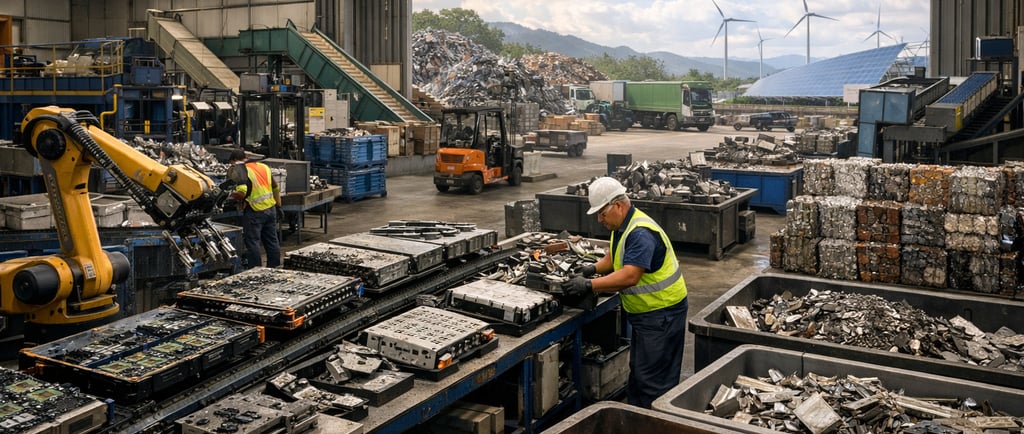
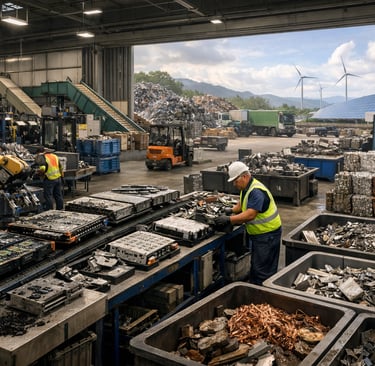
Reverse logistics is taking center stage in forging today’s circular economy. As global industries grapple with resource scarcity, waste management, and supply chain disruptions, the new imperative is clear: keep valuable materials—especially metals—circulating as long as possible. That’s where regional reverse logistics hubs come in. Leveraging tested strategies, emerging technologies, and innovative business models, these hubs serve as the backbone for localized, sustainable take-back systems that transform how products and resources move through an economic ecosystem.
In this comprehensive guide, we'll break down everything you need to know about reverse logistics hubs, from their core functions and strategic advantages to actionable steps for designing, launching, and scaling successful regional take-back networks. We’ll also explore technologies, business models, and real-world case studies that will enable your organization to make a tangible impact in the shift toward closing resource loops—especially when it comes to high-value metals.
What is a Reverse Logistics Hub?
A reverse logistics hub is a specialized facility, network node, or infrastructure point dedicated solely to managing the return journey of products, components, materials, or assemblies that have reached the end of their first lifecycle. Unlike forward logistics, where goods move in a linear flow from manufacturer to distributor to end-user, reverse logistics channels the flow back from end-user toward re-integration—via reuse, repair, refurbishment, reprocessing, or recycling—into the supply chain.
These hubs play a pivotal role in shifting the business landscape from a waste-generating, linear model to a sustainable, regenerative, circular supply chain model. Picture a warehouse humming with activity: used smartphones sorted for parts harvest, electric vehicle batteries undergoing safe disassembly, and scrap metals separated for remanufacturing or smelting. This is not a distant vision—it’s a fast-evolving reality shaping how organizations maximize resource utility, reduce landfill dependency, and build in resilience through circular strategies.
Why Reverse Logistics Hubs Matter
Reverse logistics hubs aren’t mere recycling centers. They’re critical enablers of:
Product take-back schemes for electronics, packaging, and durable goods.
Remanufacturing programs for automotive, industrial, and construction sectors.
Closed-loop recycling—turning end-of-life metals, plastics, and composites into inputs for new products.
Efficient material recovery for high-value components, rare earth elements, and specialty alloys.
By orchestrating the flow, separation, and reintegration of post-use materials, these hubs underpin circular business models, regulatory compliance, and evolving consumer expectations for sustainability and corporate accountability.
The Need for Regional Take-Back Loops in a Circular Economy
Tackling a Global Waste and Resource Crisis with Local Solutions
The world generates more than 50 million metric tons of electronic waste annually—a figure projected to surge to 74 million metric tons by 2030 (source: UN Global E-Waste Monitor). In parallel, urban mining is becoming as important as traditional mining for sourcing metals. However, today’s waste streams—especially metal-rich wastes from vehicles, appliances, and industrial sectors—are still underutilized.
Localized, regional take-back loops address this gap head-on:
Faster response, lower emissions: Proximity reduces the carbon footprint of transport and accelerates the reintegration of materials into local supply chains.
Community-driven solutions: Local stakeholders can flexibly adapt recovery systems to unique material flows, cultural patterns, and regulatory contexts.
Resilient supply chains: Dependence on global imports for metals such as copper, aluminum, and lithium creates vulnerabilities. Regional hubs ensure a more predictable, circular supply.
Why Focus on Metals?
Metals such as steel, aluminum, copper, and critical rare earth elements play a defining role in everything from renewable energy infrastructures to transportation, electronics, and construction. They are uniquely suited for circularity because they can be recycled infinitely with minimal loss of quality.
Yet, each year, over $10 billion worth of precious and high-value metals are lost in e-waste alone (source: World Economic Forum). Regional reverse logistics hubs solve this by:
Systematically recovering and reprocessing metals at the source, before value dissipates or quality degrades.
Enabling local remanufacturing and closed-loop production to keep metals—and the jobs and revenues they create—within the community.
Blueprints for Effective Reverse Logistics Hubs
Building a robust reverse logistics network requires a methodical approach. Here’s a blueprint for success—applicable whether you’re a global enterprise, a mid-sized manufacturer, or a forward-thinking municipality.
1. Mapping Material Flows
Understanding how, where, and when materials become available for recovery is foundational. This strategic material flow mapping should incorporate:
Source locations: Pinpoint households, commercial districts, factories, building demolition sites, and other major “waste” generators within your region.
Volume forecasting: Use local demographic and industrial data to estimate annual flows of specific metals or products (e.g., end-of-life vehicles, used machinery, industrial scrap).
Critical nodes: Identify places where aggregation and sorting can occur efficiently, like urban depots, transfer stations, or existing recycling parks.
Material characteristics: Different metals require different handling; mapping should account for hazardous materials, alloy compositions, or hybrid products (e.g., hybrid car batteries).
Pro Tip: Leverage data analytics and GIS (Geographical Information Systems) to visualize and optimize your network for optimal material flow recovery.
2. Strategic Hub Placement
Location is a key determinant of cost, efficiency, and scalability in reverse logistics operations. Ideal hub locations:
Accessibility: Must be reachable by local waste haulers, contractors, and community members. Proximity to population centers or high-waste-generating industries is vital.
Connectivity: Align hubs with existing transportation—road, rail, or waterway corridors—to facilitate both inbound collection and outbound distribution for reprocessing.
Expansion-ready: Ensure sites can scale as material return rates rise, accommodate new product categories, or integrate advanced technologies.
Integration potential: Sites should be positioned to foster collaboration between recycling plants, remanufacturing centers, repair shops, and secondary commodity marketplaces.
3. Collection and Sorting Technologies
Gone are the days of manual dismantling and mixed waste piles. Technology-driven reverse logistics hubs drive resource efficiency with:
Automated sorting systems: AI-enabled robots and sensor arrays detect and separate different metal types (ferrous, non-ferrous, precious metals), batteries, or hazardous components with precision.
Track-and-trace infrastructure: RFID tags, QR codes, and blockchain-based product passports provide real-time data on product origin, usage history, and component composition—essential for compliance, reporting, and process optimization.
Digital marketplaces: Platforms connecting suppliers of used products, dismantlers, recyclers, and remanufacturers allow for seamless trading, price discovery, and inventory management.
Emerging Fact: In Germany, up to 90% of valuable metals in large appliances are now recovered thanks to automated disassembly lines and track-and-trace systems (source: European Environment Agency).
Tools that Power Circular Reverse Logistics
Innovative tools are the linchpin of modern reverse logistics. Here’s what powers best-in-class circular resource recovery.
a. Smart Tracking Systems
The digitalization of reverse logistics elevates transparency, efficiency, and stakeholder collaboration. Implementing Internet of Things (IoT) devices, NFC tags, or Digital Twin platforms empowers organizations to:
Monitor in real time: Product journey, usage cycles, and return conditions—down to the serial number—can be tracked and recorded for each item.
Analyze circular lifecycles: Data provides actionable insights into product reliability, failure points, and refurbishment opportunities, laying the groundwork for design improvements and predictive maintenance.
Enable seamless recall and targeted campaigns: When faults or hazardous components are detected, tracked products can be swiftly identified and retrieved from the market.
b. Advanced Disassembly and Processing Equipment
Efficient resource recovery from complex products—think copper wiring in electronics, aluminum extrusions in vehicles, or rare earth magnets in wind turbines—demands cutting-edge disassembly:
Robotics and automation: Automated lines strip, sort, and process e-waste, batteries, and assemblies in a fraction of the time compared to manual labor, with higher yields and safer handling.
Magnetic and eddy-current separators: These rapidly segregate ferrous and non-ferrous metals, improving purity and market value.
AI-powered vision systems: Machine learning algorithms detect contamination or hazardous elements that must be removed before recycling or reuse.
c. Reverse Logistics Software Platforms
Software is the nerve center connecting collection, processing, and redistribution. Leading platforms offer:
End-to-end orchestration: From scheduling pick-ups and optimizing transport routes to tracking material status throughout the recovery cycle.
Inventory intelligence: Algorithms forecast part availability for reuse, remanufacturing, or resale, reducing overstock and ensuring timely supply to remanufacturers or secondary markets.
Stakeholder engagement: Automated notifications, dashboard reporting, and integration with ERP/CRM systems enhance communication along the value chain and provide transparency to customers.
Business models that make reverse logistics hubs work financially
Reverse logistics hubs win when they stack revenue streams. You build a “revenue ladder,” not a single income line.
EPR-backed hub operator
Who pays: producers, importers, producer responsibility organizations, and sometimes retailers.
How money moves: you get paid per unit collected, per kg processed, or per verified compliance report.
Why it scales: policy is expanding, and enforcement is rising. The UN also flags that many countries still lack strong e-waste laws and enforcement, which creates room for modern compliance-grade systems to win market share as rules tighten. Reuters+1
Where hubs profit: high capture rates plus high documentation quality. Data becomes part of the product.
Deposit-return and buy-back loops
Who pays: consumers front the deposit, brands fund the system, operators earn handling fees.
Why it works: it makes returns easy and predictable, then concentrates volume into regional processing nodes.
Proof point: Norway’s national deposit system reported a 93% deposit return rate in 2024 and a 98% total collection rate. Infinitum
Hub implication: your hub becomes the “back end” for a dense collection network, with steady inbound flow and clean, sorted material.
Core-return remanufacturing networks
Who pays: customers pay a core charge, they get it back when they return the old part, OEM earns margin on reman.
Best fit: heavy equipment, automotive, industrial components, motors, alternators, pumps, hydraulics.
Why it wins: the “returned core” is inventory. The hub is your intake, triage, cleaning, and routing center.
Proof point: Caterpillar positions Cat Reman parts at roughly 45% to 85% of the price of new parts, tied to core return. Cat
Hub-as-a-service for brands and municipalities
Who pays: cities, OEMs, retailers, fleet owners, and large facility operators.
What you sell: collection orchestration, pickup scheduling, sorting, safe storage, and compliance reporting.
Value driver: fewer fires, fewer violations, fewer surprises, faster turnaround, and verified chain-of-custody.
Parts harvesting and resale, then recycling as last step
This is the highest-margin ladder when you do it right.
Order of value:
reuse and resale
repair and resale
refurbish and resale
remanufacture
recycle for materials
The hub must run like a light manufacturing plant, not a scrapyard.
Critical materials recovery, especially batteries and electronics
This is where the “hub-and-spoke” model shines.
Spokes do collection and safe preprocessing close to source.
The hub does chemistry, refining, and upgrading to saleable outputs.
Reality check on value
E-waste contains enormous value, but most systems fail on capture and documentation.
The Global E-waste Monitor 2024 estimates billions in recoverable resources go unaccounted for, and highlights that rare earth recovery from e-waste meets only about 1% of demand today. E-Waste Monitor+1
That gap is your business case. Your hub closes it with higher capture, higher purity, and stronger proof.
Actionable steps to design, launch, and grow a regional take-back hub
Phase 1: Pick your “anchor stream” and lock supply
If you try to take everything on day one, you lose.
Choose one anchor that brings predictable volume:
packaging deposit stream
consumer electronics and small appliances
EV and industrial batteries
cores from fleets and workshops
demolition and industrial scrap streams
Do this in the first 30 days:
Map inbound volume with named counterparties, not only estimates.
Examples: retailers, telecom stores, OEM service centers, municipal depots, fleet workshops, demolition contractors.
Sign supply agreements that specify:
collection method, contamination limits, ownership transfer point, and data fields required at handoff.
Decide your commercial stance:
you pay for returns, you charge for acceptance, or you run revenue share.
Phase 2: Design the hub like a system, not a building
You need five lanes. Each lane needs its own SOPs, safety rules, and KPIs.
Lane A: intake and verification
You scan, weigh, photo-document, and tag every inbound batch.
Outcome: you can prove chain-of-custody.
Lane B: triage and sorting
You split by value path:
reuse, repair, parts harvest, material recycling, hazardous isolation.
Lane C: safe storage and hazard control
Batteries need strict segregation, fire suppression design, temperature control, and trained handling.
If you cannot run battery safety at a high standard, do not accept batteries.
Lane D: processing and upgrading
You target purity and yield.
Purity drives price. Yield drives margin. Downtime kills both.
Lane E: outbound routing
You ship to:
reman plants, refurb partners, shredders, smelters, hydromet plants, or certified disposal.
Phase 3: Build your data layer as a compliance product
Regulation is moving toward mandatory product information at scale.
In the EU, the Ecodesign for Sustainable Products Regulation entered into force on 18 July 2024, and it is the legal backbone for Digital Product Passports across product groups. European Commission
For batteries, EU rules phase in labeling from 2026, QR code access from 2027, and battery passports for specific battery types. EUR-Lex+1
So your hub should capture, at minimum:
unique identifier (batch, unit, or pallet)
weight and category
origin channel (retail, municipal, B2B, fleet)
condition code (reuse, repairable, recycle-only)
hazard flags (battery type, damaged, swollen, wet)
destination and certificate
recovery yield and residual waste
You sell this twice.
First to regulators and auditors.
Second to buyers who pay more for verified recycled content and traceable feedstock.
Phase 4: Run the hub on measurable targets
Targets that usually separate winners from “busy but broke” sites:
capture rate
How much of the available stream you actually collect.
Deposit systems show what “good” looks like when convenience and incentives align. Infinitum
contamination rate
A small contamination shift can erase your margin.
You need incentives and penalties written into supplier terms.
recovery yield and purity
This is your paycheck.
Example: recycled aluminium can save about 95.5% of energy versus primary production, but only if you deliver clean scrap streams into remelt. International Aluminium Institute
turnaround time
The longer it sits, the more it degrades, especially batteries and mixed electronics.
safety metrics
Battery incidents can shut you down.
Design for prevention, not response.
Detailed case studies with numbers and transferable lessons
Case study 1: Deposit-return as a national reverse logistics machine, Norway
What it is: a country-scale take-back network that feeds centralized sorting and recycling.
Results: Infinitum reported a 93% deposit return rate in 2024 and a 98% total collection rate. Infinitum
Why it matters for hubs:
High return rates come from convenience plus clear incentives.
Clean streams reduce processing cost.
Stable volume makes investment rational.
Lesson to copy:
Build dense return points first, then build or contract a regional processing node sized to that predictable inflow.
Case study 2: Automotive circular hubs, Renault’s Refactory at Flins
What it is: a circular site focused on extending vehicle and component life, then routing the remainder to recycling.
Operational detail: Renault describes industrial refurbishment activities, including wheel rim refurbishment processing up to 30 rims per day, with expected capacity doubling by end of 2025. Renault Group
Strategic point:
This is a hub model that mixes commercial resale, parts recovery, and regulated handling, anchored in OEM standards and brand trust.
Lesson to copy:
A hub earns more when it sits inside an OEM-grade quality system, so resale and reman stay viable.
Case study 3: Core-return reman at scale, Caterpillar
What it is: a mature reverse logistics network built around core return and remanufacturing.
Economics: Cat Reman parts are marketed at roughly 45% to 85% of new part price. Cat
Impact metrics:
Caterpillar reports large resource savings in remanufacturing versus new production, including major reductions in energy, raw material, and emissions in its published figures. https://www.caterpillar.com/en.html+1
Material flow:
Caterpillar reports 147 million pounds of material taken back for remanufacturing through Cat Reman. https://www.caterpillar.com/en.html
Lesson to copy:
The hub is not “reverse shipping.” It is inventory control plus industrial reuse. You win when your intake grading and routing decisions are fast and consistent.
Case study 4: High-throughput disassembly, Apple’s Daisy
What it is: automated disassembly that increases recovery quality for small, complex products.
Throughput: Apple reported Daisy can disassemble iPhones at a rate of 200 per hour. Apple
Evolution: Apple says it expanded Daisy’s capability to disassemble 36 iPhone models. Apple
Lesson to copy:
Automation matters most when products are complex, volumes are huge, and manual disassembly becomes a bottleneck or safety risk. Your hub does not need a “Daisy,” but it does need automation in the steps that control yield and safety.
Case study 5: Battery circularity, Redwood Materials
What it is: an integrated system that collects batteries, processes them, and produces critical materials.
Scale: Redwood says it recovers over 20 GWh of lithium-ion batteries each year and produces more than 60,000 tons of critical materials annually. Redwood Materials
Second-life extension:
Recent reporting describes Redwood building large second-life battery storage, including a 12 MW, 63 MWh deployment at its Nevada campus. The Verge
Lesson to copy:
A modern hub can add a “second-life lane” before recycling. That one lane can change your margin profile, especially as EV retirements rise.
Case study 6: Hub-and-spoke battery preprocessing, Li-Cycle
What it is: a network where spokes handle collection and preprocessing, and a central hub upgrades material.
Hub capacity reference: published project materials describe a planned hub capacity of 35,000 tonnes per year of black mass. Hatch+1
Operational reality: Li-Cycle reported producing about 5,370 tonnes of black mass and equivalents in full-year 2024. Business Wire
Lesson to copy:
Scale does not come from one giant site alone. It comes from distributed intake plus consistent preprocessing standards.
Future trends you should plan for now
Product passports become normal operations
The EU’s ESPR is already in force, and it sets the legal base for Digital Product Passports across product categories. European Commission
Battery information rules also step in hard from 2026 and 2027. EUR-Lex+1
What this changes:
Your hub’s “data exhaust” becomes a required deliverable, not a nice-to-have.
If you cannot prove composition and destination, you lose contracts.
The e-waste gap becomes a supply chain issue, not a waste issue
E-waste hit 62 million tonnes in 2022 and is projected to reach 82 million tonnes by 2030, with documented formal recycling still far below total generation. UNITAR+1
Pressure point:
Companies want domestic or regional supply of metals and critical minerals, not exposure to fragile global routes.
Automation shifts from “sorting help” to “yield control”
Robotics, machine vision, and safer battery handling move from pilot to standard.
Apple’s disassembly automation is a clear signal of where high-volume electronics go. Apple+1
Second-life markets grow fast, driven by grid needs and AI energy demand
Second-life batteries move from niche to mainstream infrastructure, because they still hold useful capacity and can serve stationary storage. The Verge+1
Hub implication:
Add diagnostics, grading, and repurposing partnerships, or you will leave money on the floor.
Metals circularity ties directly to energy and emissions economics
Recycling aluminium can cut energy needs by about 95.5% versus primary production in published industry data. International Aluminium Institute
As carbon costs and disclosure expand, buyers will pay attention to feedstock type and traceability, not only price.
Conclusion: Treat hubs as regional infrastructure, then act
Reverse logistics hubs are not a sustainability side project. They are industrial infrastructure for supply security, compliance, and cost control.
If you want a regional take-back loop that survives contact with real operations, do three things first:
pick one anchor stream and sign supply
design your hub around routing decisions and safety, not storage space
build a documentation layer that stands up to audits and customer scrutiny
The world is already generating the material. The Global E-waste Monitor shows the volume keeps climbing, while formal recovery still lags. UNITAR+1
Your advantage comes from doing the unglamorous work better than everyone else: capture, sort, prove, and route.
Build the hub that makes returns easy. Make output quality predictable. Make compliance automatic. Then your “waste” stream becomes a regional supply stream.
Connect
Your trusted partner for scrap metal procurement.
CONTACT
About
haroon@tdcventures.com
+1-307-655-7593
© 2025. All rights reserved.
NEWSLETTER