
Reward Loops: Tokens for Verified Returns
Discover how verified reward loops and tokenized incentives boost recycling participation, prevent fraud with AI verification, and deliver measurable circular results for cities. Explore real DRS case studies, implementation playbooks, and 2026 trends shaping the next generation of deposit return systems.
AI & DIGITAL ENGAGEMENT IN SUSTAINABILITY
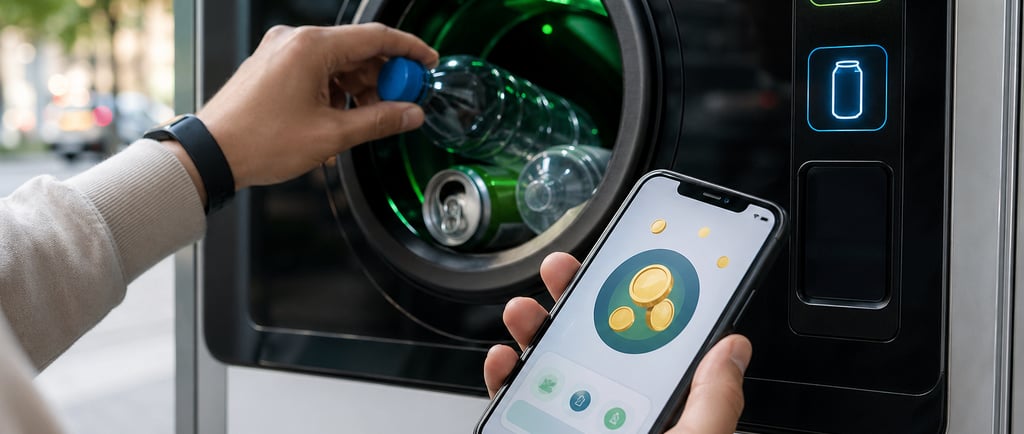
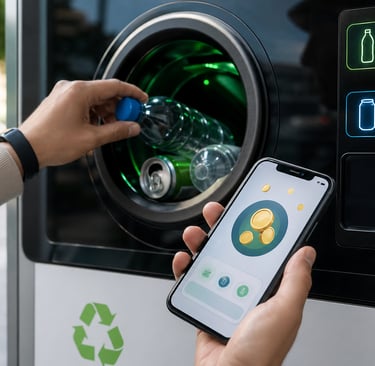
Context: Why Token Reward Loops Matter for Deposit Return Systems
Municipalities and waste-tech founders are increasingly under pressure—not only to increase recycling rates, but also to demonstrate measurable circular action to citizens, regulators, and funders. Deposit return systems (DRS) are a foundational policy in this landscape, credited with driving up beverage container returns by 30–40% in regions where implemented (Source: European Court of Auditors, 2020). However, plateaus in participation and lingering trust barriers in digital recycling apps persist globally.
Why? Traditional collection programs rely heavily on education and static reminders. Research from the Ellen MacArthur Foundation shows that while 70% of consumers recognize recycling’s importance, only 45% consistently participate—unless there are tangible, immediate personal benefits. This “intention-action gap” signals an opportunity: to redesign engagement around outcomes, not intentions.
Digital Transformation and AI Engagement
The digital wave offers new incentives—namely, token-based reward systems. Here, AI engagement acts not just as a facilitator, but as a trust amplifier. Verified reward loops transform the recycling journey from passive participation to an active, rewarding experience, by ensuring every action is instantly recognized, authenticated, and rewarded.
Globally, the expansion of digital payment infrastructure and rising smartphone penetration (forecast to reach 80% by 2025, GSMA Intelligence) further lowers adoption barriers for reward-based DRS platforms. Simply put: the combination of verified digital incentives and seamless AI engagement is emerging as a new gold standard for city-scale recycling.
2. Defining the Problem: Engagement, Fraud, and Measurable Returns
Operational Stakes
Despite widespread DRS adoption in Europe and expanding models in the US and Asia, several acute challenges persist:
Subpar Participation: Regulatory compliance alone doesn’t guarantee high-volume returns. Even advanced markets like Germany or Oregon report a ceiling of 70–75% without strong user incentives.
Unverifiable Claims: Legacy digital reward systems are vulnerable to basic exploits. According to a 2022 audit by the UK National Audit Office, up to 10% of digital voucher claims tied to recycling bins were fraudulent, primarily due to unverified manual uploads and barcode manipulation.
Resource Drain: Manual checks, callbacks for fraud, and arbitration can consume 8–15% of program budgets, diminishing cost-effectiveness and frustrating users.
Reporting Gaps: Municipalities now demand granular evidence of sustainability claims. Funding, especially from ESG-driven grants, is contingent on data that tracks not just downloads or “clicks,” but verified circular action at the point of material flow.
The Engagement Gap
The root issue is clear: without instant, trusted feedback for their actions, individuals disengage, and systems lose momentum. Squarely solving for both participation and authenticity is now essential for any DRS deployment.
3. Key Concepts: Token Mechanics and AI Verification
Understanding the ecosystem behind verified reward loops is critical for sustainable impact. Here’s how key elements function together:
Tokenized Incentives
Digital incentives take various shapes—points, credits, branded city tokens, or even blockchain-based digital assets. For example, Lithuania’s DRS app, “Užstato sistema,” converts each returned item into credits redeemable at public transit terminals and retailers, seeing a >90% cash-out rate.
Attributes:
Transparency: Clearly assigned value per action.
Fungibility: Flexible for user redemption or locked to specific purposes (e.g., donation credits).
Verified Return
AI-powered verification is at the heart of fraud prevention. Image recognition algorithms—leveraging machine learning models similar to Google Vision AI—can classify items with over 98% accuracy post-training. Cross-verification with barcodes, geo-located timestamps, and sensor data add layers of certainty.
Entity: Digital return event
Attributes: Time, place, user, proof (image, barcode, sensor readout).
Reward Loop
The value of the loop is speed and certainty:
Immediate, closed-circuit feedback: Users see results in <10 seconds, boosting dopamine and encouraging repeat engagement.
Personalization: Next-best nudges based on history—e.g., “You’ve returned five bottles! Earn a bonus if you return two more this week.”
AI Engagement
Algorithms go beyond fraud detection—enabling adaptive prompts, fatigue detection, and real-time segmentation. A/B tests have shown that apps integrating real-time nudges (e.g., “bin nearly full—bonus for using another location”) grow session frequency by 25–40%.
Circular Action
The measurable movement of material—from user handoff, to authenticated recycling, to second life—is the gold standard metric for environmental reporting and funding.
4. Framework: The Verified Reward Loop Model
The Verified Reward Loop Model synthesizes token reward systems, AI-powered verification, and user-centric design into a single, scalable process. This model moves beyond static points or occasional gift cards, ensuring every action is authenticated, instantly recorded, and automatically rewarded.
The 5-Step Verified Reward Loop:
Prompt: Apps display location- or behavior-tailored incentives using predictive analytics. Example: Users who haven’t returned items in 2+ weeks are shown double-point offers.
Action: The user returns an item, confirming engagement at the exact location and time.
Verification: AI confirms the action’s validity with layered checks—image scan, barcode lookup, location triangulation, duplicate prevention, and tamper detection. For instance, Singapore’s NEA Smart Bin system uses dual cameras + RFID sensors to combat GPS and barcode spoofing.
Reward: Tokens or credits, often non-transferable, are delivered instantly. The UI suggests the next action, building continuity.
Reporting: Each event is ledgered with a time, location, and verification status, supporting real-time dashboards and regulatory/compliance exports.
Extended Example: Smart City DRS
Manchester’s “Green Streets” pilot uses this model. Users deposit cans at solar-powered kiosks, scan with a mobile app, and receive AI-verified tokens usable for bus fare. The system wires audit-ready data to council dashboards and—crucially—shows pollution reduction in real metrics, not just estimates.
5. Implementation Playbook: Step-by-Step Setup
Building a robust, scalable token rewards program for recycling demands interdisciplinary coordination and methodical rollout. Here’s an expanded, actionable playbook based on real-world pilots and successful city deployments:
Strategic Preparation
Define Target Actions and Scope: Decide if you’ll start with bottles/cans, e-waste, clothing, or mixed recyclables. Data from Oslo’s DRS rollout found single-stream (focused) launches had 34% higher initial engagement than mixed flows.
Segmentation: Identify priority user personas—residents, businesses, event attendees. Personalize initial prompts and reward types by segment.
Technical Execution
Map User Flow: Prototype the journey from notification/prompt to action and reward. Ensure minimal friction: e.g., 2-tap flows outperform 4+ taps by nearly 20% in final conversion.
Select Verification Channels: Use hybrid approaches. Combine image, barcode, geo-locking, and IoT sensors as redundancy (best-in-class pilots report 70% fraud reduction with two-layer checks).
Design Tokenomics: Use local focus groups and A/B pilots to calibrate token value—ensuring it covers at least perceived transport cost or matches a small cash value (~€0.10–€0.15 per item is typical in EU pilots).
Build Fraud Controls: Deploy AI and ML to detect duplicate or spoofed returns—continuously retrain on new data patterns. Review logs for outlier patterns weekly.
Operations and UX
Consent/Data Privacy: Only request compliance-necessary data (GDPR/CCPA alignment), and offer clear privacy guides.
Real-Time Feedback: Users should receive instant notifications and troubleshooting tips if verification fails.
Backend Reporting: Use interactive dashboards by location, date, item, and user cohort. Share summary stats with stakeholders at regular intervals.
Stakeholder Integration: Government, waste haulers, nonprofits, and brand sponsors require role-based access.
Reward Redemption: Local rewards are most effective—fare credits, small retail discounts, or social impact donations. Digital redemptions speed up user cycles.
Contingencies
Edge Case Handling: Build-in systems for dispute resolution, redundancy for offline actions, and processes for lost token recovery.
Customer Support: Multi-channel (chat, knowledge base, hotline). Fast response benchmarks (under 12 hours) drive program trust.
Updates and Maintenance: Quarterly updates to AI models and weekly anomaly reports protect against newly evolving fraud vectors.
Scalability Planning: Pilot in one district, then expand with robust infrastructure for 10x traffic.
Measurement System: What a Verified Return Loop Must Track
A token reward loop only works when it measures the right behavior. The goal is not app downloads, open rates, or token balances. The goal is verified material movement. Every serious deposit return system must prove that a container, item, or material unit moved from the user into an approved return channel, passed a verification event, entered the recovery stream, and produced a clean record for reporting.
This matters because deposit return systems are now moving from “nice environmental programs” to regulated infrastructure. Reloop’s Global Deposit Book 2024 tracks 57 operational deposit return systems covering nearly 357 million people, up from 38 systems covering 280 million people in its first 2016 edition. That growth shows a clear policy direction: governments want measurable, auditable return systems, not loose awareness campaigns.
The strongest measurement system should track five categories.
First, it must track participation quality. This includes active users, repeat returners, lapsed users, first-time users, household-level activity where allowed, and return frequency by location. The most useful metric is not “registered users.” It is “verified returners per 1,000 eligible residents.” This tells a city whether the system is reaching real people, not just collecting dormant sign-ups.
Second, it must track return volume and material mix. A verified reward loop should measure the number of PET bottles, aluminum cans, glass bottles, cartons, e-waste units, textiles, or other eligible items returned by day, hour, site, and channel. This helps operators identify peak times, overloaded kiosks, underused return points, and seasonal shifts. In a mature DRS, the app should not act as a reward wallet only. It should act as a live operating layer for material recovery.
Third, it must track verification confidence. Every return should carry a confidence score. A clean return might include image match, barcode match, geolocation match, reverse vending machine confirmation, and no duplicate event history. A weaker return may include only a user-uploaded image and location ping. These should not be treated equally. High-confidence events can trigger instant rewards. Lower-confidence events can move into manual review, delayed payout, reduced reward value, or a user education flow.
Fourth, it must track fraud signals. Fraud in reward systems usually appears in patterns, not isolated events. The system should monitor duplicate barcodes, repeated image uploads, impossible travel patterns, unusual return spikes, return events outside location boundaries, repeated failed scans, and abnormal activity from new accounts. The purpose is not to punish normal users for mistakes. It is to protect the reward pool from being drained by fake activity.
Fifth, it must track financial performance. Tokens have a cost. Even when they are sponsored, donated, or locked to public services, they still carry economic value. Operators should track reward cost per verified item, reward cost per active user, redemption rate, unused token liability, sponsor-funded reward share, and incremental return volume created by the incentive.
This is where many pilots fail. They celebrate high engagement but never prove whether the incentive created new recycling behavior or merely paid people for behavior they already had. A better measurement model separates baseline returns from uplift. For example, if a neighborhood already returns 10,000 containers per month, and token rewards raise that number to 13,500, the real gain is 3,500 incremental returns. The cost per added return is the real economic test.
The most useful dashboard for a city, brand, or operator should answer these questions clearly:
What was returned?
Who returned it?
Where was it returned?
How was it verified?
Was the reward issued?
Was the reward redeemed?
Did this increase total recovery?
Did it reduce contamination or litter?
Did it improve reporting accuracy?
The best deposit return programs already prove that high return performance is possible when policy, convenience, and incentive value work together. Lithuania’s system reached a total return rate of 90% by the end of 2025, with 90% for PET drink containers, 91% for cans, and 84% for non-reusable glass. Norway’s Infinitum reported a 93% deposit return rate and a 98% total collection rate in 2024. These examples show why measurement must move beyond app behavior. The end target is high-quality material recovery.
Fraud Prevention and Trust Design
Token rewards create motivation. They also create abuse risk. Any system that pays for proof must expect fake proof. That is why verified reward loops need fraud prevention built into the product from day one.
The most common failure is relying on a single proof method. A photo alone is weak. A barcode alone is weak. A GPS pin alone is weak. Even a scan at a kiosk can be gamed if the operator does not check duplication, timing, and item eligibility. A better system uses layered proof.
A strong verification stack includes image recognition, barcode validation, geofencing, timestamp checks, device risk scoring, return-point confirmation, and duplicate detection. Each layer reduces risk. The system does not need to make every return difficult. It needs to apply more scrutiny only when risk increases.
For example, a user returning five bottles through an approved reverse vending machine should receive instant tokens. The machine has already validated the item and location. But a user uploading 80 images from the same phone in 10 minutes from a public bin should trigger review. The difference is context.
Trust design also applies to the user experience. If a legitimate return fails, the user must understand why. A vague “verification failed” message damages trust. A better message says, “We could not read the barcode. Retake the photo with the full label visible.” Another message might say, “This container may not be part of the program. Check for the deposit logo before returning.”
This kind of feedback turns failure into education. It reduces support tickets and helps users learn the rules of the system.
Fraud controls should also protect equity. Not every user has a new phone, strong data connection, or perfect lighting. If verification becomes too strict, the system may exclude older adults, low-income residents, rural users, and people with accessibility needs. This is why manual return points, retailer returns, SMS receipts, and assisted verification still matter.
Retail access is one of the strongest trust builders in DRS design. TOMRA’s 2025 analysis of mature deposit systems found that nine of the world’s ten best-performing systems use some form of return-to-retail collection, with an average return rate of 92%. It also reported a median return rate of 89% for return-to-retail-only systems, compared with 77% for systems without retailer redemption.
That point matters for token systems. Digital rewards should not replace physical convenience. They should sit on top of it. If users must travel too far, scan too many things, or wait too long, token value will not save the system.
A fraud-resistant reward loop should also use payout controls. Operators can apply daily reward caps, delayed payout for high-risk users, lower limits for new accounts, identity checks for high-value redemptions, and stronger review for bulk returns. These controls should be clear enough to avoid confusion but quiet enough that they do not make normal participation feel suspicious.
The safest token systems avoid open cash-like rewards at the start. Closed-loop credits are easier to manage. Examples include transit credits, grocery vouchers, school donations, charity points, utility bill credits, local merchant discounts, or municipal service credits. These rewards still feel valuable, but they reduce the risk of resale, account farming, and organized fraud.
The rule is simple: reward the action quickly, verify the action carefully, and explain failures clearly. Trust rises when users feel the system is fair. Trust collapses when good users are blocked while bad actors keep collecting.
Token Design: How to Make Rewards Valuable Without Creating Wasteful Costs
The token is the visible reward, but token design is really behavior design. A poorly designed token can drain budgets without improving returns. A well-designed token can shift habits, support local partners, and give users a reason to keep participating.
The first decision is token value. If the value is too low, users ignore it. If it is too high, fraud risk rises and the program becomes expensive. Beverage DRS programs often use fixed deposits because the consumer has already paid the amount upfront. Token reward programs for non-deposit items need a different model. They should combine base rewards, streak bonuses, location bonuses, and campaign-based incentives.
A base reward creates fairness. Every verified eligible return earns something. A streak bonus creates habit. Return three weeks in a row and earn extra credits. A location bonus solves operational problems. If one kiosk is underused or one area has high litter, rewards can temporarily increase there. A material bonus helps target high-priority streams. For example, aluminum cans, clear PET, small e-waste, or clean textiles may earn more during specific recovery campaigns.
This is where token loops become more useful than static deposit refunds. Traditional DRS is powerful because it attaches value to packaging. Tokenized reward systems can add timing, place, and behavior sensitivity. They can target the exact weak spots of a recovery network.
But the economics must stay disciplined. Operators should measure the reward cost per added return, not just the reward cost per total return. If a user was already going to return 20 containers, paying extra tokens for all 20 may not create much new behavior. Better design identifies users who are inactive, users near an underused return point, or users who have returned once but not built a habit.
This is where segmentation improves financial performance. New users may need a stronger first-return bonus. Frequent users may respond better to streaks, badges, or local merchant perks. Dormant users may need a short reactivation offer. Families may prefer grocery discounts. Students may prefer transit credits. Community groups may prefer donation pooling.
The strongest reward systems also give users choice. A token wallet can include three paths: redeem for personal value, donate to a local cause, or pool with a community group. Donation options can increase participation among users who do not care about small individual rewards. A school, mosque, church, sports club, animal shelter, or neighborhood group can become a return multiplier.
Unused tokens also need careful management. Breakage, meaning tokens that are earned but not redeemed, may look good financially, but it can damage trust if users feel rewards are pointless. A healthy system should aim for meaningful redemption. Lithuania’s high return performance shows that simple, understood value matters. Its DRS had a 90% total return rate by the end of 2025, with strong rates across PET and cans.
Token design should also avoid encouraging unnecessary consumption. A bad system rewards people for buying more containers. A better system rewards correct returns, reuse, shared drop-offs, community cleanup, and material quality. The message should be “return what you already consume,” not “consume more to earn more.”
For brands, token loops can support extended producer responsibility reporting. For cities, they can help prove behavior change. For waste-tech founders, they can create repeat usage. For residents, they can turn a small environmental action into a visible personal or community benefit.
The best token is not the flashiest. It is the one that changes behavior at the lowest fair cost.
Policy, Compliance, and Data Governance in 2026
By 2026, reward-based return systems sit inside a tougher policy environment. This is no longer a simple app engagement topic. It touches packaging law, consumer protection, data privacy, anti-fraud controls, extended producer responsibility, public procurement, digital payments, and environmental reporting.
The EU is pushing beverage container collection toward hard targets. The Packaging and Packaging Waste Regulation requires member states to reach 90% separate collection for single-use plastic bottles and metal beverage containers by 2029 through deposit return systems unless they meet specific exemptions. That changes the role of DRS technology. It is now part of compliance infrastructure.
For operators, this means verified reward loops must produce audit-ready records. A regulator or funder may ask: how many eligible containers were returned, how many were rejected, where they were collected, what material type they were, and how the system prevented double counting. A simple reward ledger is not enough. The system needs traceable proof.
Data privacy is just as important. A return event can include location, time, device ID, image data, payment details, and user history. This creates risk. The system should only collect what it needs. It should separate personal identity from return-event records where possible. It should retain sensitive data for a defined period, then delete or anonymize it. Users should see a plain-language privacy notice, not a 12-page legal document nobody reads.
A practical governance model should include:
Minimum necessary data collection.
Clear consent for location and image use.
Separate storage for identity and return records.
Short retention windows for raw images.
Longer retention for anonymized audit records.
Role-based access for city teams, operators, brands, and auditors.
Clear appeal routes for rejected claims.
A public explanation of how rewards work.
A fraud escalation process.
A human review path for disputed events.
The app should also support accessibility and inclusion. A token reward loop that only works for smartphone-heavy users will underperform in lower-income areas, rural zones, and older populations. GSMA reported that 58% of the world’s population used mobile internet in 2025, while a large usage gap remains. This means mobile-based reward systems must include assisted channels, retailer receipts, offline redemption options, and non-app alternatives.
This is especially important in emerging markets. Mobile access is expanding, but access does not equal equal digital comfort. A resident may have a phone but limited storage, weak data, shared household access, low digital literacy, or mistrust of app permissions. A successful system designs around these realities.
Digital payment regulation also matters. If tokens can be redeemed for cash, traded, transferred, or converted into monetary value, the operator may face financial compliance requirements. Closed-loop, non-transferable rewards are usually easier to manage. Public transit credits, grocery coupons, school donations, and municipal service credits are lower-risk than open-wallet tokens.
Environmental claims must also be controlled. A reward loop should not tell users, “You saved the planet.” It should show specific, defensible claims. For example: “You returned 18 PET bottles this month.” “Your neighborhood returned 12,400 containers in April.” “This site collected 3.2 tonnes of aluminum this quarter.” These are cleaner, more credible, and easier to audit.
The safest claim is tied to a verified event. The strongest claim is tied to actual material recovery. The weakest claim is a broad carbon or circularity statement with no proof trail.
Scaling the System: From Pilot to Citywide or National Rollout
A verified reward loop should not start with a national launch. It should start with a controlled pilot that tests user behavior, fraud risk, return infrastructure, reward economics, and partner operations.
The first phase should cover one clear material stream. Beverage containers are the easiest starting point because they have standard packaging, barcodes, high public familiarity, and existing reverse vending infrastructure in many markets. Once the return flow works, the system can expand into e-waste, textiles, reusable cups, batteries, or take-back programs.
A strong pilot should last 90 to 180 days. Shorter pilots may capture novelty, not habit. Longer pilots can waste money if core assumptions are wrong. The pilot should test different reward types, return locations, reminder timing, verification rules, and user segments.
The key question is not “Did people try it?” The key question is “Did people repeat the behavior after the first reward?”
The rollout should follow four stages.
Stage one: controlled proof. Test a narrow geography, a small number of return points, and one or two reward types. Measure verification accuracy, user drop-off, fraud attempts, support tickets, return volume, and redemption.
Stage two: operational stress test. Add more locations, different user groups, and peak-time pressure. Test kiosk uptime, retailer workflows, network delays, image quality issues, and support response.
Stage three: partner expansion. Add local merchants, transit providers, schools, community groups, brands, haulers, and municipal teams. Test reporting permissions, reward funding, sponsor visibility, and public communications.
Stage four: system expansion. Add new materials, larger geography, language support, accessibility paths, and advanced analytics. By this point, the operator should have enough evidence to adjust token value without guessing.
Romania’s DRS offers a useful scaling lesson. Its RetuRO system launched in November 2023 and collected more than 7.5 billion containers by September 2025, with some months reaching return rates as high as 94%. The system used a nationwide logistics network, public-private management, retailer participation, and traceability software. By November 2025, public reporting noted more than 8 billion returned containers and return rates above 90% for PET, aluminum, and glass in September 2025.
Ireland shows another scaling lesson: public resistance can fade when the system becomes familiar and convenient. Its DRS launched in February 2024 and saw monthly returns rise from 2 million containers in February to 111 million by August, with 630 million containers returned in the first eight months. That pattern matters for reward loops. Early confusion does not always mean failure. It may mean the system needs clearer labels, better return locations, and stronger public explanation.
Scaling also requires maintenance discipline. AI verification models need retraining as packaging changes, fraud patterns shift, lighting conditions vary, and new material streams enter the system. Reward economics need quarterly review. A token value that works during launch may become too expensive at higher volume. A fraud rule that works in one city may create false rejections in another.
The best expansion strategy keeps the system understandable. Users should always know three things: what qualifies, where to return it, and what they receive. If the rules become too complex, participation falls.
Industry Case Studies
Romania: Fast National Adoption Through Clear Deposits and Traceability
Romania has become one of the most important modern DRS examples because of its speed. Launched in November 2023, RetuRO built one of the largest deposit return systems in the world in less than two years. By September 2025, it had collected 7.5 billion containers and diverted more than 500,000 tonnes of recyclable materials from waste streams, according to reporting on the scheme.
The lesson for token reward loops is simple: scale needs more than an app. Romania combined a refundable deposit, retailer obligations, logistics infrastructure, public messaging, and traceability. Digital rewards can improve this model, but they cannot replace the physical network that makes returns easy.
Lithuania: High Trust Through Simplicity and Retail Access
Lithuania is one of the cleanest examples of high DRS performance in a smaller national market. By the end of 2025, its system achieved a 90% total return rate, including 90% for PET containers and 91% for cans. Earlier program data also shows how quickly behavior shifted after implementation. PET return rates rose from 34% before the deposit system to much higher levels after launch.
The lesson is that users respond when the rules are simple and the return path is visible. For token systems, Lithuania suggests that reward value should be easy to understand. A confusing token economy will not beat a simple deposit that people trust.
Norway: Producer Incentives and High Collection Performance
Norway’s Infinitum system shows how producer incentives can support high collection rates. In 2024, Infinitum reported a 93% deposit return rate and a 98% total collection rate. Norway also links high return performance to producer fee relief, which gives industry a clear financial reason to support the system.
For verified reward loops, this creates a powerful model. Brands and producers should not only fund rewards for public goodwill. They should fund them because verified returns can reduce compliance risk, improve material access, and support reporting.
Ireland: From Public Pushback to Rapid Behavior Shift
Ireland’s DRS proves that early frustration does not always predict long-term adoption. The scheme launched in February 2024 and faced public criticism at first. But returns increased sharply, reaching 111 million containers in August 2024 and 630 million containers in the first eight months. Later reporting noted more than 900 million bottles and cans returned through over 2,600 reverse vending machines and around 470 manual return points.
The lesson is that education must continue after launch. Token reward loops should include first-use guidance, clear error messages, visible community progress, and location-specific prompts. Users do not need a lecture. They need a system that explains itself while they use it.
Australia: Deposit Value and Access Still Matter
Australia is useful because it shows the limits of a low-value incentive. Campaigners argued in 2025 that Australia’s 10-cent refund was not strong enough to reach top global performance, with national return rates around 65% and billions of eligible containers still ending up in landfill or litter.
The lesson is direct: token reward loops cannot rely on novelty. If the reward does not feel worth the effort, many users will not change behavior. Convenience, deposit value, and public habit all shape performance.
2026 Trends Shaping Token Reward Loops
The first trend is the shift from recycling awareness to verified circular action. Cities and brands are under pressure to prove results. They can no longer point to impressions, pledges, or campaign reach. They need verified returns, cleaner material streams, and auditable reports.
The second trend is the rise of return-to-retail as a performance driver. Mature systems with retailer involvement outperform systems that rely only on depots or limited return points. TOMRA’s analysis found stronger return rates in systems with retail return options. Token systems will follow the same pattern. Rewards work best when the return point is already part of daily life.
The third trend is the growth of app-linked verification. As mobile infrastructure expands, more programs will connect user accounts, QR codes, reverse vending machines, receipt scanning, and digital wallets. GSMA’s Mobile Economy 2026 reported that mobile technologies and services generated $7.6 trillion for the global economy in 2025, equal to 6.4% of global GDP. This scale makes mobile-based reward systems practical, but the usage gap means non-app routes must remain available.
The fourth trend is sponsor-funded reward pools. Brands, retailers, event organizers, and local merchants will increasingly fund tokens in exchange for verified public benefit, footfall, loyalty, or compliance support. A grocery chain may sponsor bonus credits for returns at its stores. A transit agency may offer fare credits. A beverage brand may fund community cleanup rewards tied to verified container collection.
The fifth trend is anti-fraud AI becoming standard. As rewards become more valuable, fake claims will rise. Image verification, duplicate detection, geolocation checks, device risk scoring, and return-point validation will move from optional features to basic requirements.
The sixth trend is the expansion from beverage containers into harder categories. Once verified reward loops mature, they can support batteries, e-waste, textiles, reusable packaging, take-back programs, event waste, and construction material recovery. Each category will need different proof rules. A can is easy to scan. A textile bag requires weight, image review, and contamination checks. A phone return may require serial number checks and privacy-safe handling.
The seventh trend is regulation pushing standard reporting. With the EU’s 90% collection target for beverage containers by 2029, DRS reporting will become more formal. Systems that can export clean records by material, location, date, and verification status will have an advantage.
The eighth trend is community reward pooling. Small individual rewards can feel weak. Community goals can feel stronger. A school that earns playground funds, a neighborhood that funds tree planting, or a local charity that receives pooled credits can turn routine returns into shared progress.
Conclusion: The Future of Reward Loops Is Verified, Local, and Measurable
Token reward loops are not about making recycling feel trendy. They are about making correct returns visible, valuable, and provable.
The strongest systems combine four things: clear incentives, convenient return points, layered verification, and useful reporting. Remove any one of those pieces and the system weakens. Rewards without convenience become ignored. Convenience without verification invites fraud. Verification without trust frustrates users. Reporting without real material movement becomes empty marketing.
The global direction is clear. Deposit return systems are expanding. Policy targets are getting stricter. Citizens expect simple digital experiences. Cities need better proof. Brands need cleaner material recovery. Waste-tech founders need repeat behavior, not one-time downloads.
The next generation of DRS and take-back programs will not be judged by how many people saw a recycling message. They will be judged by how many verified returns they created, how much material they recovered, how much fraud they prevented, and how clearly they proved the result.
The winning model is practical: reward people quickly, verify returns carefully, keep the rules simple, protect user trust, and report real material outcomes. That is how token loops move from a clever app feature to serious circular infrastructure.
Connect
Your trusted partner for scrap metal procurement.
CONTACT
About
haroon@tdcventures.com
+1-307-655-7593
© 2025. All rights reserved.
NEWSLETTER