
SMS Drip Campaigns for Take-Back Programs
Discover how SMS drip campaigns turn consumer intentions into confirmed returns for electronics, batteries, packaging, and apparel. Explore strategy, segmentation, metrics, and real-world success stories that drive measurable circular economy results.
AI & DIGITAL ENGAGEMENT IN SUSTAINABILITY
Instant Answer
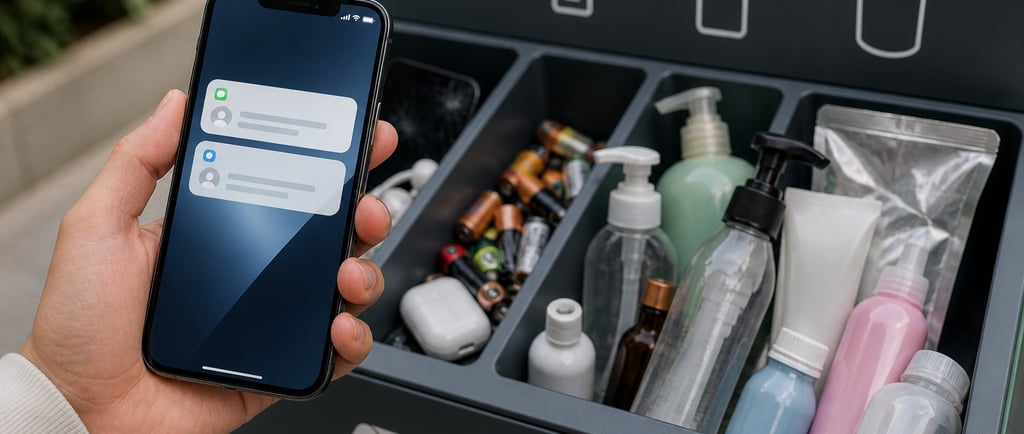
SMS drip campaigns help take-back programs move people from good intentions to confirmed action. For electronics, batteries, packaging, apparel, beauty empties, cartridges, refillables, and reusable containers, SMS works because it reaches people at the exact moment they are most likely to act: after purchase, before disposal, near a drop-off point, during a repair window, or after a product reaches the end of its useful life.
In 2026, this matters because take-back programs are no longer a side project for sustainability teams. They are tied to Extended Producer Responsibility rules, packaging waste reduction, battery collection targets, e-waste recovery, repair culture, reuse adoption, compliance reporting, and brand trust. The OECD defines Extended Producer Responsibility as a policy approach that makes producers responsible for products across their lifecycle, including the post-consumer stage, and notes that EPR helps fund collection, sorting, recycling, and treatment while improving data on waste flows.
SMS is not magic. It is a high-intent behavior channel. It works when consent is clear, timing is precise, messages are useful, and every nudge connects to a real-world action. The best SMS take-back campaigns do not simply say "please recycle." They tell the user what item qualifies, why now matters, where to take it, what they get, what happens next, and how their action is confirmed.
Context: Why SMS Drip Campaigns Matter for Take-Back Programs in 2026
Take-back programs have entered a stricter phase. Brands, retailers, municipalities, Producer Responsibility Organizations, and circular startups are under pressure to collect more material, prove where it went, and show that consumer engagement created measurable results.
For years, take-back programs relied on passive participation. A bin near the entrance. A line on a receipt. A sustainability page on the website. A QR code on packaging. A yearly awareness campaign. These tactics still matter, but they assume the user will remember, care, search, travel, and act without support. Most people do not.
The real problem is not always awareness. Many consumers already know that phones, batteries, textiles, beauty empties, and packaging should not end up in landfill. The problem is friction. People forget. They do not know which items qualify. They do not know whether the program is still active. They do not know the nearest location. They worry the return process will take too long. They hold items at home until they become clutter. Then they throw them away during a cleanup.
SMS solves a specific part of that problem. It gives the program a direct, time-sensitive route back to the user. It does not ask the user to remember the program. It brings the next step to them.
The need is urgent. The world generated about 62 million tonnes of e-waste in 2022, and that figure is expected to reach 82 million tonnes by 2030. Only 22% of that e-waste was properly collected and recycled in 2022, and the rate could fall to 20% by the end of the decade if infrastructure and participation do not improve. This is exactly the kind of gap where SMS can help, because e-waste often sits in homes for months or years before disposal. A timely nudge after warranty expiry, device upgrade, repair failure, battery replacement, or product trade-in event can bring that material back into a controlled channel.
Packaging is under similar pressure. The EU's packaging waste has risen by more than 20% over the last decade, with each European generating almost 190 kg of packaging waste per year. EU negotiators agreed on packaging reduction targets of 5% by 2030 and 15% by 2040, with all packaging required to be recyclable by 2030. In markets moving toward reuse, refill, and return systems, the communication layer becomes just as important as the collection layer. A reusable container system fails if people do not bring containers back. A refill program fails if the customer forgets the next refill window. A mail-back program fails if the return label sits unopened.
Canada's policy direction points to the same shift. Canada's Single-use Plastics Prohibition Regulations are part of a national plan to reach zero plastic waste by 2030 and prohibit the manufacture, import, and sale of several single-use plastic categories, including checkout bags, cutlery, certain foodservice ware, ring carriers, stir sticks, and straws. Regulation reduces some waste at the source, but take-back systems still need consumer action for items that remain in circulation.
This is why SMS drip campaigns matter. They connect policy goals to household behavior. They turn a program from "available" into "used."
What an SMS Drip Campaign Means in a Circular Take-Back Program
An SMS drip campaign is a planned sequence of text messages sent over time based on user consent, behavior, product ownership, location, purchase history, or program milestones. In a take-back program, the goal is not only engagement. The goal is a confirmed return, repair, refill, reuse, or recycling event.
A simple SMS drip campaign might look like this:
A customer buys a rechargeable device. The receipt asks for SMS consent to receive product care, repair, and recycling reminders. Six months later, the customer receives a message with battery care guidance. Twelve months later, they receive a reminder about repair or trade-in options. Eighteen months later, if a new model launches or the device becomes inactive in the connected app, they receive a return offer with the nearest drop-off point or a mail-back link. After return, they receive confirmation and an impact receipt.
That is a take-back SMS campaign in practical terms. It is not a blast. It is a lifecycle flow.
The strongest campaigns usually include five parts.
First, the trigger. This could be purchase date, warranty expiry, product registration, app inactivity, subscription cancellation, local collection day, repair eligibility, refill cycle, seasonal decluttering, or a hazardous waste event.
Second, the audience segment. A first-time buyer needs a different message than a loyal customer. A customer who lives 0.5 km from a drop-off point needs a different call to action than someone who needs a mail-back label. A user who has returned before can be asked to repeat the action. A user who ignored two messages should be paused or moved to email.
Third, the message promise. The user needs to know what happens if they act. Do they receive store credit? A repair slot? A prepaid label? A deposit refund? Loyalty points? Proof of environmental impact? A safer disposal route?
Fourth, the action path. The SMS must reduce decision work. The best message gives one clear action: "Get your return label," "Find the nearest drop-off," "Book a repair pickup," "Reply YES for a battery bag," "Tap to schedule a refill return."
Fifth, the confirmation layer. A take-back program should not stop at clicks. It should confirm action through QR scan, POS scan, unique code, warehouse receipt, app check-in, locker deposit, courier scan, or drop-off validation.
This distinction matters. A sustainability team may celebrate a 25% click rate, but if only 4% of users complete the return, the campaign did not deliver the intended outcome. The goal is not attention. The goal is material recovery.
Why SMS Works Better Than Passive Sustainability Messaging
SMS works because it matches the behavior problem. Take-back participation is usually time-sensitive, location-dependent, and easy to delay. SMS is immediate, direct, and personal.
SMS benchmark claims often state 90% to 98% open rates, but serious marketers should treat these numbers carefully. SMS does not track opens the way email does. There is no tracking pixel for a standard text message. The better way to think about SMS is visibility and action. If the message is delivered, there is a high chance it will be seen. The real proof is click-through, reply rate, return booking, code redemption, and confirmed collection.
This matters for sustainability programs because passive channels often fail at the point of action. A web page can explain what to recycle, but the user must search for it. A poster can raise awareness, but the user must remember it later. A packaging icon can signal recyclability, but local rules may differ. A mobile app can support repeat participation, but users may turn off push notifications or stop opening the app.
SMS sits closer to action.
If a user bought a cosmetic product 70 days ago, an SMS can remind them when the container is likely empty. If a customer lives near a store with a beauty empties bin, SMS can include that location. If a person buys a power tool battery, SMS can explain how to return it safely. If a reusable cup deposit is about to expire, SMS can prompt return before the user loses the deposit. If a city runs a one-day e-waste event, SMS can send a reminder the night before and the morning of the event.
The real strength is timing. Sustainability intent fades fast. A person may care about recycling when they buy a product, but that motivation is weaker months later when the product reaches end of life. SMS rebuilds that intent at the moment it matters.
There is also a trust benefit. A take-back SMS can show that the program is active, specific, and easy. Users are more likely to act when they feel the brand or program has removed uncertainty. Instead of "Recycle responsibly," the message says, "Your used cartridge qualifies for free return. The nearest drop-off is 1.2 km away. Tap for hours." That is useful. Useful messages reduce opt-outs because they save time.
Use Cases Across Circular Take-Back Categories
SMS drip campaigns can support nearly every product category where recovery depends on user participation. The message strategy changes by category, because the barrier to action changes.
Electronics and e-waste
Electronics take-back campaigns need to solve storage, data security, and convenience. People often keep old devices in drawers because they worry about personal data or believe the item may still have value. A strong SMS flow explains wipe procedures, trade-in value, repair options, and certified recycling.
For example, a retailer can trigger messages after purchase registration, warranty expiry, repair inquiry, new product launch, or accessory replacement. A user who bought wireless earbuds may receive a reminder after two years with three options: repair, trade-in, or certified recycling. A user who bought a laptop may receive a data wipe guide before the return link. This is important because e-waste contains hazardous substances and valuable materials, yet only a small share of global e-waste is formally collected and recycled.
Batteries
Battery returns need urgency and safety. The barrier is not only convenience. It is risk. Lithium-ion batteries can create fire hazards when damaged, stored improperly, or thrown into the wrong waste stream. SMS campaigns for batteries should use clear safety language, local drop-off information, and quick action prompts.
A battery stewardship program can trigger SMS reminders during seasonal periods when battery use rises, such as holidays, home renovation months, storm season, or back-to-school shopping. It can also send location-based reminders near participating retailers. For safety-related categories, SMS should avoid vague environmental language and focus on immediate, practical action: "Do not place loose batteries in household waste. Tape terminals and drop them at the nearest collection box."
Apparel, footwear, and textiles
Textile take-back is different because the user may not see old clothing as waste. The item may be emotionally attached, stored, donated, repaired, resold, or forgotten. SMS campaigns should focus on repair, resale, donation, and return choices.
The OECD has noted that EPR in the garment sector can help improve collection and sorting while supporting repair and reuse. A fashion brand can use SMS to prompt repair at the six-month mark, resale at the one-year mark, and return when a product line is discontinued. The strongest campaigns avoid guilt. They make the user feel smart for extending product life.
Beauty, personal care, and household packaging
Beauty empties and household packaging have a volume problem. Individual items are small, but total waste can be significant. The barrier is forgetfulness. Customers finish products in bathrooms, kitchens, or laundry rooms, then dispose of them quickly.
SMS can help by tying the reminder to the likely usage cycle. A moisturizer purchased every 60 days can trigger a reminder at day 55. A shampoo bottle can trigger a refill or return prompt based on replenishment patterns. A brand can ask the user to collect three empties and bring them back for points. The message must make the action feel easy, because the item value is low.
Reusable packaging and refill systems
Reuse systems depend on repeat behavior. A reusable container that is not returned becomes a cost, a lost asset, and a reporting problem. SMS can send return deadlines, nearby return points, deposit reminders, refill prompts, and proof of completed return.
This is where SMS can protect program economics. If a reusable cup, food container, shipping tote, or refill bottle has a deposit or asset value, a late return affects both inventory and cost. A reminder sent 24 hours before a return window closes can reduce leakage. A second reminder with the nearest location can improve recovery. A final confirmation can reinforce the habit.
Automotive, tyres, cartridges, and specialty materials
Specialty take-back programs need clarity. Many users do not know where to return printer cartridges, tyres, oil containers, filters, or small automotive parts. SMS works well when linked to purchase records, service records, or dealer networks.
For cartridges, SMS can trigger after estimated page yield. For tyres, it can trigger after seasonal changeover. For oil containers or filters, it can trigger after a service appointment. The message should connect the item to a known location, not ask the user to search.
Building the SMS Drip Strategy Before Writing Messages
Many take-back SMS campaigns fail before the first message is sent. The reason is simple. Teams write messages before they map the behavior.
A strong strategy starts with one question: what exact action must the user take?
That action should be specific. "Recycle more" is not specific. "Return your used battery pack to a participating retailer within 14 days" is specific. "Book a repair pickup for your jacket before winter" is specific. "Mail back three empty cartridges using a prepaid label" is specific.
Once the action is clear, build the campaign backward.
Define the return event
A return event is the moment the program counts success. It might be an in-store scan, courier pickup, locker drop, warehouse receipt, repair booking, refill completion, donation confirmation, or app-verified return. Without this definition, the SMS campaign can only measure digital intent.
For a serious take-back program, every message should point toward a measurable event. This is what separates circular engagement from awareness marketing.
Map the user journey
The user journey should show the full path from product ownership to return. A simple model looks like this: purchase, use, reminder, intent, action, confirmation, repeat behavior.
Each stage has a different communication job. At purchase, the message should secure consent and explain the benefit. During use, it should offer care, repair, or refill help. Near end of life, it should prompt return. After action, it should confirm impact. Later, it should invite repeat participation.
This journey must also include dead zones. A dead zone is where users disappear. For example, they click the return link but do not print the label. They request a repair slot but do not attend. They start the app return process but do not scan the code. They bring the item to store but staff do not process it properly. SMS can reduce these gaps, but only if the program knows where they happen.
Segment the audience
Segmentation makes the difference between a helpful reminder and an irritating message. A take-back campaign should never treat every user the same.
Useful segments include:
First-time customers who need education.
Repeat customers who already understand the program.
High-value product owners with stronger recovery value.
Nearby users within a practical distance of a drop-off site.
Mail-back users who need packaging and label support.
Repair-eligible users whose item may not need recycling yet.
Lapsed users who opted in but never completed a return.
High-engagement users who can be asked to share, refer, or join a pilot.
Location, product type, purchase date, consent status, prior return history, and preferred channel are often enough to create better flows. AI can help predict which users need a reminder, which users should be paused, and which users are likely to return through a specific channel, but the logic must stay explainable and consent-based.
Set the campaign cadence
SMS frequency is where many brands damage trust. A take-back SMS program should feel useful, not aggressive. For most take-back flows, a clean sequence works best: confirmation after opt-in, one educational message, one action prompt, one reminder, one final fallback, then pause.
The cadence should change by urgency. A hazardous waste collection day may justify reminders one week before, one day before, and the morning of the event. A textile repair program may need a slower rhythm over several weeks. A reusable packaging deposit return may need a deadline-based sequence.
The rule is simple: more urgency can justify more frequency, but only when the user understands why the message matters.
Design the incentive
Incentives work best when they are immediate, clear, and linked to the action. A small store credit, deposit refund, loyalty points, repair discount, transit credit, donation match, or instant impact receipt can improve follow-through.
But incentives should not hide a weak process. If the return location is far away, the app is confusing, or the staff cannot process returns, a discount will not fix the problem. Incentives increase motivation. They do not remove operational friction.
For take-back programs, the best incentive is often a mix of practical value and proof. The user gets something tangible, and they also receive confirmation that their item was returned, repaired, reused, or recycled. This matters because consumers are more skeptical of vague sustainability claims in 2026. Proof builds trust.
Build consent and compliance from the start
SMS is a regulated channel. A take-back program needs clear opt-in, clear purpose, message frequency expectations, sender identity, and easy opt-out. Compliance is not a legal footnote. It is part of user trust.
A user who opts into order updates has not automatically opted into take-back reminders. A user who joins a loyalty program has not automatically agreed to sustainability SMS. A user who gives a phone number at checkout still needs clear consent for the messages they will receive.
A compliant take-back SMS flow should state what the user is signing up for, how often messages may arrive, how to stop messages, and where to find privacy terms. It should also store consent records by timestamp, source, wording, region, and phone number. This becomes important when programs operate across markets with different privacy, telecom, and consumer protection rules.
Connect SMS to operations
The SMS campaign must match real operational capacity. If a message sends users to a drop-off site, that site must accept the item. If a campaign promises a prepaid label, the label must work. If a repair pickup is offered, appointment slots must exist. If a brand offers points, the reward must post correctly.
This is where take-back campaigns differ from standard marketing. A broken link in a normal campaign loses a sale. A broken link in a take-back campaign can damage compliance, inventory planning, customer trust, and sustainability reporting.
Before launch, test the full path. Tap every link. Scan every code. Visit sample drop-off locations. Confirm store staff instructions. Check label generation. Confirm CRM updates. Verify that the return event reaches the reporting dashboard. Test opt-out. Test language versions. Test what happens when inventory, slots, or locations change.
Create message principles
Good take-back SMS copy is short, specific, and useful. It should answer five questions quickly.
What item is this about?
Why am I receiving this now?
What should I do?
How easy is it?
What happens after I act?
A weak message says: "Help us protect the planet. Recycle your old electronics today."
A stronger message says: "Your old earbuds qualify for free return. Drop them at 142 Main St or get a prepaid label. Tap to choose."
The stronger version works because it names the item, gives options, and reduces effort. It does not rely on guilt. It gives the user a next step.
Prepare for measurement before launch
Measurement should be designed before the campaign goes live. Every flow needs tracking links, unique return codes, location IDs, product IDs, consent records, segment labels, and confirmed return events. Without this structure, the team will only see message activity, not circular impact.
The best programs measure at three levels.
The first level is channel health: delivery rate, reply rate, click rate, opt-out rate, complaint rate, and consent quality.
The second level is behavior: label requests, drop-off searches, repair bookings, completed returns, repeat returns, and time from reminder to action.
The third level is circular impact: units collected, weight recovered, hazardous items diverted, reusable assets returned, repair completions, avoided disposal, material value recovered, and verified downstream processing.
Once the foundation is built, the next challenge is proving that the campaign works. SMS take-back programs must be judged by more than opens and clicks. They need scorecards, quality checks, conversion metrics, compliance monitoring, and field-level reporting that links digital nudges to physical recovery.
6. Measurement and Quality Assurance: Scorecard and Metrics
Maximizing the success of AI-powered SMS drip campaigns isn't only about sending the right message—it's about meticulously tracking outcomes and continuously improving. Effective measurement ensures that every nudge supports regulatory compliance, enhances digital engagement, and drives genuine behavior change in recycling or take-back programs.
Key Metrics for Take-Back SMS Campaigns
Weekly Metrics:
Opt-in Rate: Measures the percentage of users consenting to SMS engagement. High opt-in rates (>30%) signal strong trust and receptivity.
SMS Open Rate: Industry benchmarks for SMS are notably higher than email, often exceeding 70%. For instance, 80% open rates aren't uncommon in retail and sustainability campaigns.
Click-Through / Action Rate: Tracking links, QR codes, or reply triggers within SMS allow brands to gauge precise user intent. A 27–35% action rate indicates healthy engagement.
Return / Collection Conversion Rate: Tracks actual returns linked to campaign messages, the truest metric of digital behavior change.
Bounce and Opt-Out Rates: Identify deliverability issues or signs of message fatigue. Aim for <2% opt-out to maintain channel health.
Monthly Metrics:
Total Return Volume: Net increase compared to baseline, measured by unit, weight, or CO2-equivalent saved.
Channel Preference: Percentage splits between drop-off vs. mail-in, or app-initiated vs. SMS-initiated returns.
User Satisfaction: Quantified via post-interaction surveys (1–5 scale), with a target above 4.5 for top-tier programs.
Compliance Events: Incidents where privacy, consent, or regulatory criteria weren't met, which must remain at zero for risk mitigation.
Lifecycle Engagement: Percentage of users repeat returning, showing the campaign's role in habitualizing circular behavior.
Scorecard Model—From Insight to Action
An actionable scorecard doesn't just report on current performance; it flags corrective priorities and sprint targets. Here's an enhanced model for rapid iteration and escalation:
MetricCurrent (June '24)Target (Q3 '24)StatusAction NeededSMS Opt-in Rate28%35%🔴Improve onboarding UXSMS Open Rate69%72%🟠Test subject linesClick-to-Action Rate27%33%🟡Refine incentivesConversion (Return Completed)12%18%🔴Tweak reminder timingOpt-out Rate2.5%<2%🔴Reduce frequencyCompliance Incidents10🔴Audit permissionsUser Satisfaction (1–5)4.14.6🟠Update message content
Iterative Improvement:
Quarterly reviews identify where drop-offs occur—e.g., if SMS open rates plateau but conversions fall short, experiment with A/B tested incentives or revised follow-up intervals.
Automated dashboards present real-time data, integrating with recycling apps or POS to directly link digital engagement with physical returns.
Industry Benchmarks and Quality Assurance
Recycling and take-back program benchmarks show that campaigns leveraging personalized, AI-timed SMS flows routinely double or triple baseline return rates (McKinsey, 2023; RCS Recycling Study, 2022). For example, typical open rates for generic reminders hover at 55%, but AI-optimized flows see rates above 70% with 20–30% higher conversion.
Quality assurance involves:
Frequent link testing to verify tracking accuracy.
Periodic privacy and opt-out audits for compliance.
User surveys post-action to collect qualitative insights, informing future segmentation and personalization strategies.
Proactive measurement ensures your campaign shifts from transactional touchpoints to a sustained channel driving circular economic outcomes.
7. Case Patterns: Mini-Scenarios from the Field
Real-world deployments of AI-driven SMS drip campaigns for circular take-back and recycling highlight dramatic improvements in participation and digital engagement. Let's dig deeper into how tailored strategies deliver distinct results in varied verticals.
Scenario 1: Electronics Retailer Reboots E-Waste Campaign
Summary:
A national retailer specializing in small electronics struggled to surpass an 8% return rate for obsolete devices. With regulatory pressure mounting—for instance, EPR requirements targeting 20% return rates—the brand implemented an AI-powered SMS drip flow with personalized incentives.
What Changed:
Integration with POS & app: SMS campaign triggered for customers as warranties expired or new models released.
Micro-commitments: Users first asked to reply YES for a free label, then nudged at "times of intent"—e.g., after device inactivity detected via companion app.
Impact: Take-back rates surged to 16% in three months, with opt-out rates below 2%. Real-time dashboard alerts enabled staff to prioritize high-value collections and optimize logistics, halving collection costs per device.
Scenario 2: Apparel Brand Pilots Repair Pickup
Summary:
A circular fashion brand aimed to increase garment repair requests via its digital platform to cut landfill disposal and boost brand loyalty.
AI Engagement Approach:
Segmented reminders: Customers who purchased textiles >6 months ago received timed SMS nudges on Sunday evenings (peak engagement window from prior A/B tests).
Dynamic incentives: Repair requests coupled with instant digital impact badges ("You saved 300g landfill this week!").
Result: Repair appointments rose 35%, with younger demographics (ages 25–35) showing even higher conversion. Brand NPS jumped 20%, demonstrating direct brand trust gains.
Scenario 3: Producer Responsibility Organization (PRO) Drives Battery Returns
Summary:
A battery stewardship coalition serving dense urban regions needed to ramp up returns and avoid penalties for hazardous disposal.
Execution:
Geo-targeted SMS nudges: Campaigns centered around city recycling days, using local language and custom incentives for each district.
Gamified feedback: Every drop-off earned points redeemable for local transit credits.
Outcome: Participation improved 21% year-on-year, hazardous incidents dropped by 30%, and tracked consent compliance surpassed audit requirements.
Scenario 4: Reuse Platform Moves Users from Signup to Action
Summary:
A fast-growing reuse app saw over 50% user "ghosting"—high signup numbers but few first-time returns.
Solution:
AI-based segmentation: Lapsed users received a different, empathy-based SMS series ("We noticed you haven't had time to reuse your last item—need help?").
Impactful messaging: Adding personalized impact links ("See your first return's carbon savings") increased emotional investment.
Results: First-action rates rose from 14% to 29%; user retention in the app's second cycle improved by 200%.
Backed by Data
These scenarios mirror results from industry surveys and academic work:
Accenture (2022): Personalized digital nudges increase actual return/repair participation by 25–40% in compliance-focused take-back programs.
World Economic Forum (2023): Brands with integrated, AI-enhanced circular engagement flows report 2x–3x performance in both compliance and customer advocacy scores.
By connecting user intent with frictionless action at the right time, SMS drip campaigns—when powered by contextual AI engagement—move programs from compliance risk to circular economy leadership.
8. FAQs on SMS Drip Campaigns for Circular Take-Back Programs
Building trust and performance in circular take-back initiatives hinges on clarity, compliance, and results. Here are enhanced, practical answers to the most-asked questions from sustainability and digital marketers:
Q1: Are SMS drip campaigns GDPR/CCPA compliant for recycling programs?
A1: Yes—if double opt-in is secured and every message contains easy, immediate opt-out instructions. Choose providers with robust audit trails, regularly update privacy policies, and make sure user data handling meets the latest jurisdictional standards.
Q2: What are the most common mistakes when starting SMS take-back reminders?
A2: Mistakes include launching without active opt-in, using unpersonalized or repeat messages, failing to update message libraries, neglecting periodic consent reviews, and not tracking real conversion rates beyond initial clicks.
Q3: Which incentives work best for driving return and reuse action?
A3: Research shows small, tangible, easily understood incentives (e.g., $10 discounts, digital badges with environmental impact, or entry into charity draws) outperform delayed or abstract rewards. Personalized impact stats (like "you just saved X kg of CO2") boost follow-through and shares.
Q4: How often should we send SMS reminders to drive maximum action but avoid overkill?
A4: After initial opt-in, send one onboarding message, then 1–2 timed reminders within campaign windows (two weeks is optimal for most programs). Only escalate to more frequent messaging (e.g., 2–3 per week) based on explicit user engagement and preference data.
Q5: Do SMS flows work with existing recycling/return apps or POS platforms?
A5: Absolutely. Leading SMS and CRM vendors offer APIs for two-way integration, triggering campaigns based on in-app milestones, purchase completion, or location data—always with explicit consent.
Q6: How do we measure real behavior change, not just digital clicks?
A6: Go beyond link-tracking. Use unique return codes, confirm physical receipt or in-person drop-off (scanned via app), and prompt for post-action feedback. Advanced programs issue digital certificates or track wallet points for confirmed returns.
Q7: What's the best fallback if the user ignores an SMS?
A7: After two non-responses, pause SMS and switch to alternative, consented channels like email or app notifications. Rotate message content and timing based on audience segment analysis to recapture attention.
Q8: Should SMS campaigns be localized for different markets or cities?
A8: Always. Language, collection site info, incentive structure, and compliance protocols differ by location. Localized campaigns have been shown to see 15–25% higher engagement rates vs. generic global flows.
Q9: Are SMS campaigns cost-effective for circular programs?
A9: With average SMS costs at $0.04–$0.08 per message and the ability to double return rates, the ROI far outweighs spend—especially when factoring in compliance cost avoidance and improved brand equity.
Q10: Do users prefer SMS, email, or app notifications for recycling prompts?
A10: SMS is king for urgent, action-oriented reminders—open rates are 3–5x higher than email for take-back. Offer a channel choice at opt-in for maximum user comfort.
Q11: How do you minimize opt-outs and negative feedback?
A11: Personalize, keep frequency low, always deliver value, and make opt-out immediate and transparent. Conduct regular sentiment analysis on message responses.
Q12: What's the best timing for the first SMS after opt-in?
A12: Hit while intent is fresh—ideally immediately or within the first 24 hours of opt-in or after a triggering purchase event.
Future Trends: Where SMS Take-Back Campaigns Go Next
SMS drip campaigns for take-back programs are entering a more mature phase. The early version of this channel was simple: collect a phone number, send a reminder, offer a discount, and hope the customer returns the product. That model is no longer enough. In 2026, take-back programs are becoming part of compliance systems, product lifecycle data, material recovery strategy, customer retention, and circular economy reporting.
The next phase will be defined by one major shift: SMS will stop operating as a standalone marketing channel and will become part of a larger circular data system.
That matters because take-back programs are no longer measured only by participation. They are measured by proof. Regulators, retailers, investors, procurement teams, and consumers increasingly want to know what was collected, where it went, whether it was repaired or recycled, what material was recovered, and whether the program reduced waste in a measurable way. The Sustainable Packaging Coalition's 2026 trends report notes that companies are spending major time and resources on Extended Producer Responsibility programs, EU packaging regulation, and recyclability reporting, while also warning that compliance alone does not solve the long-term packaging challenge. That is the exact environment where SMS can become more valuable. It can connect the consumer action layer to the reporting layer.
The first major trend is the rise of product-linked messaging. As brands prepare for GS1 Sunrise 2027, more products will carry 2D barcodes that connect physical products to richer digital information. GS1 US describes Sunrise 2027 as a move toward smarter 2D barcodes that can connect product identity to online sources of real-time information. For take-back programs, this changes everything. A product scan can identify the SKU, batch, region, material type, repair pathway, return location, deposit status, warranty stage, and local recycling instruction. Once a user consents, SMS can continue that product-specific journey.
A shampoo bottle, battery pack, jacket, laptop, refill pouch, or reusable container will no longer need the same generic message. The system can send a message based on that specific item. A user who scans a beauty product can receive a reminder when the product is likely empty. A user who scans a battery can receive safety instructions before disposal. A user who scans a garment can receive repair, resale, and return options tied to fabric type and condition. A user who scans reusable packaging can receive a return reminder before the deposit expires. This makes SMS more precise and less annoying.
The second major trend is the connection between SMS and Digital Product Passports. The EU's Ecodesign for Sustainable Products Regulation introduces Digital Product Passports for products, components, and intermediate products placed on the EU market or put into service. GS1 Europe explains that this affects products made in Europe as well as products exported into the EU, meaning the impact reaches global trade. Digital Product Passports will push brands to maintain better product-level data on composition, repairability, environmental information, and lifecycle records. SMS can become the human-facing channel that brings that data into real behavior.
For example, a Digital Product Passport may hold the repair manual, spare part availability, textile composition, recycled content, battery chemistry, disassembly notes, and end-of-life pathway. But most consumers will not open a passport dashboard on their own. SMS can translate that information into a timely prompt: "Your item qualifies for repair before recycling," "This battery needs special drop-off," "Your return window is still open," or "This product can be refilled at three nearby locations." The passport stores the data. SMS moves the user.
The third major trend is a stronger compliance burden around consent. In the United States, the legal environment around automated calls, texts, AI outreach, and consent has become more complex. Reuters reported in 2025 that companies using AI-driven marketing tools, automated SMS engines, and behavioral targeting face legal risks under the Telephone Consumer Protection Act, with statutory damages often cited at $500 to $1,500 per violation. Reuters also reported that a 2025 U.S. Supreme Court decision changed how district courts handle FCC interpretations of the TCPA, creating more legal uncertainty for businesses that relied on agency guidance.
This means take-back programs must treat SMS compliance as a core system design issue, not a legal cleanup task. In 2026 and beyond, serious programs will need clear written consent, accurate phone number records, opt-out logs, message purpose records, region-specific rules, AI audit trails, and conservative contact frequency. Sustainability intent does not remove consent requirements. A battery return reminder, e-waste nudge, repair pickup prompt, or packaging return alert may feel socially useful, but it still reaches a personal device. Trust starts with permission.
The fourth trend is the move from open-loop campaigns to closed-loop return systems. A basic campaign can tell a customer to return an item. A closed-loop system confirms the return, updates the customer record, records material type, triggers a reward, logs compliance evidence, and uses the outcome to improve the next message. This is where SMS becomes part of operations.
A closed-loop apparel take-back flow might begin with a purchase record, trigger a repair reminder after six months, offer resale or return after one year, confirm the customer selected mail-back, issue a QR return label, scan receipt at warehouse, classify the item as resale, repair, fiber-to-fiber recycling, or waste, then send a confirmation SMS. That confirmation can show the customer what happened and can feed internal reporting. The same logic applies to electronics, batteries, packaging, cartridges, furniture, toys, and reusable containers.
The fifth trend is personalization with stricter boundaries. AI can help predict when a user is likely to return a product, which message style works best, which incentive is appropriate, and which channel should be used. But the best programs will avoid creepy personalization. A useful SMS says, "Your return kit is ready." A risky SMS says, "We know you stopped using this device." The difference is not only tone. It is trust.
AI should be used to improve relevance, timing, segmentation, routing, and content quality. It should not create pressure, confusion, or surveillance concerns. The safest use cases are practical: send fewer messages to low-interest users, pause after non-response, localize instructions, route users to the closest valid collection site, identify broken links, detect repeated support questions, and flag high opt-out patterns.
The sixth trend is richer two-way SMS. One-way reminders are useful, but two-way flows are more powerful. A user can reply "LABEL" for a prepaid return label, "DROP" for the nearest location, "REPAIR" for booking options, "STOP" to opt out, or "HELP" for support. Two-way SMS reduces friction because the user does not need to open a full app or website. It also produces valuable intent data.
For take-back programs, reply data can reveal where people get stuck. If many users reply "WHERE," location clarity is weak. If many reply "COST," the incentive or deposit explanation is unclear. If many reply "CAN I RETURN THIS," qualification rules need improvement. These messages become a live research feed for program design.
The seventh trend is localization by city, language, and regulation. Take-back rules vary by product, region, and operator. Packaging that is recyclable in one city may not be accepted in another. Battery return locations change. Textile collection rules differ. Mail-back may work in one market and fail in another due to shipping cost. A global brand cannot run one SMS flow everywhere and expect strong results.
Localized campaigns should adapt collection locations, languages, units, incentives, legal wording, seasonal timing, and cultural context. This is especially important for brands operating across the EU, UK, Canada, the United States, and Asia-Pacific, where EPR programs, telecom rules, and waste infrastructure differ. The winning brands will maintain central governance with local execution.
The eighth trend is cost discipline. As take-back programs expand, SMS costs can grow quickly. The channel is still cost-effective when it drives real returns, but wasteful messaging hurts margins and trust. Programs will need to calculate cost per confirmed return, cost per kilogram recovered, cost per reusable asset returned, cost per repair booking, and cost per compliance event avoided. This will shift SMS reporting away from vanity metrics and toward recovery economics.
The ninth trend is integration with retail staff and physical collection points. Many take-back campaigns fail at the store level. A customer gets the message, goes to the location, and finds staff who do not know the program, bins that are full, QR scanners that fail, or reward systems that do not post. Future SMS systems will need operational status checks. If a store bin is full, SMS should not send users there. If a location changes hours, the message should update. If a campaign drives a surge in returns, staff need alerts.
The tenth trend is the rise of proof-based sustainability messaging. Consumers, regulators, and watchdogs are more skeptical of generic environmental claims. SMS can help brands move from broad claims to specific confirmations. Instead of saying "Thanks for helping the planet," a program can say, "Your returned battery was received at our certified collection site," or "Your jacket was accepted for repair review," or "Your container return was confirmed and your deposit has been credited." Specific proof beats vague praise.
By 2027, the best SMS take-back programs will look less like promotional campaigns and more like circular service systems. They will combine consent, product data, location data, repair pathways, return logistics, rewards, compliance evidence, and user support. The message itself will stay short. The system behind it will become much more advanced.
Implementation Roadmap: How to Build a High-Performing SMS Take-Back Program
A successful SMS take-back campaign does not begin with copywriting. It begins with program design. Before writing a single message, the team must know what product is being recovered, why users fail to return it, what action counts as success, how consent is captured, how returns are verified, and how the data will be used.
Step 1: Define the program objective
The first step is to define the program objective. This must be narrow enough to measure. "Increase recycling" is too broad. "Increase confirmed returns of used lithium-ion batteries through retail drop-off locations in Ontario by 20% over six months" is better. "Increase mail-back returns of beauty empties from loyalty customers who purchased within the last 90 days" is better. "Move reusable packaging users from first return to second return within 30 days" is better.
A clear objective keeps the campaign focused. It tells the team which audience matters, which trigger matters, which message matters, and which metric matters.
Step 2: Identify the recoverable product and its behavior barrier
The second step is to identify the recoverable product and its behavior barrier. Every take-back category has a different barrier. E-waste has storage, data security, and convenience barriers. Batteries have safety and location barriers. Beauty empties have forgetfulness and low perceived value. Apparel has emotional attachment and unclear next use. Reusable packaging has deposit timing and habit formation. Printer cartridges have low urgency. Packaging has confusion around local rules.
The message strategy must match the barrier. If the barrier is safety, the message should be direct and practical. If the barrier is forgetfulness, the message should be timed to the product use cycle. If the barrier is distance, the message should show the nearest option. If the barrier is trust, the message should explain what happens after return. If the barrier is low motivation, the message should offer a clear incentive or impact proof.
Step 3: Map the user journey from ownership to return
The third step is to map the user journey from ownership to return. This should include the moment the user enters the program, the trigger that starts the drip, the messages they receive, the decision points, the return channel, the confirmation event, and the follow-up. A complete journey might include checkout consent, purchase confirmation, product care message, return eligibility prompt, reminder, label request, warehouse receipt, reward confirmation, and repeat participation prompt.
The journey should also identify failure points. Where do users drop off? Do they ignore the first message? Click the link but fail to request a label? Request a label but never ship? Visit a store but fail to scan? Return once but never repeat? Every failure point becomes a campaign improvement opportunity.
Step 4: Build the consent architecture
The fourth step is to build the consent architecture. This is one of the most important parts of the program. Users should know exactly what they are agreeing to. Consent language should state the sender, purpose, frequency, opt-out method, and privacy reference. Consent should be stored with timestamp, source, wording, country or region, campaign name, and user identifier.
Do not combine unrelated consent without care. A user who agrees to delivery updates may not have agreed to recycling reminders. A user who joins a rewards program may not have agreed to product lifecycle messages. A user who scans a QR code may not have agreed to recurring SMS. The safer approach is clear, purpose-specific consent.
Step 5: Choose the right trigger points
The fifth step is to choose the right trigger points. A trigger is the event that tells the system when to send a message. The strongest triggers come from real behavior or product lifecycle logic.
Useful triggers include purchase date, warranty expiry, refill cycle, product registration, app inactivity, new model launch, repair request, subscription cancellation, store visit, QR scan, local collection event, deposit deadline, loyalty milestone, support ticket, or prior return history.
The trigger should match the product. A lipstick empty reminder might trigger after 60 to 90 days. A reusable container reminder might trigger within 48 hours. A laptop trade-in prompt might trigger after two or three years. A battery safety reminder might trigger after a seasonal collection event is announced. A repair reminder for apparel may trigger before winter or after a period of ownership.
Step 6: Segment users
The sixth step is to segment users. A single generic sequence will usually underperform. Segmentation makes the campaign feel relevant.
Start with simple, practical segments. Segment by product category, location, purchase recency, prior return behavior, channel preference, loyalty status, distance from collection point, and return method. Then refine based on response data. Users who click but do not complete may need friction removal. Users who never click may need a different channel. Users who return often may need a loyalty path. Users who opt out quickly may be receiving messages at the wrong time or with weak value.
Step 7: Design the message sequence
The seventh step is to design the message sequence. A strong sequence usually includes five message types.
The first message is the consent confirmation. It tells the user they are enrolled and what they can expect.
The second message is the value message. It gives useful information before asking for action. For example, it can explain how to store batteries safely, how to prepare a device for return, or how to clean a refill container.
The third message is the action prompt. It gives one clear next step.
The fourth message is the reminder. It should be sent only when the user has not acted, and it should add helpful context rather than repeat the same wording.
The fifth message is the confirmation. It tells the user the return, repair, refill, or reuse action was completed. This is where the program can reinforce trust and encourage repeat behavior.
A simple electronics flow might read like this in practice: "You're enrolled for repair and recycling reminders for your headphones." Then, months later: "Your headphones may qualify for repair before recycling. Tap to check options." If the user does not act: "Still have your old headphones? You can drop them at 3 nearby stores or request a free label." After return: "Return confirmed. Your item has been received for assessment."
Step 8: Make the action path short
The eighth step is to make the action path short. Every extra step reduces completion. A user should not need to search through a website, create an account, read a long page, or call support to return an item. The SMS should take them to the exact next step: label, map, booking, QR code, deposit wallet, repair slot, or support reply.
For in-store returns, the message should show store name, address, hours, accepted items, and what to show staff. For mail-back, it should show label request, packaging guidance, and pickup or drop-off options. For repair, it should show appointment times and eligibility. For reusable packaging, it should show return deadline, deposit status, and nearest return point.
Step 9: Connect the message to the operational system
The ninth step is to connect the message to the operational system. The SMS platform should not live alone. It should connect with CRM, POS, loyalty, e-commerce, app, warehouse, repair booking, courier, store operations, and reporting systems where needed. At minimum, the system should know who received the message, who clicked, who requested a return, who completed the return, and who should stop receiving reminders.
This is also where GS1 2D barcodes and Digital Product Passports become important. Product identity can help the campaign avoid vague instructions. If the system knows the SKU, market, and material type, the message can guide the user more accurately. With GS1 Sunrise 2027 pushing retail toward 2D barcodes and richer product data, brands that build this connection early will be better prepared for product-level lifecycle engagement.
Step 10: Build a measurement scorecard before launch
The tenth step is to build a measurement scorecard before launch. The scorecard should measure channel health, behavior, and circular impact. Channel health includes delivery rate, reply rate, click rate, opt-out rate, complaint rate, and failed links. Behavior includes label requests, drop-off searches, repair bookings, first returns, repeat returns, and time to action. Circular impact includes units collected, kilograms recovered, hazardous items diverted, reusable assets returned, repair completions, deposit recovery, and material value.
Step 11: Test the campaign before full rollout
The eleventh step is to test the campaign before full rollout. Pilot with one product category, one region, one audience segment, or one collection partner. Run the campaign long enough to capture real returns, not just clicks. For many products, a proper test window may be 30 to 90 days. For slower lifecycle products such as electronics or apparel, testing may need longer windows or proxy milestones such as label request, repair booking, or return intent.
Step 12: Improve the campaign based on real failure points
The twelfth step is to improve the campaign based on real failure points. If opt-outs rise, reduce frequency or improve consent clarity. If clicks are strong but returns are weak, simplify the action path. If returns are high in one city and low in another, check location access and staff readiness. If mail-back labels are requested but not used, add a follow-up message with packing guidance or a deadline. If users ask the same question by reply, add that answer to the message or landing page.
Step 13: Prepare for scale
The thirteenth step is to prepare for scale. Scaling does not mean sending more messages. It means adding more products, regions, triggers, and partners without losing quality. A scalable program needs message libraries by product type, approved compliance language by region, localized landing pages, active inventory of collection points, clear staff training, automated reporting, and a review process for every new flow.
Step 14: Connect the campaign to business and sustainability outcomes
The final step is to connect the campaign to business and sustainability outcomes. SMS take-back campaigns should support more than compliance. They can reduce material loss, improve customer retention, lower collection cost, increase repair revenue, protect reusable asset pools, strengthen loyalty programs, and create verified sustainability evidence. When done properly, SMS becomes a bridge between customer behavior and circular operations.
Conclusion: SMS Turns Take-Back Programs Into Active Circular Systems
Take-back programs fail when they rely on passive participation. People may care about recycling, repair, reuse, and safe disposal, but care alone does not move products back into the right channel. The gap is usually practical. People forget. They do not know where to go. They do not know whether the item qualifies. They do not know what happens after return. They do not want another complicated task.
SMS solves that gap when it is built with discipline. It reaches the user close to the moment of action. It gives a clear next step. It can adapt by product, location, lifecycle stage, and past behavior. It can confirm returns. It can support compliance reporting. It can help brands and public programs move from awareness to measurable recovery.
The strongest SMS take-back campaigns in 2026 share a few traits. They secure clear consent. They respect frequency. They use product and location data carefully. They make the action path short. They connect digital engagement to physical collection. They measure confirmed returns instead of only clicks. They treat SMS as part of the circular system, not a promotional add-on.
This shift matters because circular economy programs are moving into a proof-based era. EPR, packaging rules, battery safety, e-waste recovery, textile responsibility, Digital Product Passports, and 2D product data are all pushing brands toward better lifecycle accountability. SMS will not solve collection infrastructure by itself. It will not fix poor store training, weak incentives, broken links, missing labels, or unclear policy. But when the operational system is ready, SMS becomes one of the fastest ways to convert intent into action.
For electronics, it can bring old devices out of drawers. For batteries, it can reduce unsafe disposal. For apparel, it can move users toward repair and resale before waste. For beauty and household packaging, it can turn empties into repeat return behavior. For reusable packaging, it can protect asset recovery and deposit economics. For Producer Responsibility Organizations and municipalities, it can raise participation while improving reporting quality.
The future of take-back communication is not louder messaging. It is better-timed, better-permissioned, more useful messaging. SMS works because it respects one simple truth: most people do not need another sustainability lecture. They need the right prompt, at the right time, with the easiest possible path to act.
Connect
Your trusted partner for scrap metal procurement.
CONTACT
About
haroon@tdcventures.com
+1-307-655-7593
© 2025. All rights reserved.
NEWSLETTER