
Sustainable Packaging for Metals: Reusable Dunnage
Discover how reusable dunnage for metals slashes costs, cuts carbon, and de-risks supply chains. Learn the ROI, types, and implementation steps for sustainable metal packaging.
SUSTAINABLE METALS & RECYCLING INNOVATIONS
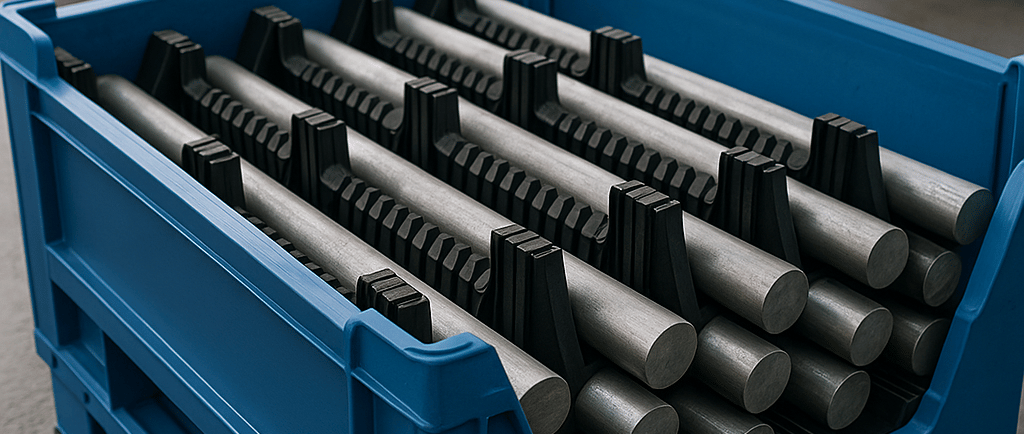
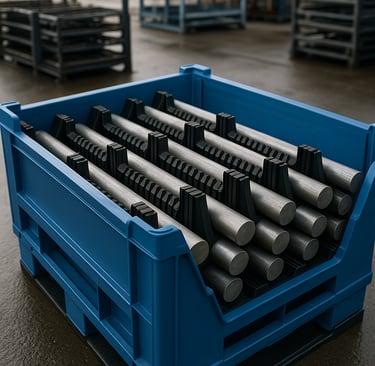
In the age of ambitious climate agreements and rising stakeholder expectations, the metal industry finds itself on the front lines of decarbonization. For metal manufacturers, processors, and distributors, operationalizing sustainability goes beyond emissions from smelters and foundries. Despite its outsized role in costs and environmental impact, packaging remains a hidden lever—especially in the era of supply chain optimization and circular economy mandates.
Across the globe, industries are re-evaluating every supply chain touchpoint. Sustainable packaging solutions, notably reusable dunnage, are transforming how metals move from mines and mills to customers while helping companies slash their carbon footprint and meet pressing regulatory requirements. This comprehensive guide demystifies the business case for reusable dunnage in the metals sector—exploring measurable benefits across cost, risk, compliance, and ESG, with actionable frameworks for implementation.
We also dig deeper into life cycle assessments (LCAs), hard ROI, and real-world implementation tactics to help you lead your organization to a lower-carbon future—one shipment at a time.
Table of Contents
What is Dunnage? Traditional vs. Sustainable Approaches
The Decarbonization Imperative for Metal Supply Chains
Reusable Dunnage: Types, Innovations & Best Practices
The Cost Equation: Saving Money and Carbon
Risk Reduction: Resilience Meets Sustainability
Regulatory & ESG Compliance: Staying Ahead of the Curve
LCAs for Packaging: Measuring True Impact
Implementing Reusable Dunnage: Action Steps for Metal Operations
Building the ROI Business Case
Conclusion: Packaging as a Decarbonization Power Tool
What is Dunnage? Traditional vs. Sustainable Approaches
Dunnage is the unsung hero of the metal supply chain—integral for safeguarding steel coils, aluminum sheets, copper wires, and finished components against damage during storage and shipment. Whether a company is sending heavy steel beams by freight rail or precision-machined brackets via truck, inadequate dunnage can quickly translate into supply chain disruption, unnecessary waste, and sky-high costs.
Traditional Dunnage: Challenges and Compliance Risks
Historically, the metals industry has relied on single-use packaging materials such as:
Wooden pallets and blocks: Prone to splintering, contamination, and global shortages.
Cardboard inserts: Offer minimal support against heavy or sharp-edged metals.
Polyurethane foam and expanded polystyrene: Lightweight, but extremely challenging to recycle with limited reusability.
Single-use plastics: Widely used but under increasing scrutiny due to non-biodegradability and environmental persistence.
Challenges with legacy dunnage practices include:
High waste volumes: According to the U.S. EPA, industrial packaging waste accounts for a significant proportion of the 82 million tons of containers and packaging generated annually.
Elevated carbon footprint: Single-use materials often require virgin resource extraction and high-emission manufacturing.
Lack of traceability: Once packaging is discarded, there’s minimal oversight or reporting, stymieing genuine supply chain transparency.
Operational inefficiencies: Damaged or inadequate dunnage incurs product losses, insurance claims, and costly shipment delays.
Sustainable Dunnage: Foundations of a Low-Carbon Metal Supply Chain
By contrast, sustainable packaging initiatives are engineered around longevity, reusability, reduced material consumption, and streamlined logistics. Best-in-class sustainable dunnage systems deliver:
Durable, reusable assets: Metal racks, heavy-duty bins, and modular supports manufactured for hundreds of repeat cycles.
Circularity: Materials designed for easy disassembly, repair, refurbishment, and recycling at end-of-life.
Logistics optimization: Collapsible units and stackable formats lower reverse shipping emissions and warehouse space.
Data-enabled visibility: RFID, barcode, and IoT tracking for full lifecycle management—bolstering ESG reporting accuracy.
Industry leaders adopting sustainable packaging are moving from "take-make-waste" to a "recover-renew-reuse" paradigm. This shift not only aligns with circular economy frameworks (as championed by the Ellen MacArthur Foundation) but also answers mounting pressure from investors, regulators, and OEM partners along the value chain.
The Decarbonization Imperative for Metal Supply Chains
The global imperative for decarbonization is reshaping the metals industry at every level. According to IEA data, steel manufacturing alone contributes nearly 7-9% of global energy-related CO₂ emissions, making metals supply chains a focal point for climate action.
Packaging as a Decarbonization Lever
The narrative around decarbonization has traditionally focused on electrifying furnaces, deploying hydrogen-based direct reduction, or switching to renewable energy. While those upstream measures are essential, they’re expensive, slow to implement, and sometimes technically constrained by existing infrastructure.
Sustainable packaging—particularly reusable dunnage—offers faster, more accessible decarbonization wins:
Scope 3 reporting: The Greenhouse Gas Protocol emphasizes the vital role of packaging within Scope 3 categories (upstream and downstream emissions). When you optimize packaging, you impact a significant, often underreported slice of your total footprint.
Landfill diversion: Reducing packaging waste supports both GHG mitigation (by avoiding landfill methane) and enhanced regulatory compliance.
Differentiation: Sustainability-focused end users in automotive, construction, and machinery procurement increasingly prefer partners who offer demonstrably lower-carbon supply and packaging solutions.
Business and Regulatory Drivers
OEM and Tier 1 supplier mandates: Automotive OEMs (e.g., Ford, GM, Toyota) are setting specific packaging recyclability and emission targets for their metals supply chains, directly impacting suppliers’ procurement decisions.
Regulatory acceleration: The EU’s Packaging and Packaging Waste Directive and California’s Plastic Pollution Producer Responsibility Act exemplify new global standards that go beyond recyclability, explicitly targeting reuse and waste minimization.
Reputation and ESG scores: Metals and mining firms face increased ESG scrutiny from financial institutions (see SASB Metals & Mining standards), with packaging risks and mitigation featuring prominently in investor due diligence.
Reusable Dunnage: Types, Innovations & Best Practices
The evolution from single-use to reusable dunnage has given rise to a spectrum of solutions, tailored for metals’ specific physical and operational requirements.
Key Types of Reusable Dunnage for Metals
Steel and aluminum transport racks: Designed for inter-plant shipments of coils, sheet, and beams, these racks often feature protective coatings and adjustable elements to accommodate different products.
Custom-molded inserts: Made from industrial-grade HDPE, recycled composites, or reinforced polymers, these forms cradle irregular shapes like tubing, extrusions, and stamped parts—minimizing abrasion and shifting.
Returnable bins and crates: Engineered for stackability and easy cleaning, many feature data tags for automated asset tracking. Some advanced systems integrate with warehouse management software for real-time visibility.
Non-foam engineered supports: Alternatives to EPS or EPE foams, using rigid recycled fiberboard or advanced corrugated plastics, withstand repeated loads and moisture, aligning with both durability and recyclability targets.
Innovations Accelerating Adoption
The last five years have seen investment in cutting-edge dunnage technologies:
IoT-Enabled Asset Tracking: Companies like ORBIS® and CHEP have developed smart containers with embedded sensors for location, usage, and environmental monitoring—ensuring high asset recovery rates and unlocking predictive maintenance for reusable dunnage pools.
Collapsible and Modular Designs: By engineering racks and bins to fold flat, return shipment volumes are cut by up to 70%, slashing both transport emissions and costs associated with “deadhead” loads.
Material advances: Hybrid dunnage systems now utilize recycled content metals, closed-loop plastics, or composite blends—balancing weight, safety, and end-of-life recyclability to deliver maximum circularity and minimal embodied carbon.
Best Practices from Leading Metal Supply Chains
Based on real-world case studies and industry benchmarking:
Stakeholder coordination: Early involvement of OEMs, logistics partners, and packaging engineers ensures standardization of dunnage specs—streamlining return flows and cost-sharing.
Digital lifecycle management: Adopting software for scheduling cleaning, inspecting, and pooling assets supports regulatory reporting and minimizes loss or obsolescence.
Pilot and scale strategy: Leaders such as ArcelorMittal and Tata Steel launch reusable dunnage pilots in high-frequency lanes or with key automotive customers, then refine reverse logistics before scaling to broader product portfolios.
Case in Point:
A European steel supplier overhauled its packaging approach by introducing RFID-enabled steel racks in its automotive division. This shift led to a 51% reduction in container loss, 30% fewer damage claims, and a documented 42,000-ton annual reduction in packaging waste—all while decreasing the cost-per-trip by 28% compared to single-use alternatives.
The Cost Equation: Saving Money and Carbon
Traditional narratives pit sustainability against profitability. However, an emerging body of industry research shows that reusable packaging is often a net financial winner—once the real-world economics and carbon savings are transparent.
Understanding the Financial Model
Upfront Capital vs. Total Lifecycle Cost: Investing in high-quality dunnage carries higher upfront costs, but these assets, when properly managed, last hundreds of cycles. Over a five-year period, the per-trip cost of reusable packaging can be 30-60% lower than that of disposables (per McKinsey’s Sustainable Packaging Report, 2022).
Waste Stream Elimination: Disposal costs for used wood, foam, and plastics—including landfill tipping fees and regulatory surcharges—frequently dwarf initial packaging costs. By switching to reusable alternatives, several European metals processors reported a 60-85% decrease in annual waste-related expenses.
Labor and Efficiency Gains: Streamlined unpacking, reduced cleaning, and fewer dockside product rejections translate into labor savings that amplify the cost advantages of reusable dunnage.
Real-World Example:
A Midwest U.S. metal fabrication firm, previously spending $275,000 per annum on disposable packaging, shifted to a $600,000 reusable system projected with a seven-year lifespan. Detailed analysis revealed an ROI in under 24 months, with $90,000 in annual net savings after accounting for reduced purchase, labor, and disposal costs.
Measuring GHG and Carbon Savings
Emissions Breakeven: Studies by the Ellen MacArthur Foundation and the Circular Economy Initiative show that reusable packaging—owing to higher manufacturing emissions—becomes environmentally superior after about 10 cycles. For metals, this breakeven is often reached within the first 9-12 return trips due to the durability of steel and engineered plastics.
Downstream Impact: Every ton of packaging waste averted prevents not just carbon emissions from manufacturing but also methane from landfill decomposition, and cuts transportation-related scope 3 emissions due to load optimization.
Strategic Insight: Utilize WRI’s GHG Protocol Scope 3 Evaluator to trace the precise attributable carbon reductions, strengthening both compliance and stakeholder engagement.
Risk Reduction: Resilience Meets Sustainability
Cost savings and carbon reductions are compelling. In metals, risk reduction may be an even stronger trigger for change. Supply chains that depend on single use packaging carry higher risk of damaged parts, line stoppages, worker injuries, regulatory problems, and raw material shortages. Reusable dunnage directly addresses these vulnerabilities.
Reducing product damage and quality incidents
When packaging fails in a metals supply chain, the consequences are immediate. Coils telescope. Edges deform. Galvanized or painted surfaces scratch. Precision machined parts arrive out of tolerance after micro impacts during transit. The direct cost of scrap is only one part of the story. Missed delivery dates, line stops at the customer, and rush re-shipments quickly multiply the impact.
Research on reusable packaging in industrial supply chains shows that engineered, reusable containers and inserts significantly reduce product damage and loss compared to generic single use materials. These systems are tailored to the shape, weight, and handling pattern of the product, so loads stay stable and protected even in mixed and less than truckload environments. ScienceDirect
In a New Zealand Post case study, redesigned dunnage and packaging cut annual damage claims by about 70 percent while also lowering packaging costs by 30 percent. Ferrier Industrial Although this example comes from parcel logistics, the pattern matches what many metals suppliers see once they move from loose pallets and ad hoc blocking to engineered racks and inserts.
For metals, the same type of shift usually delivers:
Fewer coil and sheet edge dents caused by load shifts or fork impacts.
Lower incidence of surface defects on aluminum and coated steels, which often trigger quality complaints and downgrades.
Better protection for tubular and extruded profiles that are prone to bending or telescoping during transport.
Lower risk of contamination for stainless and high purity alloys that cannot touch certain woods, oils, or mixed-contact materials.
Reusable dunnage also tends to standardize how parts are presented to the next operation. When every crate, rack, and insert has a defined position for each part, the risk of mis-picks, wrong-part shipments, and mixed lots falls. Over time, this increases customer confidence and reduces the volume of disputed claims.
Protecting worker safety and meeting load securement rules
Unsafe packaging does not only damage steel. It also puts people at risk.
Studies on freight load securement warn that poorly unitized or supported loads are a major contributor to cargo shift, falling items, and injury during loading and unloading. ResearchGate+1 In a typical metals environment, that includes:
Strapped bundles of bar that roll when a strap fails.
Improvised wood blocking that splinters under point loads from beams or plate.
Loose sheets or pallets that shift on forklifts or trailers during emergency braking.
Regulators have responded with strict load securement standards. In North America, for example, Federal Motor Carrier Safety Regulations specify how loads must be restrained on trucks. Similar rules apply in Europe and Asia for road, rail, and intermodal freight. When packaging and dunnage are weak points, shippers face:
Fines and roadside delays for non compliant loads.
Higher incident rates during loading and unloading.
Greater exposure to workers’ compensation claims and insurance premium increases.
Reusable dunnage helps reduce these safety and compliance risks because it is designed as a system, not as a one off patch. Steel racks, molded inserts, and reinforced crates are engineered to hold specific weights, withstand repeated handling, and maintain their dimensional integrity over hundreds of trips. Many designs include integrated tie down points, fork pockets, and anti slip surfaces, which make it easier for drivers and warehouse staff to secure loads correctly every time.
For safety managers and EHS leaders, that translates into more predictable handling conditions, lower rates of near misses, and a stronger position when reporting on safety performance to boards and regulators.
Building supply chain resilience in a volatile world
The last few years exposed how fragile packaging supply chains can be. Logistics disruptions, port congestion, and shifts in global trade patterns collided with spikes in timber and corrugated prices. Many industrial shippers discovered that a reliance on single use pallets, crates, and disposable inserts was a hidden vulnerability.
Reusable packaging systems, including dunnage for metals, change that equation. Instead of depending on constant purchases of disposable materials, you operate a pool of long life assets that rotate through your network. These assets can stay in service for 3 to 20 years and complete 100 to 500 loops, depending on design and handling conditions. Zamko
Recent analyses of reusable packaging in supply chains note that this model increases resilience in several ways. It reduces dependence on raw material availability for one way packaging and supports circular logistics models where packaging flows are predictable and controlled, not just a by product of external supplier capacity. Return Asset Packaging
For metals, this resilience shows up in day to day operations:
Less exposure to spikes in timber prices when there is a building boom or trade restriction.
Lower sensitivity to corrugated shortages or allocation when mills are constrained.
Reduced risk of having to downgrade shipments or delay orders because suitable dunnage is not available on the day of loading.
Reusable Transport Packaging Association data suggests that the global market for reusable transport packaging is already around 100 billion dollars, with dunnage and cargo protection representing roughly half a billion dollars of that value. Reusable Packaging Association This indicates that many sectors have already moved significant volume into reusable systems and are treating packaging assets as strategic infrastructure, not consumables. Metals and automotive are prominent among them.
In automotive, for example, returnable packaging is now widely used for parts and subassemblies. The automotive reusable packaging market alone is forecast to reach about 3.8 billion dollars by 2033. PACKNODE Steel and aluminum suppliers that feed these plants into Europe, North America, and Asia are increasingly expected to integrate with that reusable packaging logic. Those that do so successfully become less exposed to packaging disruptions and better aligned with their customers’ logistics standards.
Mitigating regulatory and reputational risk through packaging choices
Regulation and public pressure on packaging waste are rising in parallel. The European Union’s new Packaging and Packaging Waste Regulation requires that all packaging placed on the EU market be recyclable in an economically viable way by 2030. It also aims to reduce packaging volumes, cut virgin material use, and put the sector on a path to climate neutrality by 2050. Environment
For exporters of steel, aluminum, or copper into the EU, single use packaging is becoming a strategic risk:
It can trigger higher reported packaging waste figures for customers, which hurts their ESG scores.
It may fail future recyclability or reuse requirements, leading to redesigns under tight deadlines.
It sends the wrong message when buyers are under internal pressure to source from suppliers that align with corporate climate and circularity targets.
By contrast, reusable dunnage that is designed for many cycles, compatible with recycling at end of life, and traceable through digital systems creates a different risk profile. You are less likely to be caught out by new reuse or recyclability rules, and you can document your performance with real data, not estimates.
At the same time, investors and lenders are scrutinizing ESG performance in metals and mining more closely. Packaging choices may seem small compared to furnaces or power contracts, but they are visible and relatively easy to improve. Moving to reusable dunnage with clear performance metrics signals that your company is serious about operational decarbonization and circularity, not only large capital projects.
A composite example from an automotive metals loop
Consider a steel service center that supplies laser cut blanks and coil to three automotive plants in a 400 kilometer radius.
Originally, the company used single use wooden pallets, cardboard edge protectors, and stretch film. Damage rates on some high value coated blanks were around 1.5 percent per year, and the plants reported several minor safety incidents linked to unstable or broken pallets. Packaging material lead times extended during timber and corrugated shortages, forcing occasional shipment delays.
The service center and its OEM customers agreed to pilot a reusable system for the highest volume part families:
Steel racks with adjustable posts for coils and blanks.
Molded HDPE or composite inserts for separating and supporting blanks.
Integrated RFID tags to track each rack, monitor trip counts, and manage cleaning and inspection cycles.
After two years, internal data showed:
Damage rates on parts in reusable racks fell to below 0.3 percent, freeing up capacity in quality and rework teams.
Safety incidents related to load instability dropped sharply, with no reported pallet breakage events in the lanes that used reusable racks.
Packaging related line stoppages at the OEM plants were eliminated for the piloted part families.
Exposure to corrugated and timber price swings declined because the main dunnage assets were already in place and in rotation.
Although exact numbers will differ by operation, this type of risk profile is common. When you treat dunnage as a durable, engineered system rather than a low cost consumable, you reduce several classes of risk at once: operational, financial, safety, and regulatory.
The next logical step is to connect these qualitative improvements to explicit regulatory duties and ESG metrics. In the following section, you can show how reusable dunnage aligns with emerging packaging rules, extended producer responsibility schemes, and investor expectations on traceability and reporting.
Regulatory & ESG Compliance: Staying Ahead of the Curve
Regulation is quietly turning your packaging choices into a strategic issue, not a back-room detail. Packaging sits where waste law, plastics policy, climate disclosure, and circular economy goals intersect. If you ship metals into the EU, UK, North America, or major Asian markets, your dunnage design will influence both customer access and compliance cost.
The European Union’s Packaging and Packaging Waste Regulation sets clear reduction targets for total packaging waste per person. It also requires that all packaging placed on the EU market be recyclable in an economically viable way by 2030 and sets reuse targets for several transport and grouped packaging formats. For exporters of steel, aluminum, and copper, this means that single use dunnage based on mixed materials or hard-to-recycle composites will come under pressure long before 2030.
Extended producer responsibility schemes add another layer. In many jurisdictions, you or your customers pay fees based on packaging weight, recyclability, and share of recycled content. Reusable dunnage reduces total tonnage, uses better defined material streams such as mono-material steel or HDPE, and often qualifies for lower fee tiers. Over a multi-year horizon, this fee gap becomes material in your cost-to-serve.
Climate disclosure rules bring packaging into your emissions story. Scope 3 requirements under CSRD, ISSB, and other reporting standards expect you to identify material categories, quantify emissions with recognized methods, and describe credible reduction plans. Packaging flows sit squarely in purchased goods and services and in upstream and downstream transport. If you rely on disposables, you carry recurring embodied emissions and waste. If you operate reusable dunnage with known lifetimes and return rates, you can quantify and reduce those emissions in a disciplined way.
Investors and lenders are watching. Metals and mining guidance under SASB, PRI, and large ESG ratings now asks for data on resource use, waste, and circularity. You will be expected to show year-on-year improvement in packaging waste per ton shipped, share of reusable or returnable packaging, and progress toward stated climate targets. A structured reusable dunnage program gives you credible numbers for these reports and shows that you treat decarbonization as a practical operational task, not only a pledge at furnace or power contract level.
In short, reusable dunnage reduces regulatory risk in three ways. It aligns you with tightening recyclability and reuse rules. It reduces your exposure to rising producer responsibility fees and landfill restrictions. It strengthens your climate and ESG story with concrete, auditable data.
LCAs for Packaging: Measuring True Impact
Life cycle assessment is the main tool that lets you compare single use and reusable dunnage on more than intuition. It forces you to ask where emissions and impacts occur across the full life of an asset, not only at purchase.
Reusable steel racks, reinforced crates, and molded inserts often have higher production impacts per unit than a wood pallet or a simple corrugated box. The question that matters is how those impacts distribute over hundreds of trips. An LCA gives you that answer in numbers rather than opinions.
A metals-grade LCA for dunnage should follow a clear logic. First, define the functional unit in language that fits your business, such as “delivery of one metric ton of coated coil from service center A to automotive plant B.” Second, set system boundaries that include raw materials, manufacturing, all forward and return transport, use and maintenance activities such as washing and repair, and end-of-life routes including recycling, energy recovery, or landfill. Third, choose emission factors and background data from recognized databases and align methods with ISO 14040 and ISO 14044.
Reviews of packaging LCAs across industries show a consistent pattern. When reusable containers and dunnage reach moderate cycle counts and return rates, they outperform single use systems in most cases on climate impact, cumulative energy demand, and waste generation. In several studies, reusable transport units reach climate breakeven after the first ten to twenty loops. For heavy duty industrial racks used in automotive loops, it is common to see more than fifty cycles, sometimes several hundred, before retirement. At those levels, the gap in emissions and waste compared with single use pallets becomes very wide.
For your operation, the LCA does more than confirm that reuse is “better.” It supports design choices. Thicker sections may increase rack life enough to offset slightly higher production emissions. Slightly heavier returnable crates may still win if they reduce damage and enable double stacking on trucks, which raises payload and cuts trips. Without LCA results, these trade-offs remain guesswork.
LCA outputs also feed directly into your Scope 3 inventory and ESG disclosures. You can allocate emissions per ton shipped, per customer, or per lane and track improvement over time as you retire disposable packaging and roll out more reuse. That level of traceability turns packaging decisions into measurable climate actions rather than one-off pilots.
Implementing Reusable Dunnage: Action Steps for Metal Operations
Moving from single use to reusable dunnage is a change in how your network works, not only a purchasing decision. The operations that succeed treat it as a structured program with clear stages.
The first stage is diagnosis. You map which metal products travel where, in what volumes, and with which packaging formats. You gather data on annual spend, damage and claim rates, waste tonnage, disposal costs, and any incidents linked to packaging. You also flag lanes with stable demand, regular customers, and predictable routes. These lanes are usually where reusable systems achieve the fastest payback, because you can keep assets circulating with minimal loss.
The second stage is design. Packaging engineers, logistics teams, and key customers sit together and define requirements. You specify loads, centre of gravity, surface protection needs, compatible handling equipment, maximum stack heights, vehicle types, and any constraints on plant docks or storage areas. From there, you work with dunnage suppliers to design steel racks, molded inserts, bins, or crates that match these conditions. You also agree on cleaning, inspection, and repair standards. Sometimes this work is internal. In other cases, you contract a specialist pooling provider to manage the service loop.
The third stage is control. Reusable dunnage is an asset with a useful life measured in years. It needs identification and tracking. Each rack or crate receives a unique identifier through RFID, barcode, or another marker. Movements are scanned at key points such as packing, shipment, plant receipt, and return dispatch. Even a simple spreadsheet or low cost web portal creates enough visibility to monitor turns, dwell times, and loss rates. Over time, you can integrate this data into warehouse management or transport planning tools.
The fourth stage is pilot and refine. You launch the system on a few well chosen lanes and run it for at least several months. During this period you compare damage, waste, and cost against your previous baseline. You watch for practical issues such as misaligned fork pockets, label placement, or confusion over who initiates returns. You adjust designs and work instructions until the process runs smoothly for both you and your customers.
The fifth stage is scale and embed. You expand the reusable dunnage model to more part families, more customers, or additional plants, while keeping the same basic asset logic. You update contracts to spell out responsibilities for returns, loss, and cleaning. You build key indicators such as reuse cycles per asset, on time return rate, and packaging waste per ton into performance reviews. At that point, reusable dunnage stops being a “project” and becomes normal infrastructure for your supply chain.
Building the ROI Business Case
A strong technical case alone will not unlock capital. You have to present reusable dunnage in a way that convinces finance leaders who live in spreadsheets and board packs.
Start with a clear baseline. For a selected set of lanes and products, quantify how much you currently spend on pallets, crates, inserts, foam, strapping, and wrap. Add waste collection and disposal charges, including landfill or incineration fees. Include labor time spent on repacking, cutting away old packaging, handling debris, and dealing with damaged loads. Build in the cost of claims, rework, downgraded material, and customer penalties. Where possible, express these in consistent units such as cost per ton or cost per trip.
Then build the reusable scenario. Estimate the capital required for racks, bins, and inserts, including tags or labels. Add annual operating costs for cleaning, inspection, repair, and tracking systems. Include any pooling or rental fees if you choose an external provider. Use realistic assumptions for asset life, loops per year, and loss rates. When you divide total annualized cost by expected trips or tonnage, you can compare this directly to your current disposable system.
Next, bring carbon and compliance into the model. Use an internal carbon price, if your company uses one, to assign a monetary value to each ton of CO2 equivalent avoided. Factor in expected changes in producer responsibility fees and landfill costs as regulations tighten. If your LCA shows a clear reduction in emissions and waste, you can present part of that benefit in financial terms. Even if the monetary value is modest, it strengthens the case because regulators and investors now expect to see climate and resource use reflected in capital decisions.
Run sensitivity tests on key assumptions. Vary loop counts, return rates, damage reductions, and timber or corrugated prices. This shows decision makers how the payback time and net present value move under different scenarios. In many real projects, even conservative assumptions still produce payback within two to four years and ongoing annual savings after that.
Finally, package the story in operational language. Show how reusable dunnage cuts scrap and claims, stabilizes packaging supply, reduces exposure to raw material price spikes, and improves safety statistics. When a CFO sees both a clear financial case and lower risk across several categories, approvals become much easier.
Conclusion: Packaging as a Decarbonization Power Tool
For metal producers, processors, and service centers, most climate attention goes to furnaces, power contracts, and raw material choices. Those are important, capital intensive levers. Reusable dunnage gives you a different kind of lever. You can act in months, not years. You can measure the effect with straightforward metrics. You can link it directly to cost, risk, and compliance outcomes that your customers and investors already care about.
When you treat dunnage as a durable asset rather than a disposable cost, several things happen at once. Product damage and quality incidents fall. Yard and dock safety improves. Packaging waste drops, along with fees and landfill exposure. Your Scope 3 profile becomes easier to explain and defend because you have hard numbers for one important category.
The transition does require design work, coordination with customers and carriers, and disciplined tracking. Yet most of the technology, from steel racks to RFID tags and washable crates, already exists and is proven in automotive and other industrial sectors. You do not need exotic materials or untested systems. You need a clear plan, a few well chosen pilots, and a commitment to treat packaging as part of your long term supply chain infrastructure.
If you ship metals in any volume, reusable dunnage is no longer a niche idea. It is one of the most practical tools you have to cut emissions, reduce risk, and strengthen relationships with demanding OEM and industrial buyers. The sooner you start mapping your lanes and identifying candidates for reuse, the sooner packaging moves from background noise to a visible source of advantage in your decarbonization strategy.
Connect
Your trusted partner for scrap metal procurement.
CONTACT
About
haroon@tdcventures.com
+1-307-655-7593
© 2025. All rights reserved.
NEWSLETTER