
VR Safety Sims for E-Waste Facilities: Advanced XR Training for Electronics Recycling and Design for Repair
Discover how VR safety sims for e-waste recycling deliver immersive XR training to slash risks, boost compliance, and embed design‑for‑repair into daily operations.
IMMERSIVE TECH RECYCLING & CIRCULAR ELECTRONICS
Instant Answer:
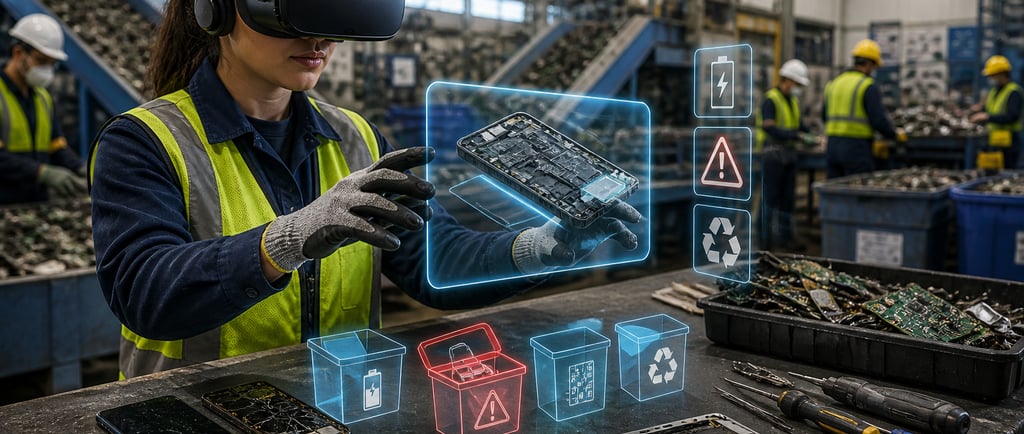
VR safety sims for e-waste facilities deliver immersive XR scenarios that upskill staff in safe collection, disassembly, refurbishment, and recycling of electronics. By promoting hazard recognition, compliance, and design for repair best practices, these simulations empower operators to decrease risks, boost circular outcomes, and streamline onboarding in the rapidly evolving e-waste sector.
Table of Contents
Context: Why VR Safety Sims Matter for E-Waste Operations
Key Problems and Opportunities in XR-based E-Waste Training
Operational Stakes: Risk, Scale, and Compliance
Key Concepts: XR, E-Waste, and Design for Repair Essentials
The 4-Step Framework for VR-Enabled E-Waste Training
Implementation Playbook: Setting Up VR Safety Sims
Measurement and Quality Assurance
Case Patterns and Scenario Examples
Frequently Asked Questions
Embedded Five-Layer Distribution and Reuse Toolkit
1. Context: Why VR Safety Sims Matter for E-Waste Operations
The global e-waste challenge is intensifying. Each year, over 53 million metric tons of electronic waste are generated worldwide—a figure projected to surpass 74 million tons by 2030 (Global E-Waste Monitor, 2020). Devices today harbor increasingly complex materials, embedded batteries, and miniaturized components, creating multifaceted hazards for recycling and refurbishment operations.
Traditional safety training—paper manuals, introductory videos, and a shadowing model—struggles to keep pace with both the volume and complexity of new electronics entering e-waste streams. Turnover among plant staff is high—sometimes as much as 30% annually—demanding scalable, effective onboarding to minimize risk.
Enter XR (Extended Reality), and more specifically, VR Safety Sims:
Virtual Reality immerses staff in lifelike, interactive simulations. E-waste operators, environmental health and safety (EHS) managers, and training providers use these modules to let employees rehearse teardown, hazardous sorting, and emergency interventions—without exposure to real-world hazards. VR training platforms are both flexible and scalable, allowing facilities to adapt their learning content as new device types or risk profiles emerge.
Key Contextual Benefits:
Repetition without risk: Staff apply procedures over and over in a safe virtual space.
Multisensory reinforcement: Visual, spatial, and even auditory cues mimic real-life challenges, strengthening hazard recall.
Measurement and readiness: Detailed tracking supports compliance reporting, skills certification, and gap analysis.
From frontline workers to EHS supervisors, VR-based e-waste safety training represents a digital leap forward for operational agility, regulatory confidence, and circular electronics goals.
2. Key Problems and Opportunities in XR-based E-Waste Training
The Problem
Modern e-waste recycling is fraught with dangers:
Toxic and Volatile Materials: Lithium-ion batteries, capacitors, mercury, and other hazardous materials can spark fires or contaminate the workspace if mishandled.
Unknown Device Designs: Rapid product cycles mean new gadgets often lack teardown and refurbishment guidance, complicating safety strategies.
High Staff Turnover: Onboarding is fragmented as new workers cycle in, often learning through "trial by fire."
Safety Incidents: Even one mistake can trigger costly regulatory investigations, downtime, or reputational damage.
Recent studies show that up to 70% of e-waste facility safety incidents involve improper battery handling or hazardous device triage (EERA Survey, 2023). Traditional training fails to engage digital-native workers or ensure retention of new safety procedures.
The Opportunity
XR-based safety training addresses these challenges directly and unlocks new opportunities:
Standardization: VR scenarios deliver consistent, repeatable best-practice guidance, regardless of trainer or facility location.
Rapid and Safe Experimentation: Staff can experiment with novel device disassemblies or unknown material types in a consequence-free environment, accelerating learning for next-gen electronics.
Embedded Circularity: By integrating modules focused on repair, refurbishment, and recovery, XR platforms reinforce design for repair thinking and support emerging circular economy mandates (like EU Right to Repair).
Upside for Facilities:
Shorter onboarding cycles—often reduced by 40% or more.
Fewer injuries and lost-time incidents.
Stronger data trails for compliance, audit, and root-cause analysis.
Improved refurbishment rates, supporting higher-margin output and reducing environmental impact.
In summary, XR isn't just an "advanced training option"—it's fast becoming a critical risk control and business enabler.
3. Operational Stakes: Risk, Scale, and Compliance
Regulatory Compliance
Regulators, from the EU's WEEE Directive to the US EPA, impose strict controls on hazardous e-waste handling. Fines for improper disposal or mishandling can reach $25,000 per incident, with potential for civil and criminal penalties. 2022 saw multiple high-profile enforcement actions against recyclers lacking verifiable operator training.
Workforce Safety
E-waste plants face daily threats:
Battery-related fires and thermal events.
Exposure to lead, cadmium, beryllium, and flame retardants.
Injury from broken glass, sharp metals, or heavy lifting.
A single incident can halt plant operations for days or weeks, impacting both morale and profitability. VR safety sims address this by ensuring every operator has practiced correct hazard identification and response—well before problems arise.
Operational Continuity
Downtime is expensive. Every safety incident means a pause for investigation, documentation, and frequently, equipment repairs. By embedding scenario-based training and practicing SOPs virtually, facilities report up to 60% faster incident response and recovery times.
Circular Economy Goals
Global circular electronics targets (EU Green Deal, US state laws, BSI PAS 141) require a growing proportion of devices to be refurbished or recycled according to defined standards. Design for repair benchmarks and recovery quotas are only achievable if the workforce can recognize, triage, and execute repair/refurbishment steps reliably at scale.
Key Stake:
VR safety sims are now essential for e-waste facilities looking to meet modern expectations for safety, productivity, and circularity—and to remain competitive in a fast-evolving regulatory environment.
4. Key Concepts: XR, E-Waste, and Design for Repair Essentials
Extended Reality (XR):
XR encompasses a spectrum of immersive technologies—Virtual Reality (VR), Augmented Reality (AR), and Mixed Reality (MR). In e-waste safety, VR is most prevalent because it fully isolates and immerses staff in controlled, authentic, risk-based simulations.
E-Waste Facility:
A site dedicated to the intake, triage, disassembly, repair, and recycling of discarded electronic products. Facility operations increasingly involve advanced automation, but hands-on work—especially for device assessment and repair—remains critical.
Safety Sims:
Immersive modules that recreate authentic plant conditions. These modules simulate hazardous scenarios (such as lithium battery fires, unidentified device leaks, and automated separation lines) and expect users to perform realistic tasks like proper use of PPE, step-by-step device teardown, and real-time hazard flagging.
Design for Repair:
This discipline focuses on the ability to disassemble, diagnose, and refurbish electronics in a way that maximizes reuse and minimizes material loss. VR modules can visually highlight repairable fasteners, connectors, or modular components—enhancing staff's ability to salvage value from even modern "sealed" devices.
Refurbishment and Material Separation:
Key to circular economy mandates, refurbishment means restoring devices for resale or secondary use—often with only minimal replacement parts. Material separation involves extracting batteries, printed circuit boards, plastics, ferrous and non-ferrous metals, and hazardous elements, often requiring precision judgment and advanced safety awareness.
XR Connects All Points:
By linking teardown, hazard management, design for repair thinking, and material separation in one training ecosystem, XR platforms support both regulatory compliance and circular economy outcomes.
5. The 4-Step Framework for VR-Enabled E-Waste Training
Implementing a robust VR safety training program requires a disciplined, iterative approach. Here's a proven 4-step framework tailored for e-waste operations:
Step 1: Hazard Mapping
Start by comprehensively cataloging hazards in the plant environment. This means going beyond generic risk labels and mapping:
Device-specific threats (e.g., high-capacity batteries in laptops, embedded adhesives, rare earth magnets).
Physical environment risks (crowded locations, proximity to hazardous waste storage).
Unknowns (mislabelled items, latest-gen devices without repair documentation).
Facility risk maps should be revisited quarterly and after any major incident or new product influx.
Step 2: Scenario Design
Craft VR modules that authentically mirror real-world workflows, device flows, and hazard points:
Intake procedures for rapid device triage.
Disassembly lines, simulating the sequence for popular devices (smartphones, laptops, small appliances).
Emergency response drills (battery ignition, chemical spill, first-responder actions).
Advanced repair and refurbishment sequences, highlighting "repairable features."
Incorporate site-specific layouts, unique devices, and operational equipment to maximize realism and operator engagement.
Step 3: Skills Assessment
Integrate ongoing competency checks:
Require demonstrations of proper PPE use and equipment lock-out/tag-out in the simulation before access to live workstations.
Assess accuracy in device teardown steps (e.g., proper battery removal sequence).
Create branching scenarios that challenge staff to respond to hidden device hazards or error states.
Provide instant feedback, tracking missteps to inform coaching or remedial drills.
Automated scoring ensures every knowledge gap is addressed before real work begins—supporting both staff safety and regulatory compliance readiness.
Step 4: Feedback, Reporting, and Continuous Update
The heart of effective VR programs is dynamic content.
Capture quantitative (task accuracy, completion speed) and qualitative (user confidence, perceived realism) data every session.
Update scenarios promptly when new device types or hazard patterns emerge—agility here is a major competitive advantage.
Feed operator feedback directly to scenario designers and even upstream to manufacturers for future design-for-repair improvements.
Worked Example
A UK-based e-waste plant recently received a shipment of the latest-generation smartwatches, introducing a lithium-polymer battery never before handled on site. The VR team updated the disassembly scenario in under 48 hours, pushed the new module to headsets, and within a week, all operators had rehearsed risk-free removal techniques. The result: zero incidents, process documentation updated, and the plant passed a surprise third-party safety audit with distinction.
6. Implementation Playbook: Setting Up VR Safety Sims
A strong VR safety simulation program starts with one practical truth: the simulation must reflect the facility, not a generic training room. E-waste sites are not clean, predictable environments. They deal with mixed loads, mislabeled materials, crushed devices, embedded batteries, sharp casings, fragile screens, broken circuit boards, toner residue, mercury-containing components, swollen lithium-ion packs, and customer-owned devices that still contain sensitive data. A training program that does not mirror those realities will feel impressive during a demo, then fail on the floor.
The first step is to choose the operational problem the VR program must solve. In 2026, the highest-value starting points for most electronics recyclers are battery identification, intake triage, safe device opening, emergency response, PPE discipline, lockout/tagout practice, and data-bearing device handling. These are the areas where mistakes become fires, injuries, failed audits, rejected downstream shipments, or costly loss of reusable devices. OSHA has specifically warned that lithium-ion batteries can create fire, explosion, chemical exposure, and thermal runaway risks during disposal and recycling, so battery-related modules should usually be the first build priority for e-waste and ITAD operators.
A useful rollout should begin with a floor-level hazard audit. This is not a paperwork exercise. The team should walk the intake bay, sorting area, battery storage zone, teardown benches, baling or shredding areas, quarantine space, data destruction area, loading docks, and emergency exits. Each risk should be captured as a real scene: what the worker sees, what the worker hears, what tools are nearby, what labels are visible, what time pressure exists, and what wrong action is most likely. For example, a swollen laptop battery under a cracked casing is a different training event from a loose cylindrical cell in mixed small electronics. A phone with adhesive-backed battery removal strips is different from a tablet with a glued pack hidden under a fragile screen. A leaking battery in a storage bin is different from a battery sparking on the belt.
Once the hazard list is complete, each risk should be converted into a task-based VR scenario. The best modules do not simply tell the worker what to do. They require the worker to act. A battery triage module should ask the trainee to identify normal, damaged, swollen, leaking, hot, punctured, and unknown batteries. It should force a decision between regular processing, quarantine, escalation, or emergency response. A device teardown module should require the user to select the correct PPE, isolate power sources, remove external accessories, open the device without puncturing the battery, separate the board, identify data-bearing parts, and place each item into the correct container. A fire response module should simulate the first 30 to 90 seconds after smoke, hissing, popping, odor, or heat appears. Those seconds matter because the wrong instinct, such as grabbing the device, throwing it into a general bin, or spraying the wrong agent, can turn a contained event into a facility-wide incident.
The content should also reflect the regulatory environment of the facility. In the United States, universal waste rules under 40 CFR Part 273 require battery handlers to manage batteries in a way that prevents releases, contain damaged or leaking batteries properly, and follow applicable shipping and hazardous material rules when sending waste off site. In Europe, the repair and reuse context is becoming more important because the EU Directive on common rules promoting the repair of goods entered into force on July 30, 2024, and Member States must apply the rules from July 31, 2026. That means e-waste facilities serving European markets should build training that does more than teach disposal. It should train workers to recognize what can be repaired, refurbished, harvested, reused, or sent for specialist processing.
Hardware selection should come after the scenario plan, not before it. Many facilities make the mistake of buying headsets first, then trying to find a purpose for them. The better order is risk, scenario, measurement, then device. Standalone VR headsets may work well for onboarding, hazard recognition, and repeated practice. Higher-fidelity PC-connected systems may be better for detailed repair, tool handling, or complex line simulations. AR or mixed-reality headsets can be useful where trainees need to see real benches, containers, tools, and labels while digital prompts appear over them. However, VR should remain the core training format for high-risk drills because it allows workers to rehearse fires, sparks, smoke, spills, alarms, wrong-bin errors, and emergency escalation without exposing anyone to live hazards.
A proper pilot should be small, measured, and tied to a specific operational outcome. A good 60-day pilot might include 25 to 50 workers across intake, sorting, and teardown. The facility can run a baseline test first, then train workers through two or three VR modules, then retest them using both simulation scores and real floor observation. The core questions are simple: Did trainees identify hazardous batteries faster? Did they choose the correct container more often? Did they remember escalation steps after one week? Did supervisors record fewer repeated coaching issues? Did new employees reach supervised readiness sooner?
VR training can justify itself faster when it replaces repeated classroom sessions, reduces supervisor burden, and standardizes instruction across shifts. PwC's VR training research found that VR learners completed training up to four times faster than classroom learners and 1.5 times faster than e-learning participants in the studied use case. The same research found that VR training can become more cost-effective at larger learner volumes, with cost parity against classroom training at 375 learners and against e-learning at 1,950 learners. E-waste facilities should not copy those numbers blindly, because safety training, repair training, and soft-skills training are different use cases. Still, the pattern is useful: VR becomes stronger when training must be repeated often, delivered consistently, measured clearly, and updated across many workers or locations.
The facility should also build a content update cycle. E-waste changes fast. New devices arrive. Battery formats change. Adhesives change. Fasteners disappear. New repair rules appear. New downstream buyers request cleaner fractions. New fire incidents reveal weak points. A VR safety program should have a monthly review with EHS, operations, maintenance, compliance, and line supervisors. Any near miss, mis-sort, battery event, audit finding, customer complaint, or new device stream should trigger a content review. The facility does not need to rebuild the whole simulation each time. It can add a hazard variant, a quiz branch, a new device shell, a new decision point, or a corrective coaching module.
The best programs also connect VR to live training, not replace it. Workers should practice in VR, then repeat critical actions at a physical bench under supervision. For example, they can first complete a VR module on damaged battery quarantine, then demonstrate the real procedure using empty demo packs, correct labels, correct containers, and the actual escalation path. This blended method prevents the common failure of digital training: good test scores but poor physical habits. The final sign-off should remain practical. A worker is not ready because they finished a headset session. A worker is ready when they can perform the task safely, explain the risk, respond to an abnormal condition, and document the action correctly.
A mature setup also includes worker language access. E-waste facilities often employ multilingual teams. VR modules should include subtitles, voiceover options, icon-based prompts, and simple visual cues. Battery hazards, PPE steps, emergency exits, quarantine labels, and "stop work" triggers should not depend on advanced reading ability. A worker under pressure should be able to understand the scene quickly. The goal is not to create a glossy training product. The goal is to create safer decisions when the line is moving, the bin is mixed, and a device looks harmless until it is not.
7. Measurement and Quality Assurance
VR safety sims become powerful when they produce evidence. Without measurement, they are training theatre. With measurement, they become a repeatable safety and operational control that can support audits, onboarding decisions, supervisor coaching, and continuous improvement.
The first measurement layer is competency.
Each module should test whether the worker can identify hazards, choose the correct action, use PPE correctly, follow the teardown order, place materials in the correct stream, and escalate abnormal events. A useful battery module, for example, should score the worker on recognition accuracy, decision speed, container selection, quarantine procedure, escalation timing, and whether they created any secondary hazard. A useful device teardown module should track puncture risk, tool choice, force applied, battery isolation, component handling, and whether reusable parts were preserved. A useful fire module should track how quickly the worker stops work, alerts others, moves away, follows site response steps, and avoids unsafe hero behavior.
The second measurement layer is retention.
Many safety programs measure the wrong thing: whether someone completed training today. E-waste facilities need to know whether the worker still remembers the procedure in two weeks, one month, and three months. VR makes this easier because the same scenario can be repeated with small variations. A trainee may see a swollen phone battery in the first session, then a damaged e-bike pack in the second, then a loose vape battery in the third. The worker cannot simply memorize one image. They must learn the underlying pattern.
The third measurement layer is transfer to the floor.
This is where quality assurance matters most. A worker who performs well in VR but repeatedly places batteries in the wrong bin has not been trained effectively. Supervisors should compare simulation data with real observations, near-miss reports, bin contamination checks, damage reports, and rework logs. If a module says a worker is competent, but floor behavior says otherwise, the module needs revision. The problem may be unclear visual cues, unrealistic timing, missing tools, poor language support, or a real process that does not match the simulation.
Facilities should track a small group of practical safety and productivity metrics before and after rollout. The most useful include time to supervised readiness for new hires, training hours per worker, repeat coaching events, incorrect battery placements, damaged-device quarantine errors, PPE misses, emergency response drill scores, near misses, first-aid cases, lost-time incidents, fire events, downtime hours after incidents, rejected downstream loads, and reusable device yield. For repair-focused programs, the facility should also track successful refurbishment rate, part recovery rate, avoidable device damage during opening, and resale-grade recovery.
Battery-related measurement deserves special attention. In 2024, the Global E-waste Monitor reported that the world generated 62 million tonnes of e-waste in 2022, with documented formal collection and recycling at only 22.3%. The same report projected e-waste generation could reach 82 million tonnes by 2030, while formal collection and recycling could fall to 20% under a business-as-usual path. More devices means more embedded batteries, more damaged batteries, and more material arriving through imperfect collection systems. The training burden is therefore rising, not shrinking.
The fire risk is already visible across waste and recycling systems. NFPA warns that lithium-ion batteries and battery-containing devices should not be placed in household garbage or recycling bins because they can cause fires during transport or at waste sites. In the UK, research reported by the National Fire Chiefs Council and Recycle Your Electricals found more than 1,200 fires in the waste system in a 12-month period, up from about 700 in 2022, with incorrectly discarded batteries identified as a major factor. In North American e-scrap facilities, HOBI cited 14 publicly reported fires in 2024, a 56% increase from the prior year. These figures should push e-waste operators to measure battery handling as a core safety indicator, not a side issue.
Quality assurance should also include scenario validity. A VR scene is only useful if it matches real work. Every quarter, the EHS team should review whether the simulation still reflects current device streams, site layout, PPE, storage rules, emergency response plans, downstream requirements, and audit expectations. If the facility changes its battery storage area, adds a new line, accepts a new category of electronics, changes its fire response plan, or receives new customer requirements, the VR content must be updated. Stale training can create false confidence.
The QA process should include worker feedback. Frontline employees often know where the simulation feels wrong. They know whether a virtual device opens too easily, whether a bin label is missing, whether a real tool is heavier, whether the line moves faster, whether alarms sound different, and whether supervisors actually respond as the module assumes. A simple post-session survey should ask: What felt realistic? What felt missing? What confused you? What risk do you see on the floor that was not covered? Which step would a new worker most likely get wrong?
Audit readiness is another major benefit. R2v3, the responsible recycling standard for electronics processors, requires structured environmental, health, and safety management and addresses industry-specific hazards related to electronics reuse and recycling. VR records can support this environment when they are managed properly. A facility can show training completion, competency results, remediation records, update history, and role-specific sign-offs. This does not replace formal compliance work, but it can make training evidence stronger, more specific, and easier to review.
The strongest QA programs separate pass/fail from coaching. If workers fear punishment, they may rush or hide mistakes. VR is valuable because it allows safe failure. A worker can puncture a virtual battery, miss a leak, choose the wrong bin, or delay evacuation without real harm. The system should use early mistakes as teaching signals. Only repeated failures on critical hazards should block live work until additional coaching is complete. This creates a safer culture because the facility learns where people are likely to fail before that failure reaches the floor.
Measurement should end with business value, but it should not reduce safety to cost savings alone. Fewer incidents mean fewer injuries, less downtime, fewer emergency calls, lower insurance pressure, better audit confidence, cleaner material streams, higher refurbishment value, and stronger customer trust. In a market where e-waste volume is growing faster than formal recycling capacity, the operators that can prove safer handling and higher recovery quality will have a stronger position with municipalities, producers, IT asset managers, insurers, regulators, and downstream processors.
8. Case Patterns and Scenario Examples
The most effective VR safety sims are built around case patterns. They take incidents, near misses, recurring mistakes, and high-value recovery opportunities, then turn them into repeatable practice. E-waste facilities do not need to start with hundreds of scenarios. They need a focused library that mirrors the highest-risk and highest-frequency decisions workers face every week.
The first pattern is the hidden lithium-ion battery.
This is the scenario every electronics recycler should build. The trainee receives a mixed bin of small electronics: wireless earbuds, power banks, smartphones, disposable vapes, toys, electric toothbrushes, tablets, Bluetooth speakers, cracked laptops, and loose cables. Some devices are safe to route forward. Some contain removable batteries. Some have swollen packs. Some are damaged but not obvious. The trainee must inspect, identify, sort, and quarantine correctly. The simulation should include misleading cases, such as a device that looks dead but gets warm, or a cracked casing that exposes a cell edge. This teaches workers to slow down at the right moment, without slowing every task.
The second pattern is the puncture event.
The worker is opening a glued smartphone or tablet. The screen is cracked. Adhesive is strong. The worker chooses between heat, prying tools, suction, cutting tools, or escalation. If the worker uses the wrong tool angle, the virtual battery is punctured. The scene shifts to smoke, odor, sound, heat, and immediate response steps. This module is valuable because it connects repair behavior to safety. Workers learn that the safest teardown is often also the most value-preserving teardown. A battery puncture destroys reuse potential, risks fire, contaminates the bench, and may trigger emergency response.
The third pattern is damaged battery storage.
Many incidents do not begin at the teardown bench. They begin after the worker has already identified the hazard but stores it badly. In this scenario, the trainee must move a damaged battery to the correct container, separate it from incompatible materials, avoid stacking, label it properly, and report it. This should include choices that look convenient but are wrong: placing it in a general battery bin, leaving it on a bench, putting it near paper packaging, or mixing it with intact cells. The module should reflect the facility's actual storage setup. EPA universal waste rules stress management that prevents releases, and damaged or leaking batteries require proper containment and handling, which makes storage behavior a training priority.
The fourth pattern is data-bearing device control.
E-waste facilities often handle laptops, desktops, phones, tablets, servers, drives, memory cards, printers, routers, and medical or office devices that may contain sensitive data. A VR module can train workers to identify data-bearing parts, maintain chain of custody, avoid mixing customer assets, route devices to secure areas, and recognize when a device should not be opened on a general line. This scenario links safety, privacy, customer trust, and certification readiness. For ITAD operators, mishandling data-bearing assets can be as damaging as a physical safety incident.
The fifth pattern is the repair-versus-recycle decision.
The trainee receives several devices: a business laptop with a damaged keyboard, a tablet with a cracked screen, a smartphone with a weak battery, a monitor with a failed board, and a small appliance with a loose connector. The worker must decide which units should move to refurbishment, parts harvesting, materials recycling, hazardous handling, or specialist evaluation. This module trains design for repair thinking. It also supports 2026 market conditions, where repair policy, right-to-repair rules, and circular procurement are putting more pressure on operators to preserve product value before shredding or commodity recovery. The EU repair directive's 2026 application date makes this especially relevant for facilities tied to European product and repair flows.
The sixth pattern is the mixed-load intake emergency.
A truck arrives with a load that contains expected e-waste plus unknown material. The trainee must inspect documentation, spot warning signs, isolate suspect items, communicate with the driver, notify a supervisor, and avoid moving unsafe material into the general processing area. This is a high-value scenario because intake is where the facility has the best chance to prevent risk from spreading. Once hazardous material enters sorting, shredding, or storage, the cost of the mistake rises.
The seventh pattern is the conveyor-line anomaly.
The worker sees a smoking device, a crushed battery pack, sparks, a chemical smell, or a hot item moving through the line. The simulation tests stop-work authority, communication, emergency controls, safe distance, evacuation route knowledge, and incident reporting. This module should be timed because delays matter. It should also test whether the worker tries to solve the problem alone. Many real incidents worsen when workers improvise under pressure.
The eighth pattern is PPE and exposure control.
E-waste work can involve lead, cadmium, mercury-containing components, beryllium, flame retardants, glass dust, toner, sharps, and unknown residues. The trainee must match PPE to task, inspect PPE condition, respond to a damaged glove or broken face shield, and avoid touching face, phone, food, or clean surfaces after contaminated handling. This is not glamorous training, but it prevents daily exposure habits that compound over time. OSHA's lithium-ion battery guidance also highlights chemical byproducts as a risk during thermal runaway, which means PPE and exposure modules should connect routine work with emergency events.
The ninth pattern is the supervisor investigation drill.
This module is built for leads, EHS managers, and shift supervisors. A near miss has occurred: a damaged battery was found in the wrong bin, a worker bypassed quarantine, or a small fire was contained. The supervisor must secure the area, interview workers, preserve evidence, review camera or training data, identify root causes, document corrective action, and assign retraining. This scenario matters because many facilities focus training only on frontline workers. Supervisors need their own practice because incident quality, documentation quality, and corrective action quality determine whether the same error repeats.
The tenth pattern is the high-value circuit board recovery scenario.
The worker handles boards from laptops, servers, network equipment, and consumer electronics. The simulation teaches correct separation of boards, batteries, heat sinks, cables, ferrous parts, aluminum, plastics, and hazardous items. It can also show the material value lost when boards are contaminated or broken unnecessarily. The Global E-waste Monitor 2024 found that billions of dollars in valuable resources are lost because of inadequate recycling, and only 1% of rare earth element demand is currently met by e-waste recycling. A good recovery scenario helps workers see that safe handling and clean separation are not just compliance tasks. They are value creation tasks.
A global case pattern worth watching is the rise of precious-metal recovery from e-waste.
The Royal Mint in the UK opened an e-waste recovery facility designed to process up to 4,000 tonnes of circuit boards per year and recover gold, copper, silver, and palladium using lower-impact chemistry developed with Excir. This type of project shows where the industry is moving: cleaner recovery, stronger traceability, higher-value outputs, and more pressure on upstream handlers to deliver cleaner, better-sorted material. VR training can support that shift by teaching workers how small decisions at intake and teardown affect downstream recovery.
Another case pattern comes from waste-system battery fires.
UK waste operators have faced a sharp rise in battery-related fires, with public reporting citing more than 1,200 fires in the waste system in a 12-month period. This should inform e-waste VR design even when the facility is not a municipal MRF. Many fires begin because batteries are hidden, damaged, crushed, or routed incorrectly. The training lesson is clear: the facility must train for incomplete information. Workers will not always get clean, labeled, well-prepared devices. The simulation must expose them to messy reality.
The best scenario libraries are modular. A facility can reuse the same virtual intake bay, teardown bench, quarantine room, storage area, and emergency exit map, then add different device and hazard variants over time. This keeps content costs manageable and keeps workers engaged. The worker should never feel that training is a one-time cartoon version of the job. They should feel that each session helps them recognize something they might see tomorrow.
9. Frequently Asked Questions
What is a VR safety sim for an e-waste facility?
A VR safety sim is an immersive training environment that lets workers practice e-waste tasks before they perform them in live operations. It can recreate intake bays, sorting lines, teardown benches, battery storage rooms, fire response scenes, data-bearing device handling, and repair-versus-recycle decisions. The worker wears a headset, interacts with virtual devices and tools, makes decisions, receives feedback, and is scored on safety-critical actions.
Why does e-waste training need VR instead of normal videos or manuals?
Videos and manuals explain procedures. VR makes workers perform them. That difference matters in e-waste because workers must make fast visual and physical judgments. They need to spot a swollen battery, choose the right tool, avoid puncturing cells, quarantine damaged devices, respond to smoke, and sort materials correctly. VR gives them repeated practice without real-world harm. Research on VR training has shown faster completion and higher learner confidence in studied enterprise settings, though each facility should test its own results against its own safety and production goals.
Which e-waste hazards should be trained first?
Start with lithium-ion batteries, damaged batteries, hidden batteries, device puncture risk, fire response, PPE, chemical exposure, sharps, mercury-containing components, data-bearing devices, and mixed-load intake. Battery modules should usually come first because battery fires are a growing risk across waste and recycling systems. OSHA identifies lithium-ion battery risks during disposal and recycling, including fire, explosion, thermal runaway, and chemical exposure hazards.
Can VR training reduce fires?
VR training alone cannot remove fire risk. It can reduce unsafe behavior that contributes to fires. The strongest use cases are battery recognition, damaged battery quarantine, correct storage, safe device opening, and early response to smoke, heat, odor, popping sounds, or sparks. It should be paired with proper collection rules, physical controls, fire detection, storage procedures, emergency planning, and supervisor enforcement. NFPA warns that lithium-ion batteries should not go into household garbage or recycling bins because they can cause fires during transport or at waste sites.
How often should workers repeat VR training?
High-risk workers should complete initial training before live assignment, then repeat key modules every quarter or after any incident, near miss, process change, new device stream, or audit finding. New hires may need several short sessions during their first 30 days. Experienced workers should use refresher scenarios with harder variations, not the same beginner module every time.
What metrics should management track?
Management should track time to supervised readiness, training completion, scenario scores, repeat errors, incorrect battery sorting, damaged-device quarantine errors, near misses, PPE misses, first-aid cases, lost-time incidents, fire events, downtime after incidents, rejected downstream loads, repair yield, parts recovery, and supervisor coaching time. The most important metric is not headset usage. The most important metric is whether safer behavior appears on the floor.
How does VR support right-to-repair and design for repair?
VR can teach workers to recognize repairable devices, reusable parts, removable batteries, modular components, fastener types, board-level value, and devices that should be routed to refurbishment instead of commodity recycling. This matters more in 2026 because repair policy is becoming stronger, especially in the EU, where Member States must apply the Repair of Goods Directive from July 31, 2026.
Is VR useful for small e-waste facilities?
Yes, but the scope should be smaller. A small facility does not need a full digital twin of the plant. It can begin with three modules: battery hazard recognition, safe intake triage, and emergency response. If those modules reduce mistakes, the facility can add teardown, data-bearing device control, and repair-routing modules later.
Does VR replace hands-on training?
No. VR should prepare workers for hands-on training. The best model is VR practice first, bench demonstration second, supervised floor work third, and refresher training after that. A worker should not be cleared for live work only because they passed a simulation. They should demonstrate the real procedure with real tools, real containers, real labels, and real supervisor sign-off.
How much detail should a VR module include?
Enough detail to train the decision. A battery recognition module needs visual realism, damage variations, heat or smoke cues, container choices, and escalation steps. It does not need a perfect replica of every screw. A repair module may need more detailed interaction with fasteners, adhesives, connectors, and fragile parts. The level of detail should match the risk and the learning goal.
What languages should the training support?
Any language commonly spoken by the workforce. E-waste safety training should not depend only on long written instructions. Use multilingual voiceover, subtitles, icons, color-coded cues, and short prompts. A worker under pressure should understand the hazard quickly.
What should be avoided when building VR safety sims?
Avoid generic warehouse scenes, one-time demos, unrealistic device behavior, unclear scoring, poor worker feedback, and training that does not match the real facility. Also avoid treating VR as a replacement for safety culture. Workers still need stop-work authority, supervisor support, proper tools, safe storage, emergency planning, and time to do the task correctly.
10. Embedded Five-Layer Distribution and Reuse Toolkit
A VR safety sim program should not live inside the headset only. Its value grows when the same training knowledge is reused across onboarding, audits, toolbox talks, SOPs, repair guidance, customer assurance, and continuous improvement. The five-layer distribution and reuse toolkit turns one simulation library into a facility-wide learning system.
The first layer is the training layer.
This is the headset experience itself. It includes role-specific modules for intake workers, sorters, teardown workers, refurbishment technicians, battery handlers, data security staff, maintenance teams, supervisors, and emergency response leads. Each role should see the risks they actually face. A sorter does not need the same depth of board-level repair instruction as a refurbishment technician. A supervisor does not need the same beginner PPE module as a new hire, but they do need incident investigation, coaching, and corrective action scenarios.
The second layer is the floor-reference layer.
Every VR scenario should produce short, practical reference material that workers can use outside the headset. A five-minute battery module can become a one-page damaged battery recognition guide. A fire response module can become a shift-start drill card. A repair-routing module can become a bench checklist. A data-bearing device module can become a secure handling poster. These materials should use the same visual language as the VR training so workers see consistent cues across the headset, wall posters, SOPs, and supervisor coaching.
The third layer is the supervisor coaching layer.
VR results should help supervisors coach specific behaviors. If several workers fail the same step, the issue may not be individual performance. It may be a confusing bin layout, poor labels, missing tools, unrealistic production pressure, or unclear escalation rules. Supervisors should review aggregate patterns weekly. For example, if 40% of new hires misclassify swollen batteries during simulation, the facility should add a toolbox talk, improve intake signage, and update the module with more examples. If experienced workers score well but still make floor errors, the facility should inspect the process itself.
The fourth layer is the compliance and audit layer.
Training records should be stored in a way that supports internal review and external audits. Records should include module name, worker role, date, score, critical errors, remediation, supervisor sign-off, module version, and update history. For certified electronics recyclers, this can support evidence of structured training and hazard control. R2v3 emphasizes environmental, health, and safety management systems and industry-specific hazards in electronics reuse and recycling, so role-specific training documentation can become a useful proof point.
The fifth layer is the upstream and downstream learning layer.
E-waste facilities sit between product design and material recovery. They see device failures, unsafe battery placement, poor repairability, hidden fasteners, glued components, fragile connectors, mixed materials, and design choices that destroy reuse value. VR training data can help identify repeated failure points. If workers repeatedly struggle to remove a certain battery type safely, that insight can inform OEM feedback, repair documentation requests, customer reporting, procurement discussions, and downstream planning. In a repair-focused market, this intelligence matters.
The reuse toolkit should also support multi-site consistency.
If a company operates facilities in several cities or countries, VR modules can create a common training baseline while allowing site-specific variations. The battery recognition standard can remain the same. The facility layout, emergency exits, local labels, language, and regulatory references can change. This allows operators to maintain consistency without ignoring local reality.
Content should be repurposed into microlearning.
A 20-minute VR module can produce several short assets: a 60-second refresher video, a quiz, a supervisor prompt, a poster, a shift huddle script, and a checklist. This matters because workers forget. Short repetition is often more useful than one long annual training session. The goal is to keep hazard recognition fresh without pulling workers off the floor for long periods.
The toolkit should also include incident-to-scenario conversion.
Every near miss should ask one question: should this become a training scene? If a worker finds a punctured battery in the wrong bin, create a scenario. If a load arrives with undocumented mixed devices, create a scenario. If a new device design confuses the teardown team, create a scenario. If an emergency drill reveals hesitation, create a scenario. The faster a facility converts real events into training, the faster it learns as an organization.
A strong reuse toolkit also supports customers.
IT asset managers, brands, municipalities, retailers, and producer responsibility organizations increasingly want assurance that devices are handled safely and responsibly. A facility can use anonymized training data, scenario descriptions, and certification records to show that workers are trained for battery risk, data security, repair routing, and material separation. This can strengthen bids, audits, and customer renewals.
Finally, the toolkit should protect privacy and worker trust.
Training data should be used to improve safety, not to embarrass workers. Personal performance data should be limited to relevant managers and used for coaching. Aggregate data should guide process improvement. Workers should know what is tracked, why it is tracked, and how it helps them stay safe. A VR program that feels like surveillance will face resistance. A VR program that helps workers practice dangerous tasks safely will gain trust.
Conclusion
VR safety sims are becoming a practical training tool for e-waste facilities because the work itself is becoming more complex, more hazardous, and more valuable. The world generated a record 62 million tonnes of e-waste in 2022, and that figure is projected to reach 82 million tonnes by 2030. Formal collection and recycling are not keeping pace, and the value trapped in discarded electronics remains enormous. At the same time, lithium-ion batteries, sealed devices, data-bearing assets, chemical exposure risks, and repairability demands are raising the skill level required on the floor.
The old training model is no longer enough. A binder cannot recreate a battery fire. A classroom video cannot test whether a worker will puncture a swollen cell. A poster cannot show the difference between a recyclable device, a reusable device, a data-security risk, and an emergency quarantine item under realistic time pressure. VR can place workers inside those decisions before the real facility is at risk.
The strongest programs will not treat VR as a novelty. They will use it as part of a practical safety system: hazard mapping, role-specific scenarios, measured competency, hands-on sign-off, supervisor coaching, QA reviews, audit records, and content updates after real incidents. They will begin with the highest-risk modules, especially battery identification, damaged battery quarantine, safe teardown, intake triage, fire response, and data-bearing device control. Then they will expand into repair routing, refurbishment quality, parts harvesting, and cleaner material separation.
For e-waste operators, the business case is direct. Safer workers make fewer critical mistakes. Better-trained intake teams catch hazards earlier. Teardown teams preserve more reusable value. Supervisors get clearer coaching data. Compliance teams get stronger records. Customers get more confidence. Downstream processors get cleaner fractions. Regulators see a facility that can prove training, not just claim it.
By 2026, electronics recycling is no longer just a waste-handling function. It is a safety discipline, a repair discipline, a resource recovery discipline, and a trust discipline. VR safety sims sit at the intersection of all four. Facilities that build them carefully can reduce risk, improve readiness, protect workers, preserve more product value, and prepare for a future where every device is harder to handle, but too valuable to waste.
Connect
Your trusted partner for scrap metal procurement.
CONTACT
About
haroon@tdcventures.com
+1-307-655-7593
© 2025. All rights reserved.
NEWSLETTER