
Wireless Charging Coils: Copper Loop Recovery in XR Electronics Recycling
Learn how recovering wireless charging coils from XR devices boosts copper yield and supports circular electronics. Step-by-step guide for recyclers and OEMs.
IMMERSIVE TECH RECYCLING & CIRCULAR ELECTRONICS
Instant Answer
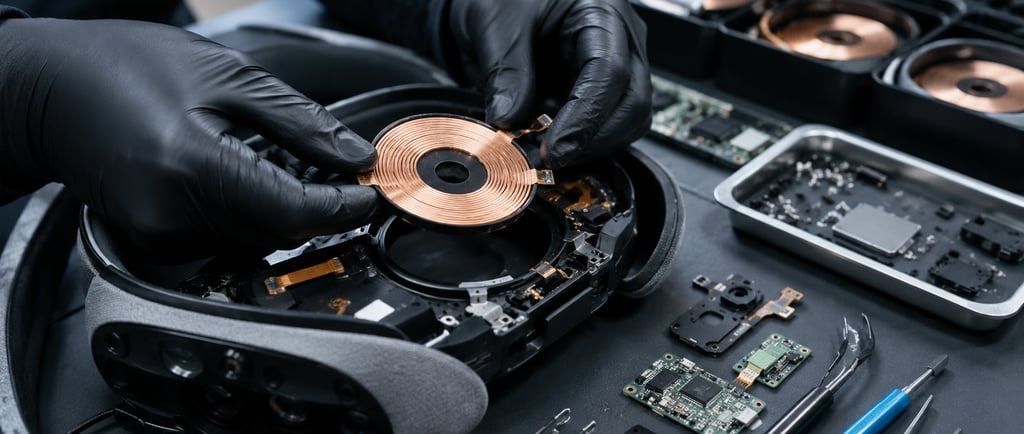
Wireless charging coils in XR and other advanced electronics feature precision copper loops, crucial for wireless energy transfer. These valuable components can be efficiently recovered during recycling through depaneling, demagnetizing, and mechanical separation workflows. Streamlined coil recovery not only raises copper yield, but also aligns with design-for-repair initiatives—ultimately helping recyclers, refiners, and OEMs close the loop for truly circular electronics.
Table of Contents
Context and Industry Stakes
Problem Definition and Opportunity in XR Recycling
Key Concepts: Copper Loops, Wireless Coils, and Design-for-Repair
End-to-End Recovery Framework
Step-by-Step: Copper Loop Recovery Example
Implementation Playbook and Checklist
Measurement, KPIs, and Quality Assurance
Case Patterns and Example Scenarios
FAQs: Wireless Charging Coil Recovery
Embedded Five-Layer Distribution & Reuse Toolkit
1. Context and Industry Stakes
XR (Extended Reality) technology—including virtual reality (VR), augmented reality (AR), and mixed reality devices—continues to reshape how individuals interact with both digital content and the real world. The global XR market, valued at over $31 billion in 2023, is projected to grow at a CAGR exceeding 35% for the rest of the decade (Statista, 2024). As this ecosystem expands, sustainability is no longer a "nice-to-have"—it is a priority for manufacturers, regulators, and eco-conscious consumers alike.
Wireless charging, once a premium feature, is now standard in leading XR headsets, VR controllers, smart glasses, and associated wearables. These charging modules rely on tightly wound copper coils embedded within compact devices. Each gram of copper represents not only significant material value—trading at approximately $9,000/metric ton (2024, London Metal Exchange)—but also environmental impact.
Why Is Copper Recovery in XR Recycling So Important?
Resource Scarcity and Supply Risks: Ongoing copper shortages, driven by electrification and renewable energy trends, increase demand for secondary (recycled) copper sources.
E-Waste Volumes: Over 54 million metric tons of e-waste are generated annually worldwide (Global E-waste Monitor, 2023), with IoT and XR growth amplifying the trend.
Circular Economy Mandates: Many regions—including the EU and several U.S. states—are adding Extended Producer Responsibility (EPR) requirements and recyclability targets for electronics.
OEM Brand and Compliance Pressure: Brands are evaluated on repairability, material transparency, and recovery rate metrics—critical differentiators for B2B and B2C buyers.
For XR device manufacturers, recyclers, and copper refiners, the efficient extraction of wireless charging coils is pivotal for both compliance and competitiveness. This is especially true as device miniaturization and embedded design trends create additional technical barriers. Efficient coil recovery delivers a win-win: high-yield copper supply for refiners, improved EPR performance, and genuine circularity for OEMs.
2. Problem Definition and Opportunity in XR Recycling
The Problem:
Conventional electronics recycling—especially for consumer and prosumer products like XR headsets—often employs manual stripping or bulk shredding. These methods frequently miss embedded copper coils. Why? Modern devices leverage complex, adhesive-bound coil modules buried deep in non-modular interiors. When not specifically targeted, the copper windings are either left behind or merged into shredded, lower-value copper fractions. This not only undermines copper recovery value, but also squanders the advanced manufacturing and engineering that goes into each coil.
Scattered Coil Architectures: Device diversity means layout, size, and attachment method vary broadly.
Adhesive/Miniaturization Challenges: Strong adhesives and compact geometries make access and extraction nontrivial.
Lack of Standardized Recovery: With shrinking device footprints, nonspecialized processes increasingly fail to yield high-grade copper recovery.
The Opportunity:
Despite these hurdles, a purpose-built workflow for recovering wireless charging coils can deliver:
Up to 95% theoretical copper yield in best-practice scenarios (better than current global e-waste copper recovery, which averages 70–80%).
Labor Cost Savings and Safety Gains: Automation and proper workflow drastically reduce manual tool time, cut worker risk (think less exposure to broken casings and sharp metals), and minimize electrical hazards.
OEM Value Add: Designing for coil-access and repair is a growing compliance requirement—and a clear signal to eco-conscious customers.
New Revenue Streams: Recovered, tested coils can be resold or reused, maximizing asset value before being relegated to refining.
Industry Arguments: Why Stakeholders Must Prioritize Copper Loop Recovery
For Recyclers and Copper Refiners: Skipping coil recovery means lower profit margins and missed upsell opportunities from copper resale or coil refurbishment.
For OEMs: Lack of design-for-repair translates to regulatory risks and loss of brand loyalty among sustainability-driven buyers.
For Policy Makers: Failing to set standards for loop recovery limits the environmental and social benefits intended by circular electronics laws.
Statistical Context: According to the Global E-waste Statistics Partnership (GESP), specialized copper recycling from high-tech devices could make up to 12% of global secondary copper supply by 2030—if best-practice recovery techniques become industry standard.
3. Key Concepts: Copper Loops, Wireless Coils, and Design-for-Repair
To drive profitable, compliant, and safe coil recovery in XR electronics, it's essential to master several foundational concepts:
Wireless Charging Coil
A wireless charging coil consists of a finely wound, insulated copper wire loop. Typical diameters in XR devices range from 8 to 45 mm, depending on product class and charging requirements. Each coil functions by transferring power via electromagnetic induction when paired with a corresponding transmitter coil (e.g., the charging pad). Attributes that affect recyclability include:
Wire Gauge: Thicker wire generally means easier mechanical separation, higher copper mass, and easier stripping.
Geometry: Flat versus stacked windings change how accessible the coil is for robotic or manual cutters.
Insulation Material: Materials can include polyurethane enamel, which affects de-insulation steps.
Copper Recovery
Copper recovery from electronics involves the separation of metallic copper from non-metal components: insulation, adhesives, ferrite backings, and circuit board cap layers. The efficiency of this process determines the final mass of usable copper recovered, which is a key yield KPI for every recycler and copper refiner.
XR and Accessory Devices
While VR headsets and AR glasses are the most visible XR items, wireless charging coils are also common in:
Stylus and controller chargers
Smart glasses
Haptic gloves
Wearable charging docks and adapters
Each format differs in coil size, accessibility, and bonding method—necessitating tailored recovery workflows.
Design-for-Repair
Design-for-Repair (DfR) is the practice of engineering devices with end-of-life access in mind. For coil recovery, relevant DfR attributes include:
Modular Assemblies: Coils mounted on dedicated brackets or accessible by simple fastener removal
Low-Adhesive Designs: Reduced use of adhesives in favor of screws, snaps, or clips for easier and less destructive access
Repair Documentation: Availability of repair and disassembly guides
Refurbishment
Recovered coils that pass continuity (electrical signal) and insulation integrity tests can be cleaned, certified, and re-integrated into new or remanufactured devices. The global remanufacturing market is projected to exceed $120 billion by 2026 (Allied Market Research), with copper coil refurbishment an emerging niche offering added value in the circular economy.
4. End-to-End Recovery Framework
Efficient copper loop recovery demands a disciplined, stepwise approach that maximizes recovered value and minimizes labor, contamination, and error rates. The CoRe-XR (Copper Loop Recovery for XR Devices) framework—backed by input from real-world recycling operations—delivers a replicable method that can flex to facility scale and technology maturity.
Stepwise Workflow: CoRe-XR
Intake & Triage:
Catalog incoming shipments by model, charging architecture, and coil presence.Depaneling:
Use precision microcutters or CNC depaneling rigs to open device housing and directly access coil locations, minimizing coil distortion. Modern automation can often cut labor by over 60% compared to full manual teardown.Demagnetization:
Neutralize any residual magnetic fields from coil/ferrite assemblies using low-heat demagnetizing stations—important for device types with strong magnetization (e.g., stylus chargers).Mechanical Separation:
Deploy microcutters, robotic arms, or delamination tools to carefully separate the coil assembly from adhesives, metal foils, or ferrite backing layers. Devices using minimal adhesives accelerate this process, while "potting" compounds can double extraction time.Manual Winding Integrity Check:
Quick visual and continuity testing to grade coils for direct reuse ("refurb grade") versus scrap ("refine grade"). Reputable recyclers report refurbishment rates of 35–45% for typical XR intake when process QA is maintained.Cleaning & De-insulation:
Coils undergo ultrasonic baths or solvent cleaning. Insulation is then stripped with programmable micro-strippers; chemical strippers are only used where mechanical means prove difficult.Yield Weighing & Tracking:
Weigh each batch of recovered copper, log yields versus intake, and record critical batch, SKU, and device-type data for traceability.Downstream Workflow Allocation:
Sort clean, functional coils for refurb channels (resale to OEMs or redeployment); direct scrap copper to refining or smelting processes.Reporting & Compliance Tracking:
Automated or manual entry into EPR, batch recovery, and QA compliance systems. This enhances traceability and demonstrates best-practice adherence to regulators, OEM partners, and customers.
Results Snapshot: Empirical Data
Best-in-class operations achieve copper recovery rates above 90% and refurb rates near 40%.
Inferior, non-specialized approaches (manual-only or no design-for-repair devices) may yield as little as 65–75%, with significantly more labor hours.
5. Step-by-Step: Copper Loop Recovery Example
A detailed step-by-step walkthrough demonstrates how recyclers can optimize each touchpoint for yield, safety, and compliance.
Scenario: XR Headset Copper Coil Recovery at a Midsize Facility
Daily Intake Example:
200 XR headsets received per day, spanning several major brands and generations.
Post-triage: 190 units confirmed to contain wireless copper charging coils (average 28mm diameter, ~5g copper per coil).
Step 1: Intake & Triage
Devices sorted by SKU and physical spot checks cross-referenced with a device coil presence database.
Barcodes scanned into copper yield tracking system.
Step 2: Depaneling
Robotic microcutter units perform fast, precise backplate removal.
Result: 95% of coils exposed without major damage. For the remaining 5%, sticky adhesives require manual access, increasing process time.
Step 3: Demagnetization
Automated "demag" bench cycles any necessary units, especially those with ferrite-enhanced coils.
Step 4: Mechanical Separation
Low-profile spatula tip or delaminator gently separates the coil assembly from its ferrite and adhesive layers with minimal deformation.
If coil is heavily glued, flagged for skilled manual removal and annotated for workflow improvement review.
Step 5: Integrity Check and Segregation
Continuity testers and visual checks separate functional, undamaged coils for potential refurbishment. Damaged windings (nicks, breaks, heavy residue) are put in the scrap stream.
Step 6: Cleaning & De-insulation
Ultrasonic cleaner removes dust/adhesive. Coils given a controlled micro-stripping pass—insulation is removed with <1% copper loss thanks to calibrated pressure settings.
Step 7: Weighing and Tracking
Yield: Approximately 900g net clean copper per day.
All metrics logged in the batch recovery dashboard.
Step 8: Downstream Allocation
40% of coils (>350 daily) pass refurbishment QA and are packaged for return to OEM or resale to part distributors.
Step 9: Reporting & Compliance
Compliance software generates reports on recovery rates, coil refurb rates, safety incidents, and process time. These documents are retained for EPR audits and monthly continuous improvement meetings.
Bottom Line: This structured approach balances mechanical and manual separation, embedding QA checkpoints, and leveraging automation to boost yield, safety, and copper value—offering a working playbook for recyclers seeking to excel in the growing XR electronics space.
6. Expanded Implementation Playbook and Checklist
A strong wireless charging coil recovery program starts before the first XR headset, controller, charging dock, or smart glasses frame reaches the dismantling bench. The biggest gains come from knowing where the coil sits, how it is bonded, whether it has reuse potential, and how much copper should be recovered from each product family. This matters because the global e-waste stream is growing faster than formal recycling systems can manage. The Global E-waste Monitor 2024 reported 62 million tonnes of e-waste generated in 2022, with only 22.3% formally collected and recycled. It also projects 82 million tonnes by 2030, which means electronics recyclers will face higher volumes, more embedded components, and more pressure to document recovery performance.
For XR electronics, the implementation goal is simple: recover copper coils as a targeted material stream instead of allowing them to disappear into mixed shred, low-grade copper-bearing fractions, or residue. Wireless charging coils may appear small, but they sit inside a broader supply pressure story. Copper is central to electrification, electronics, grids, EVs, renewable infrastructure, and high-performance computing. The International Copper Study Group projected the refined copper market would move into deficit in 2026, with usage growth outpacing refined production growth. This makes secondary copper recovery more strategic for refiners, OEMs, ITAD companies, and recyclers.
The implementation playbook should be built around eight practical stages: intake, model mapping, safe access, coil extraction, cleaning, grading, allocation, and reporting.
The first step: intake classification
Every incoming batch should be grouped by device type, brand, generation, condition, and charging architecture. XR devices should not be treated as one category. A VR headset with an internal charging dock interface, a controller with a compact inductive coil, a haptic glove module, and a pair of smart glasses with a magnetic charging pad can have very different coil sizes, adhesive choices, ferrite backing layouts, screw access points, and damage risk. The intake team should record SKU, visible condition, battery status, serial number where available, and the expected coil count per unit. Even a basic coil-location database can reduce wasted teardown time because technicians know where to cut, where to heat, where to pry, and where not to apply force.
The second step: risk sorting
XR devices often contain lithium-ion cells, magnets, printed circuit boards, cameras, sensors, antennas, flex cables, adhesives, and fine copper windings in very compact assemblies. A coil recovery line should never start with blind cutting. Devices with swollen batteries, crushed housings, liquid damage, unknown power status, or missing identifiers should move into a safety triage lane before any copper recovery attempt. The safest process removes or isolates battery risk before coil access begins. This also protects the value of the coil because heat, puncture, crushing, or aggressive prying can turn a reusable coil into low-grade scrap.
The third step: model mapping
Each product family should receive a teardown profile. That profile should include coil location, access order, fastener type, adhesive strength, ferrite backing type, coil diameter, typical copper mass, common damage points, required tools, expected processing time, and pass/fail criteria for reuse. This turns coil recovery from guesswork into repeatable work instruction. For high-volume batches, a photo-based guide is useful because one technician can confirm the exact coil location before dismantling begins. For lower-volume or mixed batches, the line can use a "first article teardown" method: one unit is opened slowly, documented, and used to guide the remaining batch.
The fourth step: controlled access
Wireless charging coils are usually positioned near the charging contact surface, backplate, dock alignment area, controller base, or accessory charging zone. The access method should depend on the device design. Screw-based housings should be opened with torque-controlled drivers. Snap-fit housings should be opened with nylon tools to prevent coil deformation. Adhesive-bonded housings may require controlled heat, low-temperature softening, or precision cutting. The goal is not simply to open the device. The goal is to expose the coil without stretching, nicking, flattening, burning, or contaminating the copper winding.
The fifth step: coil extraction
Once exposed, the coil should be separated from plastic carriers, ferrite pads, adhesive films, foam, and nearby flex circuits. The most common recovery mistake is applying force to the winding instead of the carrier or backing layer. A good extraction process supports the coil from underneath, separates adhesive at the bond line, and avoids pulling on loose wire ends. Technicians should use a controlled angle, low profile tools, and magnification where needed. If the coil is potted, cracked, heavily oxidized, or fused into the housing, it should be routed to a scrap-grade process instead of consuming skilled labor.
The sixth step: cleaning
Coils intended for copper refining need removal of bulky contaminants such as plastic, tape, ferrite fragments, foam, and loose adhesive. Coils intended for reuse require stricter handling. They should be cleaned without damaging enamel insulation or changing geometry. Ultrasonic cleaning, controlled solvent wiping, low-abrasion scraping, and air drying may be suitable depending on the contaminant and the reuse standard. Chemical stripping should be kept separate from reuse-grade workflows because it can damage insulation and reduce part reliability.
The seventh step: grading
Every recovered coil should fall into one of three lanes: reuse-grade, repair-grade, or refine-grade. Reuse-grade coils pass visual inspection, continuity testing, resistance checks, geometry tolerance checks, and insulation condition review. Repair-grade coils may be usable after minor cleaning, lead correction, adhesive removal, or carrier replacement. Refine-grade coils are damaged, contaminated, deformed, or economically unsuitable for reuse. This grading structure protects revenue because the highest value outlet is usually reuse, followed by component resale, followed by clean copper scrap, followed by mixed copper-bearing scrap.
The eighth step: documentation
Recovery data should be logged by batch, device family, coil type, weight, yield, reuse pass rate, refine-grade weight, process time, and rejection reason. Documentation is now a commercial requirement, not a back-office task. R2v3 expectations include structured management systems, legal compliance, safety controls, and accountability for electronics reuse and recycling. R2v3 also supports buyer trust because it focuses on safety, environmental performance, downstream handling, and data security.
A Practical Checklist for Copper Loop Recovery
A practical checklist for a copper loop recovery line should include the following actions:
Confirm device family, coil count, and coil location before opening the batch.
Remove, isolate, or control battery and data-bearing risks before mechanical work begins.
Use model-specific teardown guides for every repeated device type.
Open housings with the least destructive method available.
Separate coil assemblies at the carrier or adhesive layer, not by pulling the winding.
Keep reuse-grade coils away from destructive cleaning, shredding, or bulk copper streams.
Test continuity and resistance before assigning reuse status.
Weigh clean copper separately from contaminated copper-bearing material.
Track yield by SKU, technician, shift, tool method, and rejection reason.
Retain batch documentation for OEM reporting, EPR evidence, buyer records, and audit readiness.
The best facilities treat the playbook as a live operating system. Every difficult device, high-damage batch, poor yield result, or unusual adhesive pattern should feed back into updated work instructions. This is how a recycler moves from "we recovered some copper" to "we know the expected yield, recovery cost, reuse rate, and margin by product family."
7. Measurement, KPIs, and Quality Assurance
Wireless charging coil recovery only becomes a serious business line when it is measured with the same discipline as battery recovery, PCB grading, data destruction, or precious metal recovery. The right KPIs help you answer four questions: how much copper did you recover, how clean is it, how much can be reused, and how much money or compliance value did the process create?
The first KPI: coil recovery rate
This measures the number of coils successfully recovered against the number expected from the incoming batch. If 1,000 XR controllers enter the line and the model database shows one coil per controller, then the expected coil count is 1,000. If 930 coils are recovered, the recovery rate is 93%. This KPI quickly exposes missed components, rushed teardown, poor model mapping, or damage during access.
The second KPI: copper yield per unit
This measures recovered clean copper weight against the number of processed devices. It should be tracked by SKU and product family because coil mass varies widely. A smart glasses charging coil may contain far less copper than a headset dock coil or multi-coil charging accessory. The goal is not to chase one universal number. The goal is to build reliable yield profiles. If a certain headset family typically produces 4.8 grams of recoverable coil copper and the line suddenly reports 3.6 grams, the issue may be contamination, missed coils, tool damage, batch variation, or poor separation.
The third KPI: clean copper percentage
This measures the copper fraction after removal of ferrite, adhesive, insulation residues, plastic carriers, foam, and contaminants. Clean copper attracts better downstream pricing and reduces refining penalties. In high-grade copper streams, even small contamination differences can affect buyer confidence, payment terms, and sampling disputes. For recyclers serving refiners, this KPI should be supported by periodic lab checks, supplier scorecards, and retained samples from each outbound lot.
The fourth KPI: reuse pass rate
This is the share of recovered coils that pass functional and visual testing for resale, repair, or OEM return. A facility that recovers 95% of coils but damages most of them during extraction may still be leaving money on the table. Reuse-grade components usually require stricter handling, but they can create higher value than scrap if a verified market exists. The pass rate should be tracked by product family and extraction method because some designs are naturally easier to recover intact.
The fifth KPI: recovery cost per gram
This combines labor, equipment time, consumables, energy, cleaning, QA, packaging, and documentation cost. Coil recovery should not be measured only by gross copper value. A five-gram coil can become unprofitable if it requires excessive manual time. The most useful metric is net value per unit processed. This helps the facility decide whether a device type belongs in manual recovery, semi-automated recovery, reuse triage, or bulk processing.
The sixth KPI: process time per device
This should be split into triage time, opening time, extraction time, cleaning time, testing time, and documentation time. A device that takes 90 seconds to open and 20 seconds to remove the coil can be profitable at scale. A device that takes 12 minutes because of potting compound, hidden fasteners, and fragile coil leads may require a different handling route. Time tracking also helps build accurate quotes for OEM take-back programs and ITAD contracts.
The seventh KPI: safety performance
Coil recovery can involve sharp plastics, battery risk, magnets, fine wires, fumes from heated adhesives, dust, and repetitive hand work. Facilities should track near misses, cuts, punctures, battery incidents, ergonomic strain, eye injuries, and tool-related events. Safety should be part of the coil recovery scorecard because one battery event or worker injury can erase the value of a high-yield batch.
The eighth KPI: documentation completeness
For enterprise electronics, public sector ITAD, and OEM programs, the report often matters as much as the recovered material. The facility should be able to show intake records, chain-of-custody, batch IDs, sanitization status where relevant, material routing, downstream vendor records, and final disposition. NIST SP 800-88 Rev. 1 remains a major reference for media sanitization because it defines sanitization as making access to target data infeasible for a given level of effort. XR devices with storage, user accounts, cameras, or enterprise data should not enter a parts recovery line without a data handling process that matches the asset risk.
Quality Assurance at Three Levels
Quality assurance should happen at three levels: incoming QA, process QA, and outgoing QA.
Incoming QA
Incoming QA confirms whether the batch matches the shipping paperwork, whether the device count is accurate, whether the condition is safe, and whether the expected coil count is realistic. It should also confirm whether data-bearing components are present. XR headsets can contain onboard storage, user profiles, Wi-Fi credentials, enterprise app data, and sensor history. A recycler that recovers coils but mishandles data risk has created a bigger problem than missed copper value.
Process QA
Process QA checks whether technicians are following the right teardown path. Supervisors should sample devices during the shift and inspect exposed coil areas, tool marks, damage patterns, and missed components. If one technician consistently has lower reuse pass rates, the issue may be training, tool setup, speed pressure, or unclear work instructions. If every technician struggles with the same model, the teardown method needs revision.
Outgoing QA
Outgoing QA confirms that the recovered stream meets the buyer's specification. Reuse-grade coils should be packed to prevent bending, crushing, and electrostatic or moisture damage where relevant. Scrap-grade coils should be graded by contamination level and copper content. Ferrite-heavy material should not be mixed with clean copper loops if the buyer expects a high-grade copper fraction. Retained samples and batch photos help protect the recycler in disputes.
The strongest QA programs also include a feedback loop from downstream buyers. If a refiner reports high adhesive content, ferrite contamination, or inconsistent copper percentage, that information should return to the dismantling line. If an OEM reports reuse failures, the recycler should review continuity thresholds, insulation condition, cleaning methods, and packaging. Coil recovery is not just a dismantling task. It is a quality-controlled material and parts production process.
8. Case Patterns and Example Scenarios
Wireless charging coil recovery does not look the same across every XR product. The business case changes depending on product design, batch size, damage condition, labor cost, buyer requirements, and whether the recovered coil has a reuse market. The following case patterns show how recyclers, OEMs, and ITAD providers can approach different operating situations.
The first pattern: the high-volume controller batch
This is one of the easiest cases to turn into a repeatable recovery workflow because controllers are usually small, consistent, and processed in larger volumes. A recycler receiving 10,000 end-of-life XR controllers from an enterprise training program may find one compact wireless charging coil per unit. If the average recovered copper mass is 2.5 grams per controller, the batch contains about 25 kilograms of coil copper before contamination losses. At a copper value near several thousand dollars per metric ton, the copper alone may not justify excessive labor. The real value comes from fast processing, clean separation, and possible reuse of intact charging modules. If the line can process each controller in under two minutes with a high coil recovery rate, the batch can support a dedicated workstation. If the controllers are heavily damaged or potted, the process may shift toward clean copper concentration rather than reuse.
The second pattern: the premium headset recovery batch
Headsets can contain larger charging assemblies, more complex internal layouts, magnets, batteries, sensors, cameras, PCBs, and mechanical structures. A batch of 1,000 premium headsets may generate multiple recoverable streams: batteries, PCBs, optics, aluminum, stainless fasteners, magnets, copper coils, cables, and plastics. In this case, coil recovery should be integrated into a broader teardown plan. The coil should not be recovered in isolation if the same access path can also recover magnets, PCBs, and aluminum brackets. This lowers effective labor cost because one opening process unlocks several value streams.
The third pattern: OEM take-back for repairable charging modules
In this scenario, the OEM designs the coil as a replaceable module instead of burying it under permanent adhesive. The recycler or repair partner removes the module, tests it, cleans it, and returns functional units for service stock. This pattern fits the direction of repair policy in Europe. The EU Directive on common rules promoting the repair of goods was adopted on June 13, 2024, entered into force on July 30, 2024, and Member States must apply it from July 31, 2026. That policy direction increases the commercial value of parts access, repair documentation, and post-sale repair channels.
The fourth pattern: mixed-consumer e-waste with unknown coil presence
This is common for recyclers that receive small devices, accessories, docks, smart wearables, and mixed XR peripherals from municipal or retail collection channels. The challenge is variability. A fully manual coil search across mixed small electronics can be uneconomic. The better approach is a triage screen based on device category, charging surface, magnetic alignment features, weight, and model lookup. High-probability devices move to coil recovery. Low-probability devices move to other dismantling or material recovery paths. This reduces wasted labor while still capturing valuable copper-bearing assemblies.
The fifth pattern: enterprise XR fleet retirement
Enterprises using XR for training, manufacturing, health care, logistics, field support, or simulation may retire devices in scheduled batches. These assets often have better documentation, known models, and predictable condition. They also carry higher data risk. The recovery workflow should include chain-of-custody, data sanitization, battery handling, component harvesting, and material reporting. Enterprise buyers increasingly want proof of responsible disposition, not just a pickup receipt. This is where R2v3-certified handling and NIST-aligned data sanitization can support procurement confidence.
The sixth pattern: design-for-repair partnership with an OEM
In this case, the recycler gives feedback to the manufacturer about which coil designs are easiest to recover, which adhesives create yield loss, which carrier materials contaminate copper streams, and which access points reduce damage. This is where recycling data can directly improve next-generation product design. The OEM benefits through lower warranty repair friction, better EPR reporting, stronger recycled content claims, and a clearer end-of-life pathway. The recycler benefits by receiving cleaner batches, better teardown documentation, and higher component reuse rates.
A useful industrial reference comes from Apple's recycled materials work. Apple reported that 30% of the material in products shipped in 2025 came from recycled content, its highest level at the time of reporting. Apple has also previously stated that it introduced 100% recycled copper foil in the MagSafe inductive charger for iPhone, showing that inductive charging components can be part of recycled copper strategy when design, sourcing, and material traceability are treated seriously.
The seventh pattern: refiner-aligned clean copper recovery
Here, the recycler is not trying to resell coils as parts. The goal is to produce a consistent copper-rich stream with low contamination. This model works when reuse demand is weak, coil damage rates are high, or downstream buyers pay reliably for clean copper fractions. The line should focus on rapid separation, removal of bulky non-copper material, batch sampling, and consistent grading. It should avoid mixing copper loops with ferrite-heavy or adhesive-heavy residues unless the buyer has priced that contamination into the contract.
Across all case patterns, the best operating model is selective recovery. Not every device deserves the same level of handling. A recycler should decide by value, time, safety, data risk, and buyer demand. The mistake is either extreme: shredding everything and losing value, or manually recovering every coil even when the economics do not work. The right answer is a tiered routing system backed by data.
9. FAQs: Wireless Charging Coil Recovery
What are wireless charging coils in XR devices?
Wireless charging coils are wound copper loops used to transfer power through electromagnetic induction. In XR devices, they may appear in headsets, controllers, smart glasses, haptic accessories, charging docks, and wearable modules. They are usually paired with ferrite backing, adhesives, alignment magnets, plastic carriers, and nearby electronics.
Why are these coils worth recovering?
They contain copper, which is a high-demand industrial metal used in electrical and electronic products, construction, transportation, industrial machinery, and consumer goods. USGS notes that copper and copper alloy products are heavily used across electrical and electronic applications, which makes secondary copper recovery important for supply resilience.
Is the copper value alone enough to justify coil recovery?
Sometimes yes, often no. The answer depends on coil mass, labor cost, contamination, batch size, and downstream pricing. Small coils may not justify slow manual extraction if they are only sold as scrap. The business case improves when recovery is fast, batch sizes are large, copper is clean, or functional coils can be reused.
Can wireless charging coils be reused instead of refined?
Yes, but only if they pass QA. A reusable coil should pass visual inspection, continuity testing, resistance checks, insulation review, geometry checks, and cleanliness requirements. Coils with broken windings, crushed loops, damaged insulation, heavy adhesive contamination, or poor electrical performance should go to repair-grade or refine-grade streams.
What is the biggest technical barrier to coil recovery?
Adhesive design is often the biggest barrier. Strong adhesives, potting compounds, heat-sensitive plastics, and compact internal layouts increase extraction time and damage risk. Design choices such as screws, clips, accessible brackets, and modular charging assemblies make coil recovery easier and more profitable.
How does wireless charging growth affect recycling?
Wireless charging is spreading across phones, wearables, accessories, and XR-related products. The Wireless Power Consortium says Qi2 brought 15W charging with magnetic alignment, while Qi2 25W increases charging power further. As magnetic wireless charging becomes more common, recyclers will see more coil, ferrite, and magnet assemblies in small electronics streams.
Do Qi and Qi2 standards affect recyclability?
They affect product design more than recycling instructions. Qi2's magnetic alignment can add magnets and alignment structures near the coil. For recyclers, this means the charging assembly may contain copper, ferrite, magnets, adhesives, and plastic carriers in one compact module. This makes teardown mapping more important.
What tools are needed for coil recovery?
A basic line may need torque drivers, nylon pry tools, magnification, controlled heat tools, precision cutters, ESD-safe benches, continuity testers, resistance meters, ultrasonic cleaning equipment, micro-stripping tools, scales, batch labels, and QA logs. More advanced lines may add robotic depaneling, vision-assisted sorting, automated continuity testing, and barcode-linked yield dashboards.
Should coils be demagnetized?
Demagnetization may help in assemblies with magnets or ferrite-backed components, especially where magnetic attraction interferes with separation, sorting, or testing. It is not always required. The decision should be made by product family and assembly design.
Can coils be shredded with the rest of the device?
They can, but that usually reduces control over copper quality and component reuse. Bulk shredding may be suitable for low-value, damaged, or uneconomic units. For higher-value batches, targeted recovery produces better material visibility, cleaner copper streams, stronger reporting, and possible reuse revenue.
How should recyclers handle data risk in XR devices?
XR headsets and smart devices can contain storage, user credentials, enterprise data, sensor logs, images, app data, and network information. Data-bearing components should be handled under a documented sanitization process before parts recovery or resale. NIST SP 800-88 Rev. 1 is a key reference for making media sanitization decisions based on confidentiality risk.
What QA tests matter most for reuse-grade coils?
The main tests are visual inspection, continuity, resistance range, insulation condition, winding geometry, lead integrity, cleanliness, and packaging condition. For OEM reuse, the buyer may also require traceability, device source, lot records, electrical tolerance, and failure-rate tracking.
What contamination reduces copper value?
Ferrite fragments, adhesives, enamel insulation, plastic carriers, solder, foam, tapes, oils, dust, and mixed metals can reduce stream quality. Some contamination is expected, but consistent grading and buyer-aligned specifications are needed to avoid payment disputes.
How should recovered coils be packaged?
Reuse-grade coils should be packaged to prevent bending, crushing, moisture exposure, lead damage, and mixing between models. Scrap-grade coils can be bulk packed by copper quality and contamination level. Each container should carry batch ID, weight, grade, source category, and date.
What role do OEMs play in better coil recovery?
OEMs control the original design. They can improve recovery through modular charging assemblies, reduced permanent adhesives, service documentation, clear material marking, accessible fasteners, and take-back partnerships. These choices support repair, reuse, material recovery, and compliance reporting.
How does right-to-repair policy connect to coil recovery?
Repair policy increases pressure on manufacturers to support repairable products, spare parts access, and repair information. The EU repair directive entered into force in 2024, and Member States must apply it from July 31, 2026. Coil modules that can be accessed, tested, replaced, and recovered fit this policy direction better than permanently bonded assemblies.
What recovery rate should a recycler target?
For mapped, repeated, repair-friendly devices, a coil recovery rate above 90% is a strong target. For mixed small electronics, lower rates may be realistic because device types and coil presence vary. The better KPI is not one universal target, but recovery rate by product family, along with cost per recovered gram and reuse pass rate.
Can small recyclers implement this without expensive automation?
Yes. Small recyclers can start with model mapping, hand tools, safe benches, continuity testing, batch weighing, and clean sorting. Automation becomes useful when batch volumes are high and product designs are consistent. The first investment should be process discipline, not machinery.
What is the most common mistake in coil recovery?
The most common mistake is treating coils as an afterthought. When they are not mapped, measured, and graded, they disappear into mixed streams. The second mistake is over-processing low-value devices where manual labor costs exceed the recovered value.
Who buys recovered wireless charging coils?
Potential buyers include OEM repair programs, parts brokers, refurbishers, electronics repair networks, component harvesters, copper scrap buyers, refiners, and smelters. Reuse buyers need stricter QA and traceability. Scrap buyers focus on copper content, contamination, weight, and consistency.
10. Advanced Distribution Toolkit for Embedded Reuse, Reporting, and Commercial Growth
A wireless charging coil recovery program becomes more valuable when the recovered material and data are distributed properly. Distribution does not mean marketing alone. It means moving recovered coils, copper fractions, test data, compliance reports, and repair intelligence to the right buyers, partners, and internal teams.
The first layer: internal distribution
Every recovery facility should turn coil recovery data into operating intelligence. The dismantling team needs model-specific guides. The sales team needs yield data to price take-back programs. The compliance team needs batch reports. The procurement team needs device categories that are worth sourcing. The QA team needs rejection reasons. The management team needs margin by product family. A simple monthly coil recovery report can show processed units, expected coils, recovered coils, reuse-grade units, scrap-grade weight, average time per device, safety events, and buyer feedback.
The second layer: OEM distribution
OEMs need evidence that their products can be repaired, reused, and responsibly recycled. A recycler can provide model-level recovery reports showing which designs performed well and which created high damage rates. This feedback has commercial value. For example, if one charging module can be removed in 45 seconds with a 92% reuse pass rate while another takes six minutes and produces mostly damaged coils, the OEM has a clear design signal. The recycler can turn this into a paid teardown audit, take-back report, or design-for-repair advisory product.
The third layer: refiner distribution
Copper refiners and scrap buyers want consistency. They need predictable grades, low contamination, honest weights, and clear lot history. Recyclers should build buyer-specific specifications for clean coil copper, adhesive-bearing coil copper, ferrite-contaminated coil assemblies, and mixed small copper-bearing assemblies. Each grade should have photos, sample weights, contamination notes, and expected settlement logic. This reduces disputes and strengthens repeat buying.
The fourth layer: repair and resale distribution
Reuse-grade coils need a different channel from scrap copper. They should be listed by model compatibility, part number where known, test result, condition grade, quantity, and warranty terms. If direct OEM resale is not available, recyclers can work with repair networks, parts marketplaces, refurbished electronics suppliers, or specialized brokers. The value of this stream depends on trust. Buyers will pay more when they receive consistent testing, clean packaging, return policies, and traceable lots.
The fifth layer: compliance and public reporting
E-waste reporting is moving toward more proof, not less. With formal e-waste collection and recycling still far below total generation, regulators and enterprise buyers are paying closer attention to material recovery claims. The Global E-waste Monitor's finding that only 22.3% of e-waste was formally collected and recycled in 2022 shows why vague "responsibly recycled" claims are no longer enough. Facilities should be ready to show what was recovered, how it was graded, where it went, and what could not be recovered.
A Strong Distribution Toolkit
A strong distribution toolkit should include the following assets:
A coil recovery specification sheet that defines each recovered grade, acceptable contamination, packaging method, and test status.
A model-level teardown report for OEMs, showing access time, damage risk, recovery rate, reuse pass rate, and design issues.
A buyer-facing copper lot sheet, showing gross weight, net clean copper estimate, contamination notes, sample images, source category, and batch ID.
A reuse-grade component certificate, showing continuity test result, resistance range, cleaning method, visual grade, quantity, and handling notes.
An EPR-ready recovery report, showing intake weight, recovered copper weight, reuse quantity, scrap allocation, downstream route, and retained documentation.
A repair network listing pack, showing compatible models, part condition, available quantity, testing process, and purchase terms.
A monthly management report, showing revenue, cost, recovery rate, safety incidents, rejection reasons, buyer claims, and improvement actions.
A design feedback memo for manufacturers, showing specific recommendations such as replacing permanent adhesive with removable fixtures, marking coil modules, standardizing access screws, separating ferrite from plastic carriers, and publishing repair guidance.
Distribution Should Also Be Digital
Distribution should also be digital. Recyclers can maintain a live database of device models, coil locations, recovery times, test results, and buyer specifications. Over time, this becomes a competitive asset. A recycler with 500 mapped device profiles can quote faster, train faster, recover more accurately, and provide better OEM feedback than a recycler relying on technician memory.
The Advanced Opportunity
The advanced opportunity is to connect coil recovery with broader material intelligence. Wireless charging assemblies often sit near magnets, ferrite sheets, PCBs, aluminum frames, batteries, and flex cables. A facility that maps the coil can often map several adjacent value streams at the same time. This turns one recovery workflow into a full XR component harvesting strategy. Copper loop recovery becomes the entry point for higher-value circular electronics processing.
Conclusion
Wireless charging coil recovery is a small-component discipline with large strategic value. XR devices, smart wearables, controllers, charging docks, and compact electronics are moving toward more embedded charging systems. At the same time, the world is producing more e-waste, formal recycling rates remain too low, copper demand is under pressure, and repair policy is becoming stricter. These forces make copper loop recovery more important in 2026 than it was even a few years ago.
The recyclers that win in this category will not rely on bulk shredding alone. They will map devices, identify coil locations, protect reuse-grade parts, separate clean copper, measure yield by model, and document every batch. They will treat wireless charging coils as a recoverable product stream, not hidden scrap. They will also share recovery data with OEMs, refiners, repair networks, and compliance teams.
For OEMs, the lesson is direct: design choices decide end-of-life value. A coil held by accessible fasteners, clear markings, and a replaceable module can support repair, reuse, and cleaner recycling. A coil buried under permanent adhesive and mixed materials creates cost, damage, and waste.
For recyclers and refiners, the commercial path is clear. Start with targeted device families, build a coil-location database, measure recovery performance, separate reuse from scrap, and create buyer-ready material grades. The copper in each coil may be measured in grams, but across thousands or millions of devices, those grams become revenue, audit evidence, and supply resilience.
Wireless charging coil recovery is no longer a niche teardown detail. It is part of the next phase of circular electronics, where every embedded component must be evaluated for repair, reuse, recovery, and proof.
Connect
Your trusted partner for scrap metal procurement.
CONTACT
About
haroon@tdcventures.com
+1-307-655-7593
© 2025. All rights reserved.
NEWSLETTER